
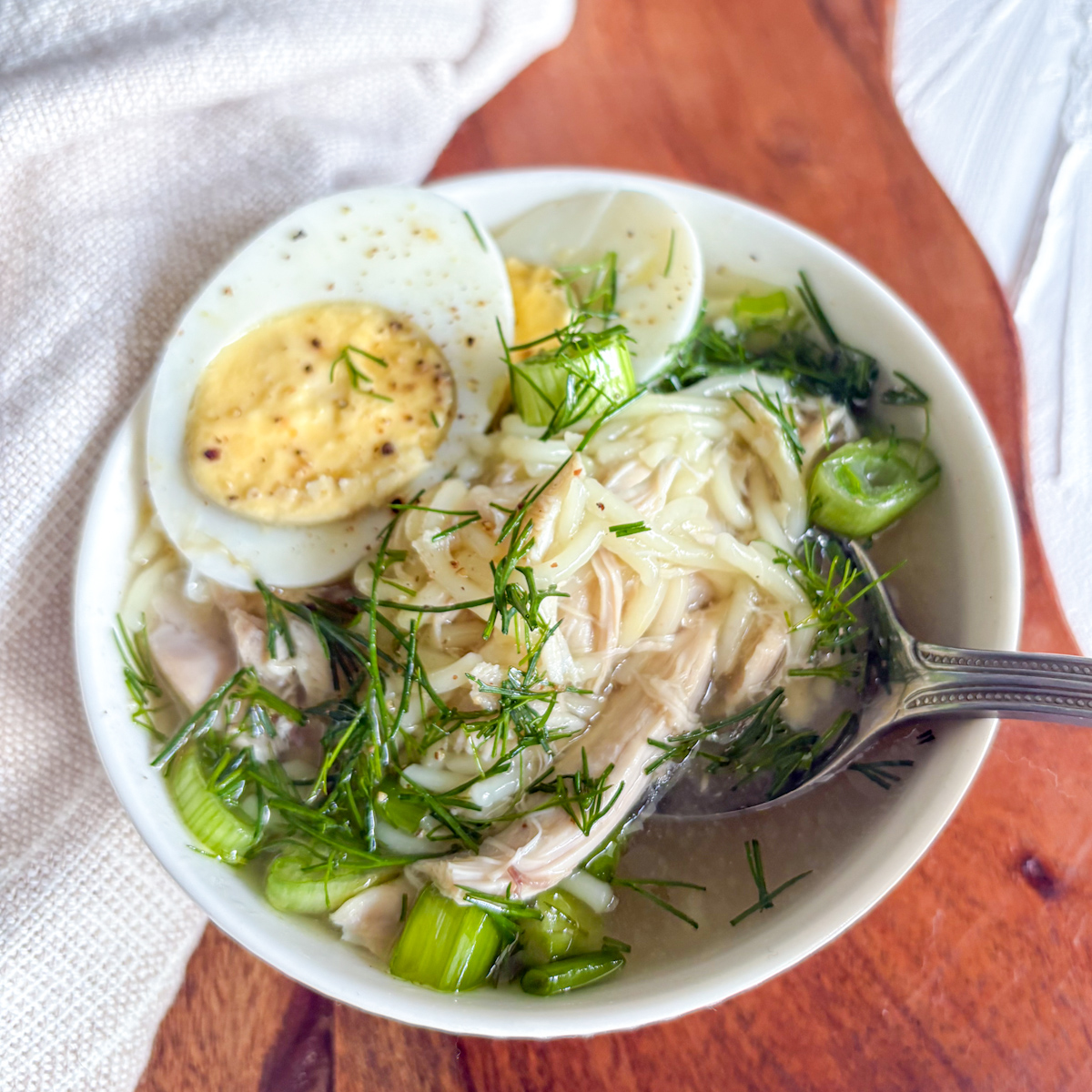
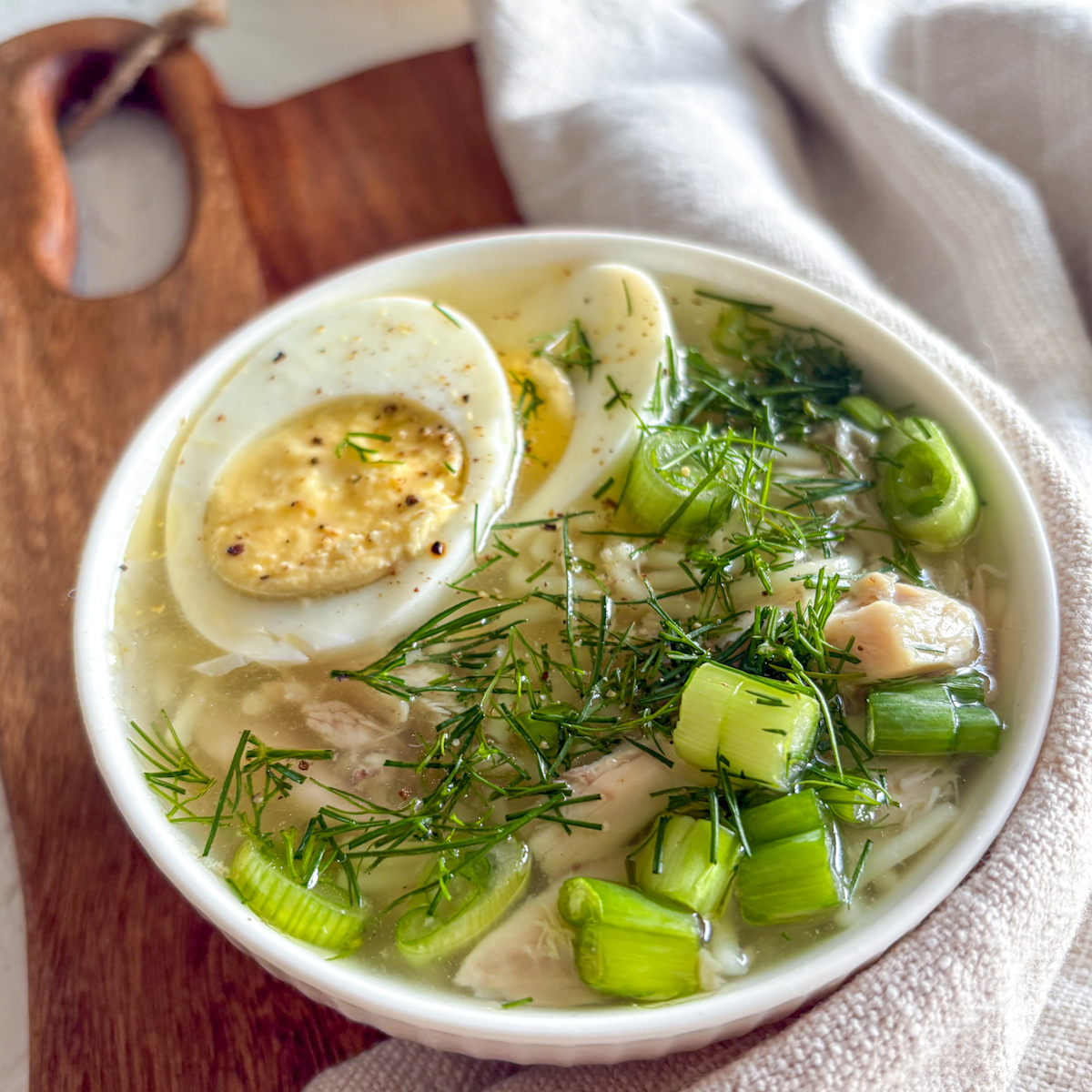
Russian chicken soup is a clear, golden broth with tender shredded chicken, thin egg noodles, fresh herbs and halved boiled eggs on top. This easy homemade chicken soup recipe takes a little patience, but the low and slow method gives you a deep, rich flavour that you simply cannot rush.
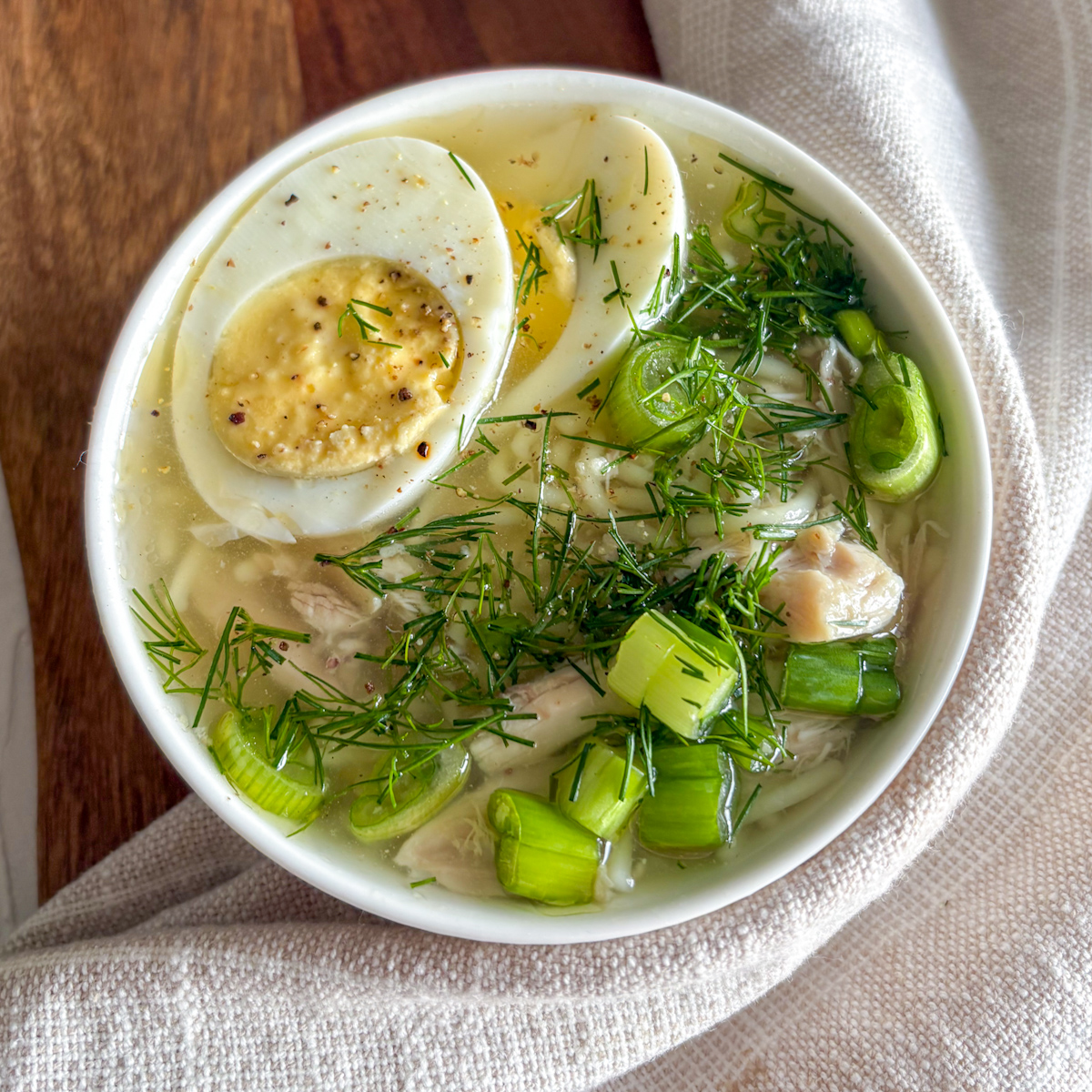
I grew up eating this Russian chicken soup at my grandfather's table, and it is still the bowl I reach for when the weather turns cold or when somebody at home feels poorly. The broth is light yet full of flavour, the chicken falls off the bone, and the small egg noodles soak up every drop of that golden liquid.
What sets this recipe apart is the simple two-step trick of parboiling the chicken first, which gives you a properly clear broth without endless skimming. You don't need fancy equipment or hard-to-find ingredients, just a big pot, good chicken legs, a handful of root vegetables and a couple of unhurried hours where the soup looks after itself on the back of the hob.
Jump to:
Ingredients for Russian Chicken Soup
Here is what you need to make this homemade chicken soup with vegetables.
- Chicken legs — bone-in, skin-on legs give the deepest flavour and the most tender meat for shredding through the broth.
- Carrots — sweet and earthy, they add natural sweetness and a warm tint to the stock.
- Parsnips — bring a gentle nutty sweetness that you can't get from carrots alone.
- Onion — left whole and unpeeled so the papery skin colours the broth a beautiful golden shade.
- Celery — adds a savoury backbone and that classic stock aroma.
- Sweet pepper — rounds everything out with a subtle sweetness and a touch of depth.
- Thin egg pasta — small egg noodles from Eastern European stores cook quickly and give the soup its comforting body.
- Salt and pepper — added at the very end so the broth stays clear and the seasoning is right.
- Boiled eggs, dill, parsley and spring onions — for serving on top, fresh and bright against the warm broth.
Other vegetables that work brilliantly in the stock include leek, celeriac, turnip, swede, garlic cloves, a few whole black peppercorns and a sprig of fresh thyme. Any of these root vegetables will deepen the flavour of your Russian chicken soup without overpowering the delicate base.
How to Make Russian Chicken Soup
This recipes is easy to prepare. Here are the steps:
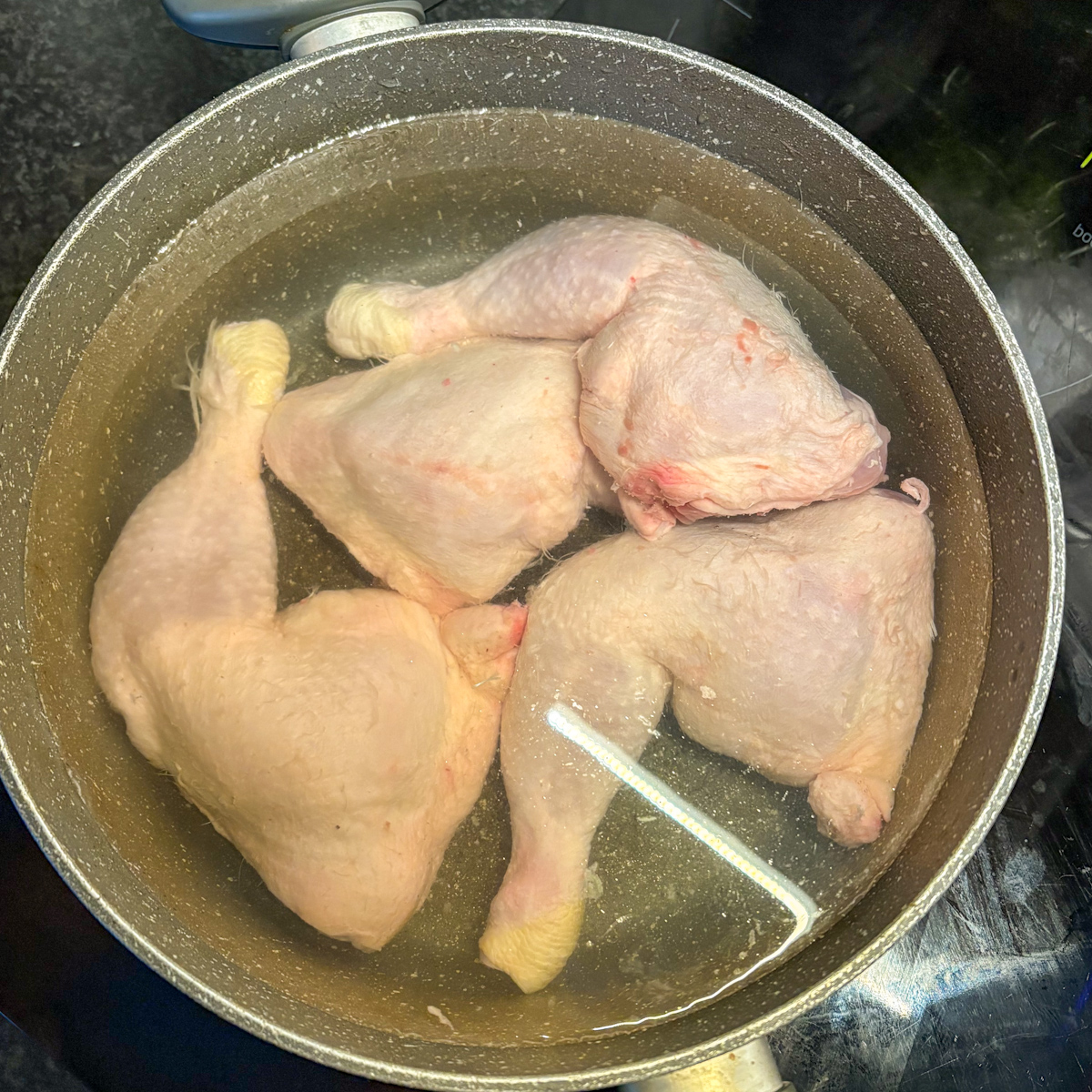
- Step 1: Place the chicken legs in a large pot and cover them with cold water. Bring to the boil over high heat, then take the pot off the stove, drain the water and rinse the chicken under the cold tap. This quick parboil washes away the protein scum and gives you a clean, clear stock without any foam to skim later.
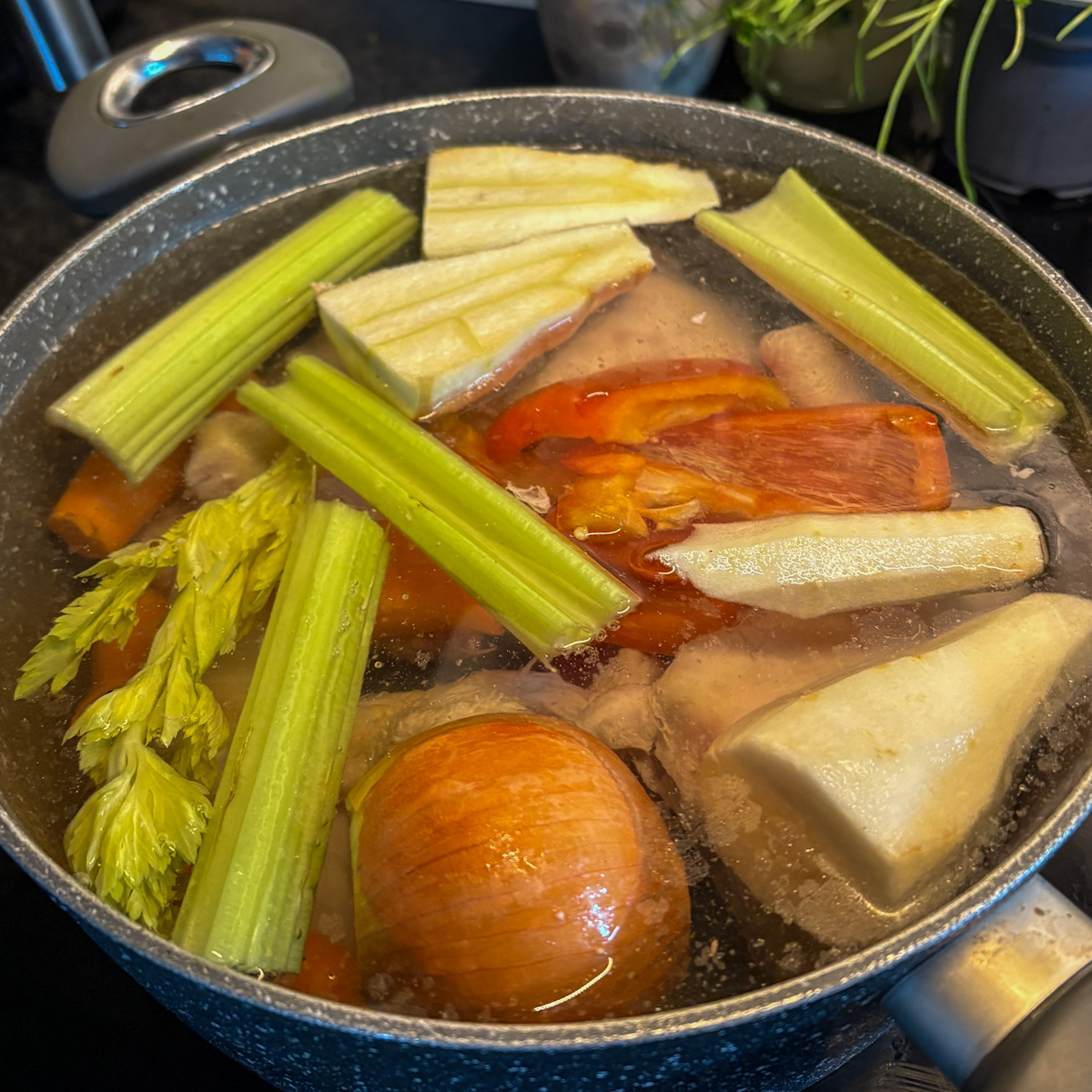
- Step 2: Return the rinsed chicken to the pot and pour in around 2.5 litres of fresh cold water. Bring it back to the boil over high heat, then add all the prepared vegetables. Drop the heat to its lowest setting and let the pot cook uncovered for 2 hours. Don't add salt at this stage, and keep the lid off so the broth slowly reduces into a rich, deep flavour.
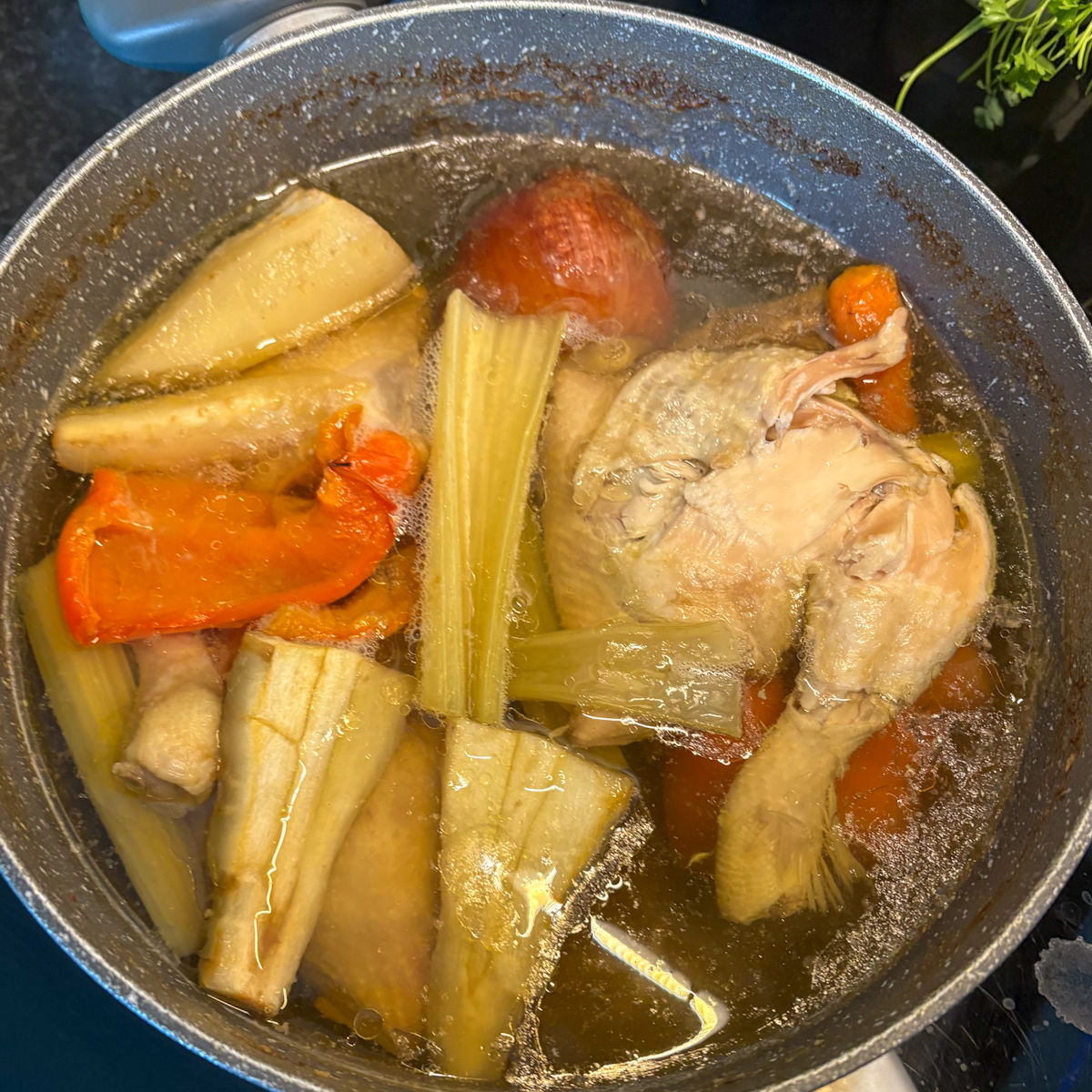
- Step 3: Take out the cooked vegetables with a slotted spoon and discard them, keeping all the lovely stock in the pot. Take the chicken legs out and let them cool until you can handle them comfortably. Pull the meat off the bones, cut it into strips and return it back to the pot of stock.
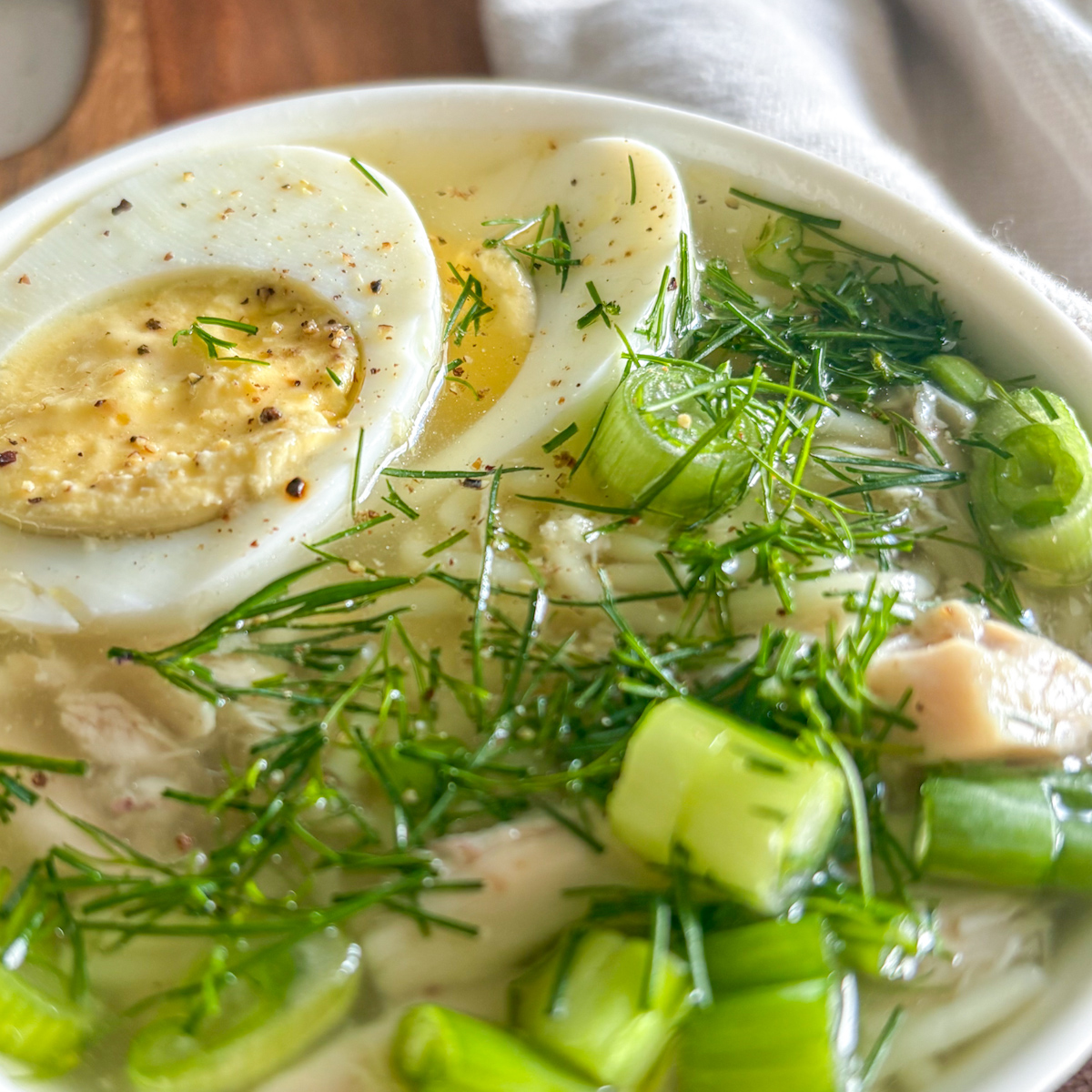
- Step 4: Bring the stock back to the boil and now season with salt and pepper to taste. Stir in the egg pasta and cook for 5 minutes only. Turn off the heat, put the lid on, and let the soup rest for at least 15 minutes. Serve hot with halves of hard-boiled egg and a generous scatter of fresh dill, parsley and spring onions on top — a slice of dark rye bread or a bit of garlic bread on the side never goes amiss.
If you have a four-legged friend at home, the soft cartilages from the cooked chicken legs make a lovely treat. I never give my pup the hard chicken bones, but the soft cartilage is good for him and he has never once turned his nose up.


How to Serve and Store This Russian Chicken Soup
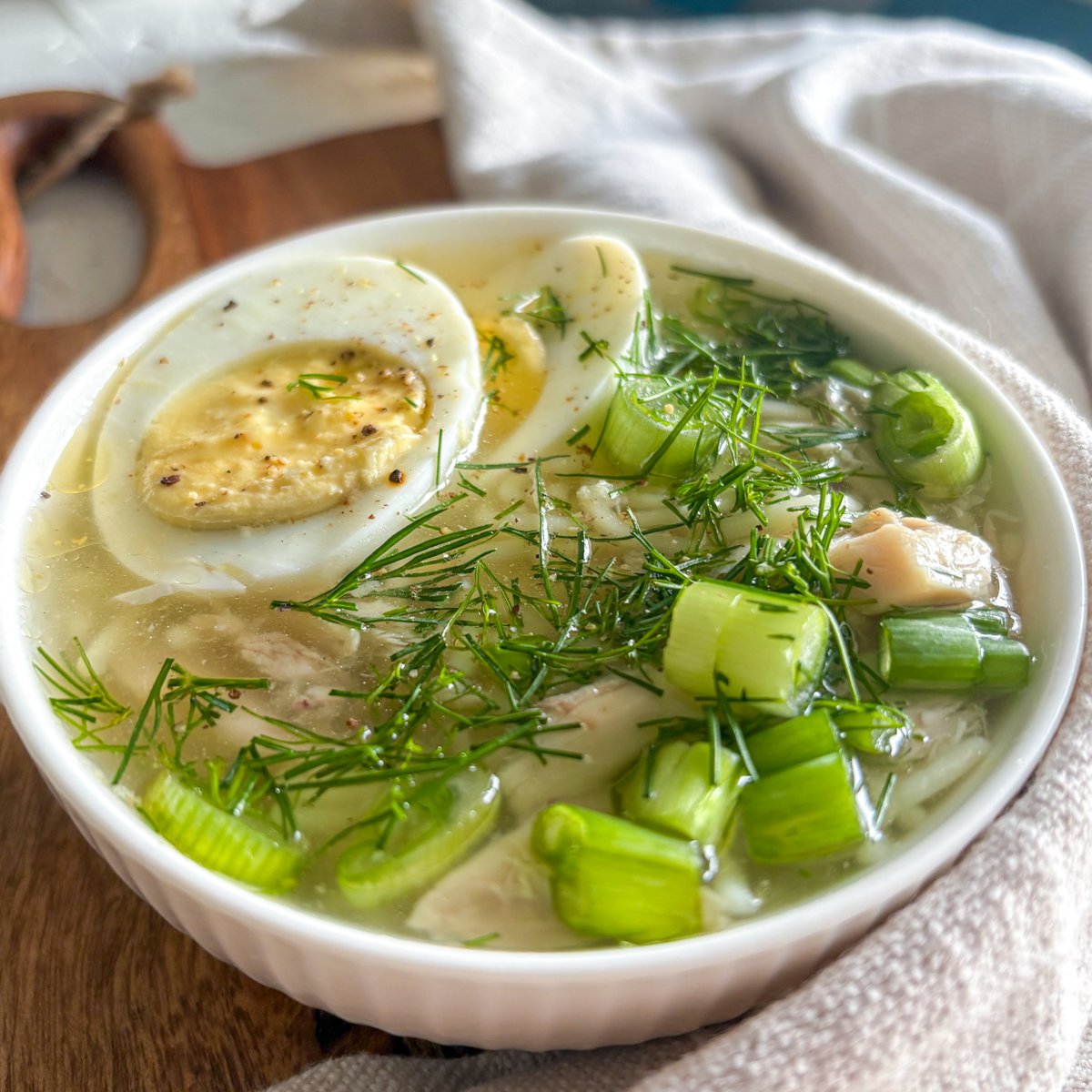
Serve this Russian chicken soup hot in deep bowls, with half a hard-boiled egg, a big handful of chopped dill and spring onions, and a fresh crack of black pepper on top. A slice of dark rye bread, some rye bread grenki (croutons) or a piece of warm garlic bread on the side turns it into a proper meal. For a heartier lunch, you can add a small spoon of soured cream straight into the bowl or a squeeze of lemon to brighten the broth.
Leftovers keep well in the fridge for up to 3 days in a sealed container. The noodles will keep absorbing liquid as they sit, so the soup will thicken overnight — just loosen it with a splash of water or extra stock when you reheat. To freeze, store the broth and shredded chicken without the noodles for up to 3 months, then cook fresh pasta when you are ready to serve. Reheat Russian chicken soup gently on the hob over a low heat so the chicken stays tender and the broth stays beautifully clear.
Top Tips and Notes for the Best Russian Chicken Soup
- Always start with cold water for blanching. Putting the chicken into cold water and slowly bringing it to the boil draws out the impurities that cause cloudy stock. If you drop chicken into already-boiling water, the proteins seize up and trap the foam inside the meat. The cold-start method takes a few extra minutes but it is the single biggest reason this Russian chicken soup turns out so clear. Once you have done it this way once, you will not go back.
- Don't peel the onion. Leaving the onion skin on gives the broth its lovely golden colour, almost like a weak black tea. The papery skin is full of natural pigment that releases into the stock as it simmers, and there is nothing to worry about because you strain the onion out at the end anyway. I just rinse the whole onion under the tap to remove any dust before dropping it in. This little trick is what separates a pale, watery broth from a deep golden one for a perfect Russian chicken soup.
- Cook low and slow with no lid on. Keeping the heat at its lowest setting and the lid off is what gives you that restaurant-quality clear broth. A rolling boil emulsifies the fat into the liquid and turns the soup cloudy, while a gentle simmer lets the broth stay crystal clear. The open lid also lets the stock reduce a little, which concentrates the flavour. Two hours feels long, but the pot more or less looks after itself while you get on with your day.
- Salt only at the end, never at the start. If you salt the stock while it is reducing, you can easily end up with something far too salty by the time the soup is finished. Salting at the end means you can taste the broth and add exactly what it needs. It also helps the chicken stay tender, as salt added too early can firm up the meat fibres. A good pinch is usually all it takes — the vegetables and chicken do most of the seasoning work.
- Cook the pasta separately if you plan to keep leftovers. Egg noodles drink up broth like a sponge once they sit in the pot, so by the next day you can end up with soggy pasta and very little soup. If you know you will have leftovers, cook the noodles in a separate pan of salted water, drain them, and add a portion to each bowl before ladling over the hot stock. This way the noodles stay springy and the broth stays generous. It is a small extra step that makes a real difference.
- Use bone-in, skin-on chicken legs for the richest flavour. The bones release collagen that gives the broth its silky body, and the skin adds a layer of natural fat that carries flavour. Boneless chicken breast simply cannot match this depth and you would end up with a thin, sad stock. Whole legs (drumstick and thigh together) are ideal because they have a good ratio of meat to bone. If you can find chicken with the feet still attached, even better, as feet are pure collagen.
- Add the fresh herbs only at serving, never during cooking. Dill, parsley and spring onions lose all their bright, green flavour if they are simmered in the broth for any length of time. Sprinkle them over each bowl right before serving so they hit the hot soup and release their aroma at the table. Chop them just before you need them, as pre-chopped herbs go limp and lose their colour. A really generous handful makes all the difference to this Russian chicken soup.
- Let the soup rest with the lid on after the noodles go in. Once you have stirred in the pasta and turned off the heat, putting the lid on for 15 minutes lets the flavours settle and the noodles finish cooking gently in the residual heat. This rest also allows the broth temperature to drop to the perfect eating temperature without losing its warmth. The soup actually tastes better after this short pause than it does straight off the stove. It is a small habit worth getting into.
- Make the stock a day ahead for even better flavour. If you have time, cook the broth and shred the chicken the day before, then chill it overnight in the fridge. The flavours deepen as the stock rests, and any fat will rise to the top so you can lift it off easily for an even cleaner soup. The next day, just reheat the stock with the chicken, cook the noodles fresh and serve. This trick works brilliantly when you are cooking for guests or want a stress-free meal.
Russian Chicken Soup FAQ
Why do I need to blanch the chicken first?
Blanching the chicken is what gives this Russian chicken soup its signature clear broth without any of the grey foam you usually have to skim off. When raw chicken is heated, the proteins and impurities in the meat rise to the surface and turn into scum. By boiling the chicken briefly, draining and rinsing it, you wash all of that away before you start the actual stock. The result is a clean, golden broth that needs almost no babysitting on the stove.
Can I use chicken breast instead of chicken legs?
You can, but the broth will be much thinner and less flavourful, and the meat itself will turn out drier. Chicken legs have bones, skin and connective tissue that all melt into the stock and give it a rich, silky body. If you only have chicken breast in the fridge, add a few wings or a chicken carcass to the pot for the bone content. Otherwise, stick with whole legs — they are usually cheaper and far more forgiving in a long simmer.
What kind of pasta should I use?
Thin egg noodles are traditional for this soup — the kind you find in Eastern European or Polish shops, sometimes labelled as soup noodles or soup vermicelli. They cook in about 5 minutes and have a delicate texture that suits the light broth well. If you can't find them, any small egg pasta like orzo, stelline or broken angel hair will work. Avoid thick pasta shapes like penne or fusilli, as they overpower the soup.
Can I make this Russian chicken soup in a slow cooker?
Yes, this homemade chicken soup adapts beautifully to a slow cooker. Blanch the chicken on the hob first as described, then transfer everything to the slow cooker with the cold water and vegetables. Cook on low for 6 to 8 hours, then strain, shred the chicken, return it to the pot and finish the noodles in a separate pan on the hob. The flavour comes out just as deep, and you barely have to think about the soup all day.
Do I have to discard the cooked vegetables?
The vegetables have given all their flavour to the stock during the long simmer, so they are usually quite bland and soft by the end. Most people discard them, but you don't have to waste them — mash them with a little butter for a quick side dish, or blend them into a smooth vegetable soup the next day. The carrots in particular are still tasty if cut fresh and added back to the bowl.
Can I freeze Russian chicken soup?
Yes, but freeze the broth and shredded chicken without the noodles in. Pasta turns mushy and unpleasant after freezing and thawing, which spoils the whole bowl. Pack the broth into freezer-safe containers, leaving room at the top for expansion, and freeze for up to 3 months. When you are ready to eat, thaw overnight in the fridge, reheat on the hob and cook fresh noodles to add at the end.
Related
Looking for other recipes like this? Try these:
- Easy Chilled Carrot Soup Recipe for Hot Summer Days
- Easy Pea Soup with Bacon and Vegetables
- The Best Creamy Roasted Root Vegetable Soup with Roasted Garlic
- The Best Roasted Carrot and Ginger Soup Recipe


Russian Chicken Soup Recipe
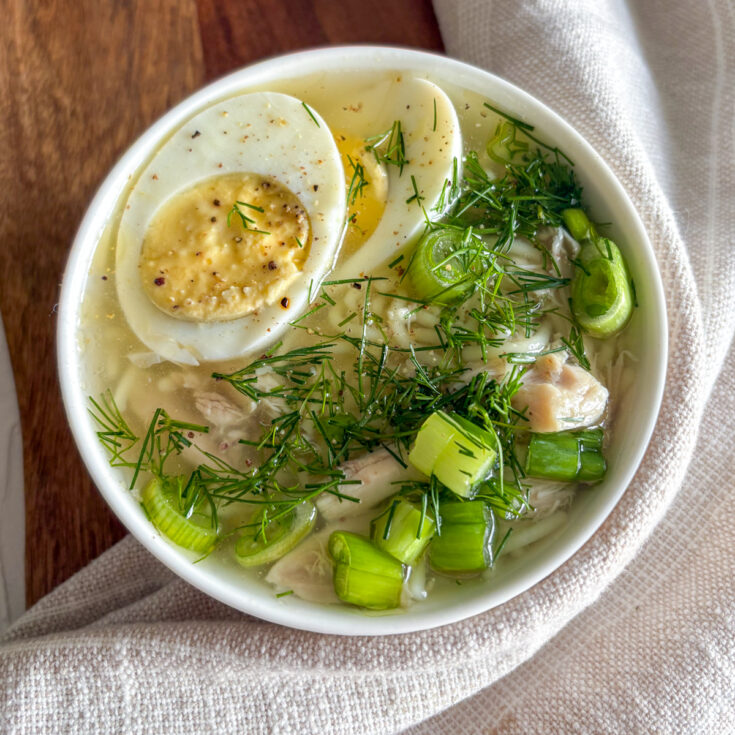
Russian chicken soup is a clear, golden broth with tender shredded chicken, thin egg noodles, halved boiled eggs and a generous shower of fresh dill. The slow-simmered stock has a deep, rich flavour, and the parboiling trick keeps the broth perfectly clear. A traditional Eastern European bowl that is light, warming and deeply comforting.
Ingredients
- 4 large chicken legs (about 1.2 kg / 2 lb 10 oz)
- 2 carrots, cut in halves
- 2 parsnips, roughly chopped
- 1 onion, unpeeled and whole
- 2–3 celery sticks, roughly chopped
- 1 sweet pepper, cut into large pieces
- 200 g (7 oz) thin egg noodles
- 2.5 litres (10½ cups) cold water
- Salt and black pepper, to taste
- 3 hard-boiled eggs, halved, for serving
- fresh herbs - dill, parsley, green onions - for serving
- Rye bread croutons or garlic bread (optional)
Instructions
- Place the chicken legs in a large pot and cover with cold water. Bring to the boil over high heat, then take off the stove, drain the water and rinse the chicken under the cold tap.
- Return the rinsed chicken to the empty pot and pour in 2.5 litres of fresh cold water. Bring back to the boil over high heat, then add the carrots, parsnips, onion, celery and sweet pepper. Lower the heat to its minimum setting and simmer gently, uncovered, for 2 hours. Do not add salt at this stage.
- Lift out the vegetables with a slotted spoon and discard. Remove the chicken legs and set aside to cool. When cool enough to handle, pull the meat off the bones, cut into strips and return to the pot.
- Bring the stock back to the boil and season with salt and pepper to taste. Stir in the egg noodles and cook for 5 minutes. Turn off the heat, cover with a lid and let rest for at least 15 minutes.
- Ladle into deep bowls and top each portion with halved boiled eggs, a generous handful of dill, parsley and spring onions. Serve hot with rye croutons or garlic bread on the side.