
Baby leeks are a tender, mildly sweet spring vegetable that braise beautifully in butter - and this easy baby leeks recipe is ready in just 20 minutes. Silky leeks, fragrant thyme, and a generous scatter of Parmesan: simple ingredients that produce something that genuinely looks and tastes restaurant-quality.
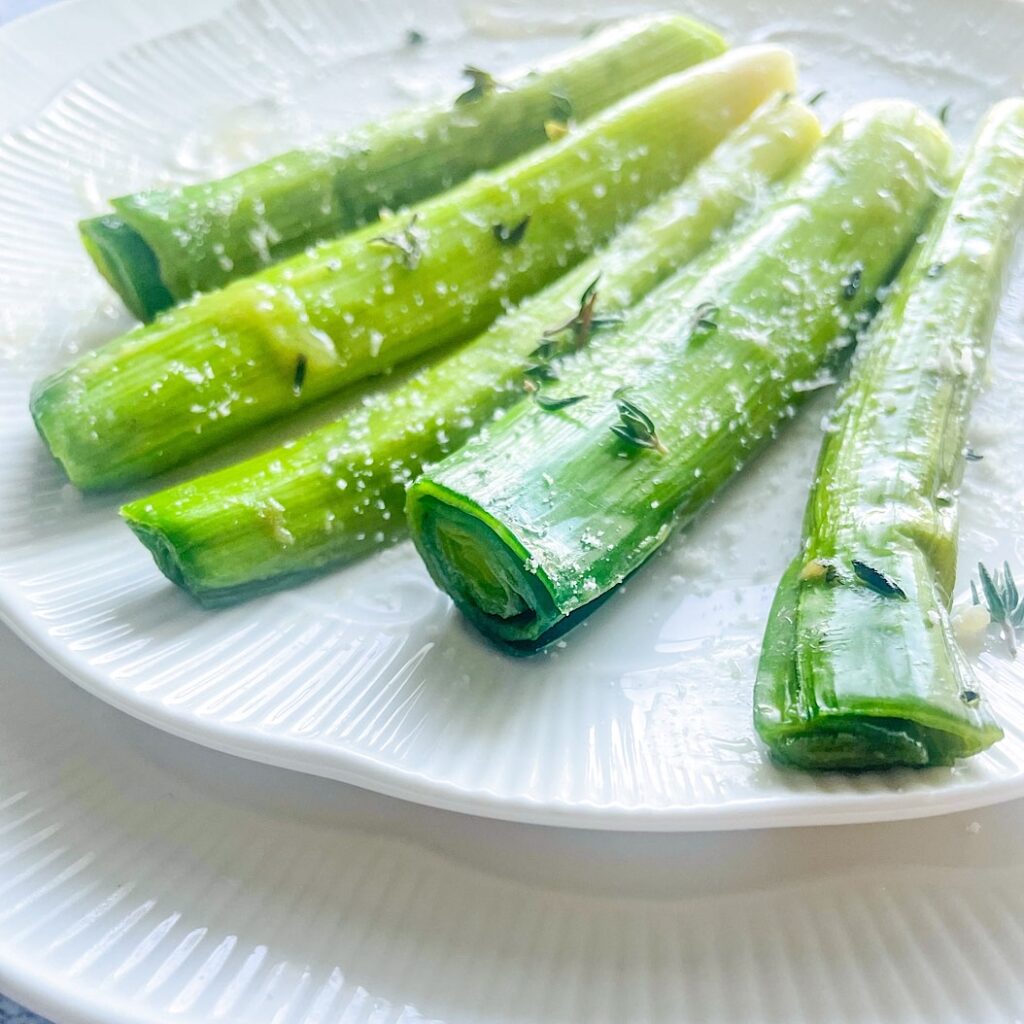
What makes this dish worth making is how much flavour you get from so little effort. You're pan-cooking baby leeks in butter with a splash of water, letting them gently braise until they're completely soft, glossy, and fragrant with thyme. There's no complicated technique here and no long list of ingredients. The butter coats the leeks beautifully, the thyme adds an earthy depth, and the Parmesan on top pulls everything together with a light, savoury finish. It pairs with almost anything — roast chicken, grilled fish, lamb, or even a bowl of pasta — and takes barely any time to put together. If you're looking for a quick baby leeks side dish that feels a little bit special without any fuss, this is the one.
Jump to:
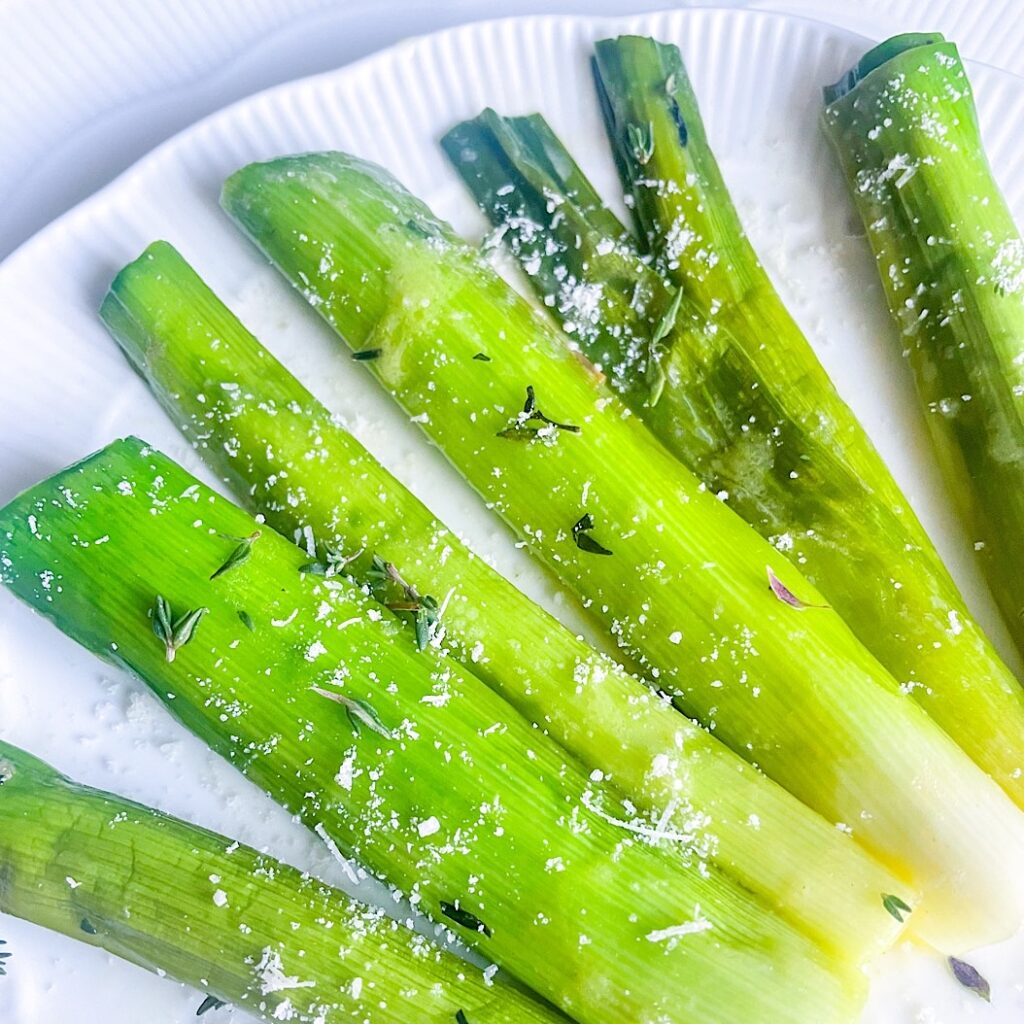
What You Need to Make This Baby Leeks Recipe
Here is what you need to make this buttered baby leeks side dish:
Baby leeks — the star of the dish; small, slender, and naturally sweeter and more delicate than regular leeks, they braise to a silky, melt-in-the-mouth texture
Unsalted butter — gives richness and creates a glossy, savoury pan sauce as the leeks cook; a proper big knob makes all the difference here
Water — just a small splash creates the steam needed to braise the leeks gently without burning the butter
Fresh thyme leaves — adds a subtle, earthy, herby fragrance that pairs perfectly with leeks; fresh is best for this recipe
Salt — added during cooking to season the leeks as they braise and bring the flavours together
Parmesan cheese — shaved or finely grated over the finished dish for a light, savoury, slightly nutty topping
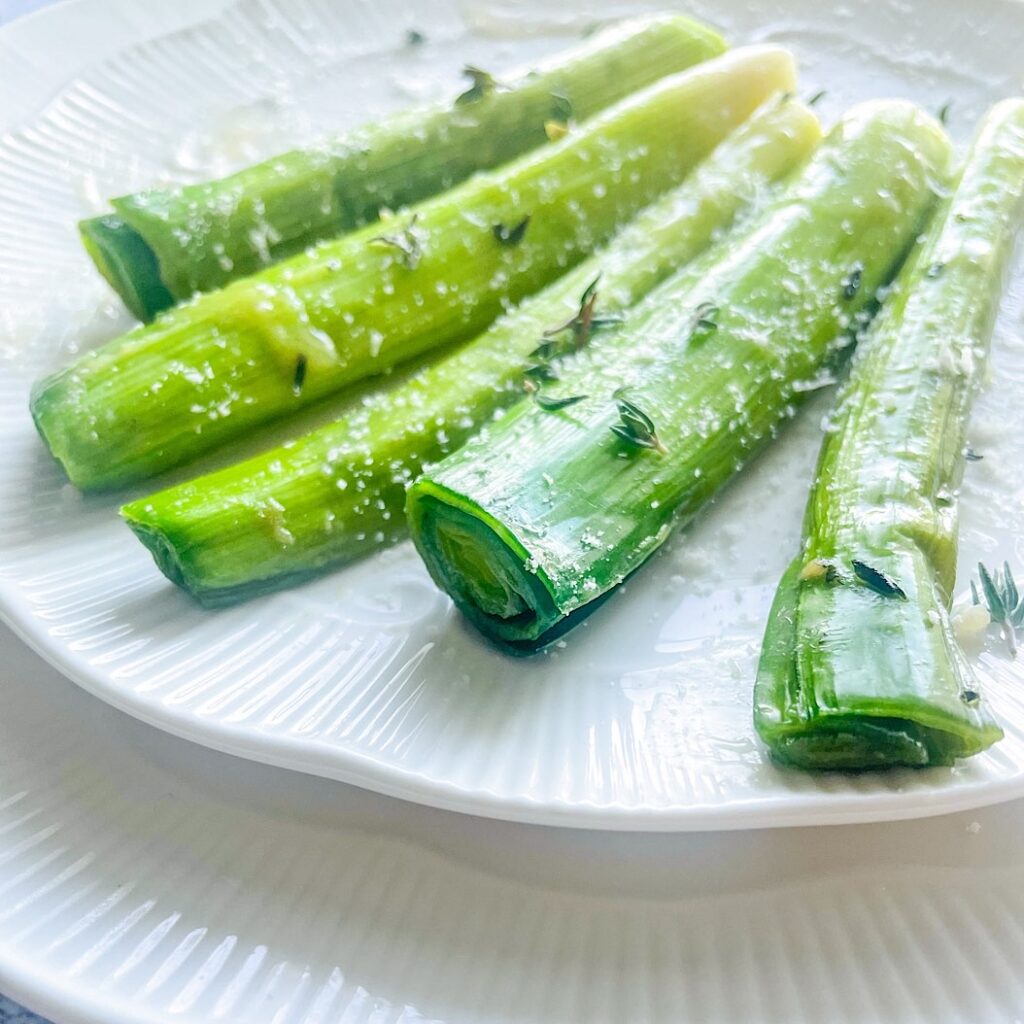
Cleaning Baby Leeks the Right Way
Despite their smaller size, baby leeks can still carry a bit of soil between their layers — that is just the nature of how they grow. To clean them properly, trim the root ends and the dark green tops if still attached. Rinse them thoroughly under cold running water, gently separating the layers with your fingers to flush out any hidden grit.
If your pan is on the smaller side, feel free to chop the leeks into two or three sections so they sit comfortably in a single layer.
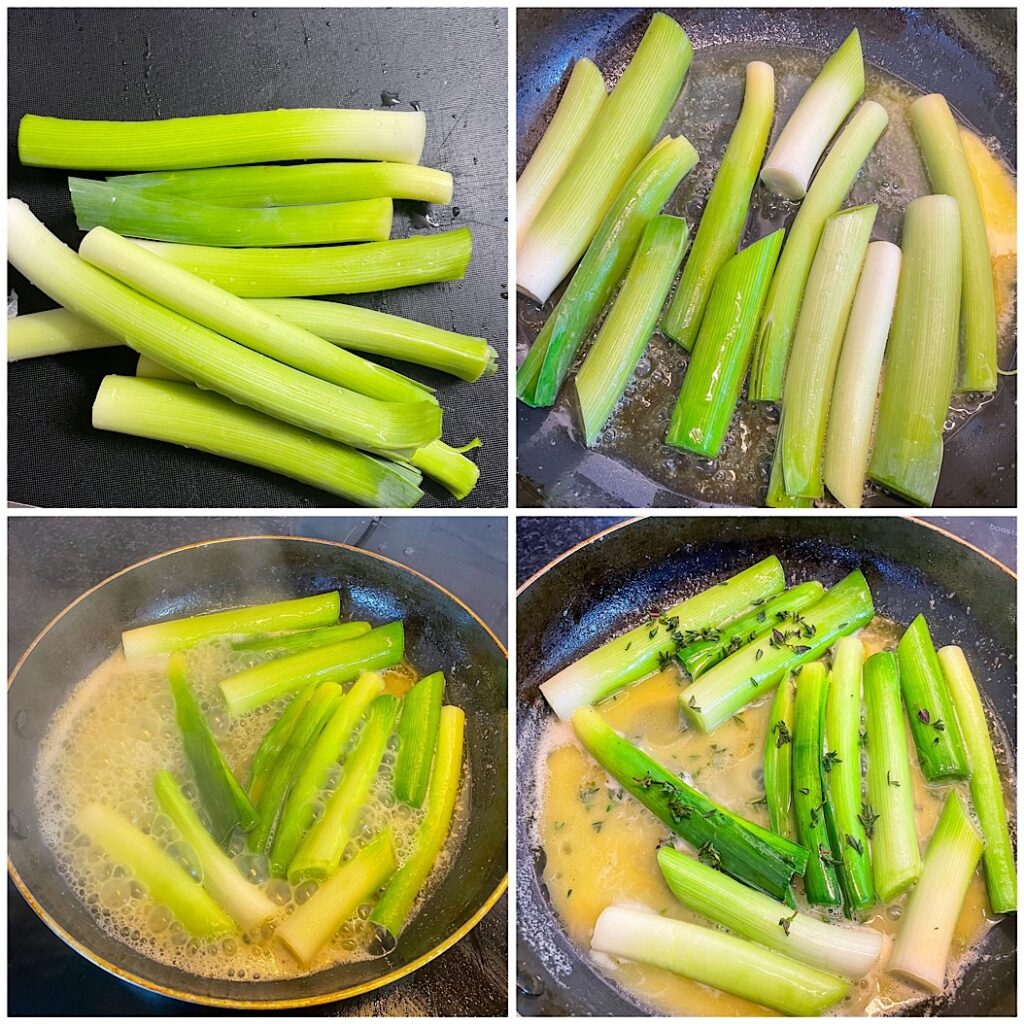
How to Cook Baby Leeks — Step by Step
Step 1: Wash and trim the baby leeks, removing the roots and any tough ends. Rinse well under cold running water, separating the layers to make sure no grit remains.
Step 2: Melt the butter in a large frying pan over medium heat. Add the baby leeks and roll them gently in the pan so they are fully coated in the butter.
Step 3: Add a splash of water to the pan and bring it to the boil. Lower the heat to a gentle simmer, add a good pinch of salt and the fresh thyme leaves. Cook for 10–15 minutes, turning the leeks occasionally, until they are completely tender and the liquid has mostly reduced down into a glossy sauce.
Step 4: Transfer to a serving plate and finish with grated or shaved Parmesan and a little extra thyme scattered over the top. Serve hot.
How to Serve and How to Store
Baby leeks work as a side dish alongside pretty much anything. They are particularly good with roast chicken, grilled salmon, lamb chops, or steak. They also sit well alongside simple pasta or as part of a vegetarian spread. Serve them straight from the pan while hot and glossy — that is when they are at their best.
To store, let the cooked leeks cool completely, then transfer to an airtight container and refrigerate for up to 2 days. Reheat gently in a pan with a small knob of extra butter or a splash of water to loosen them up. They do not freeze well — the texture becomes soft and watery once defrosted, so it's best to make what you need fresh.
If You Like Easy Vegetable Side Dishes, Try These Too
Looking for more quick vegetable sides to add to your weekly rotation? Here are some recipes from the blog that work brilliantly alongside the same kind of meals:
- Roasted Broccoli and Cauliflower Recipe - a simple, hands-off oven tray bake that produces crispy, golden florets with minimal effort.
- Garlic Broccolini Recipe - tender broccolini cooked quickly with garlic and butter for a fast, flavourful side.
- Easy Pan-Steamed Broccolini Recipe with Shallot - a one-pan broccolini dish with shallots, lemon zest, and thyme that comes together in under 15 minutes.
- Sautéed Courgettes - How to Cook Courgettes - a quick, light courgette side dish with garlic that works with almost any main course.
- Garlic Broccoli Recipe - crispy, garlicky broccoli cooked in a pan - easy, healthy, and full of flavour.
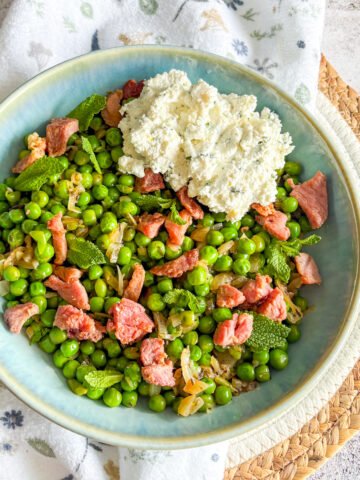
- Easy Frozen Peas in Garlic Butter Recipe - a 10-minute side dish that transforms a bag of frozen peas into something genuinely delicious.
How Much Do Baby Leeks Cost? Price Comparison by Country
Baby Leeks Price: What to Expect Around the World
Baby leeks are a seasonal spring vegetable, and prices reflect that — they tend to be at their most affordable (and best quality) between March and June.
- In the UK, a single pack of baby leeks (around 150–175g) costs approximately £2.20 at Waitrose and Sainsbury's Taste the Difference. Since this recipe uses two packs, budget around £4.40–£5 for the leeks alone, making the whole dish very affordable.
- In Ireland, baby leeks are stocked at Dunnes Stores and SuperValu seasonally, typically priced at around €2.50–€3 per pack, so roughly €5–€6 for the full recipe quantity.
- In the USA, baby leeks are a more specialist item — look for them at Whole Foods, specialty greengrocers, or some Kroger stores at around $3–$5 per bunch. In Australia, they are available at specialty grocers and selected Coles or Woolworths stores for approximately AUD $4–$6 per bunch. I
- n France, where leeks are a staple vegetable, baby leeks (poireaux primeurs) are widely sold at markets and supermarkets such as Carrefour and Monoprix for around €1.50–€2.50 per bunch, making France one of the best-value countries to make this recipe.
Wherever you are, baby leeks are a seasonal buy - and worth every penny.

Tips and Notes for the Best Baby Leeks
- Do not skip the water Adding that splash of water is what turns this from a simple pan-fry into a light braise. The water creates steam, which cooks the leeks through gently and keeps the butter from burning. It also helps form the glossy, buttery pan sauce that coats the leeks as the liquid reduces down. Without it, the outside of the leeks can colour too quickly before the inside has a chance to soften. Just a splash — around 2–3 tablespoons — is all you need.
- Keep the heat low once it's simmering Once you have brought the water to the boil and lowered the heat, keep it at a gentle simmer rather than a steady boil. A vigorous boil will cook off the liquid too fast, leaving the leeks without enough moisture to become fully tender. A low, steady simmer allows them to braise slowly in the butter and water mixture, which is what gives them that silky, soft texture. If the liquid evaporates before the leeks are done, add another small splash of water and continue cooking.
- Cleaning baby leeks properly makes a real difference Even though baby leeks are smaller than regular leeks, they can still trap soil between their inner layers. If you rinse them only on the outside, you risk biting into grit in the finished dish — not a good experience. Take the time to gently separate the outer layers under cold running water and feel for any soil or grit as you go. Trimming the roots and any dark, tough green tops before rinsing also makes it much easier to clean them properly. It takes an extra minute but is completely worth it.
- Use good quality butter This is a very simple recipe, and the butter is front and centre in terms of both flavour and texture. A good quality, unsalted butter — one with a higher fat content — will give you a richer, creamier result than a budget option. Using unsalted also gives you more control over the seasoning, since you are adding salt separately during cooking. If you want a slightly nuttier flavour, you can let the butter foam and very lightly colour before adding the leeks, but keep a close eye on it so it does not burn.
- Fresh thyme works much better than dried here Dried thyme has a much more concentrated, sometimes slightly dusty flavour that can overpower the delicate sweetness of the leeks. Fresh thyme leaves are much lighter and more fragrant, and they infuse the butter and pan sauce beautifully without dominating the dish. If fresh thyme is not available, you can substitute with a few sprigs of fresh rosemary (use sparingly) or even a small handful of fresh flat-leaf parsley added right at the end. But if you can get fresh thyme, use it — it makes a noticeable difference.
- Serve them straight away Baby leeks are at their absolute best the moment they come off the heat. As they cool, they lose some of their glossy, silky texture and can start to go a little limp. If you are cooking for a dinner party or a roast, time it so the leeks are the last thing you finish before serving. Keep the pan covered with a lid off the heat for a few minutes if you need to hold them briefly, but try not to leave them sitting for longer than 10 minutes. The Parmesan should be scattered over at the very last second, just before they go to the table.
Frequently Asked Questions About Baby Leeks
Do you need to peel baby leeks?
No, you do not need to peel baby leeks. Unlike regular leeks, which often have tough outer layers that need removing, baby leeks are tender enough to eat whole including the outer layer. What you do need to do is trim the roots at the base and any very dark, tough green tops, and then rinse them well under cold running water, separating the layers gently to remove any trapped soil or grit. That is the full extent of the prep — there is no peeling involved, which is one of the reasons they are so quick and easy to work with.
Are baby leeks healthy?
Yes, baby leeks are a healthy and nutritious vegetable. They are low in calories and a good source of vitamins C and K, folate, and manganese. They also contain beneficial plant compounds including flavonoids and prebiotic fibre that supports digestive health. As part of the allium family — the same family as onions and garlic — they share some of the same health-supporting properties, including antioxidant and anti-inflammatory compounds. They are a particularly good vegetable to eat during spring and early summer when they are at their freshest and most widely available.
Can I use regular leeks instead of baby leeks?
You can, but the result will be different. Regular leeks have a stronger flavour, a firmer texture, and will need to be cut into sections and cooked for longer — closer to 20–25 minutes — to become tender. The delicate, melt-in-the-mouth quality of this dish really comes from using true baby leeks, which are far more tender and cook quickly. If regular leeks are all you have, cut them into 5–6cm sections and follow the same method, but check them more frequently and add extra water if needed to prevent the pan from drying out before they are cooked through.
What do baby leeks taste like?
Baby leeks have a mild, sweet, slightly earthy flavour that is much gentler than both onions and mature leeks. When raw, they have a subtle onion-like sharpness, but once cooked in butter they become soft, silky, and almost sweet, with a delicate savoury depth. The natural flavour of baby leeks is delicate enough that it does not overpower other ingredients, which is why they work so well paired with simple things like butter, thyme, and Parmesan. They are one of those vegetables that genuinely taste better than they look in their raw state.
Can baby leeks be eaten raw?
Yes, baby leeks can be eaten raw, and their mild flavour means they work well thinly sliced in salads or used as a garnish. However, their texture is much more enjoyable when cooked — braising or pan-cooking transforms them from slightly firm and fibrous into something silky and tender that is genuinely a pleasure to eat. Raw baby leeks have a gentle sharpness that not everyone enjoys in large amounts, so if you are serving them raw, slice them very finely and use them sparingly as part of a larger dish rather than as the main component.
How do I know when baby leeks are cooked?
The best way to test baby leeks for doneness is to pierce the thickest part of a leek with the tip of a sharp knife. If the knife slides in with no resistance and the leek feels completely soft, they are done. Visually, they will have changed from a bright, vibrant green to a slightly softer, olive-tinged green, and they should look glossy from the butter. The liquid in the pan should have mostly reduced down by this point. If the leeks still feel firm at the centre, continue cooking for a few more minutes, adding a tiny splash of extra water if the pan looks dry.
Baby Leeks Recipe

Baby leeks braised in butter with fresh thyme and finished with Parmesan — a quick, elegant vegetable side dish ready in 20 minutes. This easy baby leeks recipe requires just five simple ingredients and one pan. It is light, seasonal, and genuinely delicious.
Ingredients
- 2 packs baby leeks, approx. 360g total (12.7oz total)
- 30g unsalted butter (2 tbsp)
- 2–3 tablespoon water
- A small handful of fresh thyme leaves, picked
- Salt, to taste
- Parmesan cheese, for serving — grated or shaved
Instructions
- Start by washing and trimming the baby leeks. Remove the root ends and any tough dark green tops. Rinse them well under cold running water, gently separating the layers to remove any trapped soil or grit. If your pan is on the smaller side, cut the leeks into two or three sections so they fit comfortably.
- Melt the butter in a large frying pan over medium heat. Once it is foaming, add the baby leeks and roll them gently in the pan to coat them all over in the butter.
- Add a splash of water — around 2–3 tablespoons — and bring to the boil. Lower the heat to a gentle simmer. Add a good pinch of salt and scatter in the fresh thyme leaves. Cook for 10–15 minutes, turning the leeks occasionally, until they are completely tender when pierced with a knife tip and the liquid has reduced down to a glossy, buttery sauce.
- Transfer to a warm serving plate. Scatter generously with grated or shaved Parmesan and a little extra fresh thyme. Serve immediately while hot.