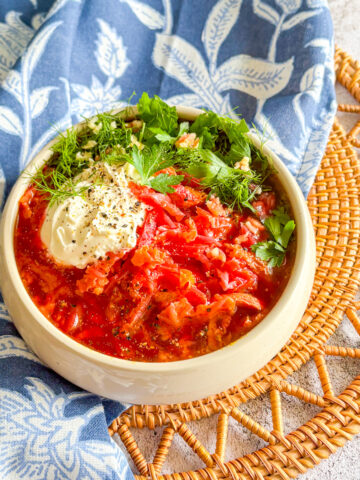

Soljanka is a hearty Russian meat soup packed with smoked meats, pickled cucumbers, olives and a rich tomato-spiked broth. Ready in under 3 hours, this bold, tangy soup is comforting, meaty and deeply flavoured.

I've been making this Soljanka for years and it's the soup I turn to when I want something with real character on the table. The broth is rich and savoury, the pickles give it a sharp tang, and the mix of smoked pork belly, salami and frankfurters makes every spoonful taste different. It feeds a crowd, reheats beautifully the next day, and doesn't need fancy ingredients – just good stock and whatever cured meats you have in the fridge. If you've only had thin, watery soups before, this Russian meat soup will change your mind.
Jump to:
📌 What Is Soljanka (Solyanka)?
Soljanka (sometimes written as Solyanka) is a traditional Russian soup celebrated for its bright, tangy, and meaty character. The name comes from the word “sol”, meaning salt – and that’s your first clue that this isn’t your average broth. It’s often called “hangover soup”, thanks to its rich base and restorative ingredients – ideal after a big night. Historically, it’s been known as the “leftover soup” too, cobbled together from bits and pieces lingering after holidays and feasts.
My Soljanka was never about strict rules or fancy ingredients. After celebrations, parties, or big family feasts, the table would be left with all sorts of cured meats — ham, sausages, smoked pork, pieces of roast, even salami. Alongside those, there’d often be leftover pickles, olives, maybe some capers and half a lemon. Instead of letting any of it go to waste, cooks would throw it all into a pot with a flavourful broth, add a spoonful of tomato paste for body and brightness, and finish it with lemon juice and sour cream

Ingredients for Russian Soljanka
Here is what you need to make this authentic Russian Soljanka recipe.
For the stock:
- Whole chicken – gives the broth body and a clean, meaty base that carries all the other flavours.
- Onion – adds a gentle sweetness to the stock as it simmers.
- Carrot – brings natural sweetness and colour to the broth.
- Parsnip – a traditional root that deepens the stock with a warm, slightly nutty note.
- Celery stalks – add that savoury backbone every good stock needs.
- Leek (white part only) – mild and aromatic, it rounds out the stock without overpowering it.
For the soup:
- Chicken stock – the foundation of the whole soup, built from scratch for the cleanest flavour.
- Cooked chicken meat – shredded from the stock chicken so nothing goes to waste.
- Onion – sautéed until golden, it forms the flavour base of the soup.
- Carrot – grated and fried with the onion for sweetness and texture.
- Tomato paste – fried briefly to mellow its sharpness and give the broth its signature colour.
- Sausages or frankfurters – add a soft, smoky bite that soaks up the broth.
- Smoked pork belly – the key to the smoky depth of a proper Solyanka.
- Salami – brings a spiced, cured edge that cuts through the richness.
- Pickled cucumbers or cornichons – the briny heart of the soup, giving it that unmistakable tang.
- Pickle brine – poured straight in for an extra hit of sourness and seasoning.
- Mixed olives – salty and meaty, they balance the smoked meats beautifully.
- Vegetable oil – for sautéing the vegetables and meats.
- Salt and black pepper – added at the very end once everything has mingled.
- Lemon slices, sour cream and fresh herbs – the classic finish that lifts the whole bowl.

How to Make Soljanka at Home
For me, cooking Soljanka always starts with cooking the stock. Put the whole chicken in a large pot, cover it with cold water by about 3–4 cm, and bring to the boil. Lower the heat and let it simmer gently for an hour. Add the onion, carrot, celery, leek and parsnip, then simmer for another hour. Strain the stock, throw out the vegetables and shred the chicken meat off the bone. Here is another great recipe for making rich and golden chicken stock.

- Step 2: In a big skillet, heat oil and sauté chopped onions and carrots until golden. Stir in tomato paste and fry for a couple of minutes until aromatic.

- Step 3: Add your meats – chicken, sausages, salami, pork belly – and sauté to release their flavours.

- Step 4: Then stir in sliced pickled cucumbers, pour in the brine, and cook for a few minutes.

- Step 5: Add the olives last and cook briefly. Transfer everything into the pot of strained stock. Stir well, bring to a gentle boil and simmer for 5 minutes. Only season with salt at this stage – the meats, pickles and olives already carry plenty of salt. Taste, adjust and ladle into bowls. Let it rest for 15 minutes under the closed lid. Serve with lemon slices, a spoonful of sour cream and chopped dill or parsley.
Hint: Always use a large pot for the stock and a wide skillet for sautéing – trust me, Soljanka grows in volume quickly!
✨ Useful Note about cooking Soljanka
Note: Salt Soljanka only at the very end of cooking. The soup already gets a good deal of saltiness from the sausages, salami, smoked pork, pickled cucumbers, and olives. If you add salt too early, you risk overdoing it. Taste the soup once it's fully assembled and adjust if needed. Keep in mind, the flavour will intensify over time, so it’s better to under-salt during cooking and adjust in your bowl later.
How to Serve and Store Soljanka
Serve this Soljanka soup piping hot, straight from the pot, with a thick slice of lemon floating on top, a generous spoon of sour cream and a scatter of chopped dill or parsley. A slice of dark rye bread on the side is the traditional partner, though any crusty loaf works.
For storage, let the soup cool completely, then transfer it to an airtight container and keep it in the fridge for up to 4 days – the flavour actually improves overnight as the smoked meats and pickles settle into the broth. You can freeze portions for up to 2 months in freezer-safe containers, though the olives can soften a little on thawing. Reheat gently on the hob over medium-low heat, stirring now and then, and add the sour cream and lemon fresh each time you serve.

Top Tips and Notes for the Best Solyanka Soup
- Use a mix of at least three different meats. The whole point of a proper Soljanka is the variety of cured and smoked meats layered into the broth. I always aim for one fresh meat (the chicken from the stock), one smoked (pork belly or smoked sausage) and one cured (salami or ham). This combination gives the soup its complex, meaty flavour that no single meat can deliver on its own, and it's the reason this recipe tastes different every time depending on what you've got in the fridge.
- 2. Don't skip frying the tomato paste. Frying the tomato paste for 2–3 minutes after the onion and carrot is one of those small steps that makes a huge difference. Raw tomato paste tastes tinny and flat, but once it's been cooked out in oil, it turns darker, sweeter and much more savoury. This builds the rich, warm colour you see in a proper Solyanka and gives the broth its deep flavour foundation, so never rush this bit.
- 3. Taste your pickles before adding them. Not all pickled cucumbers are equal – some are mildly sour, others are punchy and salty. Before chopping yours in, taste one and decide how much brine to add based on its strength. If your pickles are very sharp, start with 100ml of brine and adjust from there, because it's much easier to add more sourness at the end than to fix a soup that's gone too tangy.
- Salt only at the very end. This is the single most important rule in the whole recipe. Between the pickle brine, the olives, the salami, the smoked pork belly and the sausages, the soup already contains a huge amount of salt before you even think about seasoning. Taste it first, then add salt cautiously – I often find I don't need to add any at all, and a heavy hand at this stage can ruin hours of careful cooking.
- Let the soup rest before serving. If you can spare the time, take the Soljanka off the heat and let it sit covered for 15–20 minutes before ladling into bowls. The flavours settle, the smoked meats release more of their character into the broth, and the pickles mellow slightly. This is why Soljanka is famously even better the next day – the resting time really does make a difference.
- The lemon and sour cream aren't optional. I know they feel like garnishes, but the fresh lemon slice and cold sour cream are part of what defines this soup. The lemon cuts through the richness with a bright, fresh sourness that differs from the fermented tang of the pickles, while the sour cream adds a cool, creamy contrast to the hot, salty broth. Skip them and you'll have a good soup – add them and you'll have a proper Soljanka.
Frequently Asked Questions About Soljanka
What is Soljanka and where does it come from?
Soljanka is a traditional thick, sour and spicy soup from Russian and Eastern European cuisine, dating back to at least the 15th century. There are three main versions – meat (myasnaya - мясная сборная), fish (rybnaya - рыбная) and mushroom (gribnaya - грибная) – and the meat version is by far the most popular. The name comes from the Russian word for salt, which makes sense given how salty and briny the finished soup is.
Can I make Soljanka without a whole chicken?
Yes, absolutely – you can use bone-in chicken thighs, drumsticks or even a good-quality shop-bought chicken stock if you're short on time. A whole chicken gives the richest flavour because you get the bones, skin and different cuts all contributing, but 1kg of chicken thighs will still make a lovely broth. If using ready-made stock, pick a low-sodium version so you have control over the salt levels later.
Can I make Soljanka vegetarian?
You can make a mushroom version, which is a legitimate traditional variant called gribnaya solyanka. Use a strong mushroom stock in place of the chicken stock, and replace the meats with a mix of dried porcini, fresh chestnut mushrooms and smoked tofu or smoked cheese for depth. You'll still want the pickles, brine, olives, tomato paste and lemon – those are what give the soup its signature character regardless of the main ingredient.
Why is my Soljanka too salty?
Too much salt usually comes from adding table salt before tasting, or from using very salty pickles and a heavy hand with the brine. If it's already too salty, add a peeled whole potato and simmer for 15 minutes to absorb some of the salt, then remove it. You can also stretch the broth with a bit more water or unsalted stock and adjust the other flavours to balance.
Can I make Soljanka ahead of time?
Soljanka is actually better the next day, so making it ahead is a great idea. Prepare the full soup, cool it completely, then refrigerate in a covered container for up to 4 days. The flavours meld and deepen overnight, and many Russian home cooks would argue that day-two Soljanka is the proper way to eat it – just reheat gently and add the fresh lemon and sour cream when serving.
What's the difference between Soljanka and borscht?
Borscht is built around beetroot, which gives it that deep red colour and earthy, sweet flavour, while Soljanka gets its colour from tomato paste and its signature taste from a mix of smoked meats, pickles and olives. Borscht is generally milder and sweeter, while Soljanka is punchier, saltier and more layered. They're both beloved Russian soups but they sit in very different flavour territories.
Related
Looking for other recipes like this? Try these:
- Easy Chilled Carrot Soup Recipe for Hot Summer Days
- Easy Pea Soup with Bacon and Vegetables
- The Best Creamy Roasted Root Vegetable Soup with Roasted Garlic
- The Best Roasted Carrot and Ginger Soup Recipe
Pairing
These are my favorite dishes to serve with Soljanka:
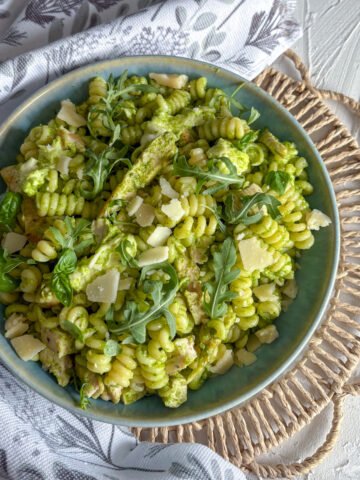
- Rocket Pesto Pasta Salad with Chicken and Cashews
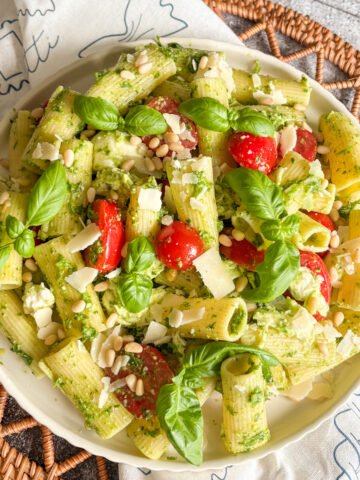
- Easy Pesto Pasta Salad with Parsley Pesto and Mozzarella
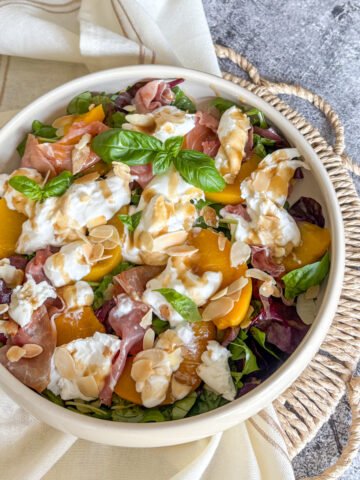
- Summer Peach and Burrata Salad with Prosciutto
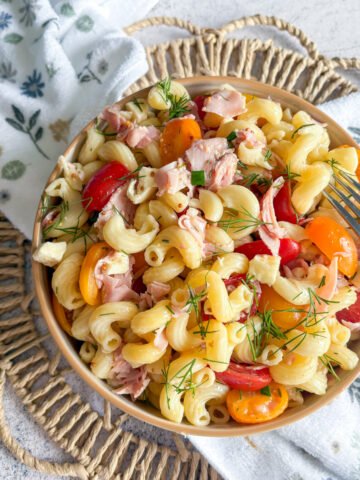
- Pasta Salad with Dill Vinaigrette - Easy Summer Recipe
Soljanka or Solyanka Recipe

Soljanka is a rich, tangy Russian soup made with a trio of smoked and cured meats, pickled cucumbers, olives and a tomato-based chicken broth. Served with lemon and sour cream, it's a hearty, full-flavoured meal in a bowl that tastes even better the next day.
Ingredients
For the stock:
- 1 whole chicken
- 1 onion
- 1 carrot
- 1 parsnip
- 2–3 celery stalks
- 1 leek (white part only)
For the soup:
- Chicken stock (from above)
- Cooked chicken meat
- 1 onion
- 1 carrot
- 2–3 tablespoon tomato paste
- 300g sausages or frankfurters
- 300g smoked pork belly
- 250g salami
- 6–7 pickled cucumbers or small cornichons
- 300g mixed olives
- 200ml pickle brine
- 2 tablespoon vegetable oil
- Salt and black pepper to taste
- Lemon slices, sour cream, fresh herbs for serving
Instructions
- Place the whole chicken in a large stockpot and cover with cold water by 3–4 cm. Bring to the boil, then reduce the heat and simmer gently for 1 hour, skimming off any foam that rises to the surface. Add the onion, carrot, parsnip, celery and leek, and simmer for another hour. Strain the stock through a fine sieve, discard the vegetables, and shred the chicken meat off the bones.
- Heat the vegetable oil in a large skillet over medium heat. Add the chopped onion and grated carrot and sauté for 5–6 minutes until golden and soft. Stir in the tomato paste and fry for a further 2–3 minutes until it darkens in colour and smells rich.
- Add the shredded chicken, sliced sausages, diced salami and diced smoked pork belly to the skillet. Sauté for 2–3 minutes so the meats take on the tomato base. Stir in the chopped pickled cucumbers along with their brine and cook for another 3 minutes, then tip in the olives and sauté briefly.
- Transfer the skillet contents into the pot of strained stock. Stir well, bring to a gentle boil and simmer for 5 minutes. Taste the broth and season with salt and black pepper only at this stage, keeping in mind how salty the meats and pickles are. Ladle the hot soup into bowls and top each with a slice of lemon, a spoonful of sour cream and a scatter of fresh dill or parsley.