
Brioche French Toast is a rich, sweet breakfast of thick-cut slices soaked in a silky cream custard and pan-fried to a crisp golden brown. Ready in under 20 minutes, it turns a few simple ingredients into a proper weekend treat.
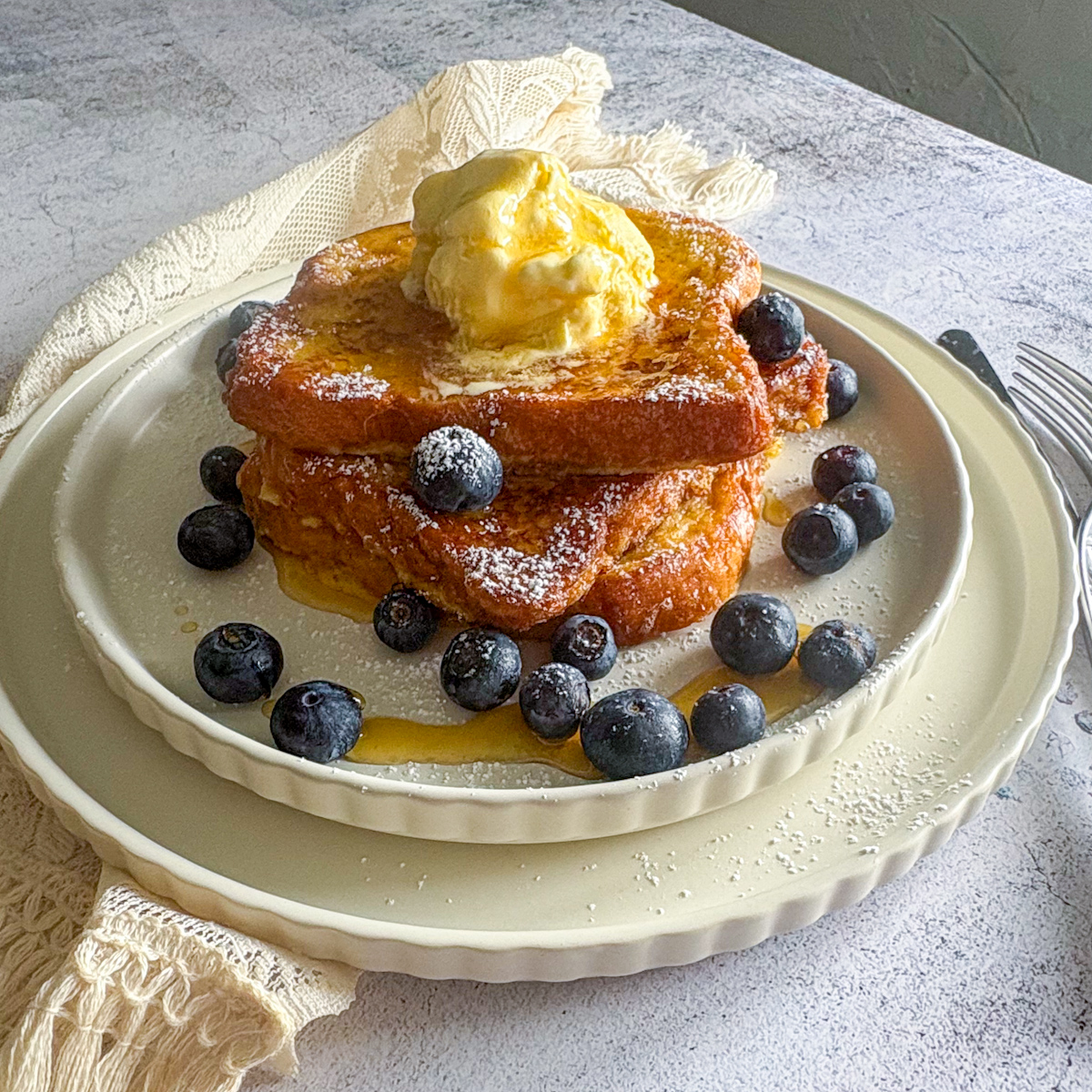
Brioche French toast takes thick, slightly stale slices, soaks them in a custard of eggs, double cream, cinnamon and vanilla, then fries them in butter until the edges crisp and the middle stays soft. Straining the custard through a fine-mesh sieve is the small step that keeps the coating smooth, with no flecks of cooked egg white on the surface.
The whole thing comes together in under 20 minutes, which makes it as easy on a busy morning as it is on a slow Sunday. It is cheap to make, endlessly adaptable with whatever fruit you have, and a reliable way to use up bread that is past its best.
Jump to:
Ingredients for Brioche French Toast
Here is what you need to make this easy homemade brioche French toast recipe:
- Brioche - Thick slices that are stale and dry are the best option because they hold their shape without falling apart in the pan.
- Eggs - Large eggs form the base of our custard, and my ratio is one egg for every two slices of bread.
- Double cream - Heavy whipping cream gives the liquid base a beautiful richness. A lot of recipes call for whole milk, but for this recipe I always use double cream, as it results in wonderful and luxurious custard. So, please, use double cream and start your diet from next Monday 😉
- Ground cinnamon - This adds a warm, subtle spice to the outer coating.
- Icing sugar - Powdered sugar dissolves quickly into the cold liquid and helps to caramelise the crust, plus we need extra for serving.
- Vanilla extract - A splash of vanilla enhances the sweet bakery flavours of the bread.
- Unsalted butter - We use a good knob for frying to give the crust perfect flavour and colour.
- Fresh berries, ice cream, and whipped cream - These are essential toppings for serving the finished plate.
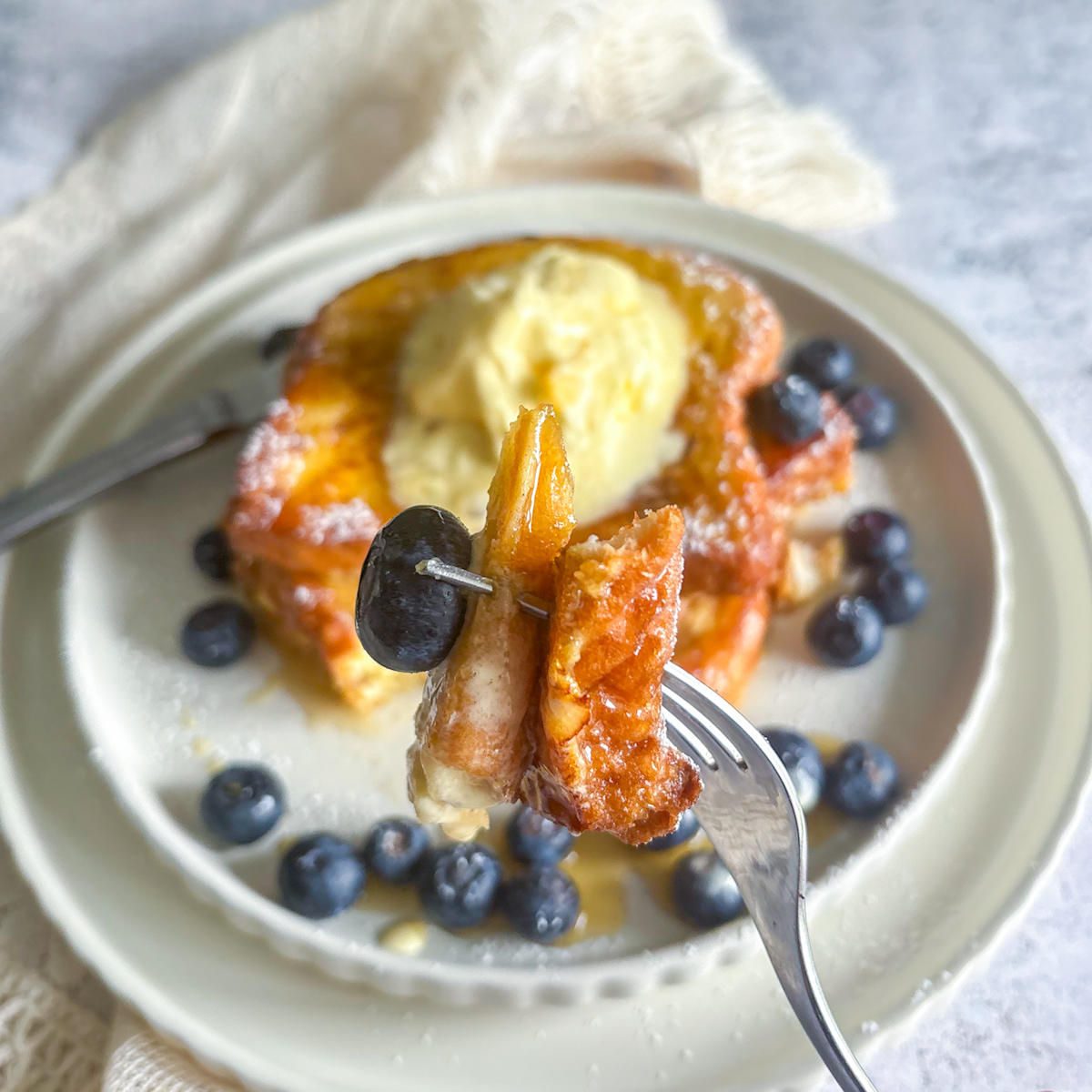
How to Make French Toast With Thick Bread
This is a very easy recipe and I provide 4 easy steps to make this dish.
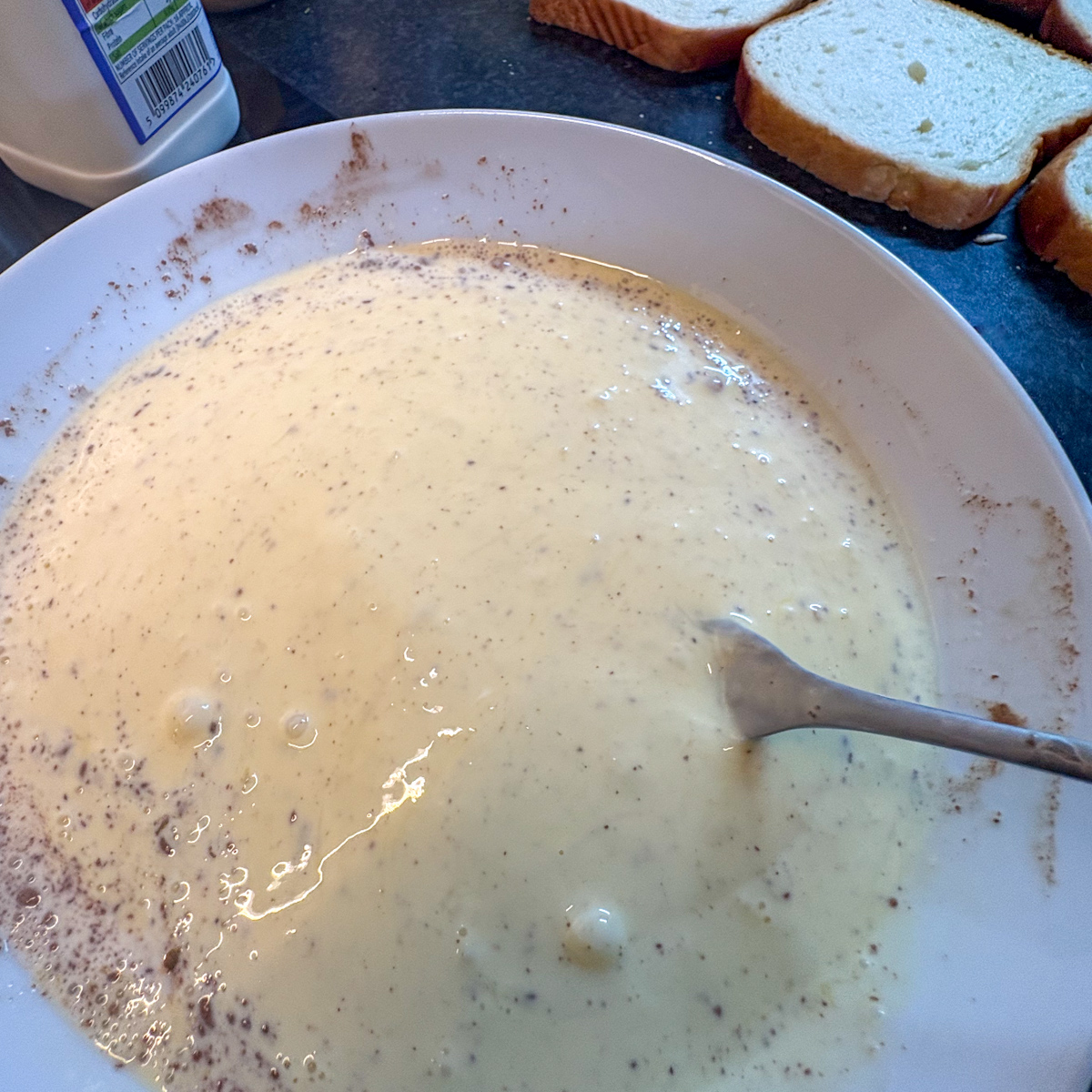
- Step 1: In a shallow bowl, whisk the eggs, double cream, icing sugar, ground cinnamon, and vanilla extract until completely smooth and well combined.
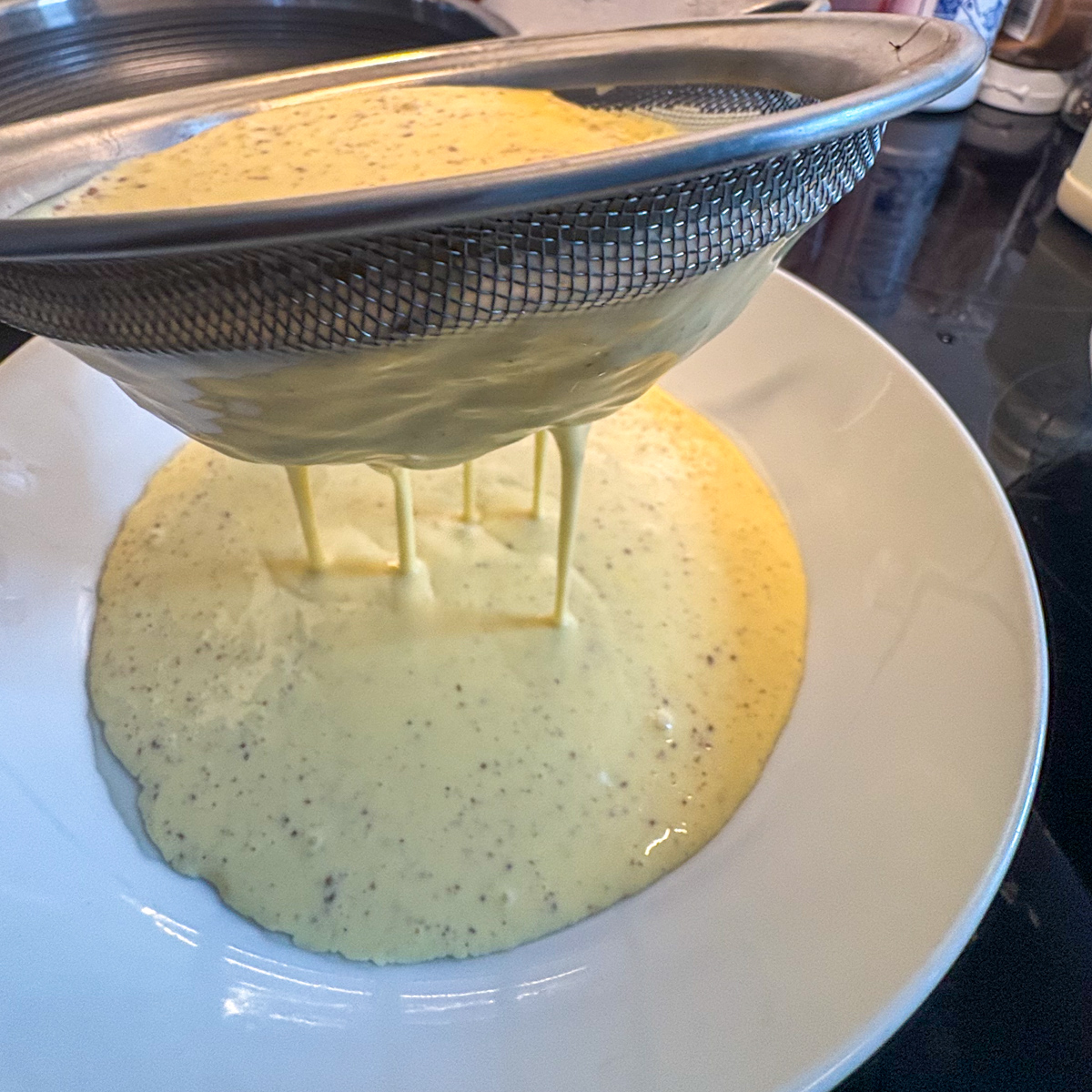
- Step 2: Strain the mixture through a fine-mesh strainer into a second shallow bowl. This removes any lumps and ensures the egg custard is delicately silky.
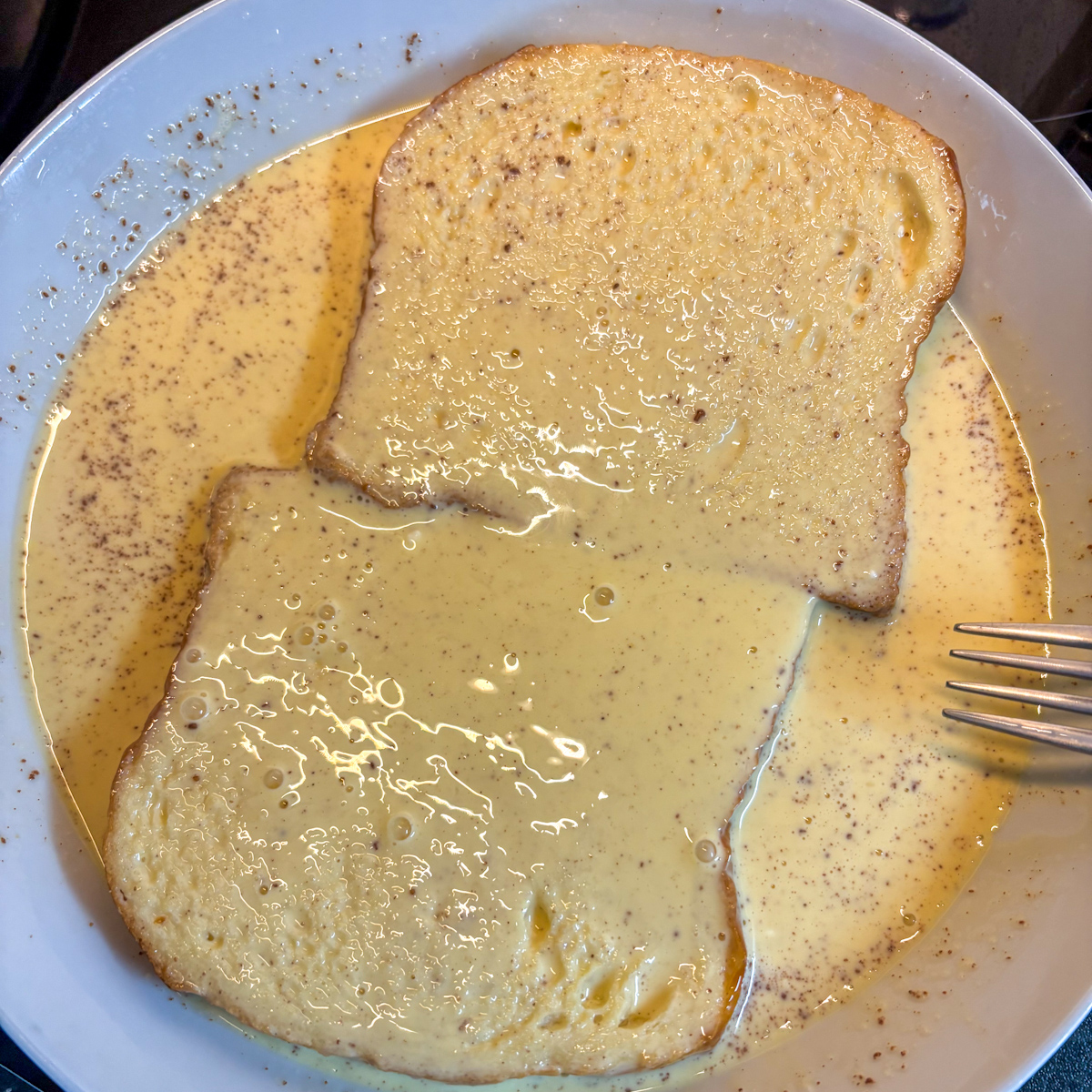
- Step 3: Dip two brioche slices into the custard, allowing them to soak for 20 to 30 seconds on each side. Gently shake off any excess liquid before cooking.
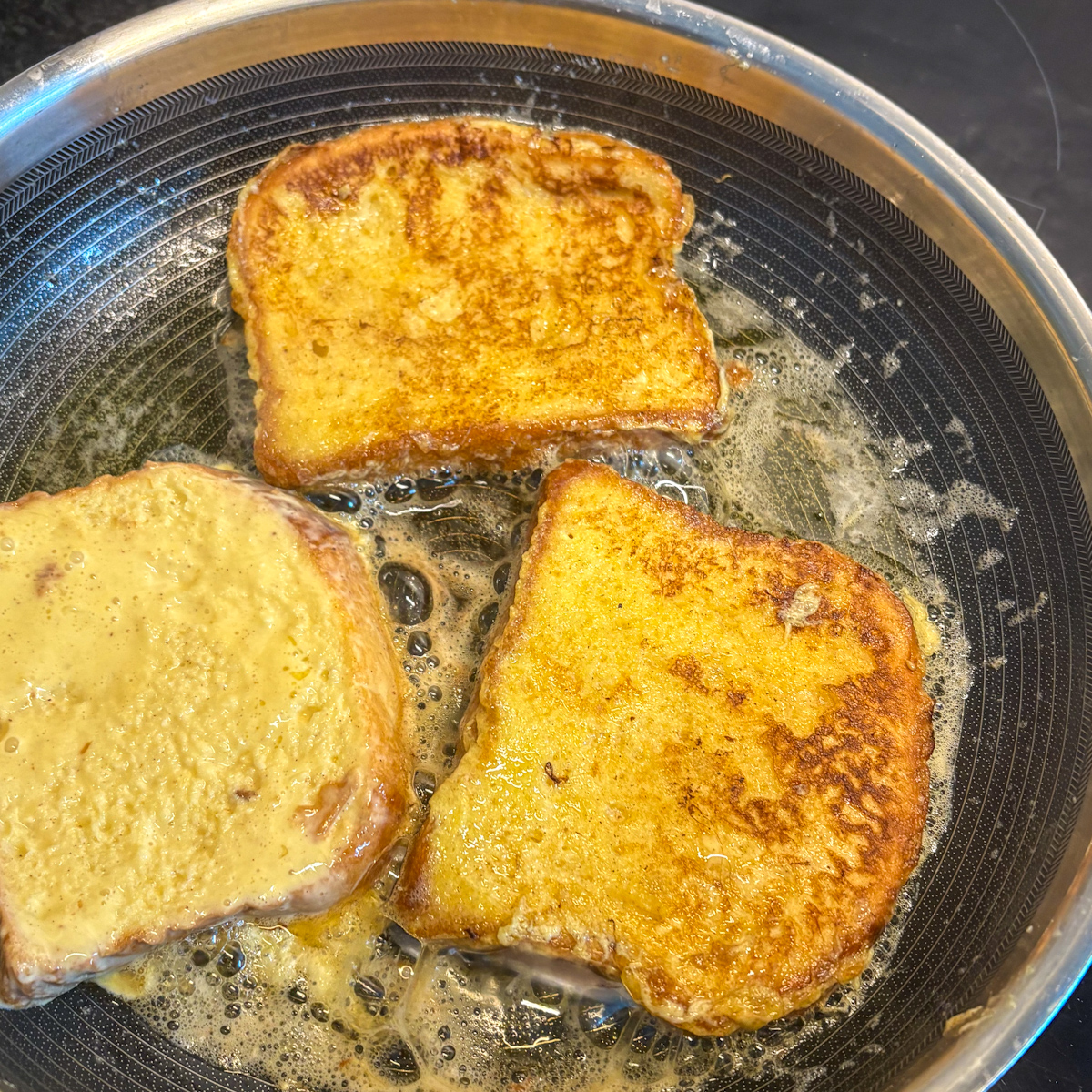
- Step 4: Melt a knob of unsalted butter in a heavy-based frying pan over a medium-high heat. Add the soaked brioche and fry for 30 seconds, then turn the heat down to medium. Cook for three minutes, flip the slices, and fry for another two minutes until golden brown. Repeat with the remaining bread and serve immediately topped with ice cream, fresh berries, whipped cream, and a dusting of icing sugar.
How to Serve and Store Brioche French Toast
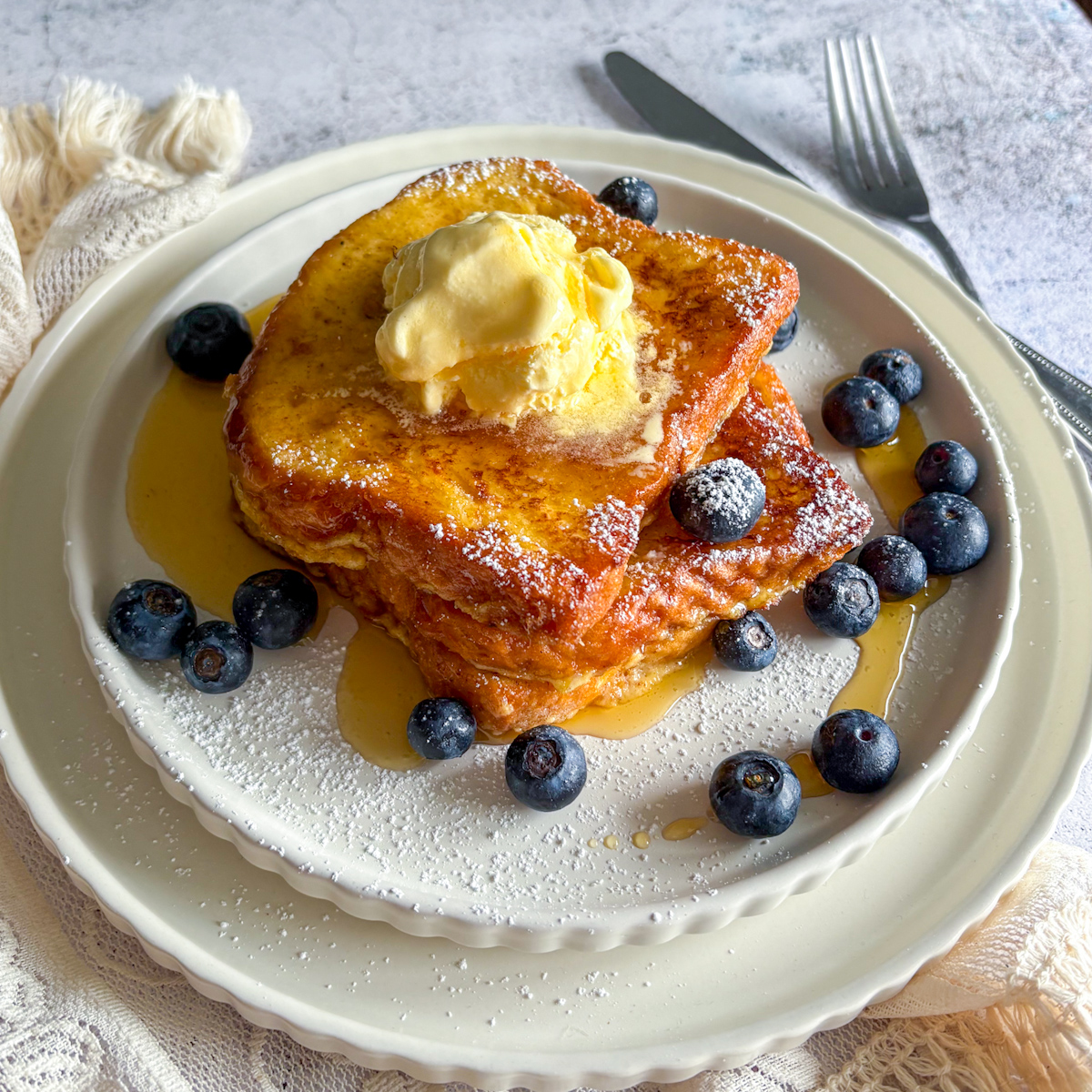
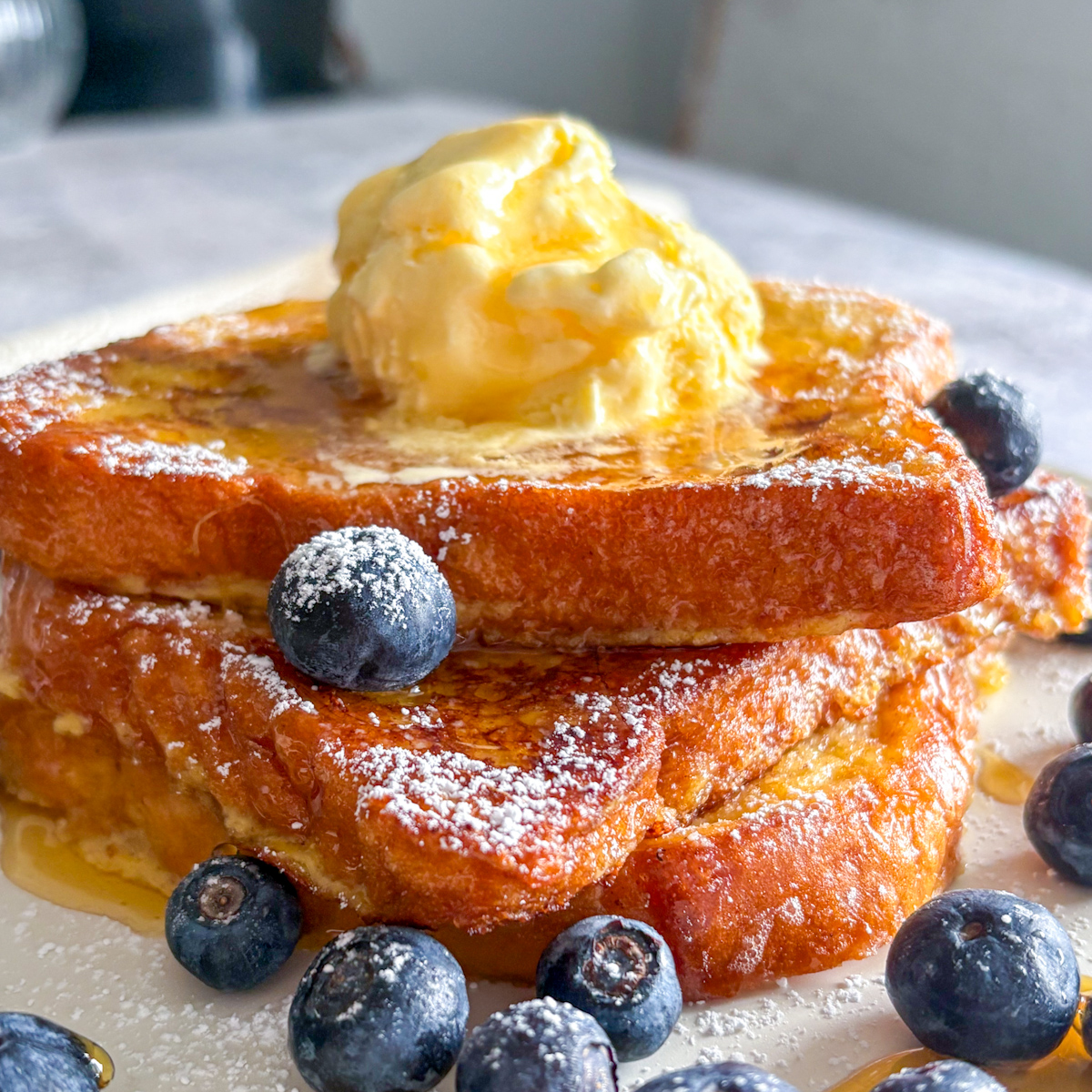
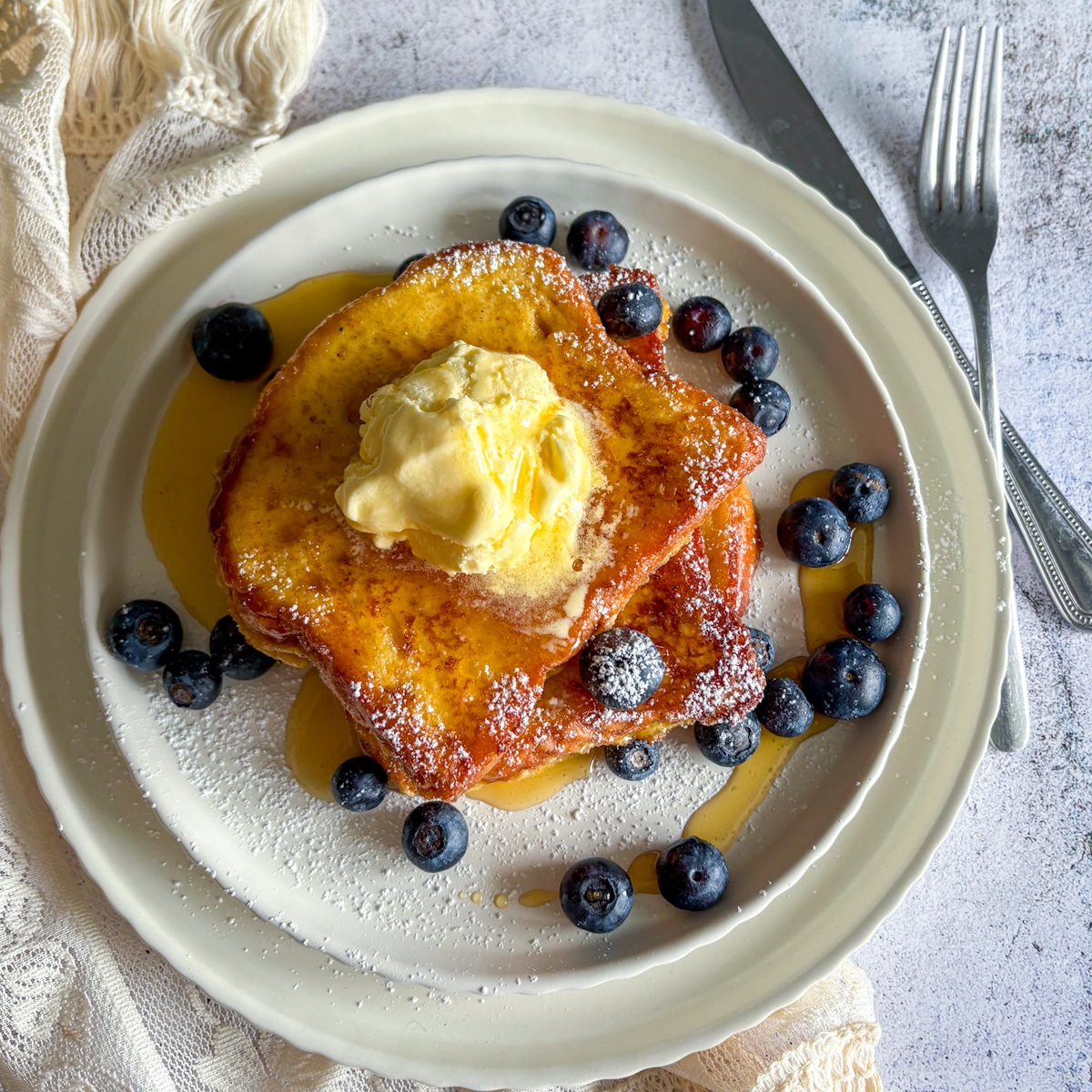
Serve your Brioche French Toast straight from the pan while it is still warm and the edges are crisp. I highly recommend topping it with a scoop of vanilla ice cream, fresh blueberries, a heavy dusting of icing sugar, and a generous pour of maple syrup.
Although leftovers can be kept in an airtight container in the fridge for up to two days, I strongly advise against storing them. Leftover slices quickly become soggy and lose their beautiful texture, making them far less pleasant to eat. They are at their absolute best when freshly cooked, with cold ice cream melting right over the hot bread. If you find yourself wanting more later, it is much better to simply whip up a fresh batch.
More Easy Breakfast Recipes You Might Enjoy
If you like an easy weekend breakfast, here are a few more from the blog worth a look.
For another fluffy stack to start the day, try my Homemade Buttermilk Pancakes Recipe — thick, golden diner-style pancakes that come together with simple pantry staples.
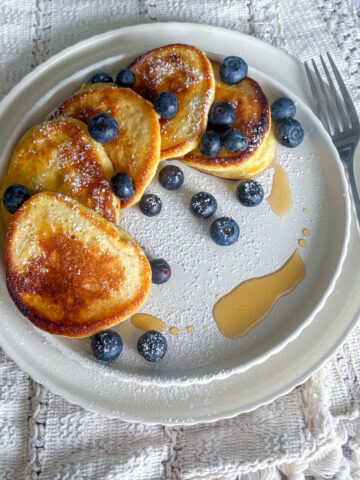
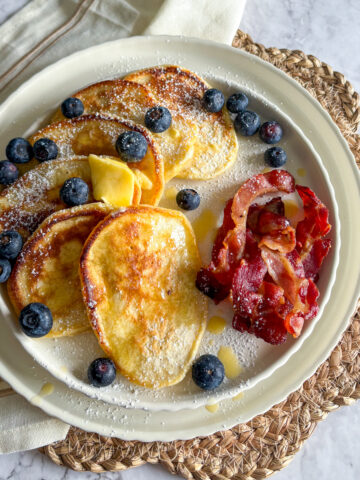
If you fancy something lighter and a little zesty, take a look at my Ricotta Pancakes Recipe — pillowy lemon pancakes that feel like a proper brunch treat.
When you are feeding a crowd, my French Toast Croissant Casserole Recipe is the answer — buttery croissants baked in vanilla custard with fresh berries.
For a Eastern European classic, have a go at my Ricotta Syrniki Recipe — little cottage cheese pancakes with a crisp golden crust and a creamy middle.
And for an easy pudding to round off the weekend, there is my Strawberry Crumble Recipe — juicy summer strawberries under a buttery oat topping.
Brioche French Toast Cost: A Price Comparison
This is a genuinely cheap breakfast, which is part of why brioche French toast is worth keeping in your back pocket.
- In the UK, a sliced brioche loaf runs about £1.69–£2.00 at Tesco, Sainsbury's or Asda, and with eggs, a splash of double cream and store-cupboard sugar and cinnamon, the whole dish costs around £3.50–£4.50 to serve four — roughly £0.90–£1.15 per serving.
- In Ireland, brioche is easy to find at Tesco, Dunnes or SuperValu for about €2.30–€3.00 a loaf, putting a four-serving batch near €5–€6.50, or about €1.30 a head.
- In the USA, brioche from Walmart, Kroger or Trader Joe's sits around $4–$5 a loaf, and with the cream and eggs the dish lands near $8–$10 for four, about $2–$2.50 per serving.
- In Australia, where brioche is stocked at Woolworths and Coles for roughly AU$4–$5, a batch comes to about AU$10–$13, near AU$2.50–$3.25 each.
- And in France, the home of the loaf, brioche is cheapest of all at any supermarché or boulangerie for around €1.50–€2.50, making a four-serving batch one of the best-value brunches going at well under €1.50 per serving.
Wherever you are, the main keyword here is value — French toast with brioche turns budget ingredients into something that tastes far more expensive than it is.
Top Tips for Making Brioche French Toast
- Always strain the custard through a fine-mesh sieve before you start dipping. Whisked eggs leave behind stringy bits of white that never fully break down, and these are what turn into little flecks of scrambled egg on the surface of the finished toast. Pushing the liquid through a sieve takes only a few seconds and removes them completely. The result is a smooth, even coating that cooks to a clean golden brown.
- Use double cream rather than milk for the richest custard. Standard milk makes a thin liquid that runs straight off the bread and never properly coats it. The high fat in double cream clings to the surface and soaks into the crumb, giving you a custardy middle. That same fat is what helps the outside crisp and caramelise as it fries.
- Do not rush the soak, especially with thick slices. A quick dunk leaves the centre dry and bland while only the outer edge picks up any flavour. Give each slice a full 20 to 30 seconds per side so the custard reaches right into the crumb. Then shake off the excess so you are not tipping a puddle of liquid into the pan.
- Let your brioche go slightly stale before you use it. Fresh, soft bread is fragile and tends to collapse or tear once it is soaked. Bread that has dried out for a day holds its structure and drinks up more custard without falling apart. If you have only fresh brioche, lay the slices out for an hour or pop them in a low oven for a few minutes to dry.
- Control the heat in two stages. Start on medium-high to seal the surface and kick off the browning, then drop to medium so the inside has time to warm through. Leave it on high the whole time and the outside scorches before the middle is cooked. A steady medium heat after the initial sear is the reliable middle ground.
- Fry in butter, not oil, for the best flavour and colour. Butter browns alongside the custard and gives the crust its rich, nutty taste. Add a fresh knob between batches, because the milk solids left in the pan can darken and turn bitter. If your butter is browning too fast, lower the heat slightly and wipe the pan before the next batch.
- Match the bread to the method by choosing something rich and sturdy. Brioche is ideal because it is enriched with butter and egg, so it tastes sweet and holds together when soaked. Challah does the same job if that is what you have. Thin sandwich bread is the one to avoid, as it turns to mush long before it has soaked up enough custard.
Brioche French Toast FAQ
What is the best bread for brioche French toast?
A rich, slightly sweet loaf like brioche or challah is ideal, because the butter and egg in the dough give flavour and structure. You want thick slices that have dried out a little so they soak up custard without collapsing. Thin, soft sandwich bread is best avoided, as it disintegrates during soaking.
Can I make the custard ahead of time?
Yes, you can whisk the custard the night before you plan to cook. Combine the eggs, double cream, sugar, cinnamon and vanilla, then keep it covered in an airtight container in the fridge. Give it a quick stir the next morning before you start dipping the bread.
Why do I need to strain the custard?
Straining is what gives you a silky, even coating. It removes the thick, stringy parts of the egg white that do not blend smoothly into the cream. Skip it and you tend to find small white specks of cooked egg stuck to the surface of the toast.
Why use icing sugar instead of granulated sugar?
Icing sugar dissolves instantly into the cold custard, so the sweetness is even throughout. Granulated sugar can sink and stay grainy at the bottom of the bowl. The fine powder also helps the surface caramelise into a lovely crust as it fries.
Why is my French toast soggy in the middle?
A soggy centre usually means the heat was too high, so the outside cooked before the inside caught up. Sear on medium-high, then drop to medium to give the middle time to set. Over-soaking can also do it, so stick to 20 to 30 seconds a side and shake off the excess.
Can I use milk instead of double cream?
You can, but the result is noticeably less rich and the coating thinner. If milk is all you have, whole milk is far better than semi-skimmed, and a spoon of melted butter in the custard helps. For the luxurious version, though, double cream is what makes this recipe stand out.
Related
Looking for other recipes like this? Try these:
- Easy Pork Mince Patties with Dried Herbs
- Easy White Beans and Bacon in Tomato Sauce (Budget Skillet Recipe)
- Healthy Oatmeal Cookies with Dates for Breakfast
- Budget Breakfast Burritos with Bacon and Veggies




Brioche French Toast
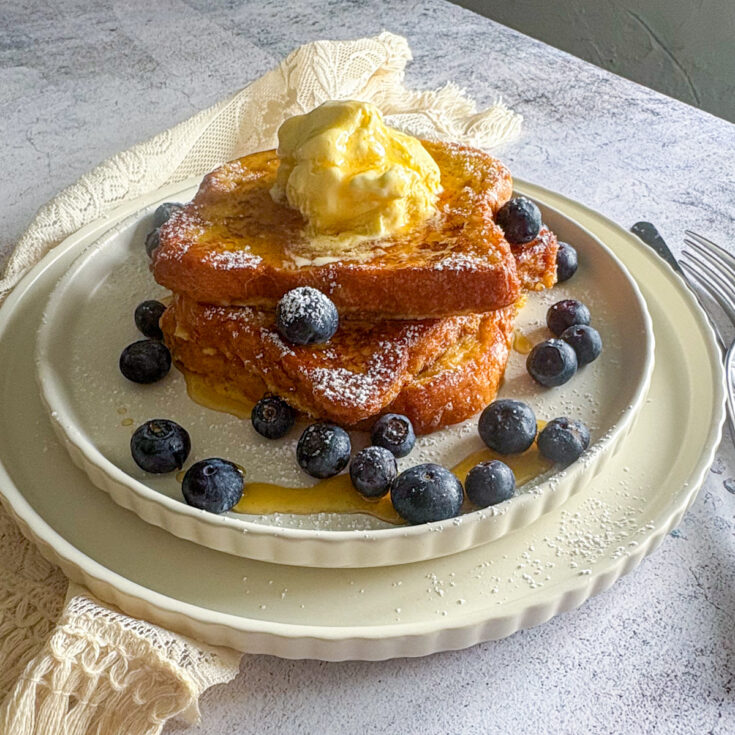
Brioche French Toast is the best French toast recipe for a weekend breakfast, ready in under 20 minutes. Thick slices of brioche are soaked in a rich double cream custard and pan-fried in butter until crisp and golden brown. Serve warm with ice cream, fresh berries and a dusting of icing sugar.
Ingredients
- 8 thick brioche slices (slightly stale)
- 4 large eggs
- 160 ml (⅔ cup) double cream
- 1 teaspoon ground cinnamon
- 2 tablespoons icing sugar (plus extra for serving)
- 1 teaspoon vanilla extract
- Unsalted butter (a knob, for frying)
- Fresh berries, ice cream and whipped cream (to serve)
Instructions
- In a shallow bowl, whisk the eggs, double cream, icing sugar, ground cinnamon and vanilla extract until completely smooth and combined.
- Pour the mixture through a fine-mesh sieve into a second shallow bowl, so the custard is silky and free of egg-white strands.
- Dip two brioche slices into the custard and soak for 20 to 30 seconds on each side. Lift out and gently shake off any excess liquid.
- Melt a knob of unsalted butter in a heavy-based frying pan over medium-high heat. Add the soaked brioche and fry for 30 seconds, then reduce the heat to medium. Cook for 3 minutes, flip, and fry for another 2 minutes until golden brown. Repeat with the remaining slices and serve immediately with ice cream, fresh berries, whipped cream and a dusting of icing sugar.
Notes
- Do not skip straining the custard. It takes seconds and is the difference between a smooth coating and one dotted with little flecks of cooked egg white.
- If the pan starts to smoke, the heat is too high. You want a gentle sizzle as the bread goes in, not an aggressive spit, so adjust the heat as you go.
- Rest finished slices on a wire rack in a low oven rather than stacking them on a plate. Stacking traps steam and softens the crisp underside.
- Let the brioche go slightly stale first. Day-old slices soak up more custard and hold together far better than fresh, soft bread.
- Add a fresh knob of butter between batches. The milk solids left behind darken and can turn bitter, so wiping the pan keeps each batch clean and golden.