
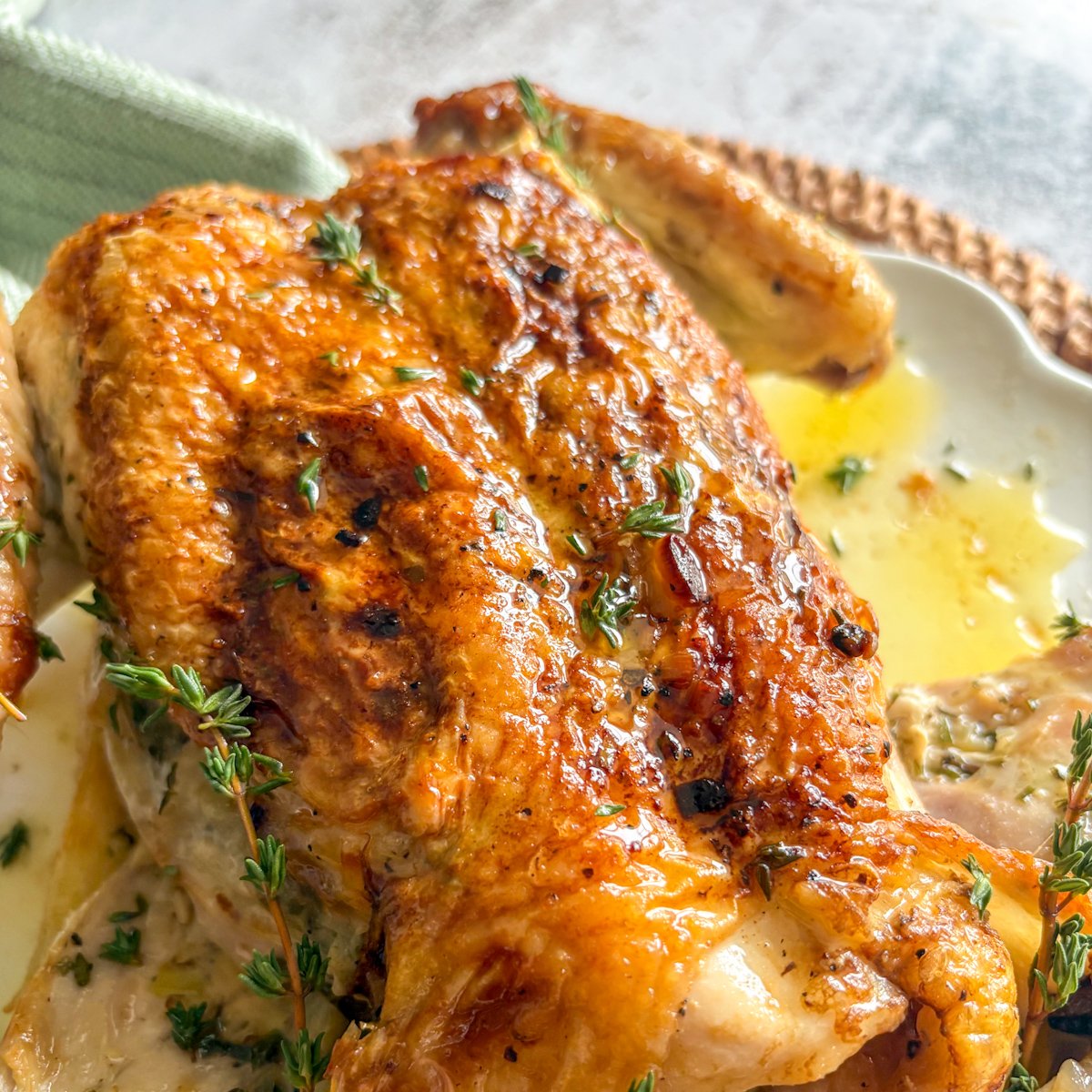
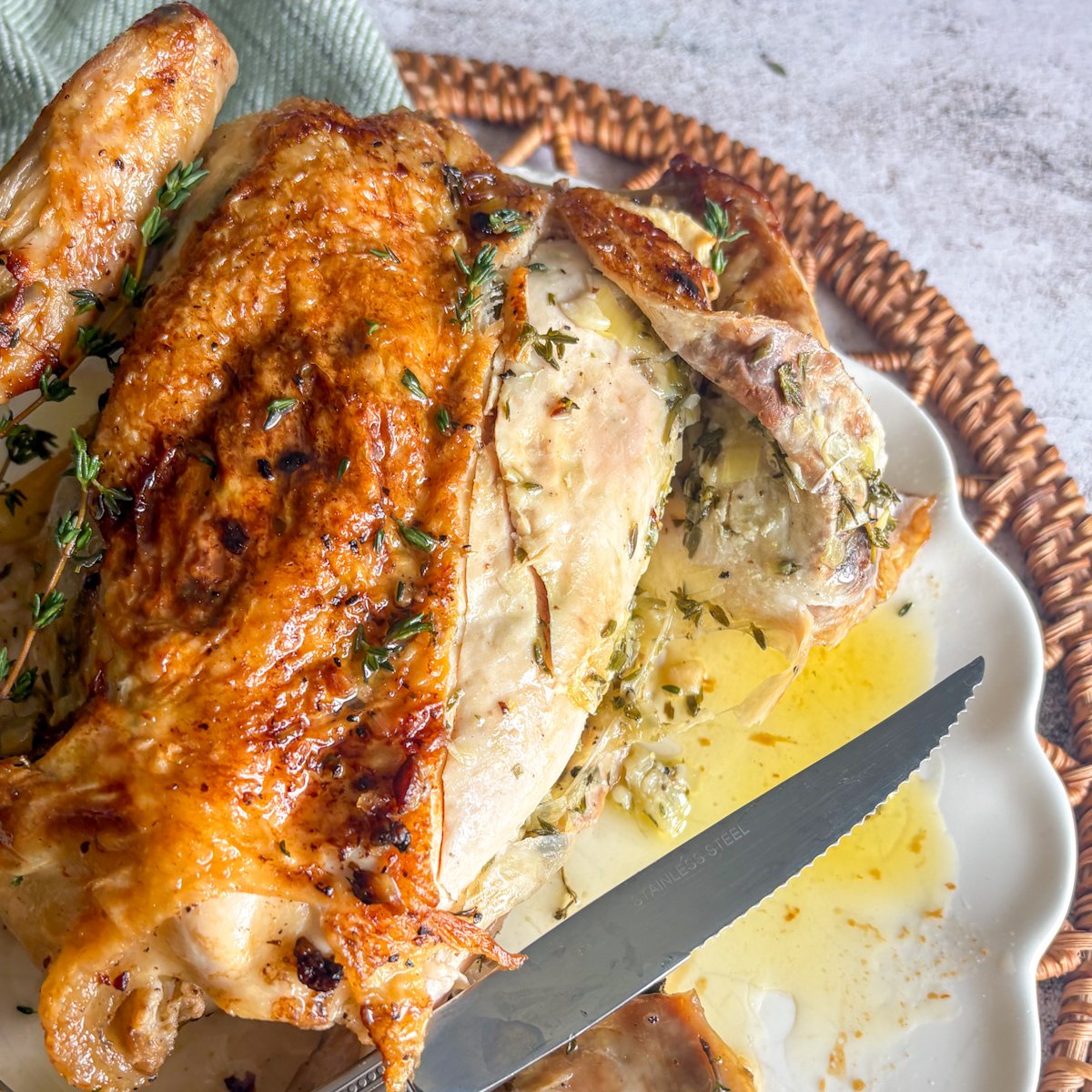
Herb butter roast chicken with shatteringly crisp golden skin, garlicky butter pushed right under the breast, and meat that stays juicy from edge to edge. A salt brine does the seasoning while the bird sits in the fridge, and the whole thing takes under an hour once it hits the pan.
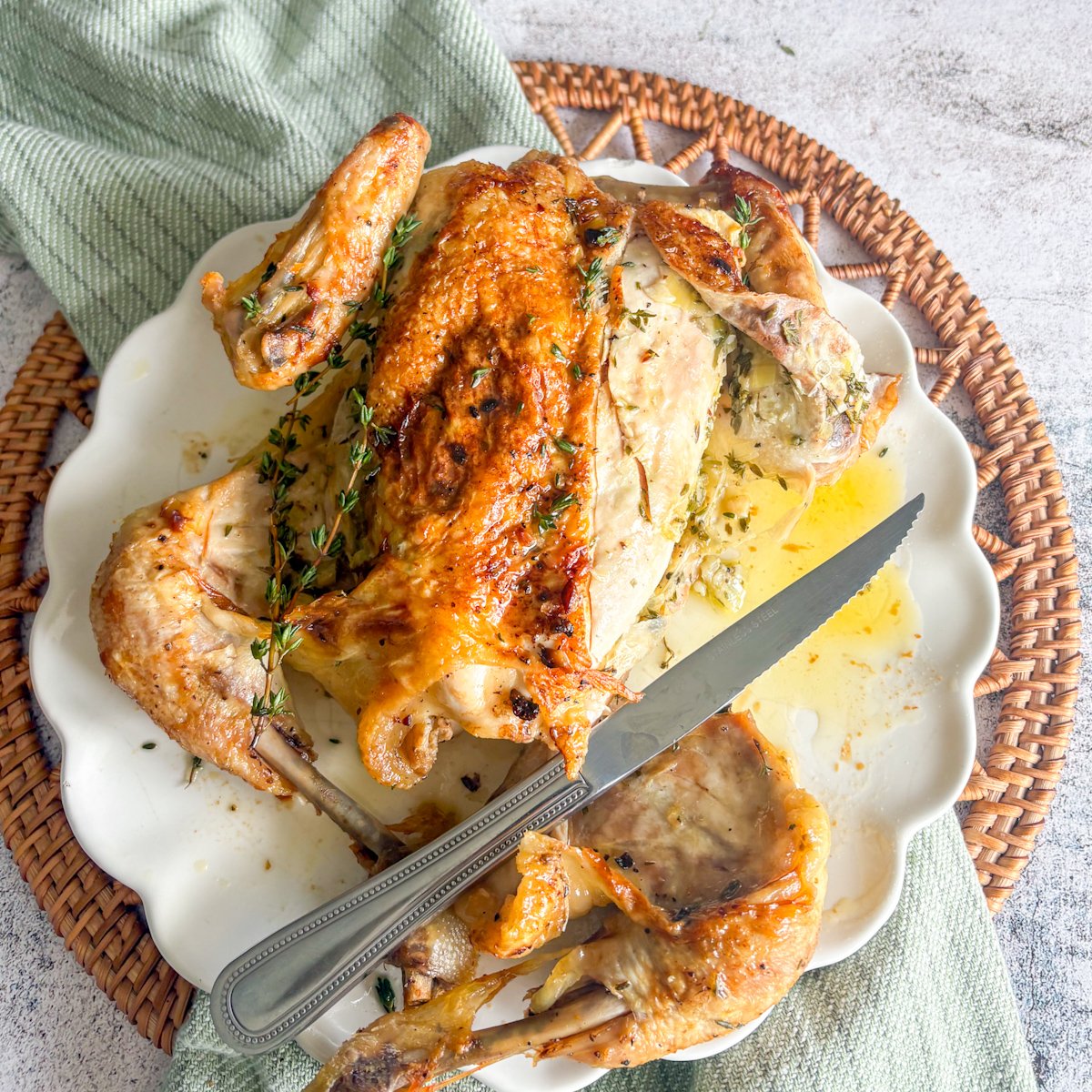
Herb butter roast chicken is the simplest way to get a properly flavoured bird without fuss or expensive ingredients. The chicken is spatchcocked so it cooks faster and browns evenly, brined in salted water for at least two hours, then packed with softened butter mixed with garlic, thyme, tarragon and spring onions.
The skin turns deep golden and crisp in a skillet before the bird finishes in the oven, basted with the last of that butter. A 1.5kg chicken feeds four with potatoes and something green alongside, and the leftovers are excellent cold in sandwiches or salads.
Jump to:
- Ingredients You Need for Herb Butter Roast Chicken
- How to Make Herb Butter Roast Chicken
- How to Serve and Store Herb Butter Roast Chicken
- More Easy Chicken Recipes You Might Enjoy
- What Herb Butter Roast Chicken Costs to Make Around the World
- Tips and Notes for the Best Herb Butter Roast Chicken
- Herb Butter Roast Chicken FAQ
- Related
- Pairing
- Herb Butter Roast Chicken Recipe
Ingredients You Need for Herb Butter Roast Chicken
- Whole chicken – a smaller bird of 1–1.5kg cooks quickly and stays moist; scale up to two birds for a crowd.
- Fine table salt – for the brine, which seasons the meat all the way through and keeps it juicy.
- Unsalted butter – softened, not melted; it carries the herbs and garlic under the skin and bastes the meat as it roasts.
- Spring onions – the white parts go into the butter for a mild savoury bite, the green tops make a good garnish.
- Dried tarragon – gives that gentle aniseed note that pairs so well with chicken and butter.
- Fresh thyme – picked leaves only, softer and more fragrant than woody stalks.
- Garlic cloves – minced fine so they melt into the butter rather than catching in the pan.
- Salt and black pepper – a pinch in the butter, plus generous seasoning on the bird itself.
- Olive oil – for searing the skin in the skillet before the chicken goes into the oven.
How to Make Herb Butter Roast Chicken
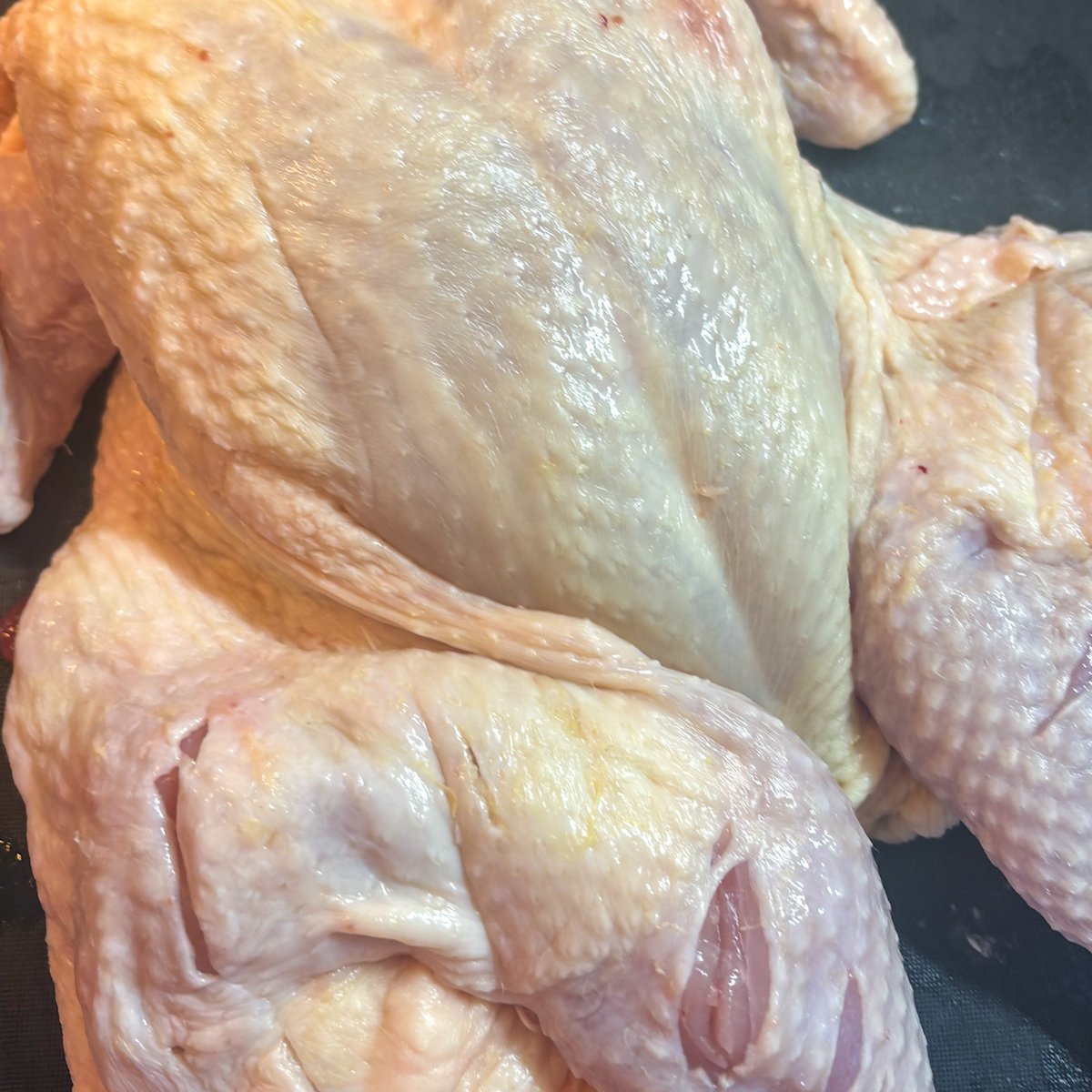
- Step 1: Spatchcock the bird first — it speeds up cooking and gives you far more flavour. Sit the chicken breast side down and cut out the backbone with kitchen scissors or a sharp knife. Flip it over and press down firmly on the breastbone with your hands to flatten it. Cut a couple of slashes into the legs and thighs so the brine gets right in. Fill a large pot, bowl or container with 2–3 litres of cold water and dissolve 5 tablespoons of fine salt in it. Lower the chicken into the salty bath, cover, and refrigerate for at least 2 hours or up to overnight.
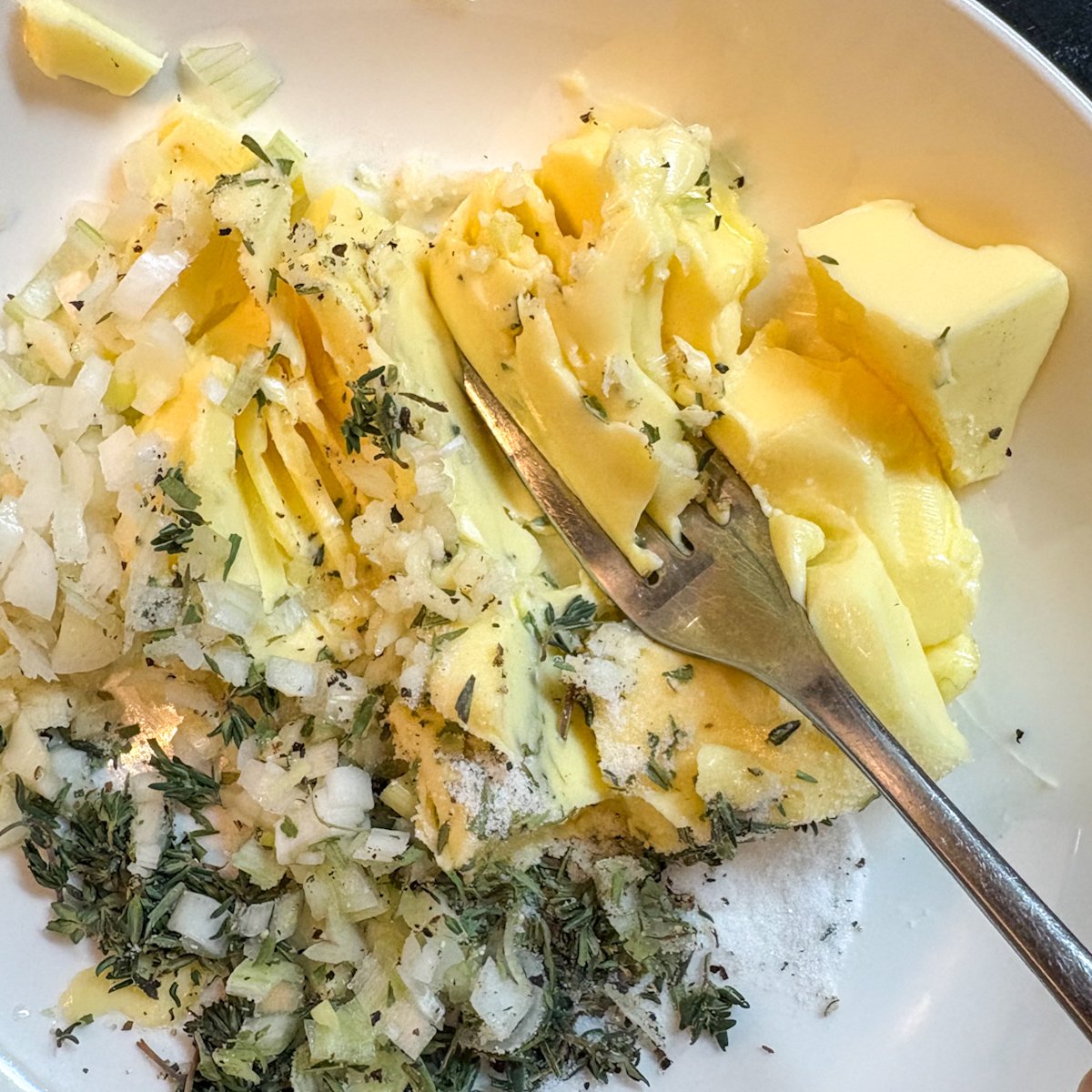
- Step 2: Make the herb butter. In a bowl, combine the softened butter, chopped spring onions, minced garlic, thyme leaves, tarragon, salt and black pepper. Mash it together with a fork until evenly mixed. Set around 2 tablespoons aside for later.
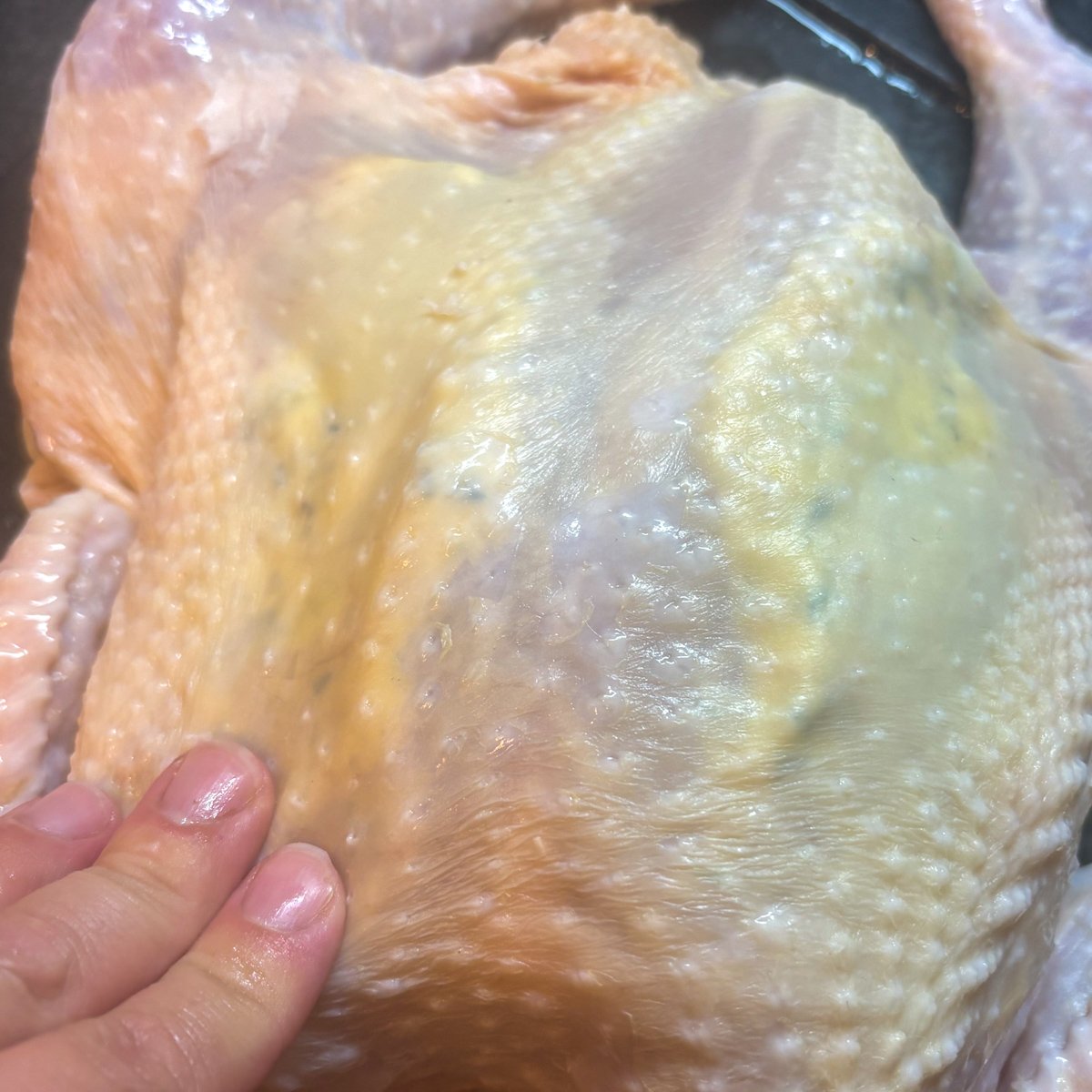
- Step 3: Heat the oven to 190°C (375°F). Lift the chicken out of the brine and pat it completely dry. Gently loosen the skin over each breast, working your fingers in from the neck end. Divide the butter mixture in two and push one part under the skin of each breast. Press down gently on the outside to spread the butter across the meat. Season the bird generously with salt and freshly ground black pepper.
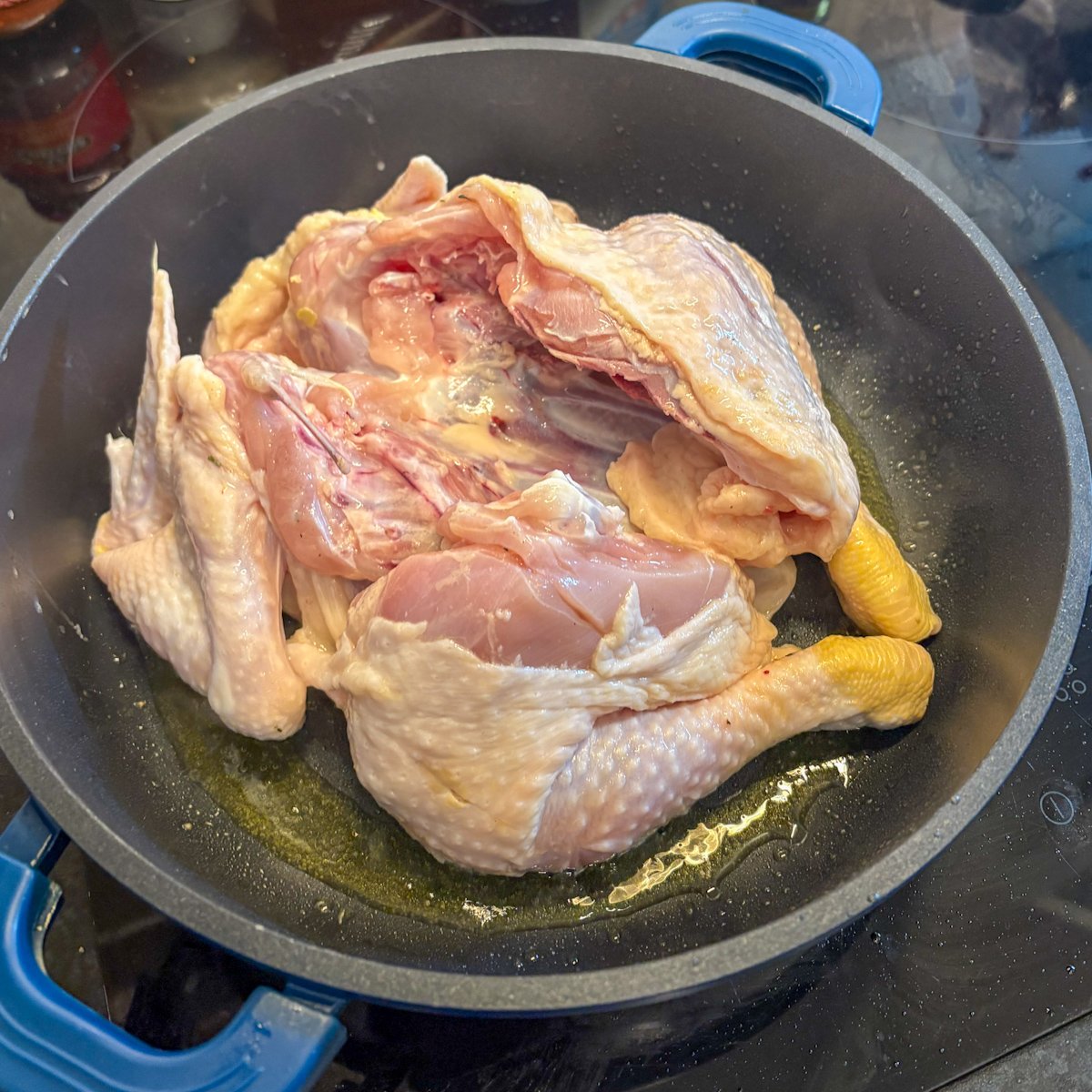
- Step 4: Heat 1 tablespoon of olive oil in a large ovensafe skillet. Lay the chicken in breast side down and fry over medium heat for 10 minutes, until lightly browned. Sprinkle salt and ground pepper over the cut side. Transfer the skillet to the oven and roast, uncovered, for 25 minutes.
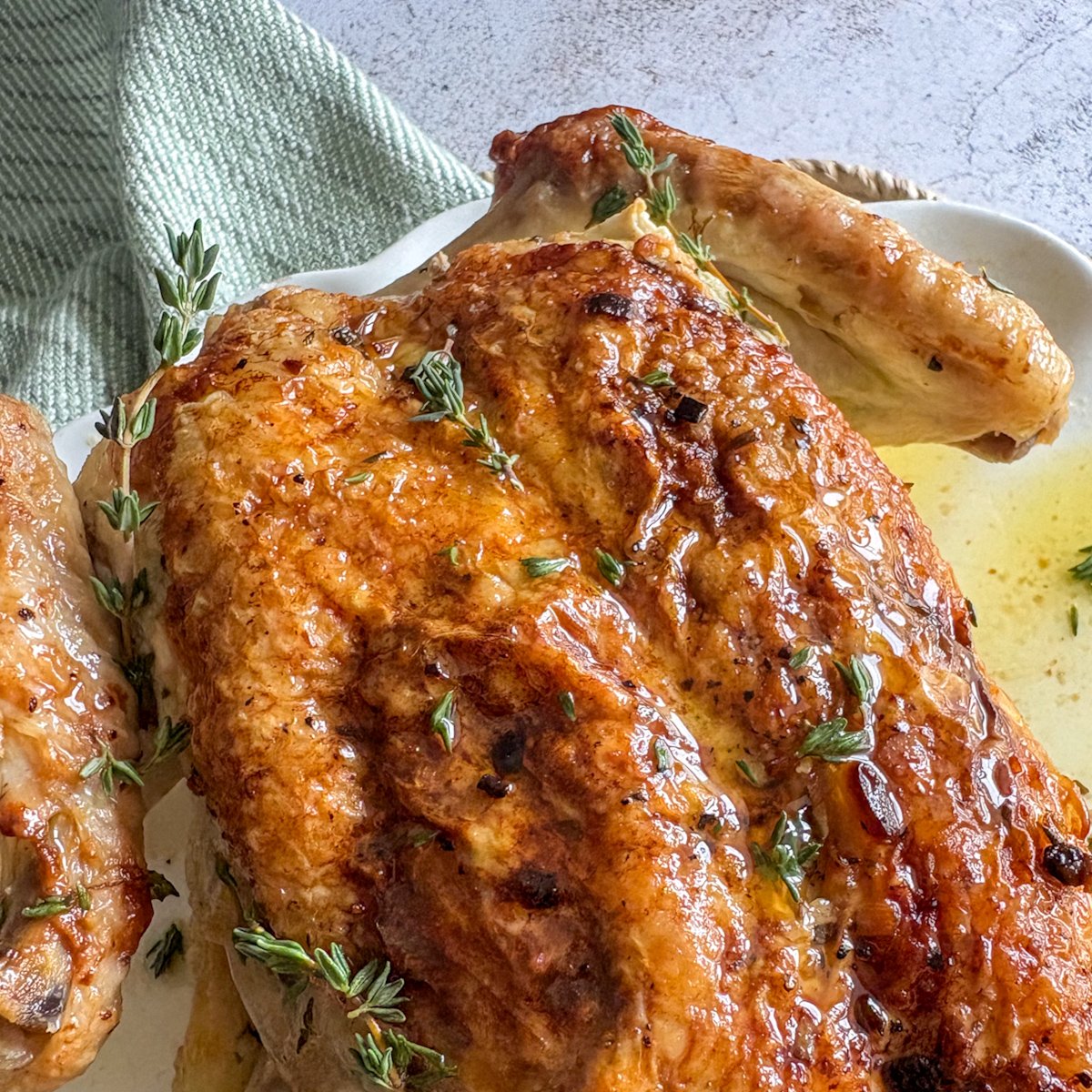
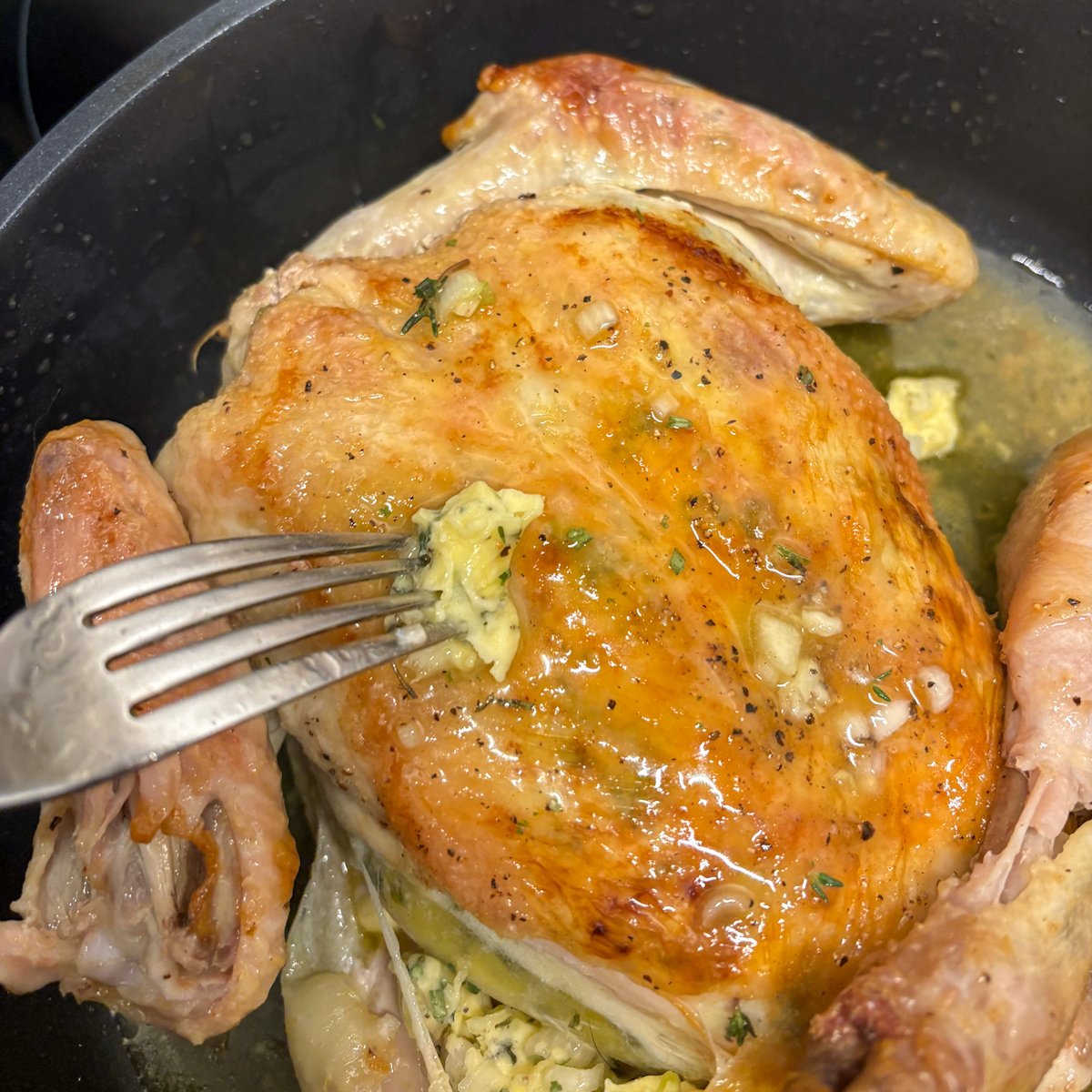
- Step 5: Take the skillet out of the oven. Carefully turn the bird over so the skin side faces up. Using a fork or spatula, spread the reserved butter mixture over the skin and return the skillet to the oven. Roast for another 20 minutes. Let the chicken rest for 10–15 minutes before carving. Total roasting time depends on the size of the bird — the bigger it is, the longer it needs. The juices should run clear with no trace of pink, or check with a thermometer.
How to Serve and Store Herb Butter Roast Chicken
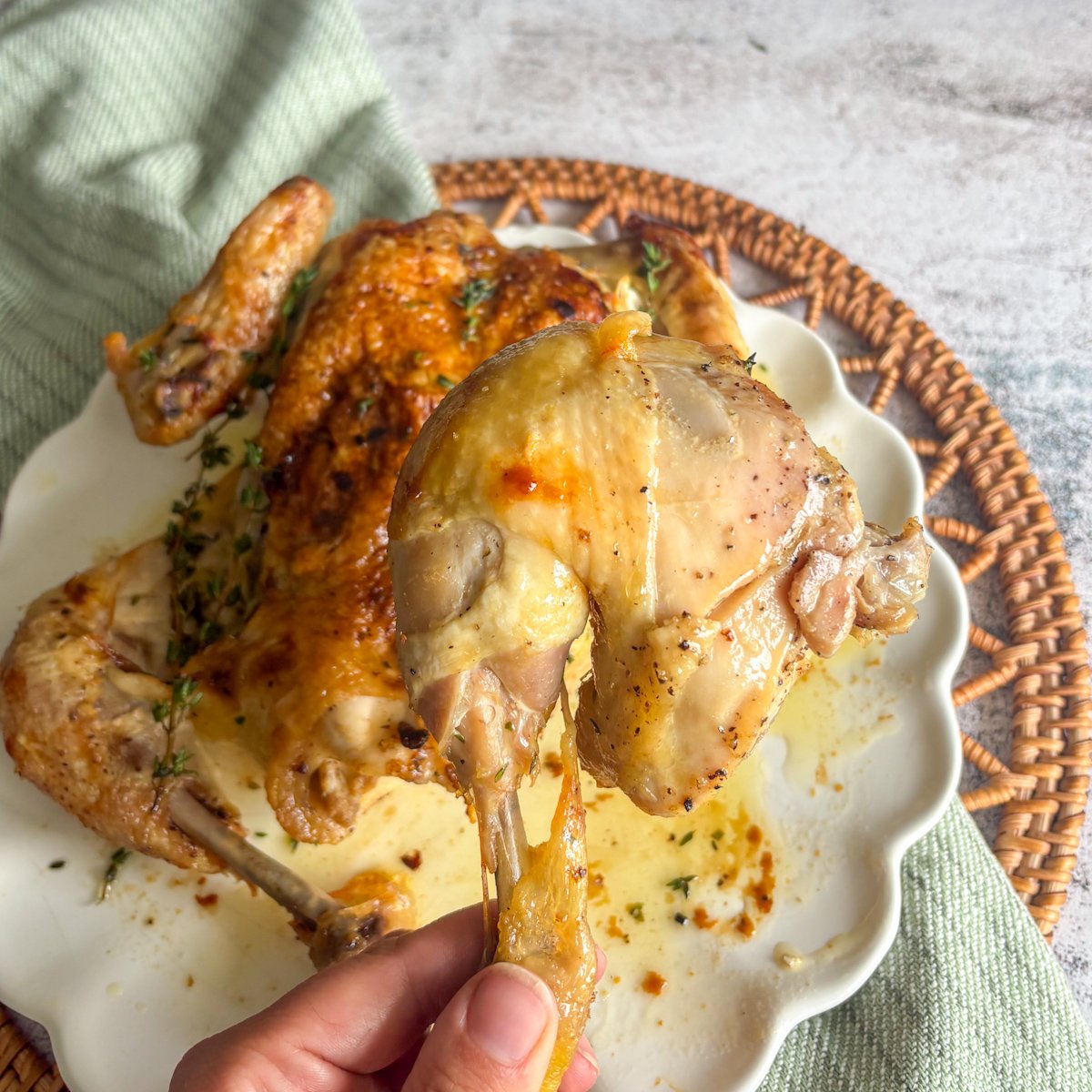
Herb butter roast chicken is perfect on a warm platter with all the buttery pan juices spooned over the top. Roast potatoes are the obvious partner, but it works just as well with buttered new potatoes, mash, or a plain rice pilaf that soaks up the juices. Add something green and sharp alongside — steamed broccoli, roasted asparagus, or a simple rocket salad with a lemon dressing cuts through the richness. Scatter the reserved spring onion tops over the carved meat for a bit of colour and bite.
Leftovers keep well. Carve the meat off the bones while it's still slightly warm, put it in an airtight container with a spoonful of the pan juices, and refrigerate for up to 3 days. Cold roast chicken is excellent in sandwiches with mayonnaise, shredded through a salad, or stirred into a quick pasta. To reheat, cover with foil and warm at 160°C (325°F) for 10–15 minutes rather than microwaving, which dries out the breast. The carcass makes very good stock — simmer it with an onion, a carrot and a bay leaf for a couple of hours. Cooked chicken also freezes for up to 2 months in a sealed bag.
More Easy Chicken Recipes You Might Enjoy
If this one has gone down well at your table, here are a few more chicken dinners worth cooking.
- For another flattened bird with seriously crisp skin, try Tapaka Chicken — a Georgian classic pressed under a weight in a hot pan until the skin turns golden and shatters.
- If you fancy something saucier, have a look at Chakhokhbili — a herby Georgian chicken and tomato stew that comes together in one pot.
- When the budget is tight, Budget-Friendly Lemon Chicken Legs do the job — bright, zesty and cheap enough to make on any weeknight.
- For a full tray-bake dinner with no extra washing up, there's Chicken Legs with Vegetables — everything roasts together on one tray until the veg soaks up all the juices.
- And if you want to swap the bird entirely, Turkey Steaks in Tomato Sauce — lean turkey simmered in a rich tomato sauce, ready in under half an hour.
What Herb Butter Roast Chicken Costs to Make Around the World
A whole roast chicken is one of the cheapest ways to feed a family properly, and this recipe leans on store cupboard basics rather than anything fancy.
- In the UK, a 1.5kg whole chicken from Tesco, Aldi or Lidl runs about £4.50–£6.00, with the butter, herbs, garlic and spring onions adding roughly £2.00. That puts the whole dish at around £7.00, or about £1.75 per serving across four people.
- Ireland sits a little higher — Dunnes, Aldi and SuperValu price a similar bird at €6.50–€8.00, and with the butter and aromatics you're looking at about €10.00 in total, or €2.50 a head.
- In the USA, a whole chicken at Walmart, Kroger or Aldi costs roughly $8.00–$10.00 for a 3lb bird, and the butter, garlic and fresh herbs add another $4.00, bringing the dish to about $13.00 or $3.25 per serving.
- Australia comes in similar — Woolworths and Coles sell a 1.5kg chicken for around AU$11.00–$13.00, with the butter and herbs pushing the total to roughly AU$16.00, or AU$4.00 a plate.
- Georgia, where flattened roast chicken is something of a national habit, is by far the cheapest: a whole bird from a local market or Goodwill supermarket costs around 12–15 GEL, and the full dish lands near 20 GEL, or 5 GEL per serving.
Wherever you're cooking it, this is a proper Sunday dinner for less than the price of a takeaway.
Tips and Notes for the Best Herb Butter Roast Chicken
- Buy the smallest bird that will feed your table. A 1.2–1.5kg chicken roasts faster and holds its moisture far better than a 2kg one, because the breast finishes cooking before it has time to dry out. Large birds are false economy if the meat ends up chalky. If you need to feed more people, roast two small birds side by side rather than one big one. They will take almost the same time as a single bird, provided your skillet or tray is wide enough for both to lie flat.
- Kitchen scissors beat a knife for spatchcocking. Poultry shears or sturdy kitchen scissors cut through the rib bones cleanly with far less force than a knife, which tends to slip on the round backbone. Work slowly down one side of the spine, then the other, and pull the backbone free in one piece. Keep it — it makes excellent stock along with the carcass later.
- Don't skip the brine, and don't rush it. Two hours is the minimum for the salt to penetrate the meat properly, but overnight gives noticeably better results, especially in the breast. The salt changes the protein structure so the muscle holds onto moisture during roasting instead of squeezing it out. Use a container that lets the bird sit fully submerged; a large stockpot or a clean washing-up bowl works. Weigh it down with a plate if it keeps floating.
- Soften the butter properly before mixing. Butter straight from the fridge will not combine with the herbs — it stays in lumps and tears the skin when you try to spread it. Leave it out for an hour, or microwave it in 10-second bursts until it gives easily to a fork but still holds its shape. Fully melted butter is no good either; it runs straight out from under the skin and pools in the pan. You want the texture of thick paste.
- Loosen the skin from the neck end, not the bottom. The membrane connecting skin to breast is thinnest near the neck, so starting there gives you the cleanest separation. Slide your fingers in flat and work slowly across and down, keeping your nails away from the skin. If you tear it, the butter escapes during roasting and you lose the whole point of the exercise. Take your time — this is thirty seconds of care that changes the entire dish.
- Pat the bird bone dry or the skin won't crisp. Wet skin steams instead of browning, and a brined chicken comes out of the water carrying a lot of surface moisture. Use plenty of kitchen paper, get into the crevices around the wings and legs, and press rather than wipe. If you have time, leave the patted-dry chicken uncovered on a rack in the fridge for 30 minutes; the cold air dries the skin further. That extra half hour is the difference between golden and truly crisp.
- Use a proper heavy skillet if you have one. Cast iron or heavy-based stainless steel holds its temperature when the cold bird hits the pan, which is what gives you a real sear rather than a slow grey stew. A thin pan drops in temperature immediately and the skin never browns. Make sure the handle is ovensafe before you start — plastic handles will not survive 190°C. If your skillet is too small, sear in the pan and transfer the bird to a roasting tray for the oven stage.
- Fresh thyme is worth the picking time. Running your fingers down the stalk against the direction of growth strips the leaves in seconds once you get the knack. Woody stalks left in the butter are unpleasant to bite into and don't release much flavour. If you only have dried thyme, use half the quantity, since drying concentrates the oils considerably. The same rule applies in reverse if you have fresh tarragon rather than dried.
- Rest the chicken uncovered, never under foil. Foil traps steam against the skin and undoes all the crisping you just spent an hour achieving. Ten to fifteen minutes on a warm plate or board is enough for the juices to redistribute through the meat, so they stay in the chicken rather than flooding your board when you carve. The bird will still be hot when you serve it — chicken this size loses heat slowly. Pour any resting juices over the carved meat.
Herb Butter Roast Chicken FAQ
Do I have to spatchcock the chicken?
No, but it makes a real difference to both cooking time and evenness. A flattened bird sits in one layer so the thighs and breast finish at roughly the same moment, instead of the breast drying out while you wait for the legs. If you'd rather roast it whole, add around 20–25 minutes to the total time and expect slightly less crisp skin overall.
Can I brine the chicken for longer than overnight?
Twelve hours is about the ceiling for a bird this size in a 5-tablespoon brine. Beyond that the texture starts to turn spongy and the meat can taste distinctly salty rather than well seasoned. If you need to prep further ahead, brine overnight, then drain, pat dry and keep the chicken uncovered in the fridge until you're ready to cook.
What if I can't find fresh thyme?
Dried thyme works perfectly well here — use half the quantity, so around half a tablespoon. Drying concentrates the essential oils, which is why the ratio drops. Rub it between your palms as you add it to the butter to wake the flavour up before it goes in.
Can I use salted butter instead of unsalted?
You can, but reduce the pinch of salt in the herb butter to almost nothing, and go lighter when seasoning the outside of the bird. The chicken has already been brined, so it's carrying salt from the inside out. Salted butter varies wildly between brands, which is why unsalted gives you more control.
Why did my skin tear when I was pushing the butter under?
Almost always either cold butter or hurried fingers. Cold butter has to be forced, and force is what splits the membrane holding the skin to the meat. Work from the neck end with softened butter and flat fingers, and go slowly. A small tear isn't fatal — just push the butter to the intact side and press gently to spread it.
Can I make the herb butter in advance?
Yes, and it's a good idea if you're cooking for guests. Mix it up to three days ahead and keep it in the fridge in a covered bowl, or roll it in cling film and freeze it for up to two months. Bring it back to soft room temperature before you try to spread it, otherwise you'll be back to the torn skin problem.
What size chicken feeds four people?
A 1.5kg bird is about right for four moderate portions with sides, especially with roast potatoes on the table. If your family eat heartily or you want leftovers for sandwiches, go for two smaller birds and double the butter mixture. Scaling the brine is straightforward too — just keep the ratio of roughly 5 tablespoons of salt to 2–3 litres of water per bird.
How do I know when herb butter roast chicken is properly done without a thermometer?
Pierce the thickest part of the thigh where it meets the body and watch what runs out. Clear juices mean it's ready; any pink or cloudy liquid means it needs another 5–10 minutes. The leg should also feel loose in its socket when you wiggle it. That said, a thermometer is far more reliable and takes the anxiety out of roasting entirely.
Related
Looking for other recipes like this? Try these:
- Baked Mediterranean Meatballs with Roasted Vegetables Recipe
- How to Cook Pan-Fried Chicken Cutlets with Basil
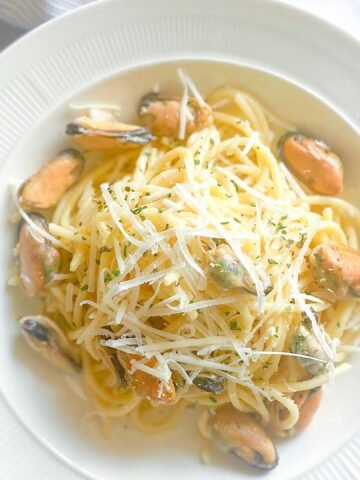
- Mussel Pasta in Creamy Garlic Butter Sauce
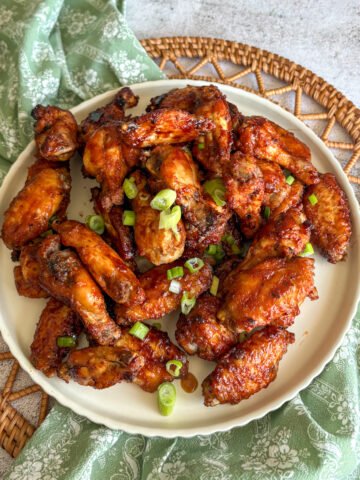
- Sticky Baked Guinness Chicken Wings with a Smoky Dry Rub
Pairing
These are my favorite dishes to serve with Herb Butter Roast Chicken:
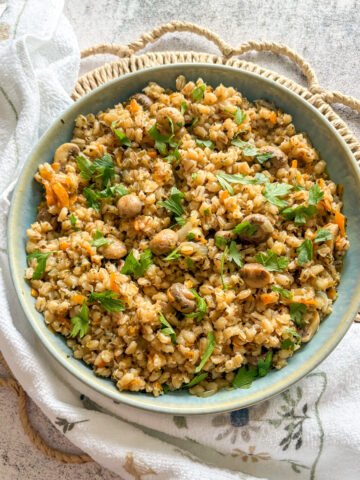
- Budget-Friendly Pearl Barley with Mushrooms
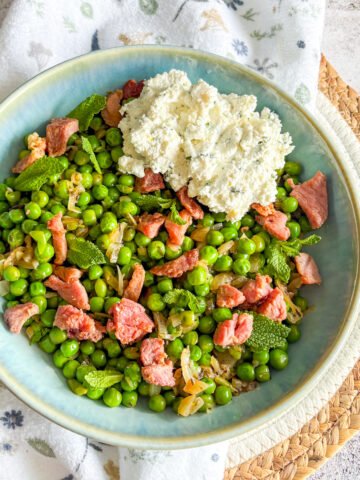
- Summer Peas with Bacon and Ricotta (Hot or Cold)
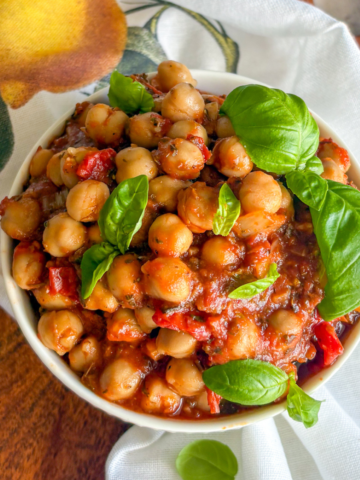
- Easy Chickpeas in Tomato Sauce Recipe (Budget-Friendly Struggle Meal)
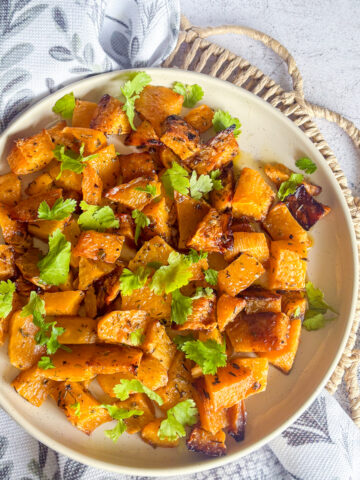
- Easy Roasted Turnips Recipe with Herbs and Olive Oil
Herb Butter Roast Chicken Recipe
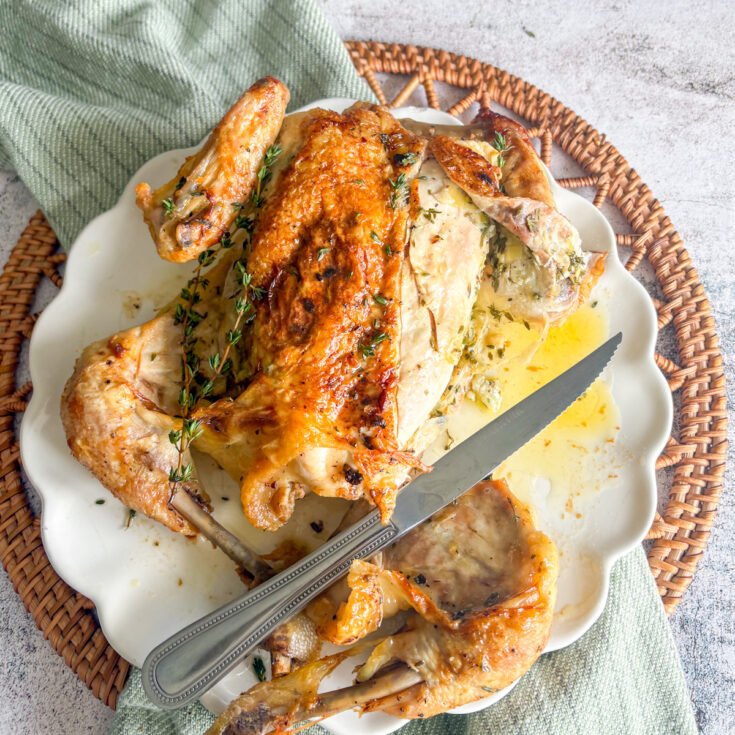
Herb butter roast chicken with crisp golden skin and garlicky butter tucked under the breast. The bird is spatchcocked and brined, then seared and roasted until juicy throughout. A proper Sunday roast that costs less than a takeaway.
Ingredients
- 1 whole chicken, 1.5kg (3¼ lb)
- 5 tablespoon fine table salt, for brining
- 2–3 litres (8–12 cups) cold water, for brining
- 100g (7 tbsp) unsalted butter, softened
- 2–3 spring onions (scallions), white parts chopped, green parts reserved for garnish
- 1 tablespoon dried tarragon
- 1 tablespoon fresh thyme leaves (or ½ tablespoon dried thyme)
- 3 garlic cloves, minced
- Pinch of salt
- Pinch of freshly ground black pepper
- 1 tablespoon olive oil
Instructions
- Sit the chicken breast side down and cut out the backbone with kitchen scissors or a sharp knife. Turn it over and press down firmly on the breastbone to flatten. Cut a couple of slashes into the legs and thighs. Dissolve the salt in 2–3 litres of cold water in a large pot or container, submerge the chicken, cover and refrigerate for at least 2 hours or up to overnight.
- Combine the softened butter, chopped spring onion whites, minced garlic, thyme leaves, tarragon, salt and pepper in a bowl. Mash together with a fork until evenly mixed. Set about 2 tablespoons aside.
- Heat the oven to 190°C (375°F). Lift the chicken from the brine and pat it completely dry. Gently loosen the skin over each breast, working in from the neck end. Divide the remaining butter in two and push one part under the skin of each breast, pressing gently on the outside to spread it. Season generously with salt and black pepper.
- Heat the olive oil in a large ovensafe skillet. Lay the chicken in breast side down and fry over medium heat for 10 minutes, until lightly browned. Season the cut side with salt and pepper. Transfer the skillet to the oven and roast, uncovered, for 25 minutes.
- Remove the skillet from the oven and carefully turn the chicken skin side up. Spread the reserved butter over the skin with a fork or spatula and return to the oven for a further 20 minutes. Rest the chicken for 10–15 minutes before carving. The juices should run clear, or the breast should read 74°C (165°F) and the thigh 82°C (180°F).