
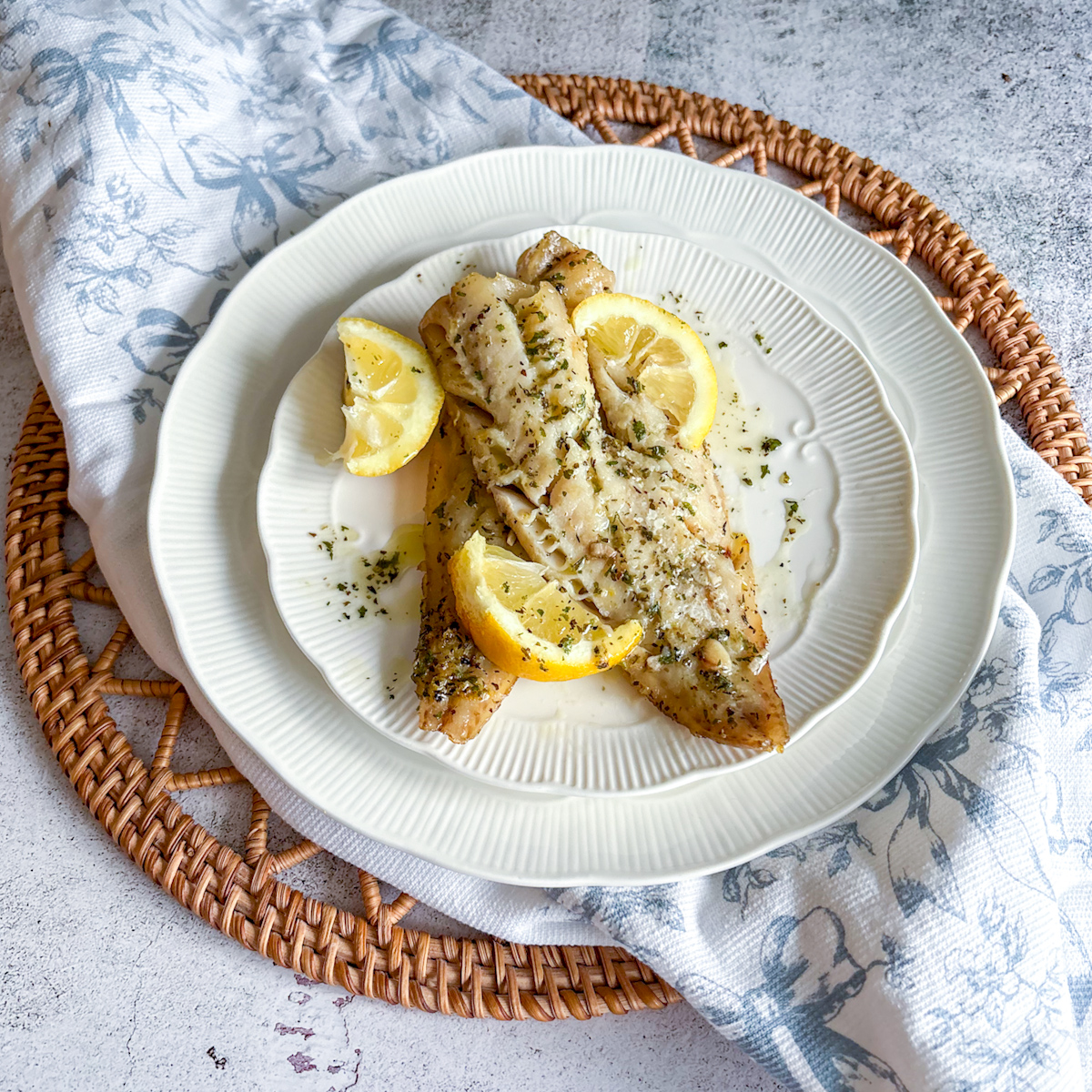
Baked pollock fillets brushed with melted garlic butter, lemon zest, dried herbs and sea salt, then baked for ten minutes until they flake apart at the touch of a fork. Light, cheap and quietly impressive, this baked pollock is on the table in under 20 minutes with a glossy lemon butter sauce spooned over the top.
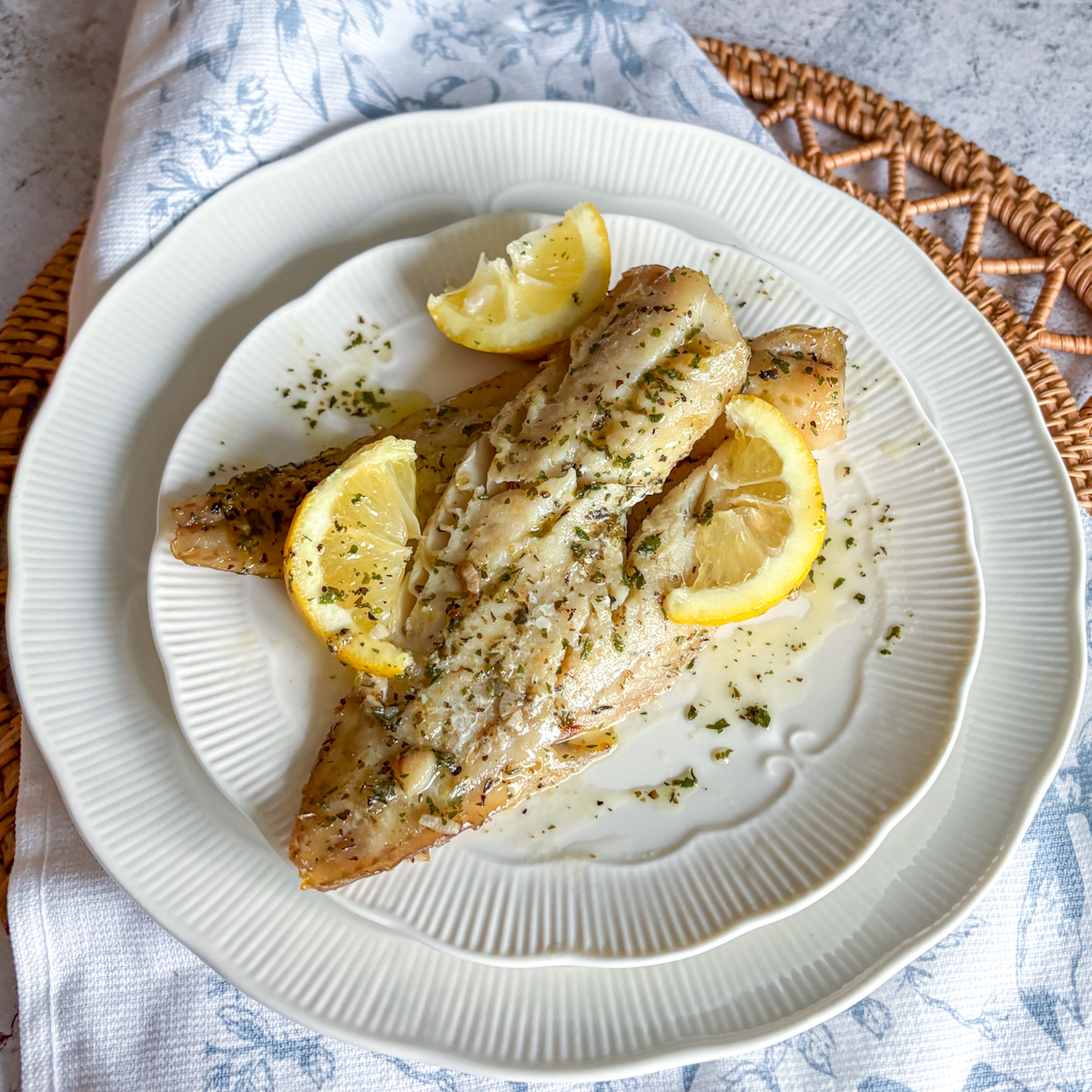
Baked pollock is one of the easiest ways to cook white fish at home, and the whole thing runs on butter, garlic, lemon and a good dried herb mix. The sauce melts in the microwave in under two minutes, goes over the fillets, and the fish bakes for ten minutes with one turn halfway through.
Pollock is mild, lean and noticeably cheaper than cod or haddock, which makes this a budget dinner that never tastes like one. It is filling next to potatoes, light enough for lunch, and the leftovers flake beautifully through a salad the following day.
Jump to:
Ingredients for Garlic Butter Baked Pollock
Here is everything you need for this baked pollock, with a short note on what each one does.
- Alaskan pollock fillets – mild, flaky white fish that cooks in minutes and takes on the butter sauce without losing its own gentle sweetness.
- Unsalted butter – melts into a glossy lemon garlic sauce and keeps the fish moist; unsalted means you set the salt level yourself.
- Fresh lemon zest – carries the citrus oils, which give a fragrance you never get from juice alone.
- Lemon juice – sharpens the melted butter so the sauce tastes bright rather than heavy.
- Garlic – minced fresh for a warm, savoury depth that runs through every bite.
- Dried herb mix (dill, parsley, oregano) – a soft, earthy background that suits white fish without covering the flavour.
- Sea salt – a good pinch from the grinder draws out the natural sweetness of the fish.
- Lemon slices – baked alongside the fillets and laid over the top to serve, for both flavour and a pretty finish.
How to Make Easy Baked Pollock in the Oven
This baked pollock comes together in four short steps, and the oven does almost all of it.
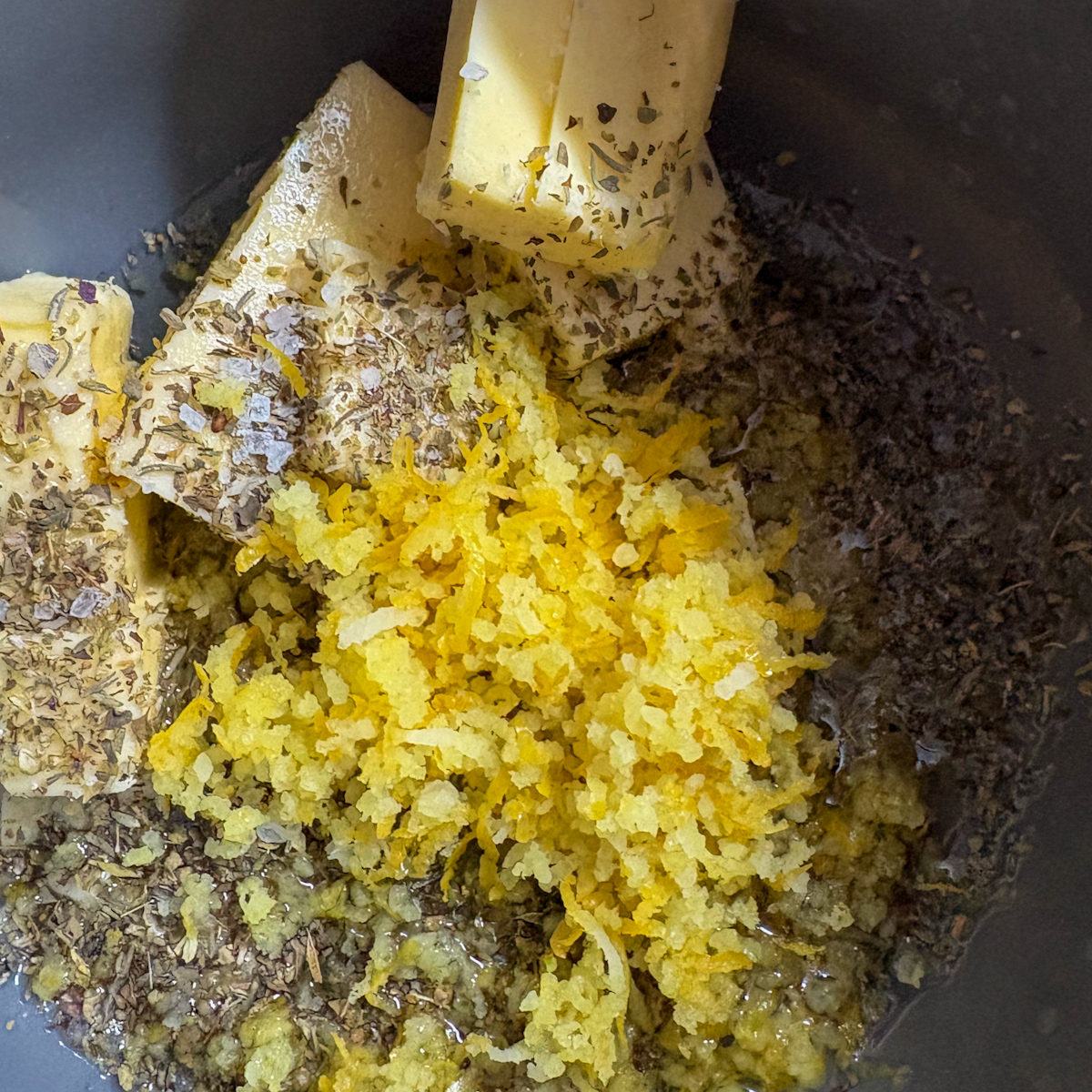
- Step 1: Put the butter, lemon juice, lemon zest, minced garlic, dried herb mix and a good pinch of sea salt into a small microwave-safe bowl. Microwave for one minute, stir well, then heat again in short bursts until the butter has melted into a smooth, glossy sauce.
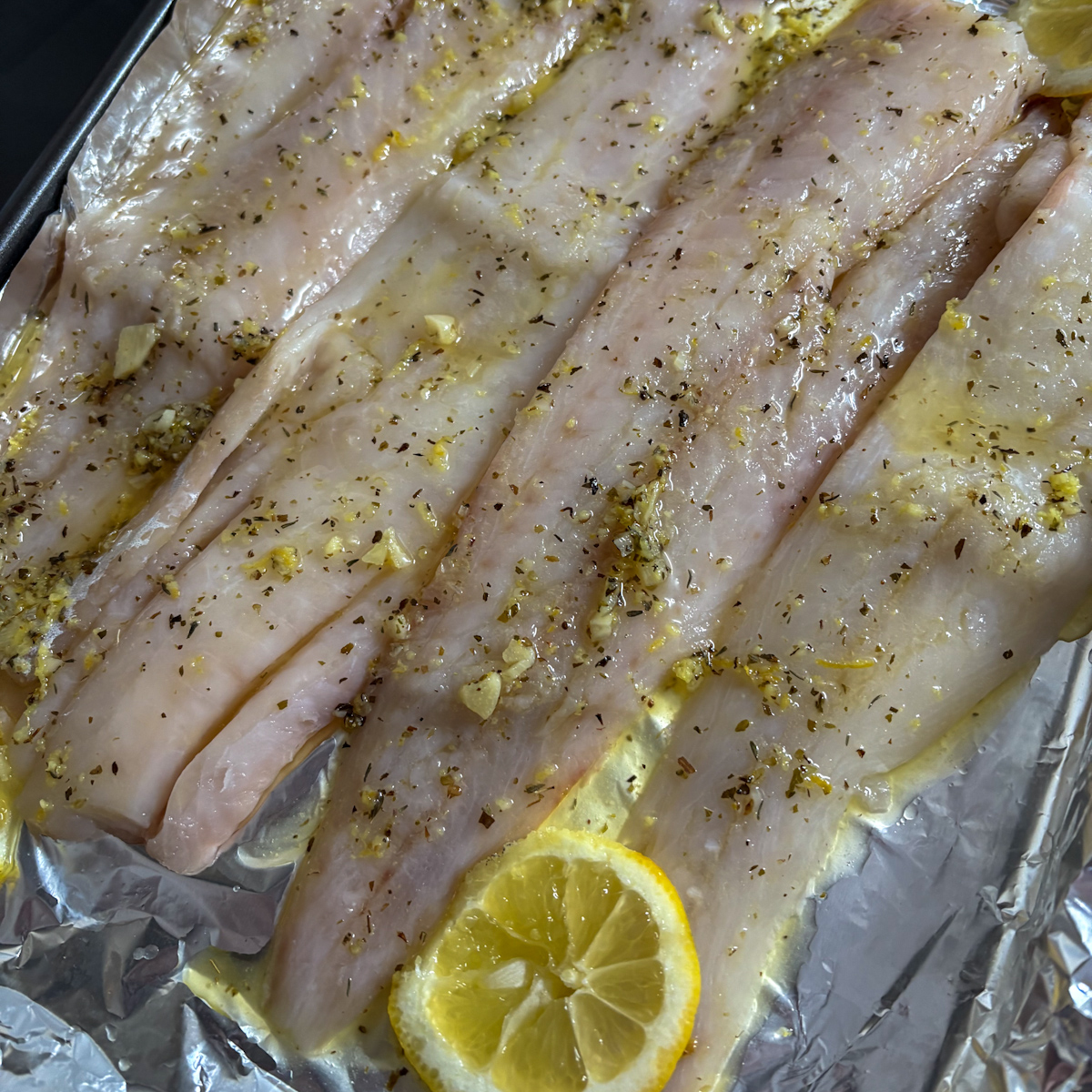
- Step 2: Heat the oven to 190°C (375°F) and line a baking tray with foil or parchment paper. Pat the pollock fillets dry with kitchen paper and lay them out in a single layer. Spoon most of the warm garlic butter over the fish, holding a little back, and bake for 5 to 6 minutes.
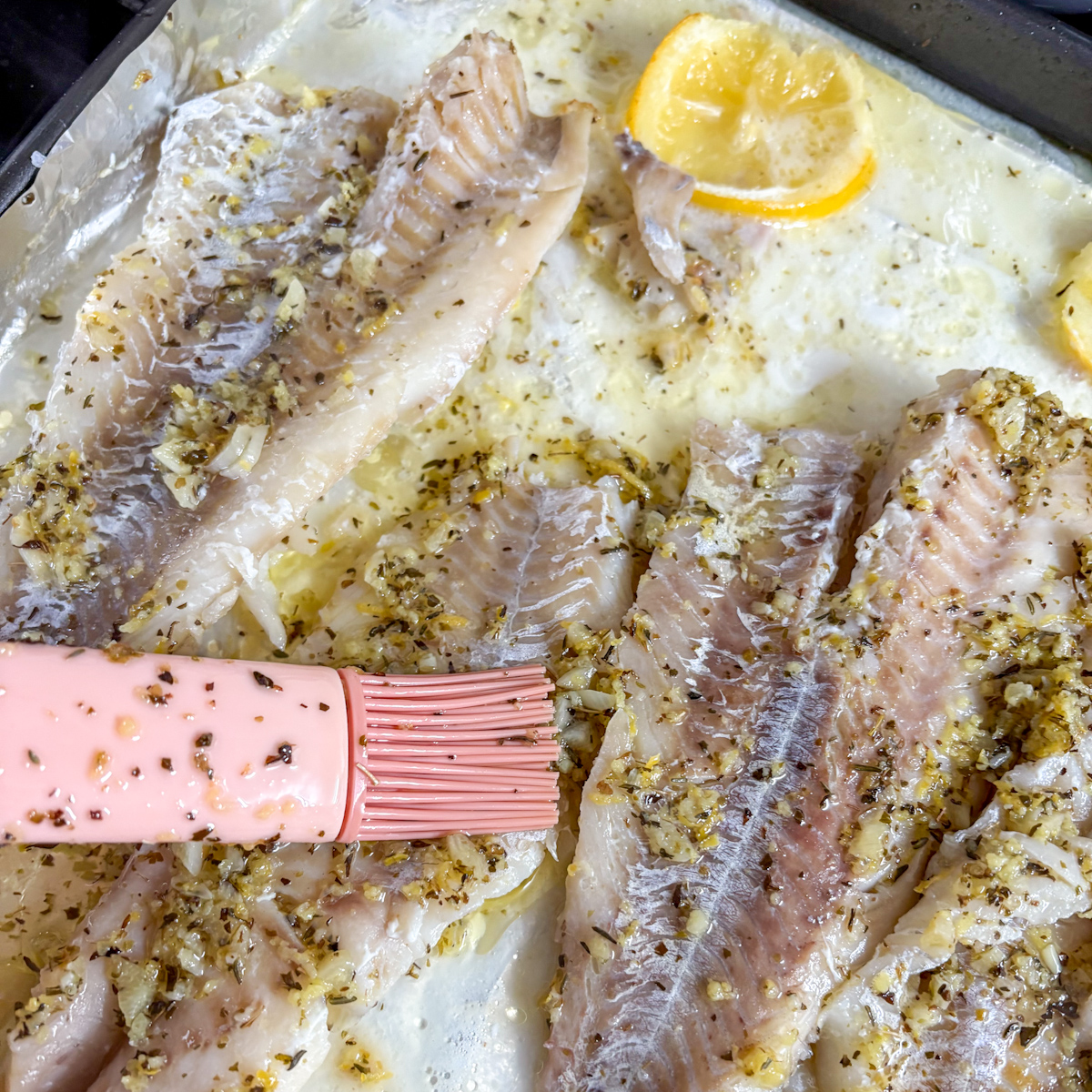
- Step 3: Take the tray out and turn each fillet over carefully with a fish slice. Brush the rest of the butter sauce across the top, then return the tray to the oven for another 4 minutes, until the fish is opaque and flakes easily with a fork.
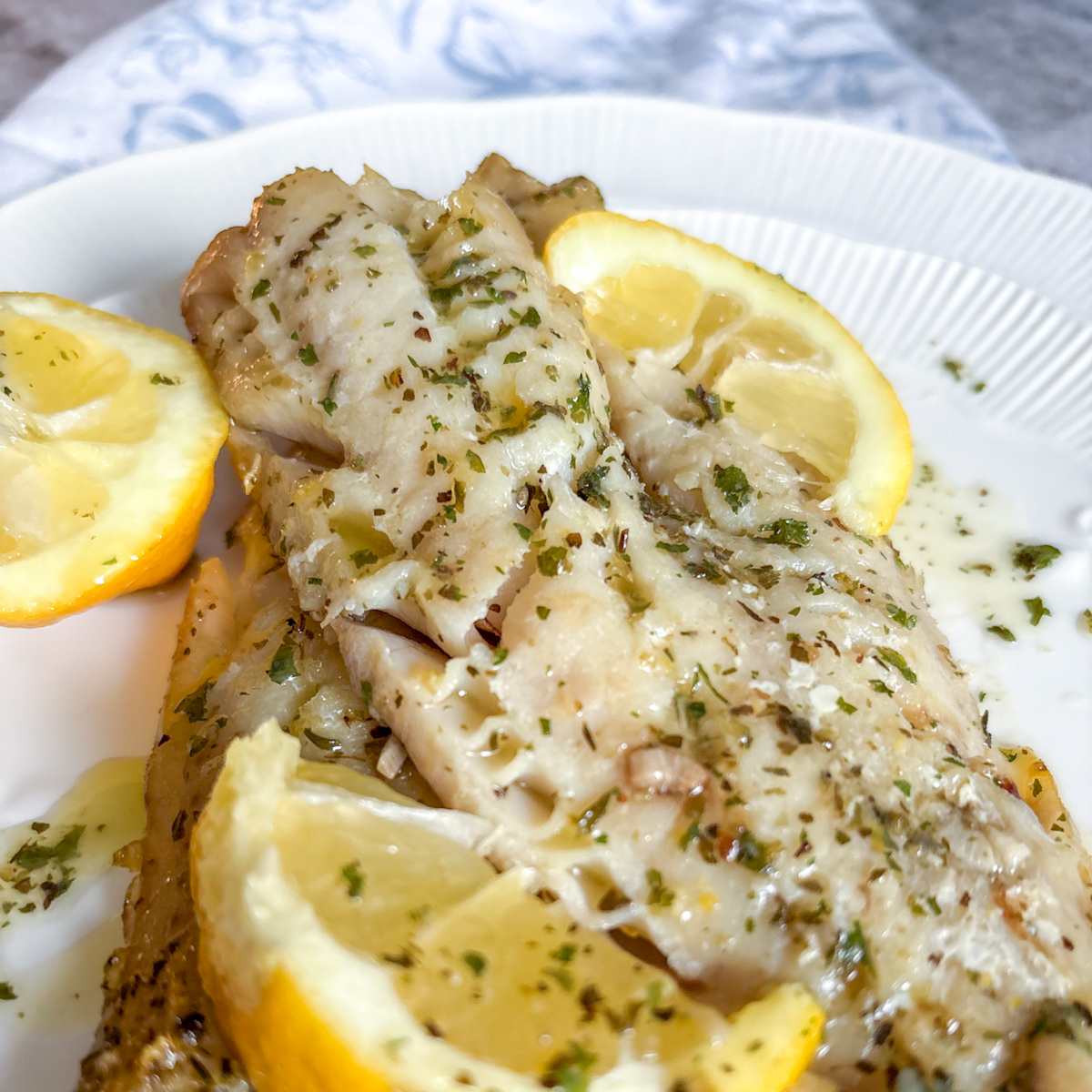
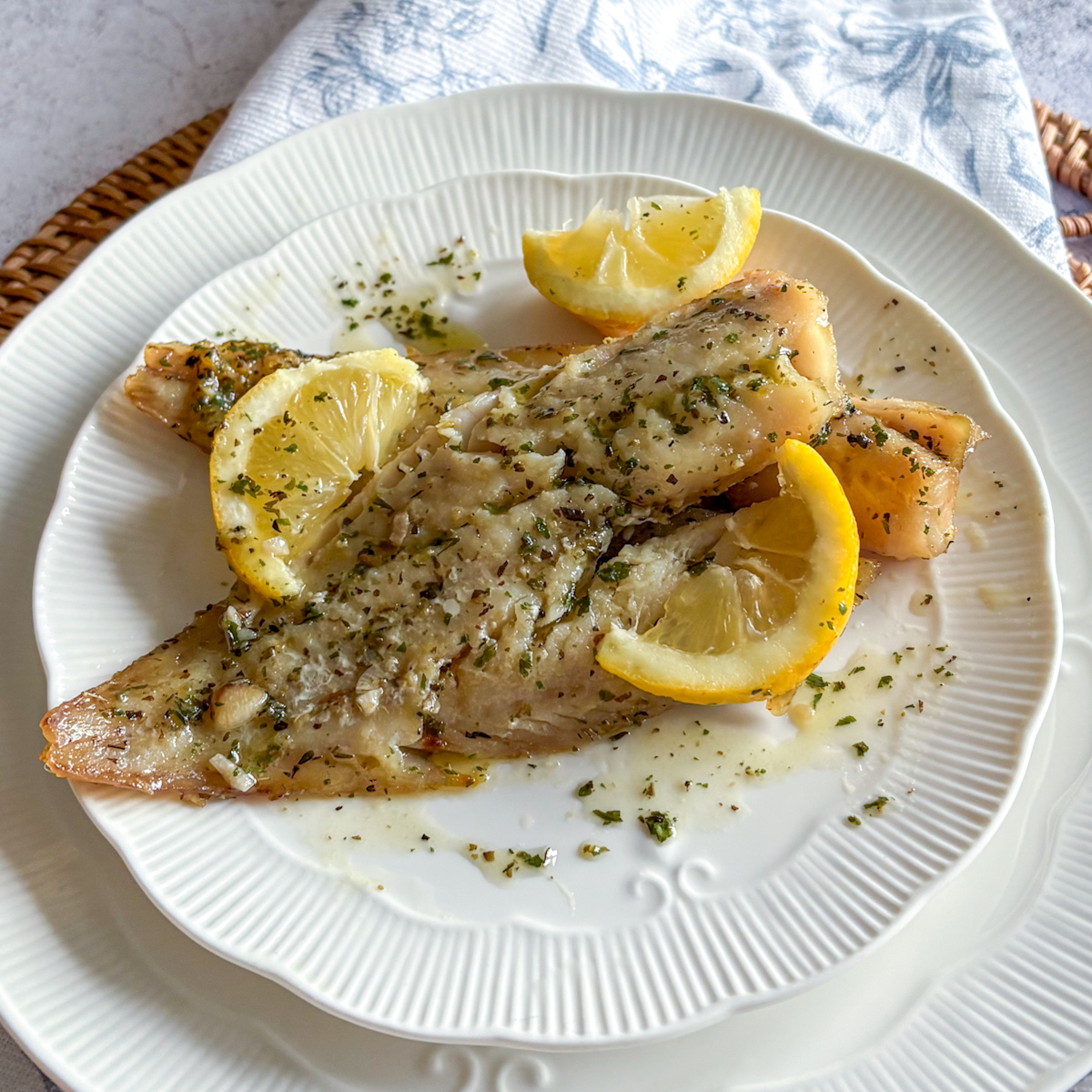
- Step 4: : Lift the fillets onto warm plates and spoon the buttery resting juices from the tray over each one. Garnish with fresh lemon slices and serve straight away, while the fish is piping hot.
Hint: Pollock is delicate, so avoid overcooking — it should stay moist and flaky rather than firm or rubbery.
How to Serve and Store Baked Pollock
Baked pollock is best eaten within a few minutes of leaving the oven, while the butter is still loose and the fish is at its softest. Herby baby potatoes, buttered greens or a bowl of mash all work well, mainly because they soak up the lemon garlic sauce left on the plate. For something lighter, serve it over a tomato and cucumber salad, or flake it into wraps with yoghurt and dill. A spoonful of the tray juices over the vegetables makes the whole plate taste finished.
Leftovers keep well for a day or two. Cool the fish to room temperature, then store it in an airtight container in the fridge for up to two days. Reheat gently, either in a low oven at around 150°C for a few minutes or in a covered pan on a low heat with a splash of water, so the fillets stay moist. Freezing cooked baked pollock is not worth it, as the texture turns soft and watery once it defrosts. Cold leftovers are lovely anyway, flaked through a green salad or stirred into pasta with a little more lemon.
More Easy Fish Recipes You Might Enjoy
If this one goes down well, here are a few more fish dinners from the blog worth a look.
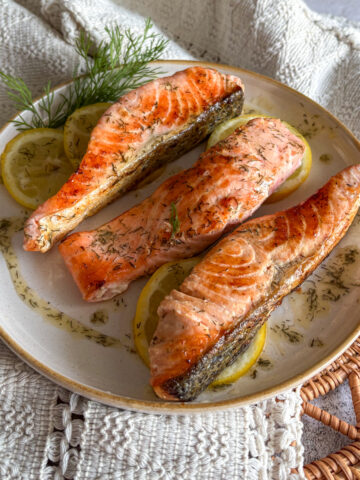
- For another quick pan supper, try Easy Pan Fried Salmon with Lemon Butter — crisp-edged salmon fillets finished in a bright lemon butter sauce.
- When you want something even cheaper, this Basa Fillet Recipe — soft, mild white fish baked with simple seasoning and ready in minutes.
- On a cold evening, nothing beats Cod Ukha — a clear, classic Russian fish soup with potatoes, dill and plenty of black pepper.
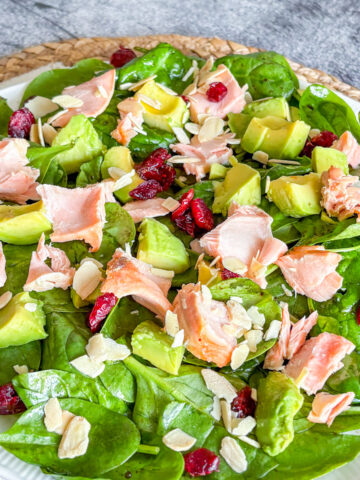
- For a light lunch, have a look at Salmon Spinach Salad — flaked salmon, baby spinach and a sharp dressing that comes together in one bowl.
What Baked Pollock Costs Around the World
Baked pollock is one of the cheapest fish dinners you can put on a table, and the numbers hold up almost everywhere.
- In the UK, a 500g pack of frozen Alaskan pollock fillets runs around £5 in Tesco, Aldi or Iceland, and with butter, a lemon and garlic the whole dish lands near £6, or roughly £1.50 per serving.
- Ireland sits a little higher, with fillets around €6 to €7 in Tesco, Dunnes or Lidl and a total of about €8, close to €2 a portion.
- In the USA, pollock is one of the best value fish in the freezer aisle at Walmart, Kroger or Trader Joe's, so the whole tray comes in around $6 to $7, near $1.70 a serving.
- Australia is the pricier one, since pollock is less common and often sold as hoki or Alaska pollock at Coles and Woolworths, taking the dish to about AU$14, or AU$3.50 a portion.
- Poland is the bargain, where mintaj sits on every supermarket freezer shelf in Biedronka and Lidl, bringing this baked pollock to around 24 zł for four servings, near 6 zł each.
Top Tips and Notes for the Best Baked Pollock
- Choose fillets of a similar thickness when you can. Pollock is sold in fairly uneven pieces, and a thin tail end will be dry by the time a thick centre cut is done. If your pack is mixed, tuck the thin ends under themselves to make a chunkier shape before the tray goes into the oven. That one adjustment keeps every piece of fish cooking at the same rate.
- Take the fish out of the fridge about ten minutes before baking. Fridge-cold fillets drop the temperature of the tray and start to release water instead of cooking, which dilutes your butter sauce. Ten minutes on the worktop is enough to take the chill off without leaving fish standing at room temperature for too long. Warmer fillets also grip the melted butter better, so less of it slides straight onto the foil.
- Grate the zest before you cut the lemon. Trying to zest a squeezed half is fiddly and you always lose some of it, and the zest is where most of the citrus flavour actually lives. Take the zest off the whole lemon first, then halve it for the juice and slice what is left for the tray. It saves you reaching for a second lemon halfway through the recipe.
- Melt the butter in short bursts rather than one long blast. Butter spits when it overheats in a microwave, and once it separates the sauce turns greasy instead of creamy. One minute, a good stir, then ten-second bursts is all it needs to come together smoothly. If you would rather not use the microwave at all, a small pan over a low heat does exactly the same job in about two minutes.
- Line the tray with foil and turn the edges up slightly. The butter sauce is loose and will run to the lowest corner of a flat tray, where it burns and smells bitter well before the fish is ready. A shallow lip keeps the juices pooled around the fillets, basting them as they bake. It also means you can tip that lovely liquid straight onto the plates at the end without losing a drop.
- Use a fish slice or a wide palette knife to turn the fillets. Pollock is delicate and a fork or tongs will tear straight through a half-cooked piece, leaving you with shreds rather than neat fillets. Slide the blade fully under each one, lift, and flip in a single confident movement. Doing this at the halfway mark rather than at the end also means the fish is still firm enough to hold together.
- Slice a lemon thinly and lay a few rounds under the fish as well as on top. The slices underneath stop the fillets sitting directly on hot foil and gently steam the base with citrus at the same time. The ones on top look pretty and soften into something worth eating rather than pushing to the side. Thin slices are the trick here, since thick ones stay raw and bitter over such a short bake.
- Season at the last moment. Salt draws moisture out of white fish quickly, so a fillet salted ten minutes early will be sitting in a puddle by the time it reaches the oven. Adding the sea salt to the butter sauce, as this recipe does, handles the seasoning and the coating in one step. If you want extra salt at the table, use flaky sea salt over the finished fillets so it stays crisp on top.
Baked Pollock Recipe FAQ
Can I make baked pollock without butter?
Yes, olive oil works well in place of the butter and keeps the recipe dairy-free. Use the same quantity, whisk it with the lemon, garlic, herbs and salt, and skip the melting step entirely. The finish is slightly less rich and a little more Mediterranean in character, so a scattering of fresh parsley at the end suits it. Cooking time and temperature stay exactly the same.
Should the skin be left on or taken off?
Most Alaskan pollock is sold skinless and boneless, so this rarely comes up. If you have bought fillets with the skin still attached, bake them skin side down for the first stage and turn them for the last few minutes as usual. Oven baking will not crisp fish skin the way a hot pan does, so many people simply peel it away once the fish is cooked and lifts easily.
Can I bake pollock straight from frozen?
You can, but the result is noticeably wetter and the sauce ends up thin. If you have no choice, add roughly eight to ten minutes to the total time, drain the liquid from the tray halfway through, and hold back some of the butter to brush on at the end. Defrosting overnight in the fridge is always the better option and takes no real effort.
What is the best oven temperature for baked pollock?
190°C, or 375°F, is the sweet spot for thin white fish. It is hot enough to cook the fillets quickly before they release too much moisture, but not so fierce that the butter burns or the edges tighten. Lower temperatures around 160°C work if you are baking thicker cuts and want a gentler result, though you will need to add a few minutes.
Can I cook this baked pollock in an air fryer?
Yes, and it is very quick. Set the air fryer to 180°C, line the basket so the sauce does not run through, and cook the coated fillets for about 8 minutes, turning once. Watch it closely towards the end, because air fryers move a lot of hot air and delicate fish dries out faster than it does in the oven.
Why did my baked pollock turn out watery?
Almost always because the fillets were not dried properly before baking. Pollock, especially defrosted pollock, holds a lot of water, and any that stays on the surface will dilute the butter into a thin pool. Press both sides firmly with kitchen paper until the fish feels dry to the touch, and drain any liquid from the pack rather than tipping it onto the tray.
Can I get the baked pollock ready in advance?
The butter sauce can be made up to three days ahead and kept in the fridge, then melted again when you need it. The fish itself is best coated just before baking, since sitting in salted butter for hours draws out moisture and softens the texture. Ten minutes of preparation on the night is genuinely all this recipe asks for.
Related
Looking for other recipes like this? Try these:


Easy Baked Pollock Recipe
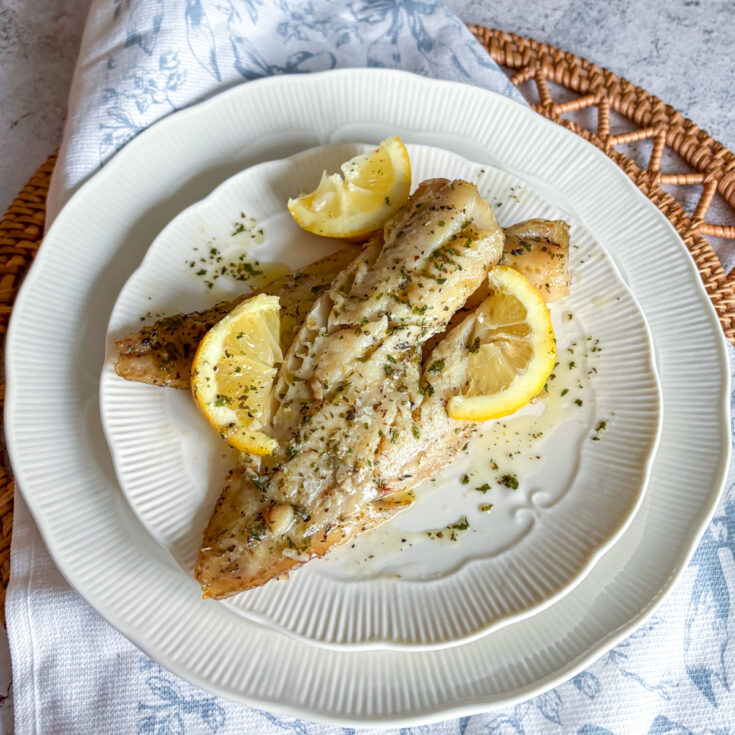
Baked pollock fillets cooked in a garlic butter sauce with lemon zest, dried herbs and sea salt. This easy, healthy weeknight fish dinner is ready in under 20 minutes and gives you tender, flaky fillets and a glossy lemon butter glaze every time.
Ingredients
- 4 large Alaskan pollock fillets (about 500g / 1 lb 2 oz total)
- 60g unsalted butter (2 oz), in 4 knobs
- ½ tablespoon fresh grated lemon zest
- 1 tablespoon lemon juice
- 3 garlic cloves, minced
- 1 tablespoon dried herb mix (dill, parsley, oregano)
- Pinch of sea salt
- 1 lemon, sliced, to bake and serve
Instructions
- Combine the butter, lemon juice, lemon zest, minced garlic, dried herb mix and a pinch of sea salt in a small microwave-safe bowl. Microwave for one minute, stir, then heat again in short bursts until the butter is fully melted and smooth.
- Heat the oven to 190°C (375°F) and line a baking tray with foil or parchment paper, turning the edges up slightly. Pat the pollock fillets dry with kitchen paper and arrange them on the tray in a single layer. Spoon most of the warm garlic butter generously over each fillet, keeping a little back for later.
- Bake for 5 to 6 minutes, then carefully turn the fillets over with a fish slice. Brush the remaining butter sauce evenly across the fish and return the tray to the oven for another 4 minutes, until the fish is opaque and flakes easily with a fork.
- Lift the fillets onto serving plates, spoon over the buttery resting juices from the tray, garnish with fresh lemon slices and serve immediately while piping hot.
Notes
Defrosting frozen fillets — defrost overnight in the fridge and pat extremely dry before baking, or the released water will thin the sauce into a pool on the tray.
Thickness matters — average fillets cook in about 10 minutes in total, but thicker cuts may need an extra 1 to 2 minutes. Always check with a fork before serving.
Butter temperature — pour the sauce over while it is still warm and fully melted. A cold or resolidified sauce sits on the surface instead of coating the fillets evenly.
Herb swap — a Mediterranean blend of oregano, thyme and parsley works best here, and shop-bought Italian seasoning is a fine substitute if you have no herb mix to hand.
Storage — keep leftovers in an airtight container in the fridge for up to two days and reheat gently in a low oven or a covered pan with a splash of water.