
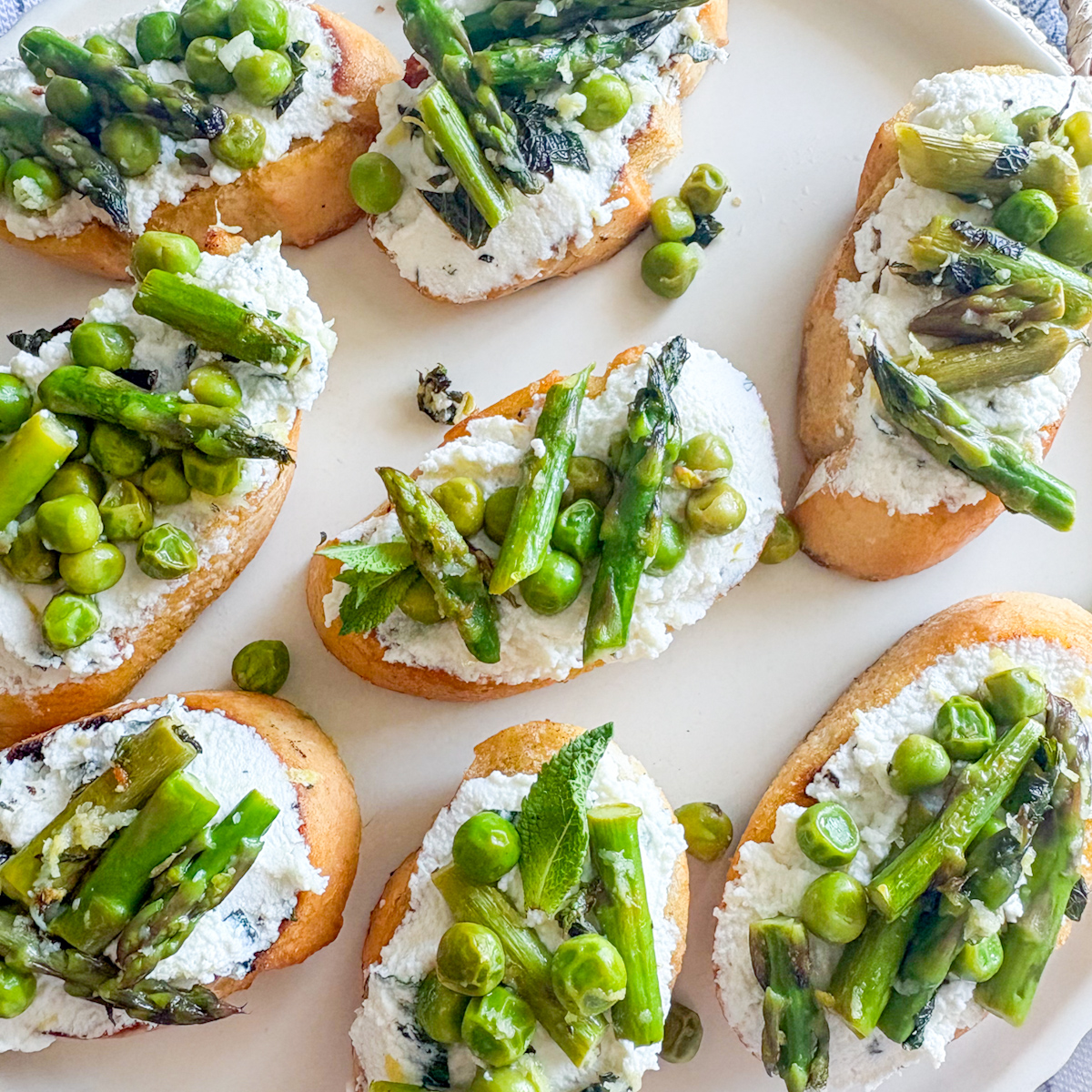
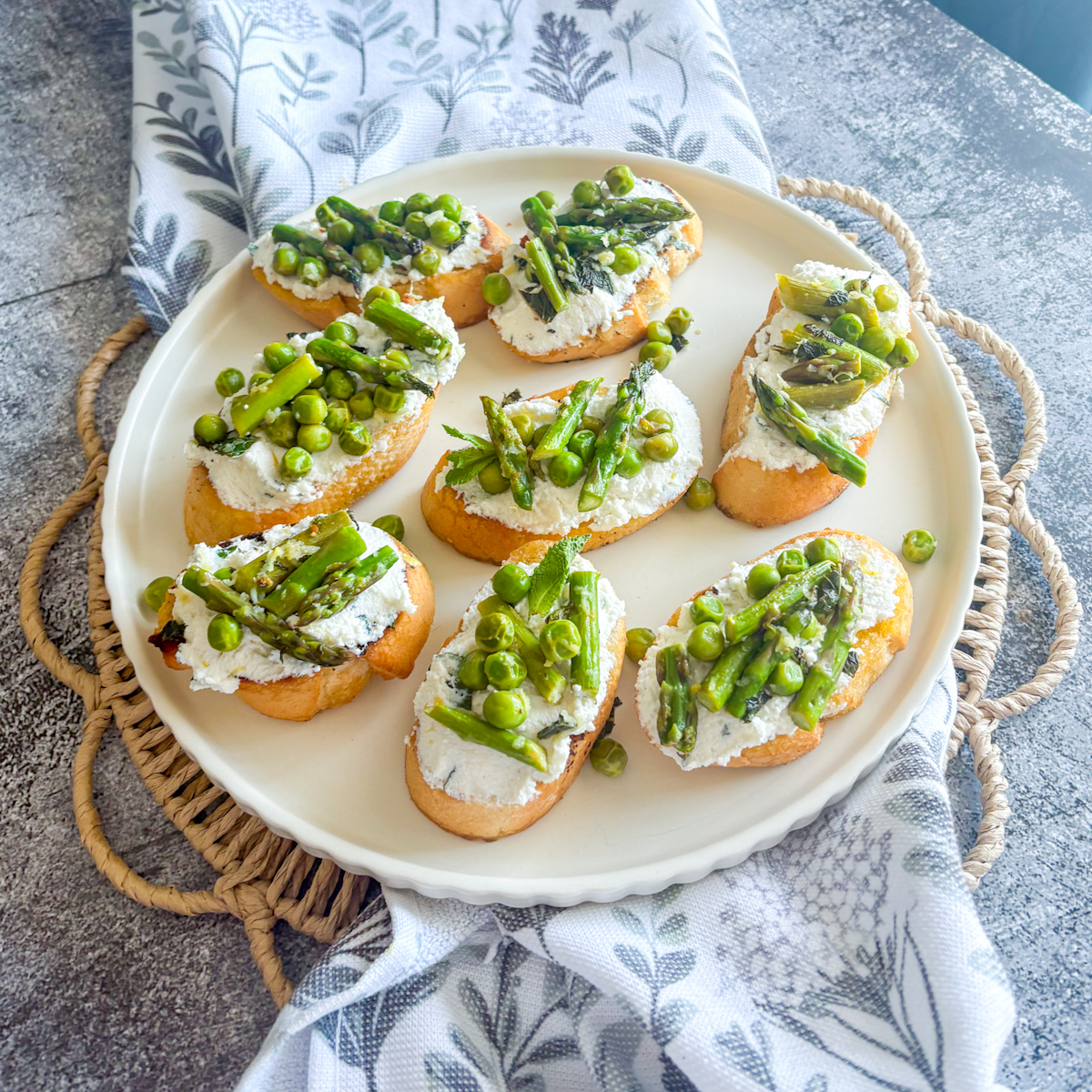
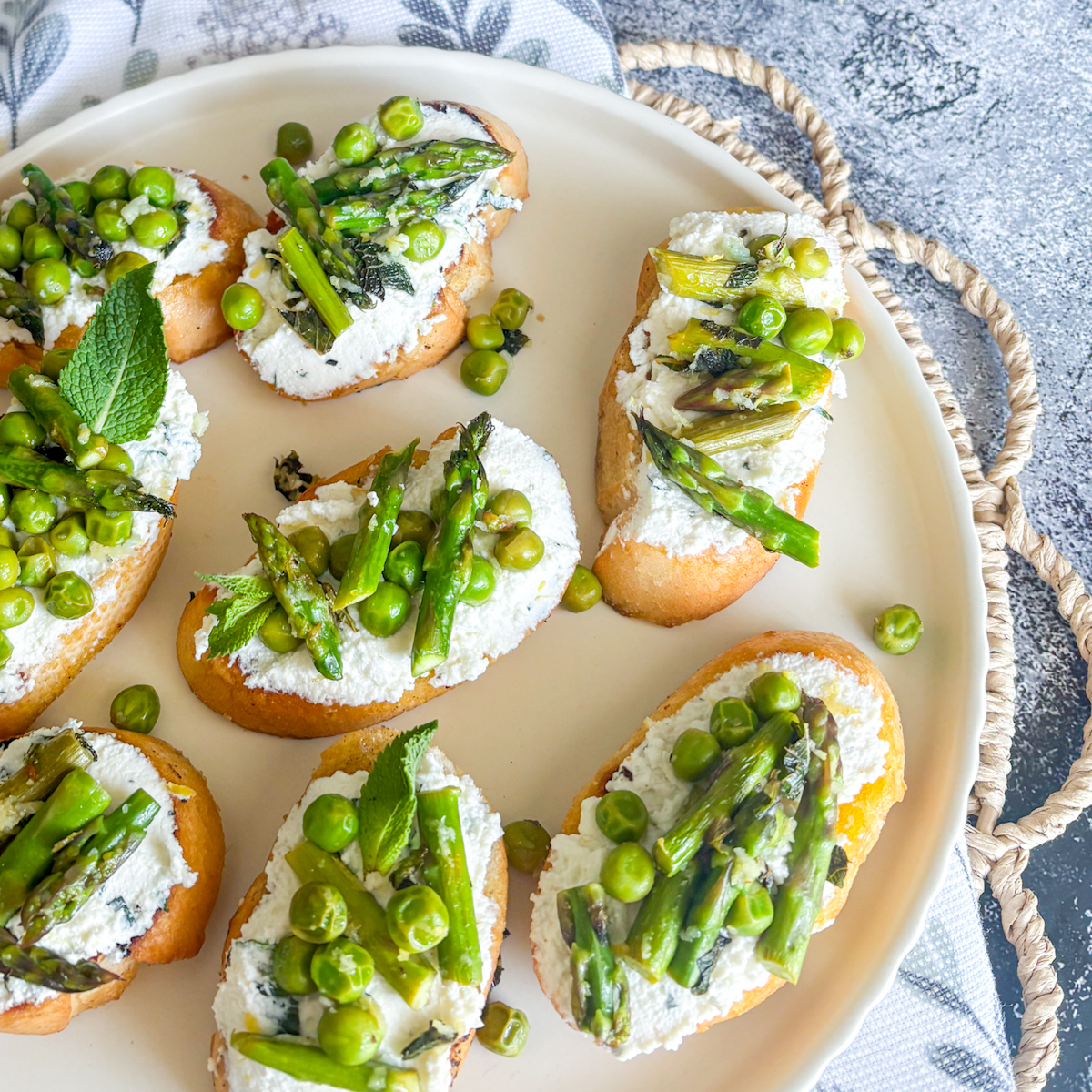
Pea and asparagus crostini are a quick, fresh spring appetiser made with crispy butter-fried baguette slices, whipped lemon ricotta and bright green spring veg. Ready in under 20 minutes, these little toasts are creamy, herby and perfect for entertaining.
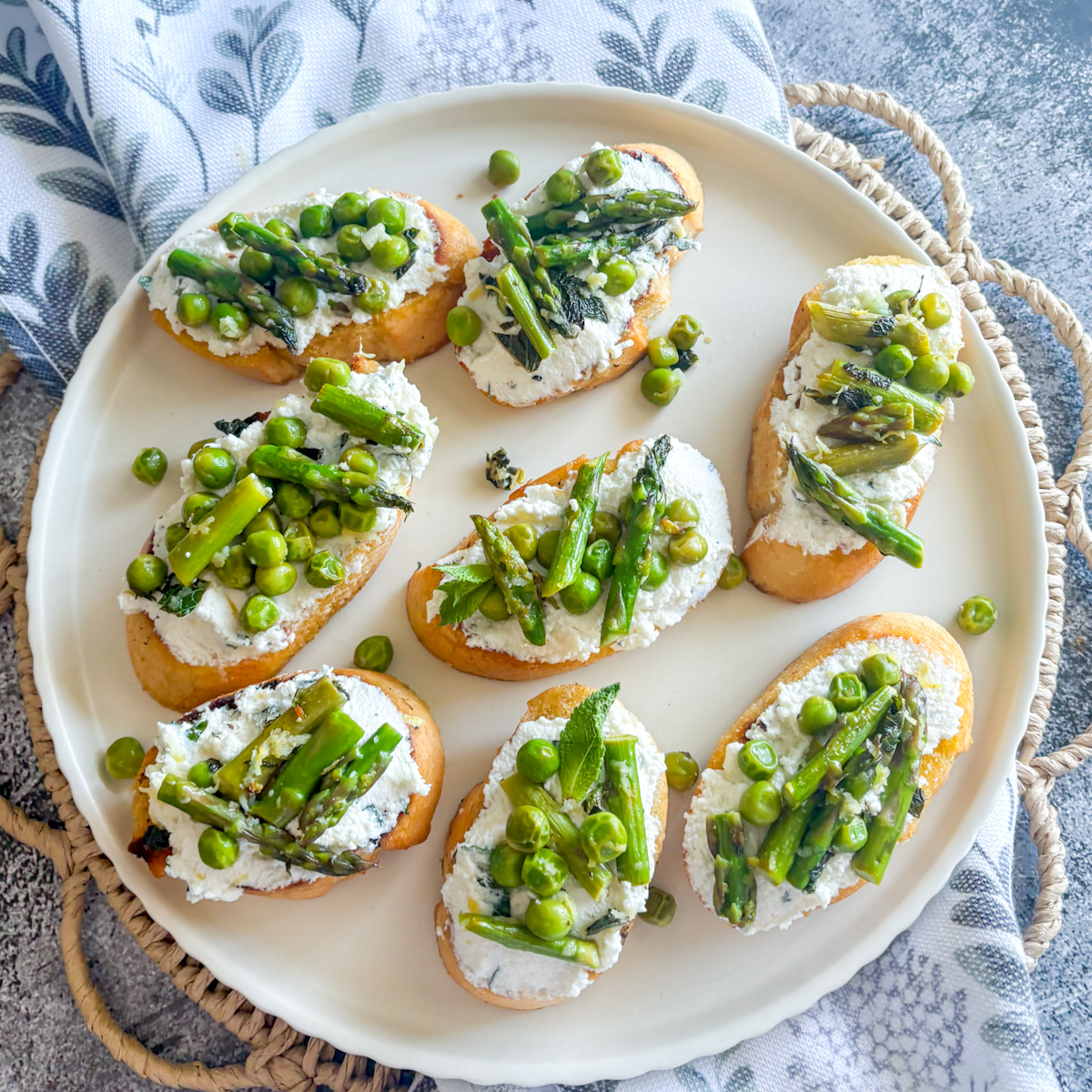
The combination of creamy ricotta, sweet peas and tender asparagus on a golden, buttery baguette slice feels properly special, but the whole thing comes together in about 20 minutes with very little fuss. Lemon zest and fresh mint pull everything into focus and stop the ricotta from feeling heavy.
The ricotta spread and spring veg can both be prepped ahead, so you only need to fry the baguette slices and assemble before serving. They work just as nicely for a casual weekday lunch as they do for a dinner party starter or a brunch board.
Jump to:
Ingredients for Pea and Asparagus Crostini
- French baguette – the base of the crostini. Look for a fresh baguette with a thin, crisp crust and a slightly chewy crumb that fries up crisp and golden.
- Unsalted butter – for frying the baguette slices. Unsalted lets you control the seasoning, and butter gives a richer, nuttier finish than oil alone.
- Olive oil – for cooking the spring veg. A standard everyday olive oil is fine here; no need to reach for the expensive bottle.
- Whole-milk ricotta – the creamy base of the spread. Whole-milk ricotta is thicker and richer than low-fat versions, which tend to be watery.
- Garlic cloves – one goes into the ricotta, the rest into the pan with the veg. Fresh garlic adds a sharp, savoury edge to both layers.
- Lemon zest – brightens the ricotta and lifts the spring veg. Always zest your lemon before juicing, it's much easier that way.
- Fresh lemon juice – balances the richness of the ricotta and butter. Use freshly squeezed, not bottled.
- Asparagus – sweet, tender and the main green veg here. Look for firm spears with tight, closed tips and a vibrant green colour.
- Fresh or frozen peas – sweet little bursts of green. Frozen peas work brilliantly and are available year-round; thaw them first.
- Fresh mint leaves – the herb that ties pea, lemon and ricotta together beautifully. Avoid dried mint here, it just doesn't compare.
- Water – helps the peas and asparagus steam and soften gently in the pan.
- Sea salt – flaky sea salt from a grinder gives the best flavour and texture.
- Freshly ground black pepper – more aroma and bite than pre-ground pepper.
How to Make Pea and Asparagus Crostini
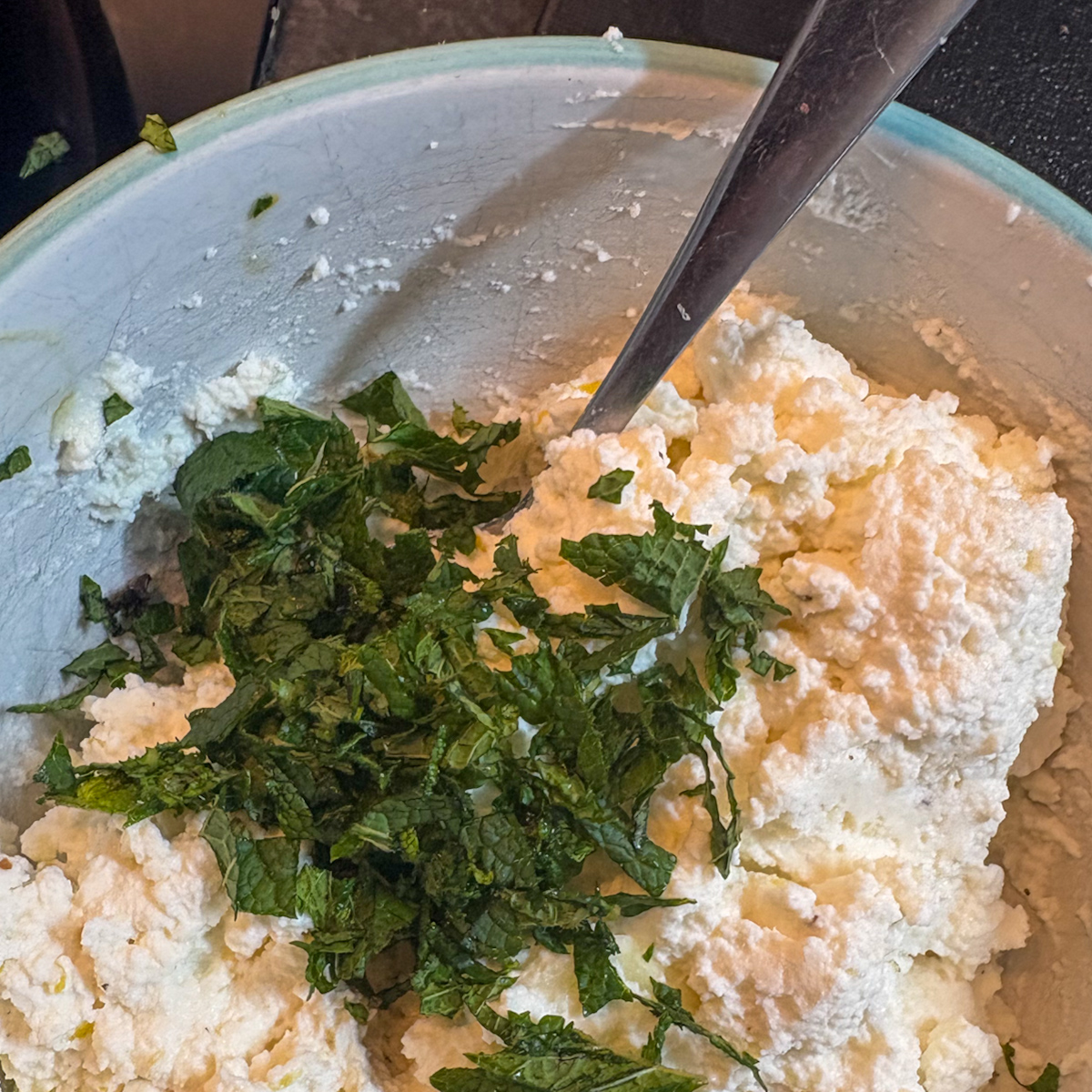
- Step 1: In a small bowl, combine the ricotta with ½ teaspoon salt, a good crack of black pepper, one minced garlic clove, 1 teaspoon chopped mint and 1 teaspoon each of lemon juice and lemon zest. Stir until smooth and creamy, then set aside for at least 15 minutes while you prep everything else. This short rest lets the flavours mingle and the ricotta soften.
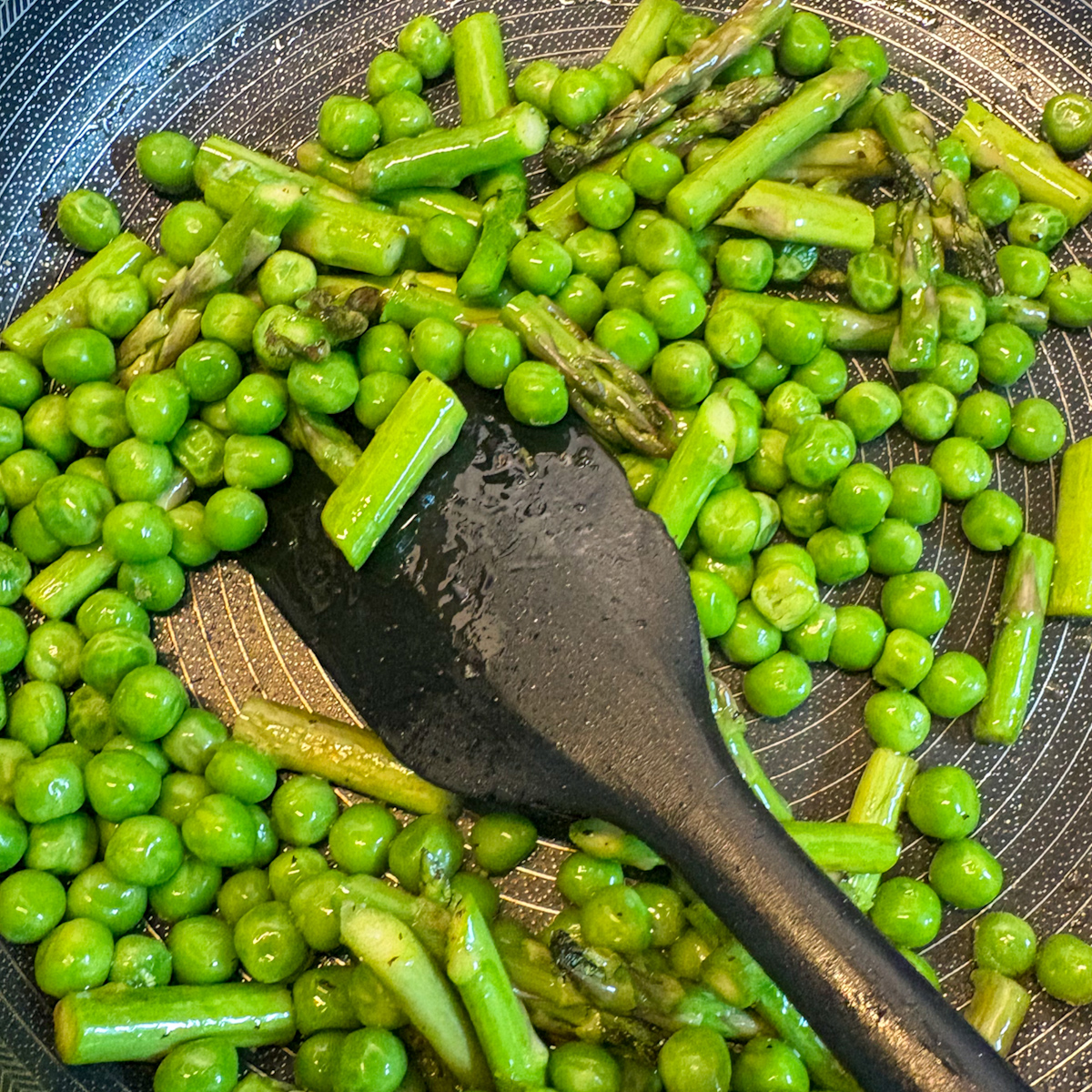
- Step 2: Heat the olive oil in a pan over medium-high heat. Snap or trim the tough ends off the asparagus and cut the spears into roughly 1cm pieces. Add them to the hot oil and cook for 1 minute, stirring often. Tip in the peas and cook for another 30 seconds. Pour in the water, turn the heat up and keep stirring for a couple of minutes until all the liquid has evaporated.
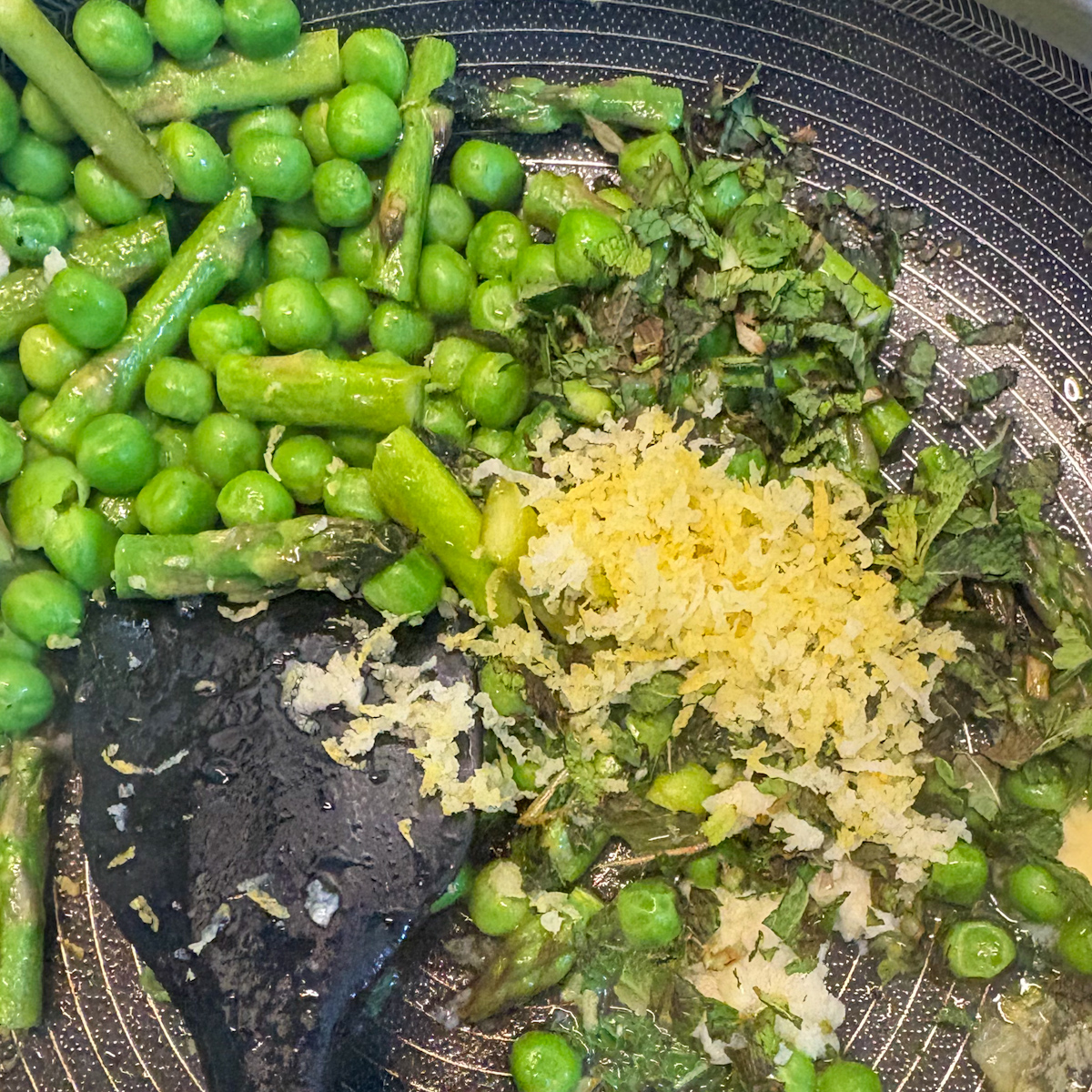
- Step 3: Drop the heat back to medium and add the remaining chopped mint, the rest of the minced garlic, the leftover lemon zest, the lemon juice, salt and black pepper. Toss everything together so the peas and asparagus get coated in the herby lemon mix. Cook for one more minute, then take the pan off the heat and let the veggies cool slightly.
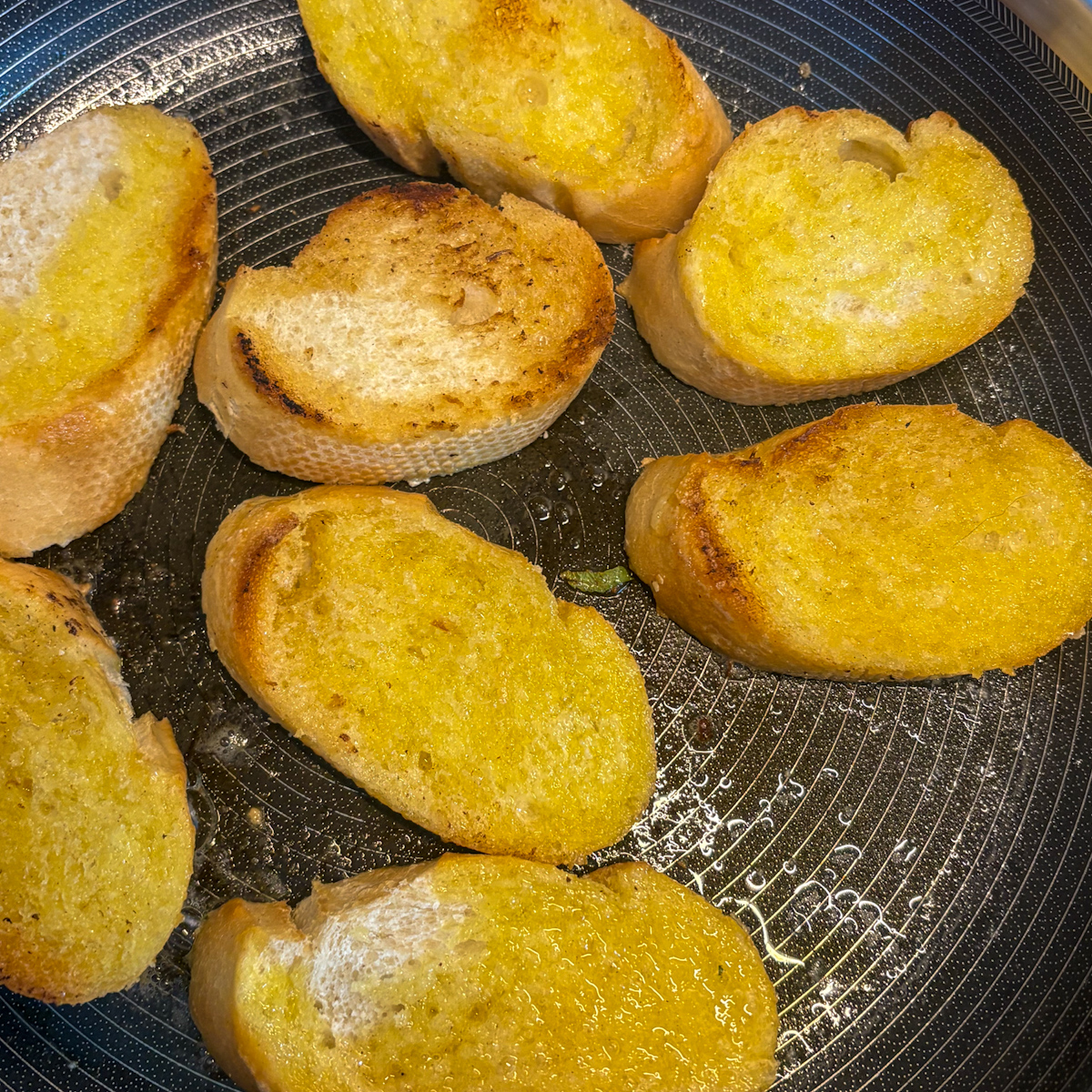
- Step 4: Slice the baguette into similar-sized rounds, around 1.5cm thick. Heat a large pan and melt a knob of unsalted butter. Lay the baguette slices into the melted butter in a single layer and fry for 1-2 minutes on each side, until golden and crispy. Don't overcrowd the pan – cook in batches if needed and add more butter whenever the pan starts to look dry.
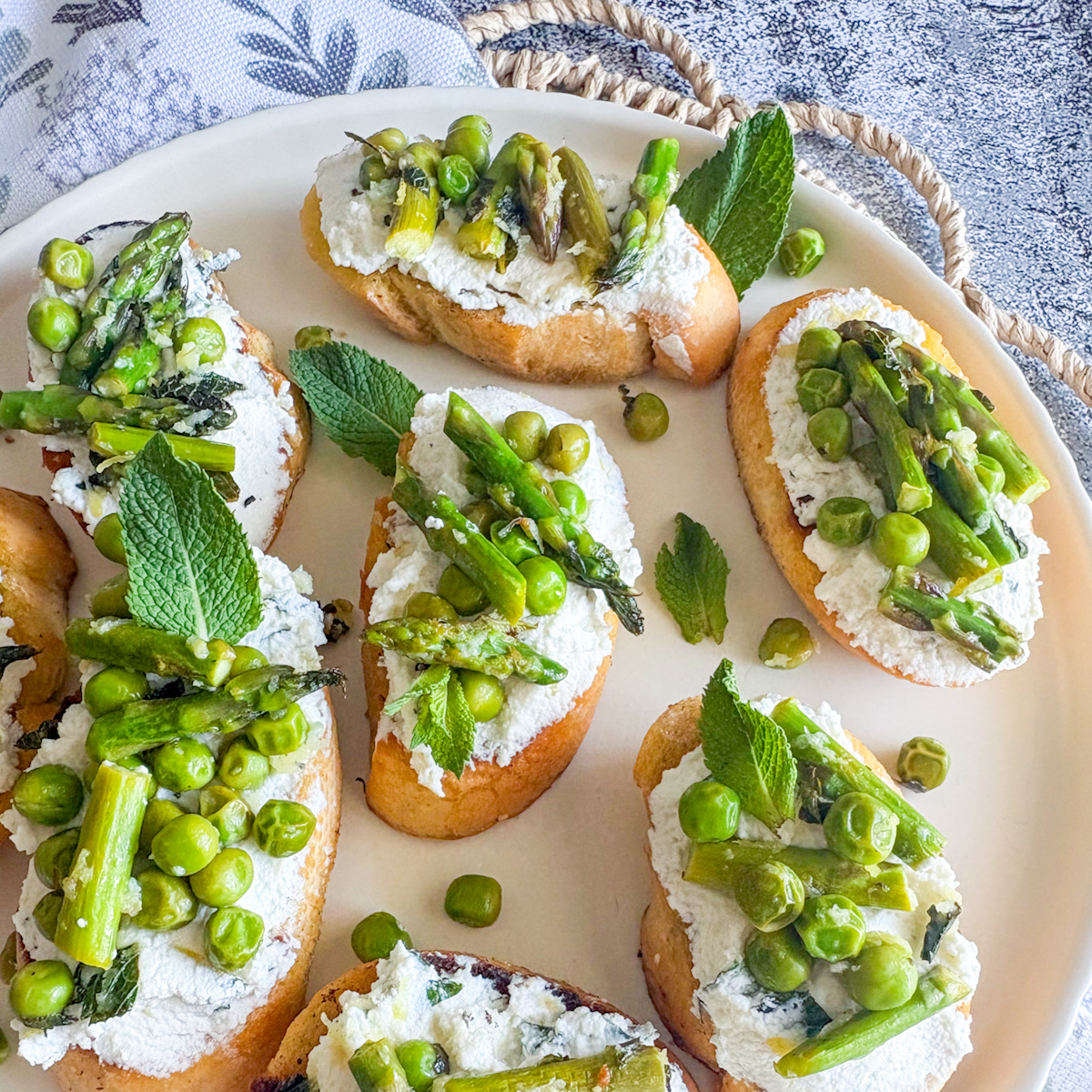
To build the pea and asparagus crostini, spread a generous spoonful of the ricotta mix onto each toasted slice, then top with the spring veg. Finish with a pinch of sea salt and a fresh grind of black pepper.
How to Serve and Store Pea and Asparagus Crostini
These pea and asparagus crostini are best served fresh, while the baguette is still crisp and the ricotta is at room temperature. Plate them up on a large board or platter for sharing, and serve alongside a glass of chilled white wine or a light spritz. For a bigger spread, pair them with marinated olives, a few slices of prosciutto, or a simple green salad. They also slot in nicely on a brunch table or a picnic spread.
The components store much better than the assembled crostini. Keep the whipped ricotta mix in an airtight container in the fridge for up to 3 days. The cooked spring veg will keep for 2 days in the fridge – bring it back to room temperature before serving. Once assembled, the baguette slices start to soften within about an hour, so build them just before serving for the best texture. Leftover toasted baguette can be stored in an airtight tin at room temperature for a day and refreshed in a hot oven for a few minutes.
How Much Does It Cost to Make Pea and Asparagus Crostini?
Asparagus is the headline ingredient and also the one whose price varies most.
- In the UK, a 250g bunch of asparagus typically costs £1.75 to £2.50 in Tesco, Sainsbury's and Morrisons during the British season (May to June), rising to £3+ for imported spears out of season.
- In Ireland, expect to pay €2.50 to €3.50 per bunch at Tesco, Dunnes Stores or SuperValu.
- In the USA, asparagus runs around $3.50 to $4.50 per pound at Kroger, Whole Foods and Hy-Vee.
- In Spain – one of Europe's biggest asparagus producers – you can pick up fresh spears for €2 to €3 per bunch at Mercadona or Carrefour.
- In Australia, supermarkets like Woolworths and Coles tend to charge AUD 4 to 6 per bunch.
Adding in the baguette, ricotta, lemon and basic store-cupboard staples, a generous platter of pea and asparagus crostini works out at roughly £6-£10 (about $8-$12) – cheap enough for a weekday lunch and impressive enough for guests. For the best value, buy asparagus in season and stick with frozen peas, which are consistently affordable everywhere.
More Easy Appetiser Recipes to Try
If you enjoy these crostini, there are plenty more easy starter ideas on the blog.
- For another simple sharing plate, try Stuffed Mini Peppers Recipe - Ultimately Cheese – sweet baby peppers loaded with a creamy cheese filling and baked until golden.
- These Slow-Braised Courgettes with Mint, Garlic & Chilli Recipe make a brilliant side that uses the same mint-and-garlic flavour combination as the crostini topping.
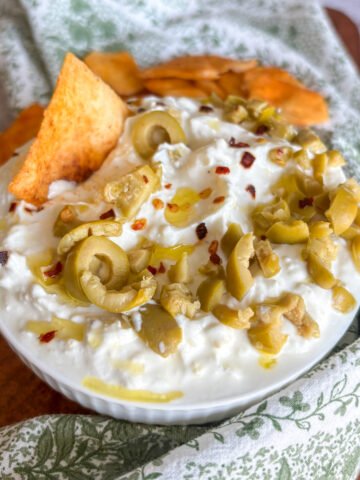
- If you love whipped cheese spreads, this Marinated Olives and Whipped Feta Recipe is a perfect pairing for these crostini on a sharing board.
- Use up leftover bread with these crunchy Rye Bread Grenki (Rye bread croutons) Recipe – a great snack with drinks or a topping for soups.
- For another easy bread-based starter, this Prosciutto Flatbread Recipe is salty, crisp and ready in minutes.
Top Tips for the Best Pea and Asparagus Crostini
- Choose the right baguette. A traditional French baguette with a thin, crisp crust and a slightly chewy interior is the best base for these crostini. Avoid the soft, sandwich-style baguettes you sometimes find in the bread aisle – they go limp once topped. If you can, buy your baguette the same day or the day before for the best texture when fried. Day-old baguette actually crisps up a touch faster in the pan, which is a small but useful detail.
- Don't skip resting the ricotta. Letting the ricotta mix sit for at least 15 minutes makes a real difference to the final flavour. The salt has time to draw out a little excess moisture, the garlic mellows slightly, and the mint and lemon zest infuse properly into the cheese. If you have longer, leave it for 30 minutes or even an hour. Give it a quick stir before spreading and you're good to go.
- Use whole-milk ricotta. Low-fat or part-skim ricotta tends to be grainy and watery, and it won't give you that creamy, spreadable consistency you want here. Whole-milk ricotta is denser and richer, which is exactly what you need against the buttery baguette. If your ricotta looks a bit wet straight from the tub, drain it through a fine sieve for 10 minutes before mixing. That small step gives you a much smoother, thicker spread.
- Don't overcook the spring vegetables. Asparagus and peas need just a few minutes in the pan to stay vibrant green with a little bite. Overcooked asparagus turns dull and floppy, and overcooked peas go grey and starchy. Aim for tender but still snappy – the veg should hold its shape on top of the toast. Once the cooking time is up, get them off the heat straight away to stop residual cooking.
- Fry the baguette in batches. It's tempting to fit every baguette slice in at once, but crowding the pan drops the temperature and you end up steaming rather than frying. Work in batches of 4 to 6 slices at a time, depending on your pan size. Each slice needs proper contact with the hot butter to go golden and crispy on both sides. Be patient – the crisp, buttery texture is half the appeal here.
- Top up the butter as you go. Buttered baguette absorbs a fair bit of fat, and the pan can quickly go dry between batches. Add a fresh knob of butter as needed to keep the next round of slices frying properly. Skimping on butter leaves you with pale, slightly dry slices. The rich, buttery edges are what make pea and asparagus crostini feel indulgent rather than just bread with stuff on top.
- Assemble at the last minute. Once the ricotta hits the warm baguette, the slices start to soften from underneath. To keep that contrast of crispy bread and creamy topping, build the crostini just before serving. Have all your components ready and laid out on the counter, then assemble in a few minutes. You can even build them in front of guests for a bit of theatre.
- Finish with extra mint and lemon zest. A scattering of small fresh mint leaves and a final grating of lemon zest just before serving lifts the whole plate. It adds aroma, freshness and a flash of colour against the green veg. A small drizzle of good olive oil works too, especially if you're serving these as part of a more formal starter. Little finishing touches make a real difference to how the dish looks and tastes.
Pea and Asparagus Crostini FAQ
Can I make pea and asparagus crostini ahead of time?
You can prep the ricotta mix and the cooked spring vegetables a day in advance and keep them in separate airtight containers in the fridge. The baguette slices are best fried just before serving, as they soften once they've cooled. Bring the ricotta and veg back to room temperature before assembling for the best flavour and texture.
What can I use instead of ricotta?
Soft goat's cheese, cream cheese or mascarpone are all good substitutes. Goat's cheese gives a tangier, sharper finish, while mascarpone is richer and milder than ricotta. Whipped feta is another lovely option if you want a saltier, more savoury base for the spring veg.
Can I use frozen peas instead of fresh?
Yes, frozen peas work beautifully and they're available all year round. Just thaw them in cool water for a few minutes, then drain and pat them dry with kitchen paper before adding to the pan. Fresh podded peas are lovely when in season, but the difference in the final dish is small – go with whichever is easiest and most affordable.
Can I toast the baguette in the oven instead of frying?
Absolutely. Brush both sides of the baguette slices with melted butter or olive oil and bake at 200°C (400°F) for 8-10 minutes, flipping halfway through, until golden and crisp. This is handy if you're making a large batch, as you can do them all at once on a baking tray. The flavour is slightly less buttery but still excellent.
How long does asparagus need to cook?
Cut into 1cm pieces, asparagus needs just 1-2 minutes in a hot pan to soften while keeping its bright colour and gentle crunch. Thicker spears take a touch longer than slim ones, so adjust accordingly. The key is to stop cooking while the asparagus is still bright green and just tender to the bite.
Can I add other vegetables?
Yes, broad beans, courgette ribbons, pea shoots or thin slices of radish all sit beautifully on these crostini. Keep any additions seasonal and tender, and don't overload the toast – too many toppings make them tricky to eat. One or two extras tends to give the cleanest flavour.
How do I stop the ricotta from being watery?
If your ricotta seems wet straight from the tub, drain it through a fine sieve or a coffee filter for 10 to 15 minutes before mixing. This removes excess whey and gives you a thicker, creamier spread. Whole-milk ricotta is usually fine without draining, but supermarket brands can vary in moisture content.
Related
Looking for other recipes like this? Try these:
- How to Make Whipped Feta Dip with Lemon and Olives
- Sticky Baked Guinness Chicken Wings with a Smoky Dry Rub
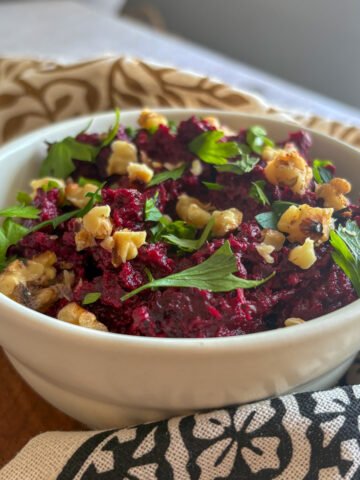
- Easy Beetroot and Walnut Dip with Roasted Garlic (Georgian Pkhali)
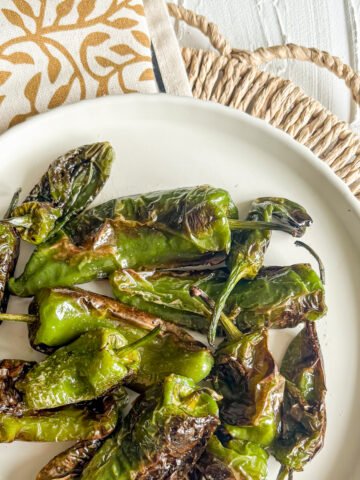
- How to Cook Padron Peppers (Easy Blistered Tapas in 5 Minutes)

Pairing
These are my favorite dishes to serve with Pea and Asparagus Crostini:
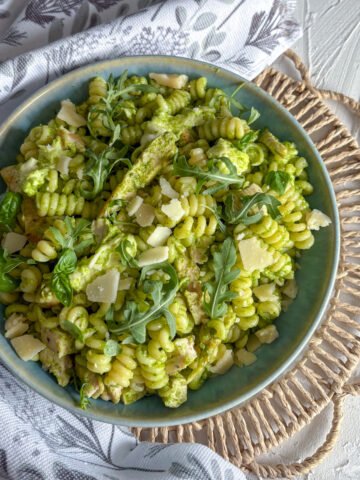
- Rocket Pesto Pasta Salad with Chicken and Cashews
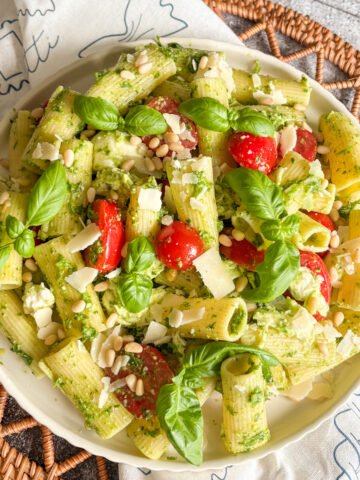
- Easy Pesto Pasta Salad with Parsley Pesto and Mozzarella
- Summer Peach and Burrata Salad with Prosciutto
- Pasta Salad with Dill Vinaigrette - Easy Summer Recipe
Pea and Asparagus Crostini Recipe
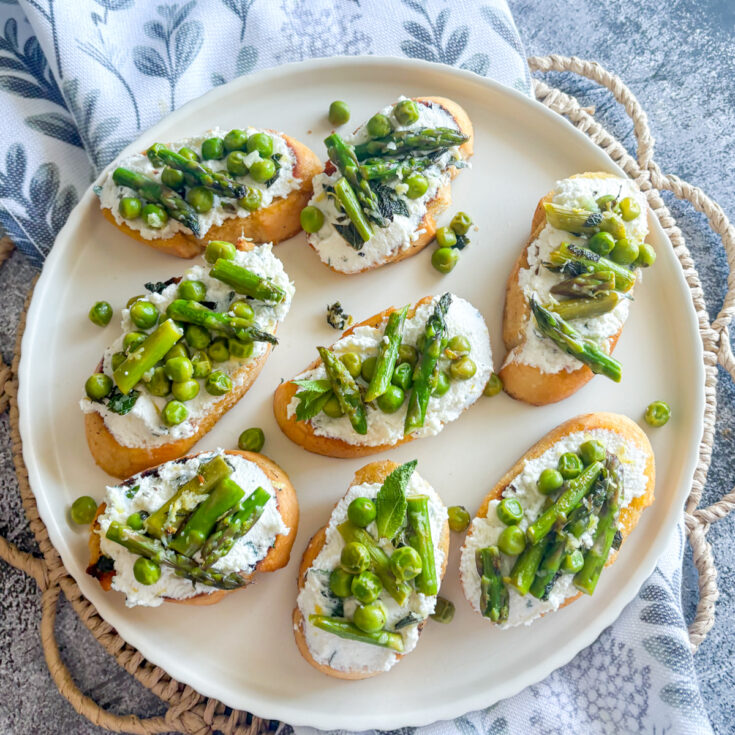
Pea and asparagus crostini are a quick, fresh spring appetiser made with crispy butter-fried baguette slices, whipped lemon ricotta and a herby mix of sweet peas, tender asparagus and mint. Ready in 20 minutes and perfect for entertaining or a light lunch.
Ingredients
- 1 French baguette
- 40-60g unsalted butter (3-4 tbsp), 2-3 large knobs
- 1 tablespoon olive oil
- 250g whole-milk ricotta (about 1 cup / 9 oz), 1 tub
- 3 garlic cloves, minced, divided
- 1 teaspoon lemon zest, divided
- 2 teaspoon fresh lemon juice
- 1 bunch asparagus, about 200-250g (8-9 oz), snapped and cut into 1cm pieces
- 100g fresh or frozen peas (about ¾ cup), thawed if frozen
- 50ml water (about 3 tbsp)
- 3 teaspoon fresh mint, chopped
- Sea salt, to taste
- Freshly ground black pepper, to taste
Instructions
- Combine the ricotta with ½ teaspoon salt, a good crack of black pepper, 1 minced garlic clove, 1 teaspoon chopped mint, 1 teaspoon lemon juice and 1 teaspoon lemon zest in a small bowl. Stir until smooth and set aside for at least 15 minutes while you prep the rest.
- Heat the olive oil in a pan over medium-high. Snap or trim the tough ends off the asparagus and cut the spears into 1cm pieces. Add to the hot oil and cook for 1 minute, stirring. Tip in the peas and cook for a further 30 seconds. Pour in the water, raise the heat and stir for about 2 minutes until all the liquid has evaporated.
- Drop the heat back to medium. Add the remaining chopped mint, the rest of the minced garlic, the remaining lemon zest, the lemon juice, a pinch of salt and a crack of black pepper. Toss to coat the veg in the herby mixture and cook for 1 more minute. Take off the heat and set aside to cool slightly.
- Slice the baguette into rounds about 1.5cm thick. Heat a large pan and melt a knob of unsalted butter. Place the baguette slices in the butter in a single layer and fry for 1-2 minutes per side until golden and crispy. Don't overcrowd the pan – cook in batches if needed and add more butter as it runs dry.
- Spread the ricotta mix onto each toasted baguette slice and top with the spring vegetable mixture. Finish with a pinch of sea salt and a fresh grind of black pepper. Serve straight away.