
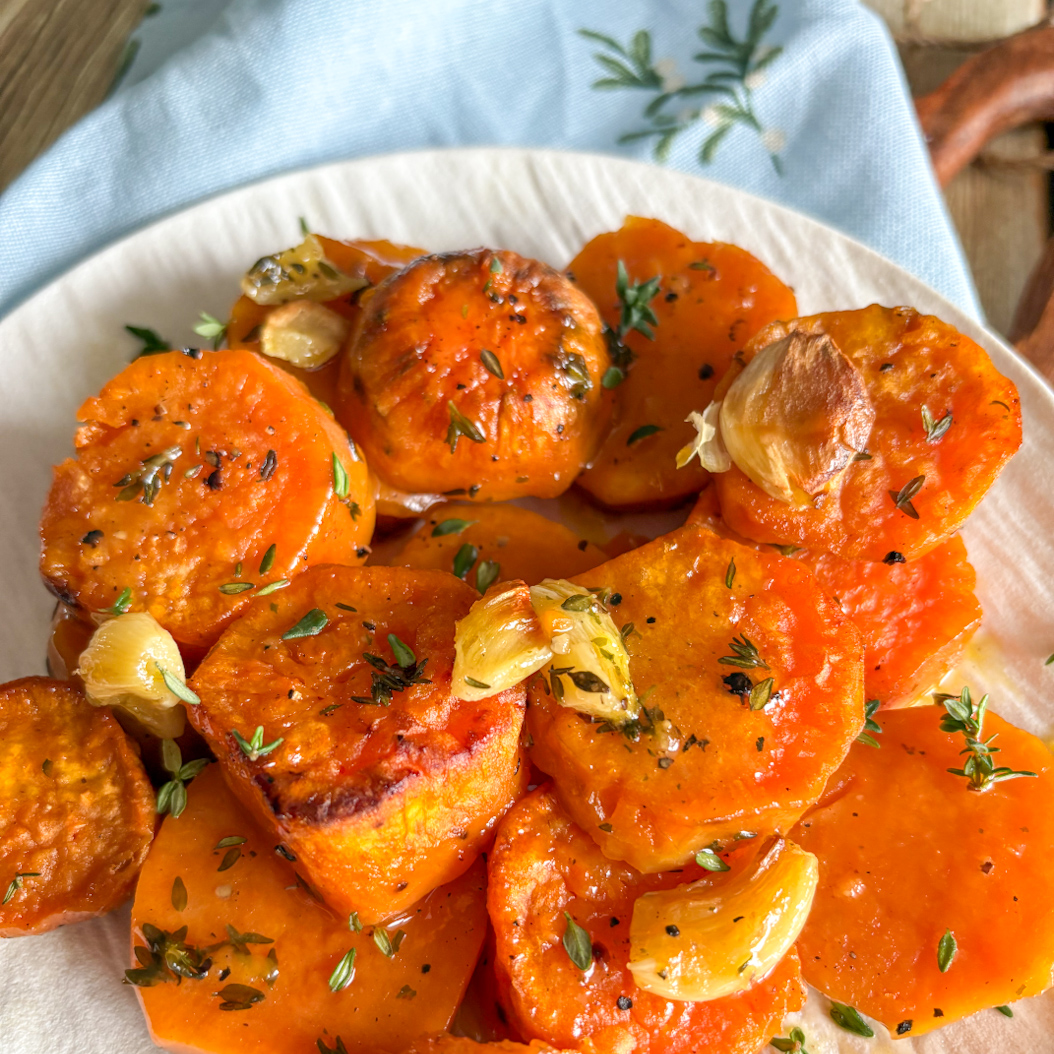
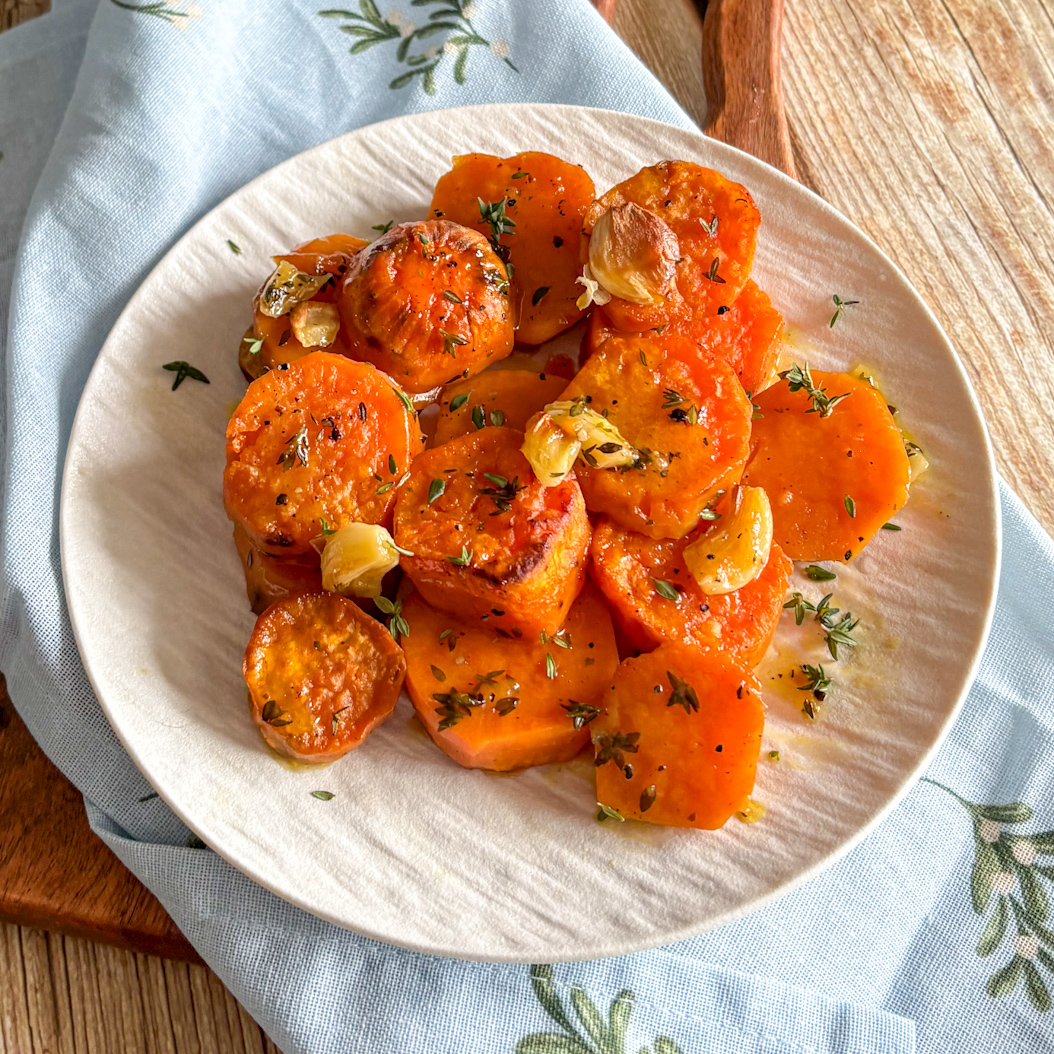
Melting sweet potatoes are tender in the centre, caramelised at the edges and coated in a buttery rosemary broth. This easy side dish is ready in under an hour and turns a plain sweet potato into something rich and satisfying.
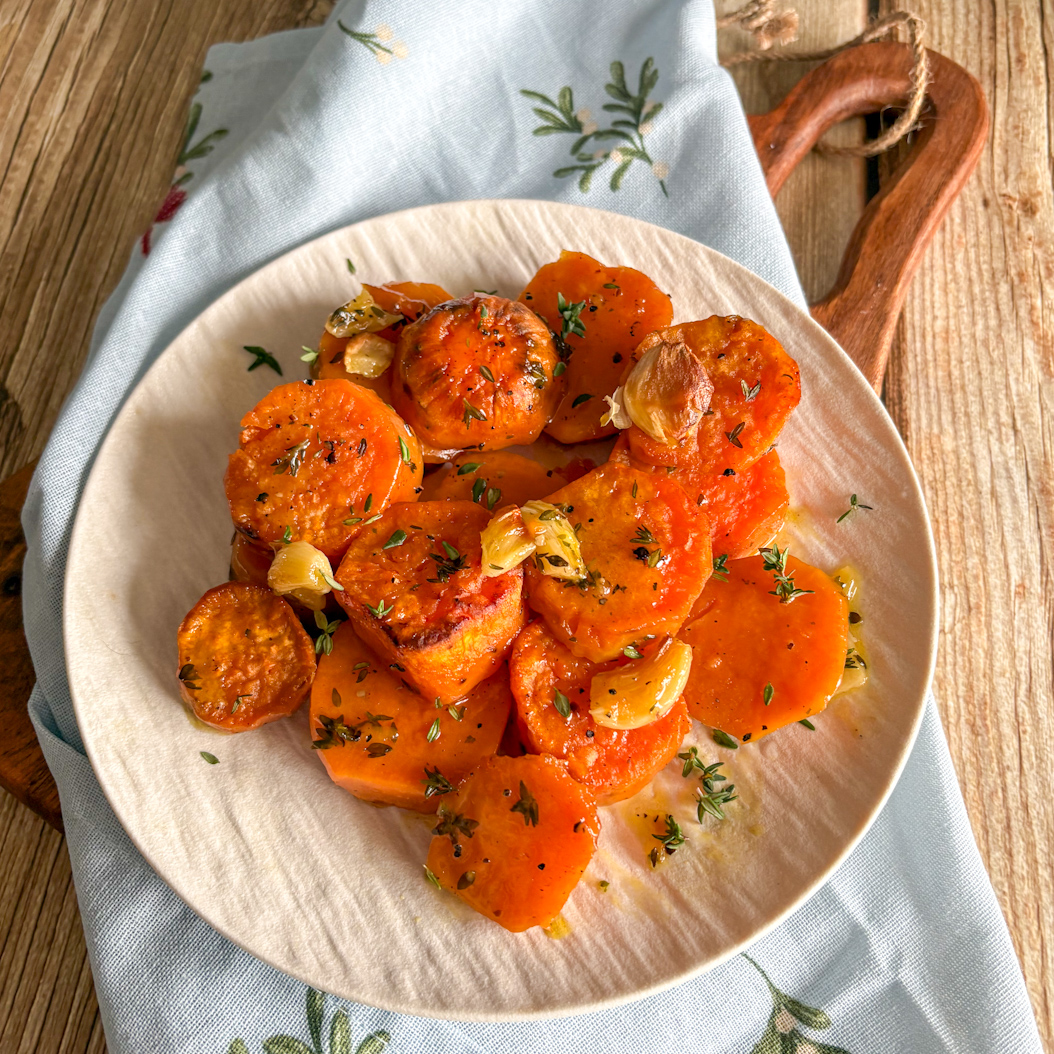
Melting sweet potatoes start with thick rounds roasted until golden, then finished in a savoury broth with garlic and rosemary until the centres go soft and buttery. The two-stage method builds crisp caramelised edges first, then a gentle braise gives that signature melting texture. You only need a handful of everyday ingredients and one baking dish. It is cheap to make, easy to scale up for a crowd and pairs with almost any roast or weeknight main.
Jump to:
- Ingredients for Melting Sweet Potatoes
- How to Make Melting Sweet Potatoes
- How to Serve and Store Melting Sweet Potatoes
- More Easy Sweet Potato Recipes You Might Enjoy
- What Melting Sweet Potatoes Cost Around the World
- Top Tips for the Best Melting Sweet Potatoes
- Melting Sweet Potatoes FAQ
- Related
- Melting Sweet Potatoes Recipe
Ingredients for Melting Sweet Potatoes
- Sweet potatoes – cut into thick rounds so they hold their shape while roasting and soften evenly in the broth.
- Unsalted butter – melted and poured over the rounds for a rich, buttery coating and to kick off the caramelisation.
- Olive oil – balances the butter and stops it burning during the high-heat roast.
- Fresh rosemary sprigs – chopped leaves flavour the coating, while whole sprigs go in later for aroma.
- Low-sodium vegetable or chicken broth – braises the rounds in the second stage so they turn tender and soak up flavour.
- Garlic cloves – smashed and scattered on top so they release flavour slowly into the broth.
- Kosher salt – brings out the natural sweetness without overpowering it.
- Freshly ground black pepper – adds a little warmth and cuts through the sweetness.
How to Make Melting Sweet Potatoes
This recipe is easy and straightforward, and once you make Melting Sweet Potatoes this way, you will return to it again and again.
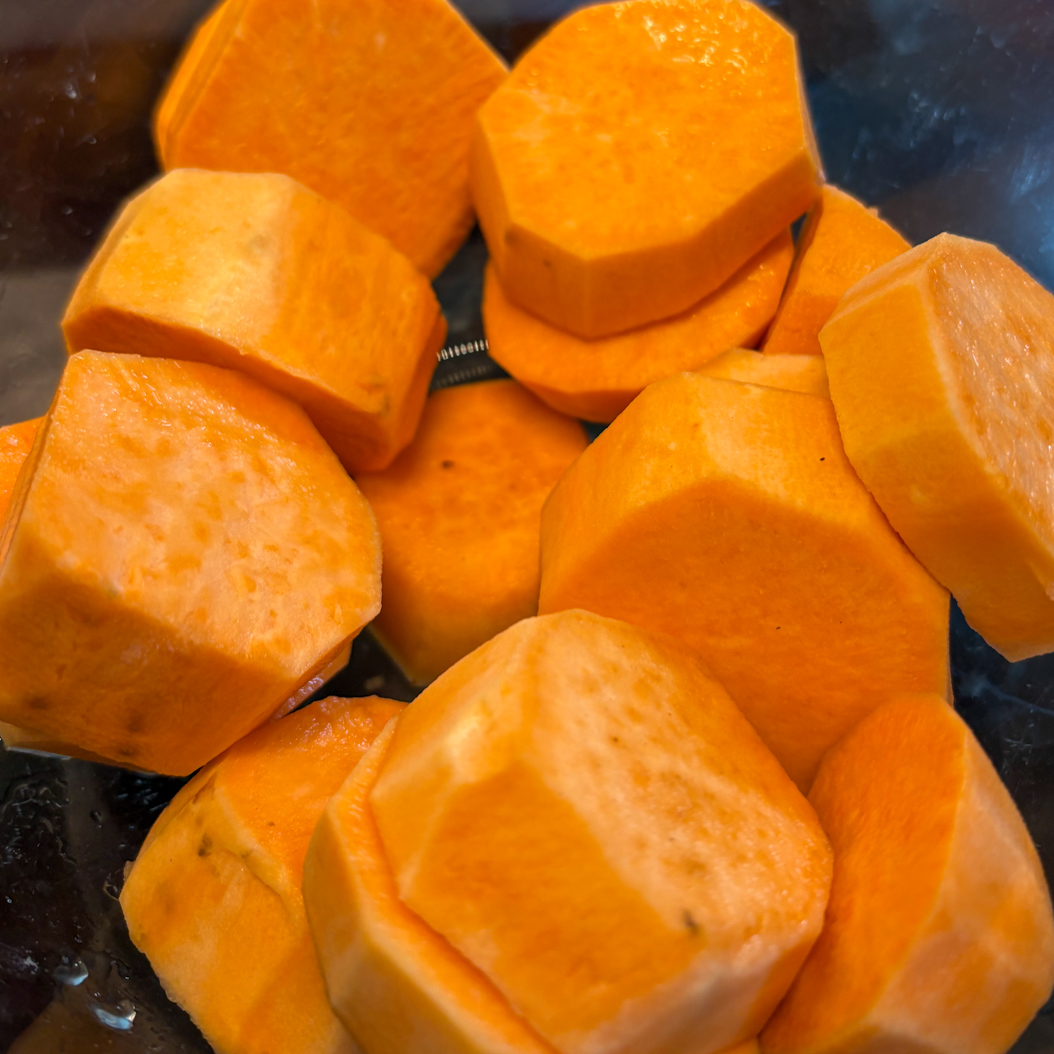
- Step 1: Heat the oven to 200C. Wash the sweet potatoes well under cold water and peel them if you want a smoother finish. Slice them crosswise into rounds about 2.5 cm thick and drop them into a large mixing bowl. Pull the leaves from most of the rosemary sprigs and chop them finely, keeping three whole sprigs aside for later.
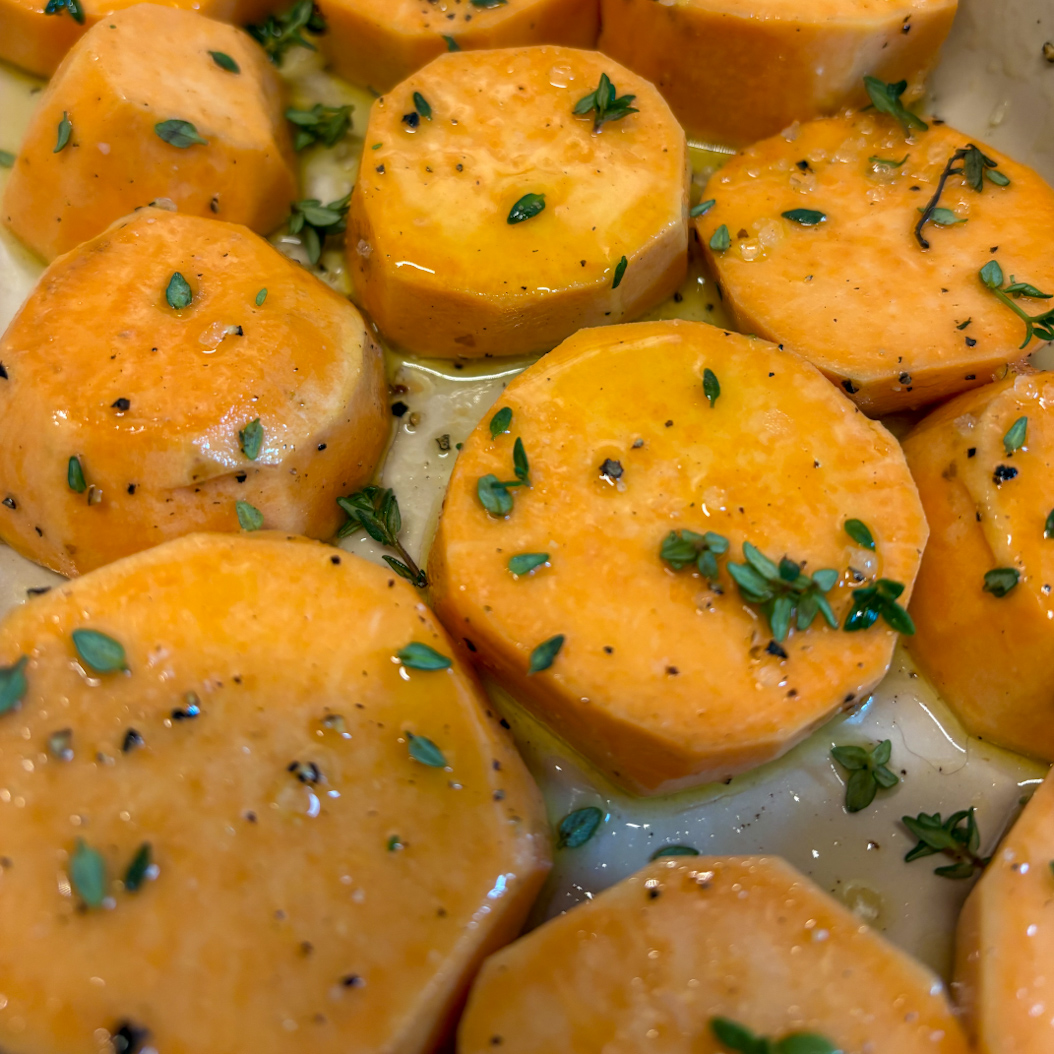
- Step 2: Melt the butter completely, then pour it over the sweet potato rounds. Add the olive oil, chopped rosemary, a pinch of kosher salt and a few turns of black pepper. Toss well so every round is coated. Lay the slices in a single layer in a high-sided baking dish, keeping them from overlapping. Roast for 15 minutes, then take the dish out, turn each round with tongs or a spatula, and roast for another 10 minutes. This stage builds a deep golden colour, lightly crisp edges and a concentrated sweetness before any liquid goes in.
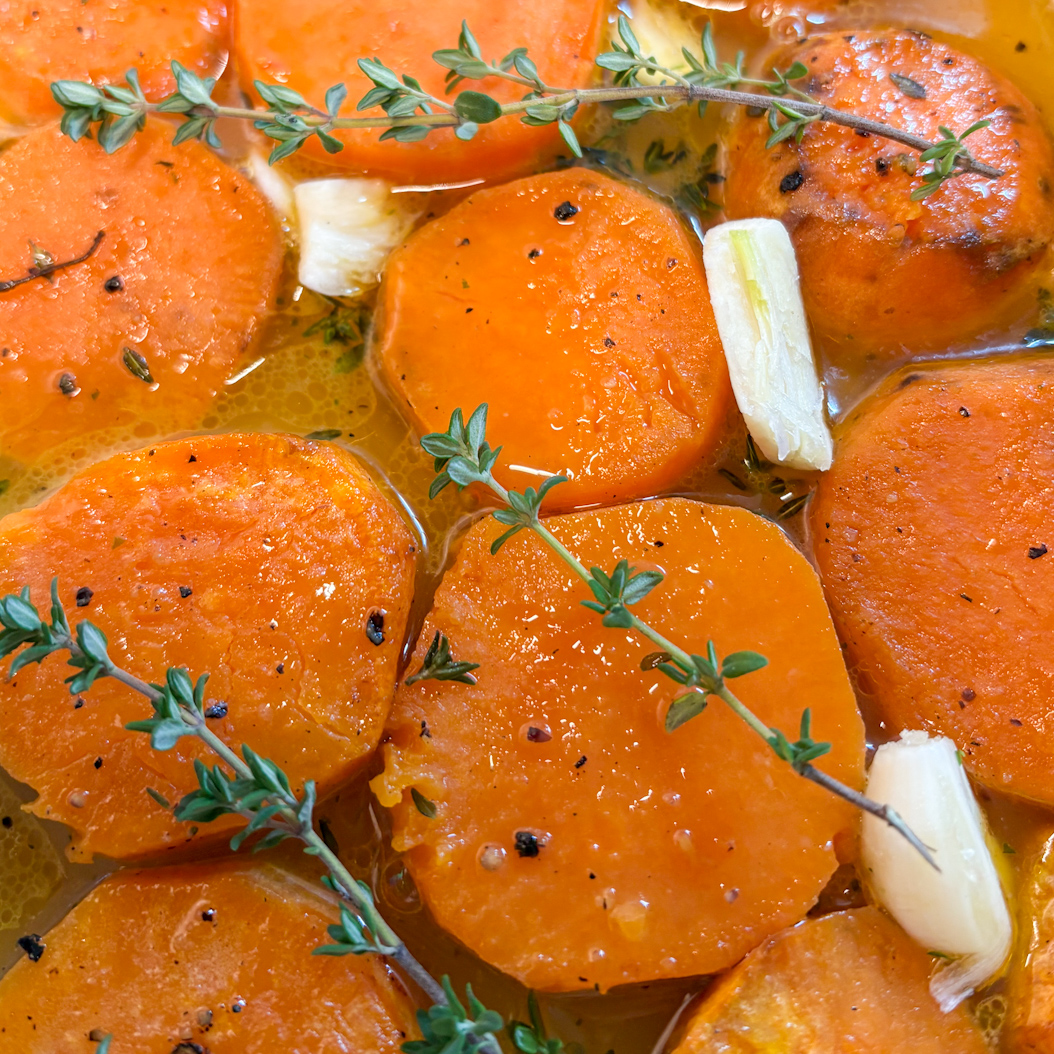
- Step 3: While the potatoes roast, get your stock ready, either homemade or made from a cube. Use chicken stock for a richer flavour or vegetable stock to keep it vegetarian. Take the dish out and carefully pour in about 150 ml of stock, enough to reach halfway up the sides of the rounds without covering them. Scatter the smashed garlic over the top and lay the reserved rosemary sprigs across the dish. Return it to the oven and roast for around 15 minutes more, until the sweet potatoes are very tender and most of the broth has reduced.
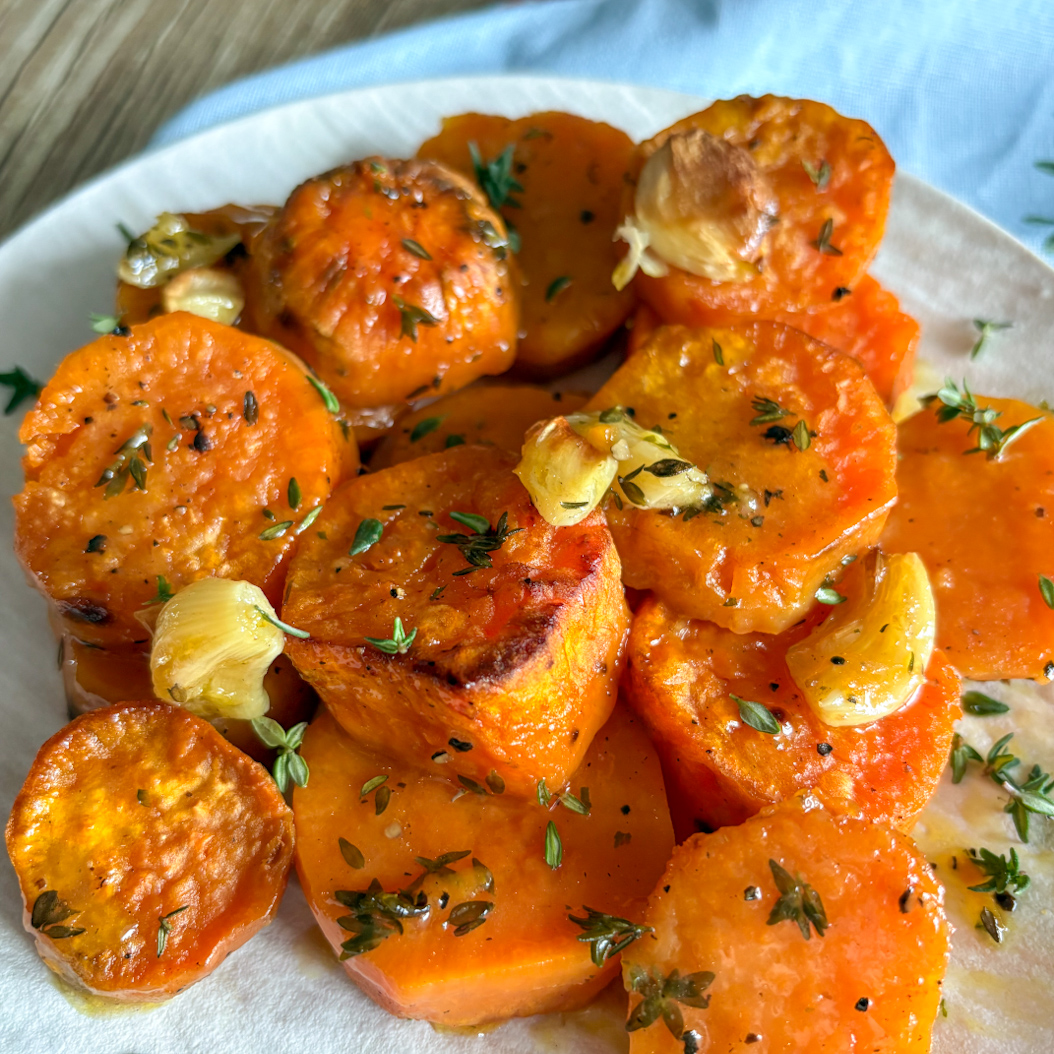
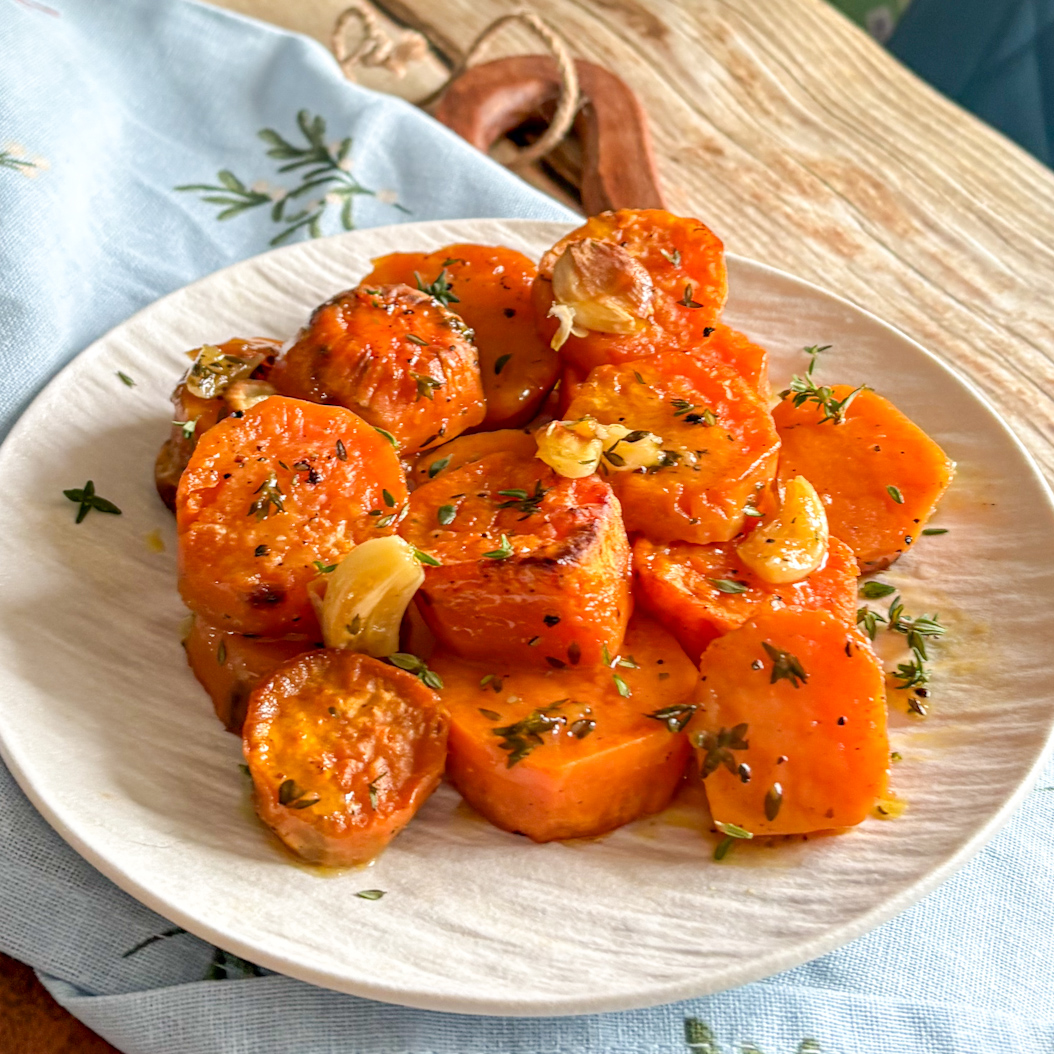
- Step 4: Take the dish out and let it rest for a few minutes. This short rest lets the buttery broth thicken a little. Move the melting sweet potatoes to a serving plate and spoon some of the reduced liquid over the top. Serve warm, ideally next to a lean protein like turkey.
How to Serve and Store Melting Sweet Potatoes
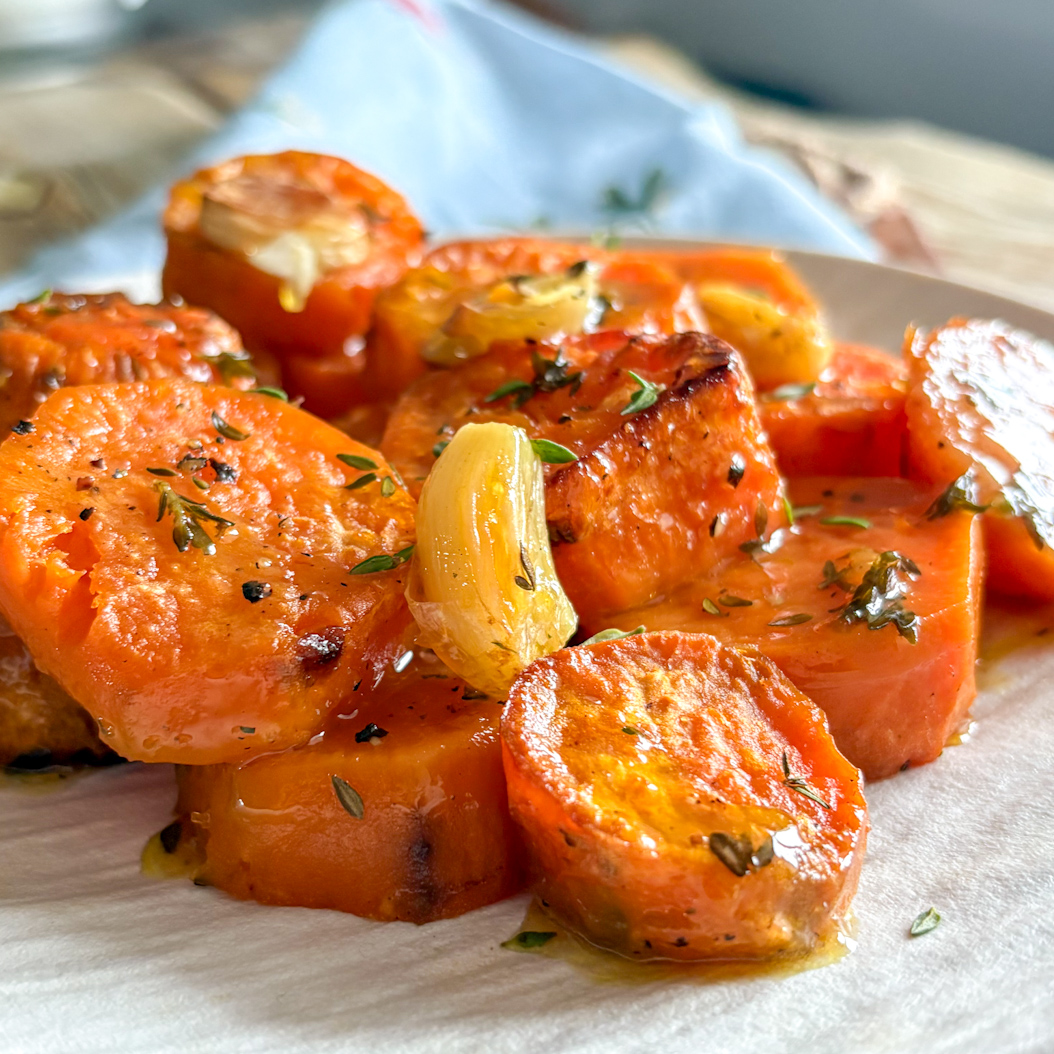
Serve melting sweet potatoes warm, with the reduced buttery broth spooned over just before they reach the table. They sit happily beside roast turkey, grilled chicken breast, baked tofu or a simple lentil salad if you want a vegetarian plate. The savoury, herby flavour also makes them a natural fit for Sunday roasts and festive spreads.
For leftovers, let the rounds cool fully, then keep them in an airtight container in the fridge for up to three days. Reheat in the oven at 180C until warmed through, which keeps the edges intact. The microwave works too, but it softens the outside more than the oven does. I would not freeze them, as the texture tends to go mushy once thawed.
More Easy Sweet Potato Recipes You Might Enjoy
If you liked these melting sweet potatoes, here are a few more sweet potato recipes worth a look.
For something warming and spoonable, try this Sweet Potato and Carrot Soup — smooth, cosy and easy to blitz together on a cold day.
When you want a bigger plate, the Loaded Sweet Potatoes are baked until soft and piled high with toppings for a proper meal.
If you fancy a bit of crunch, these Roasted Sweet Potato Quesadillas fold roasted sweet potato into crisp, cheesy tortillas.
For an easy snack or side, the Sweet Potato Rounds are simple roasted discs you can dress up any way you like.
And for a creamy classic, these Mashed Sweet Potatoes are soft, buttery and perfect next to any roast.
What Melting Sweet Potatoes Cost Around the World
Melting sweet potatoes are a genuinely budget-friendly side, since the main cost is the sweet potatoes themselves and everything else is a store cupboard staple. Here is a rough guide to the whole-dish and per-serving cost across five countries, based on 4–5 medium sweet potatoes serving four.
- In the UK, sweet potatoes run around £1.19–£1.30 per kg at Tesco, Sainsbury's and Aldi, so the dish comes to roughly £1.60–£2.00 in total, about £0.40–£0.50 per serving.
- In the USA, sweet potatoes sit near $1.20–$1.80 per lb at Walmart, Kroger or Target, putting the dish around $3.50–$4.50, close to $0.90 per serving.
- In Ireland, expect €1.50–€2.20 per kg at Tesco, Dunnes or SuperValu, giving a whole dish of about €2.20–€2.80, roughly €0.60 per serving.
- In Australia, sweet potatoes cost around AUD $3–$4 per kg at Woolworths or Coles, so the dish lands near AUD $4.50–$5.50, about AUD $1.20 per serving.
- In Canada, they run about CAD $2.50–$4 per kg at Loblaws or No Frills, making the dish roughly CAD $4–$5, around CAD $1.10 per serving.
Wherever you shop, melting sweet potatoes stay one of the cheapest ways to fill a side dish.
Top Tips for the Best Melting Sweet Potatoes
- Cut the rounds to an even thickness. Aim for 2 cm rounds all the way through the batch, using the widest part of the potato as your guide. Thin pieces will overcook and collapse during the braising stage, while chunky ones stay firm in the middle and let the dish down. If your potatoes taper a lot at the ends, save those offcuts for a soup rather than forcing them into the dish. Even rounds are the single biggest factor in getting a consistent melting texture.
- Pick potatoes of a similar width. When you shop, try to grab sweet potatoes that are close in diameter rather than a mix of skinny and fat ones. This gives you rounds that are roughly the same size, so they roast and braise at the same rate. Wildly different sizes mean some rounds are done while others are still firm. It is a small thing at the shop that saves you juggling in the oven.
- Do not crowd the baking dish. Lay the rounds in a genuine single layer with a little space between them, using two dishes if you need to. When rounds overlap or touch, they steam instead of roast and never build those caramelised edges. The first roast is all about dry heat and colour, so give them room. A crowded dish is the most common reason melting sweet potatoes come out pale and soft rather than golden.
- Warm your broth before adding it. Take a moment to heat the stock so it is warm, not fridge-cold, before you pour it in. Cold liquid dropped onto hot potatoes and a hot dish drops the temperature and slows the braise right down. Warm stock keeps everything moving and helps the liquid reduce into a proper glaze. It is an easy habit that shaves time off the final stage.
- Taste the broth before it reduces. Give the stock a quick taste once it is in the dish, because as it cooks down the seasoning concentrates fast. If it already tastes salty at this point, it will be far saltier once reduced to a glaze. This is exactly why low-sodium broth and unsalted butter are worth using here. Adjust with a pinch more salt at the very end if it needs it, not before.
- Baste the tops in the final stage. Halfway through the braising stage, spoon a little of the buttery broth over the exposed tops of the rounds. Sweet potato that sits above the liquid line can dry out slightly while the bottoms go soft. A quick baste keeps the whole round glossy and evenly cooked. It also builds up that lacquered, caramelised look on top.
- Use a metal or ceramic dish, not glass, for colour. If you have the choice, reach for a metal or good ceramic baking dish, as both conduct heat well and encourage browning. Glass holds heat more gently and can leave you with paler edges. You still get a lovely dish either way, but the browning is noticeably better in metal. It makes a real difference to those golden edges everyone goes for first.
- Let the garlic mellow, do not chop it fine. Smash the cloves rather than mincing them, and keep them sitting on top of the rounds. Whole smashed garlic softens and turns sweet as it roasts in the broth, infusing the liquid gently. Finely chopped garlic scattered through the dish can catch and turn bitter at 200C. If you love a strong garlic hit, squash the softened cloves into the broth right at the end.
Melting Sweet Potatoes FAQ
What makes melting sweet potatoes different from ordinary roasted sweet potato?
Standard roasting relies on dry heat the whole way through, which gives you firm, roasted edges but a fairly uniform inside. Melting sweet potatoes use two stages instead: a dry roast first to build colour, then a braise in broth to soften the centres. That combination is what creates the crisp edge and the melting, buttery middle. It is the braise that earns the "melting" name.
Can I make this sweet potato recipe ahead of time?
Yes, and it is a handy trick for a busy roast dinner. You can finish the first dry-roasting stage earlier in the day, then leave the part-roasted rounds at room temperature for a few hours. When you are ready, add the broth, garlic and rosemary and do the final braise just before serving. This keeps the texture fresh rather than reheating a fully cooked dish.
How do I know when the sweet potatoes are done?
Slide a knife or skewer into the centre of the thickest round. It should go in with no resistance and slip back out cleanly. If it still feels firm in the middle, give the dish another few minutes in the oven and check again. Proper tenderness right through the centre is what you are after for a true melting texture.
Can I freeze melting sweet potatoes?
I would not recommend freezing them, as the texture suffers once they thaw. Sweet potato holds a lot of water, and freezing then reheating tends to make the rounds mushy and watery. They are much better kept in the fridge for up to three days and reheated in the oven. For the best result, this is a dish worth making fresh.
What stock is best for melting sweet potatoes?
Both chicken and vegetable broth work beautifully, so it depends on who is eating. Chicken stock gives a slightly richer, rounder flavour, while vegetable stock keeps the dish fully vegetarian. Whichever you use, go for a low-sodium version so the seasoning stays under control as the liquid reduces. Homemade stock is lovely here, but a good cube does the job fine.
Can I use a different fat instead of butter?
You can, though butter is what gives this dish its signature richness. For a dairy-free version, swap in a plant-based butter or simply use more olive oil, though you will lose a little of that buttery depth. Duck or goose fat is a lovely alternative around the festive season. Whatever you choose, keep the olive oil in the mix to help prevent burning.
Related
Looking for other recipes like this? Try these:
- Budget-Friendly Pearl Barley with Mushrooms
- Summer Peas with Bacon and Ricotta (Hot or Cold)
- Easy Chickpeas in Tomato Sauce Recipe (Budget-Friendly Struggle Meal)
- Easy Roasted Turnips Recipe with Herbs and Olive Oil

Melting Sweet Potatoes Recipe
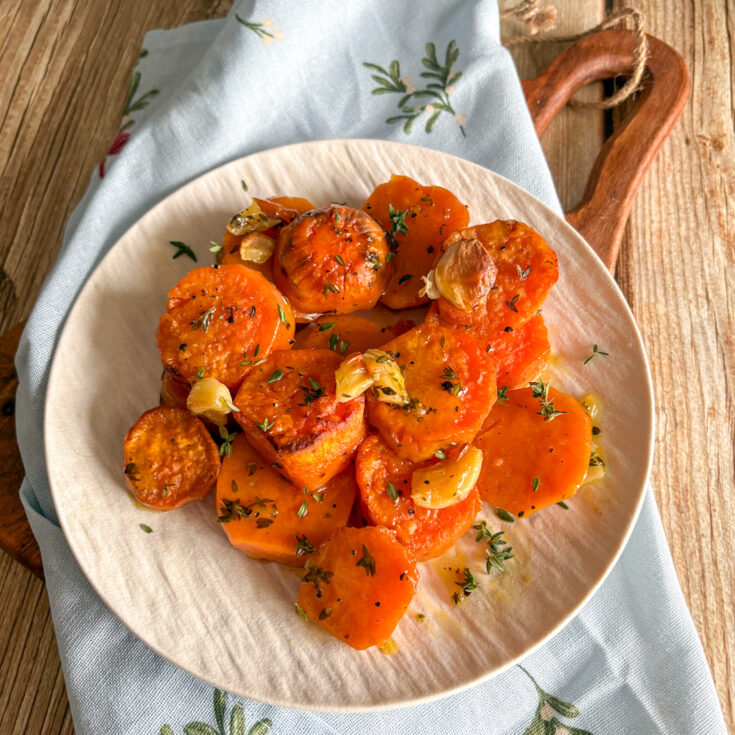
Melting sweet potatoes are roasted sweet potato rounds finished in a buttery herb broth with garlic and rosemary. The two-stage method combines high-heat roasting with a gentle braise, giving you caramelised golden edges and a soft, melting centre. Serve this easy side dish warm alongside a roast dinner or any weeknight main.
Ingredients
- 4–5 medium sweet potatoes, peeled if desired and cut into 2.5 cm (1 inch) thick rounds
- Knob of unsalted butter, melted (about 30 g / 2 tbsp)
- 2 tablespoon olive oil (30 ml)
- 4–5 fresh rosemary sprigs, divided
- 150–200 ml low-sodium vegetable or chicken broth (⅔–¾ cup)
- 4 cloves garlic, peeled and smashed
- Pinch of kosher salt
- Freshly ground black pepper
Instructions
- Heat the oven to 200C (400F). Wash the sweet potatoes well and peel them if you prefer a smoother finish. Slice them into even 2.5 cm rounds and place them in a large mixing bowl. Strip the leaves from most of the rosemary sprigs and chop them, keeping three whole sprigs aside.
- Melt the butter, then pour it over the sweet potato rounds. Add the olive oil, chopped rosemary, kosher salt and black pepper, and toss until every round is coated. Arrange the slices in a single layer in a high-sided baking dish without overlapping. Roast for 15 minutes, then turn each round over and roast for another 10 minutes, until both sides are golden with lightly crisp edges.
- Take the dish out and carefully pour in 150–200 ml of broth, so the liquid reaches about halfway up the rounds without covering them. Scatter the smashed garlic over the top and lay the reserved rosemary sprigs across the dish. Return to the oven and roast for about 15 minutes more, until the sweet potatoes are very tender and most of the liquid has reduced.
- Remove from the oven and let the dish rest for a few minutes so the broth thickens. Transfer the sweet potatoes to a serving plate, spoon the reduced buttery broth over the top and serve warm.