

Red kidney beans borscht is a hearty vegetarian beet soup with a deep ruby-red broth, tender beans and shredded cabbage. This wholesome, meatless version of the classic Eastern European soup is ready in about 2 hours and feeds a big family on a budget.
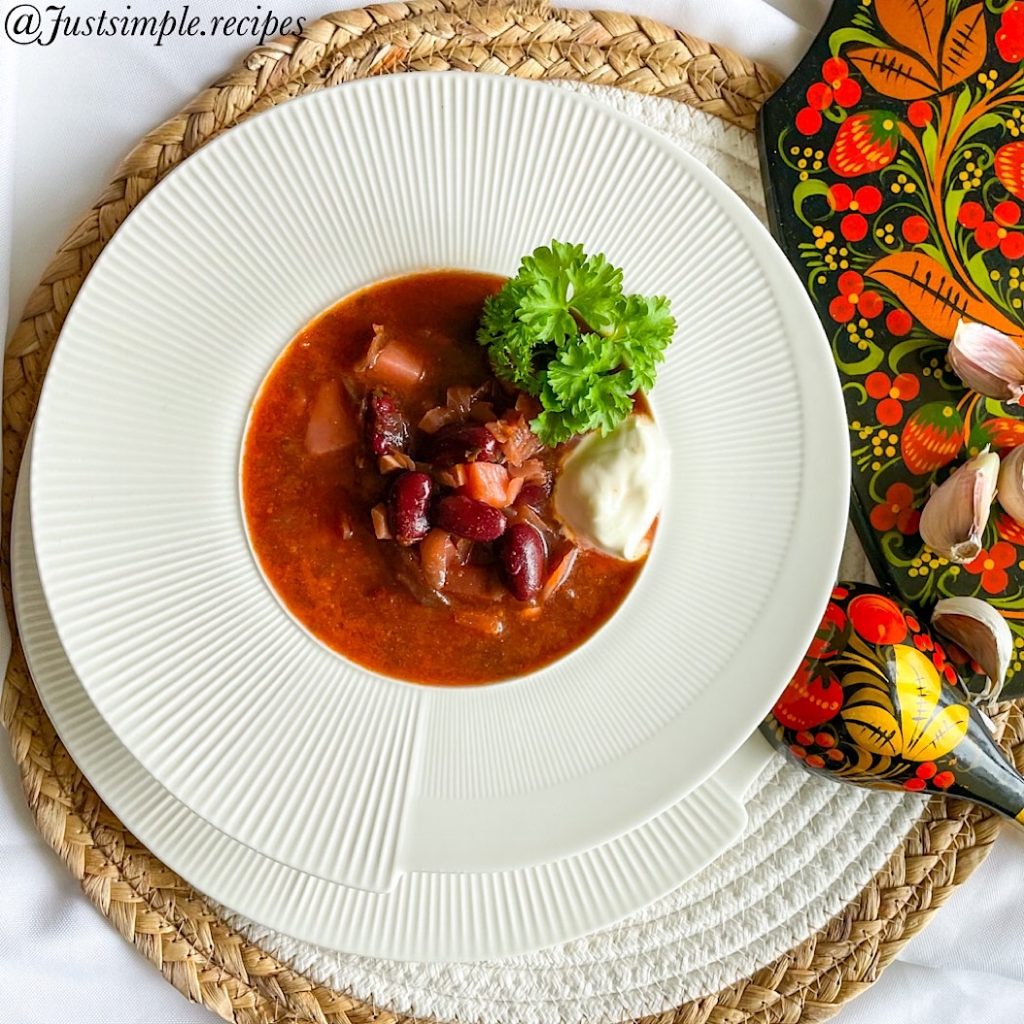
I have been cooking borscht for years, and this version with beans is the one I make most often when I want something filling without any meat. The kidney beans give the soup real substance, so every spoonful feels like a proper meal rather than a light starter. The homemade vegetable stock builds a clean, savoury base, and the sautéed beets with tomato paste bring that signature deep colour and gentle tang. It keeps well in the fridge, tastes even better the next day, and works just as nicely for a quiet weeknight dinner as it does for a Sunday lunch with rye bread and sour cream on the table.
Jump to:
- Ingredients for Red Kidney Beans Borscht
- How to Make Borscht with Red Kidney Beans
- How to Serve and Store This Vegetarian Borscht Recipe
- More Soup Recipes You'll Love
- Top Tips and Notes for the Best Red Kidney Beans Borscht
- FAQ About Red Kidney Beans Borscht
- Red Kidney Beans Borscht – Hearty Vegetarian Beet Soup
Ingredients for Red Kidney Beans Borscht
Here is what you need to make this red bean borscht from scratch, starting with a simple homemade vegetable stock and finishing with a rich, chunky soup.
For the vegetable stock:
- Carrot - adds natural sweetness and body to the stock.
- Onion (unpeeled) - the skin gives the broth a warm golden tint.
- Green pepper – brings a mild, fresh note to the base.
- Leek - adds a soft, oniony depth without any sharpness.
- Parsnip - lends a gentle earthy sweetness that rounds out the stock.
- Bay leaves - classic aromatic that ties all the vegetables together.
- Black peppercorns - add quiet warmth and a subtle background heat.
- Celery sticks - contribute a clean, herbal backbone to the broth.
For the borscht:
- Carrots - grated for a soft texture and natural sweetness in the soup.
- Onions - finely chopped so they melt into the sauté base.
- White cabbage - shredded to give the borscht that traditional chunky bite.
- Pre-boiled beets - grated for the vibrant red colour and earthy flavour.
- Tomato paste or tomato puree - deepens the colour and adds tang.
- Fresh tomatoes - grated rather than chopped, for a smoother sauce.
- Potatoes - the starchy element that makes the soup filling.
- Red kidney beans - the vegetarian protein that replaces the usual meat.
- Unsalted butter - used for sautéing, giving a rich, silky finish.
- Salt and black pepper - basic seasoning to bring everything into balance.
- Lemon juice or vinegar (optional) - a small splash lifts the flavour at the end.
- Garlic cloves, rye bread and sour cream - the traditional trio for serving.
- Fresh herbs - parsley or dill, added at the end for colour and freshness.
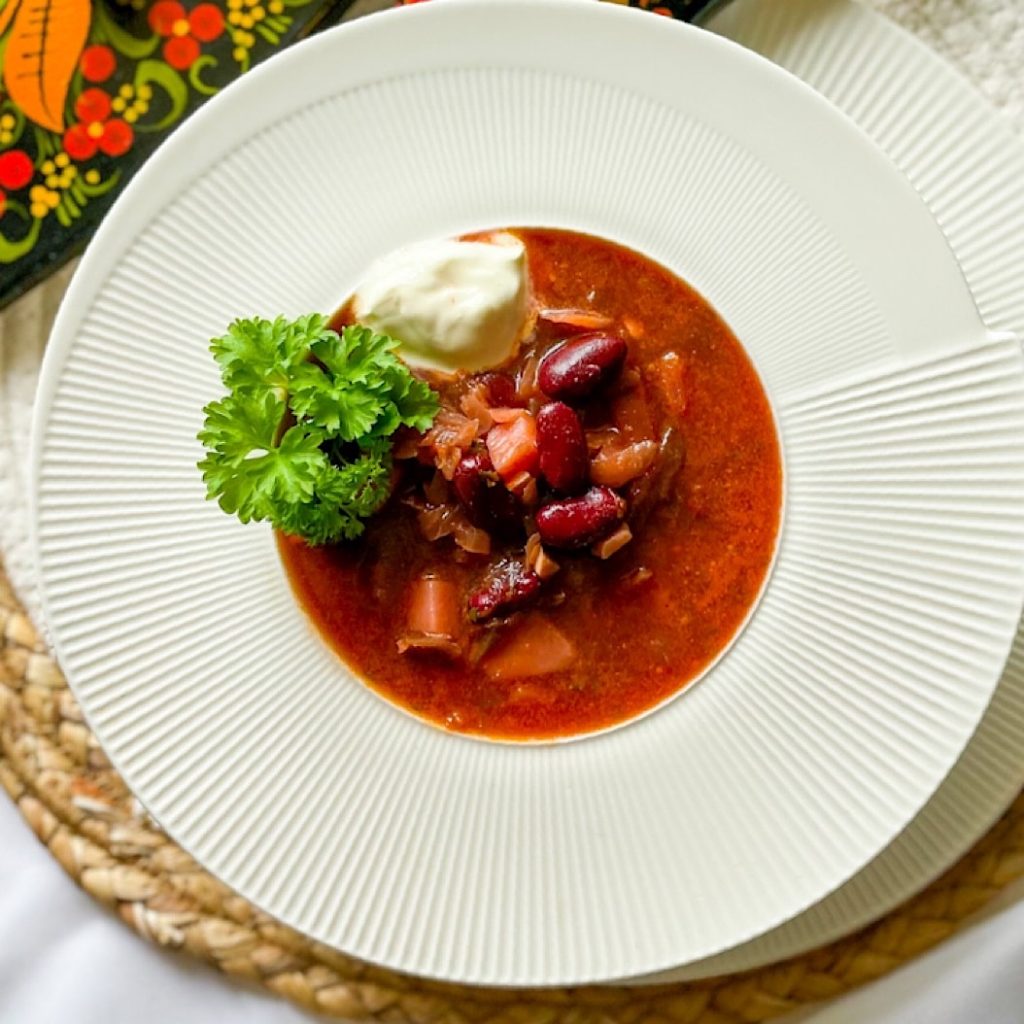
How to Make Borscht with Red Kidney Beans
Step 1. Make the vegetable stock. Put all the stock vegetables into a large soup pot along with the bay leaves and peppercorns. Pour in about 4 litres of cold water, set the pot over a high heat and bring it to a boil. Lower the heat and let it simmer gently for 1.5 hours, then strain the stock and discard the vegetables.
Step 2. Start the soup base. Return the strained stock to the clean pot and bring it back to a boil. While it heats, wash, peel and chop the potatoes into even cubes. Add the potatoes to the boiling stock, reduce the heat to medium and cook for 15 minutes.
Step 3. Sauté the vegetables. Meanwhile, melt half of the butter in a large skillet over a medium heat. Add the chopped onion and grated carrots and cook for about 5 minutes, stirring now and then. Stir in the tomato paste, grated tomatoes and grated beets, then add the rest of the butter, a pinch of salt, a pinch of black pepper and the drained kidney beans. Mix everything together, cover with a lid and let it cook for another 10 minutes.
Step 4. Bring it all together. Tip the sautéed vegetables from the skillet into the pot with the potatoes. After 5 minutes, add the shredded cabbage and cook for a further 5 minutes. Turn off the heat and let the borscht rest for 10 minutes so the flavours settle. Taste and adjust the seasoning, adding a splash of lemon juice or vinegar if you like. Ladle into deep bowls, scatter over fresh herbs and serve with sour cream, garlic cloves and rye bread.
How to Serve and Store This Vegetarian Borscht Recipe
I always serve this borscht piping hot in deep bowls, with a generous spoon of cold sour cream stirred in at the table and a slice of rye bread on the side. A peeled raw garlic clove, eaten alongside the soup in the traditional way, really lifts the whole dish and is worth trying at least once. Chopped parsley or dill on top adds freshness and a pop of green against the deep red broth.
For storage, let the soup cool to room temperature, then transfer it to an airtight container and keep it in the fridge for up to 4 days. The flavour actually improves overnight, so leftovers are often even better. You can also freeze it in portions for up to 3 months, though the potatoes may soften a little after thawing. Reheat gently on the hob over a low heat until warmed through, and avoid boiling hard so the beans stay whole.
More Soup Recipes You'll Love
If you enjoyed this vegetarian borscht, here are a few more soup recipes from the blog worth trying next.
- For a chilled summer option, try my Cold Borscht – Lithuanian Beetroot Soup Recipe – a refreshing pink beet soup made with kefir and fresh cucumber.
- For a classic with poultry, have a look at my Chicken Borscht Recipe – a lighter take on borscht made with tender chicken and vegetables.
- For the most traditional version, try my Borscht on Meaty Bones - Rich, Hearty Traditional Beet Soup From Scratch – a deeply flavoured borscht built on a slow-simmered bone broth.
- For another hearty Eastern European soup, see my Authentic Russian Soljanka Recipe - Hearty Meat & Pickle Soup From Scratch – a bold, tangy soup with pickles, olives and smoked meats.
- For a comforting everyday option, try my Russian Chicken Soup Recipe – a clear, golden broth with chicken, vegetables and noodles.
- For something tangy and filling, check out my Shchi – Hearty Russian Sauerkraut and Beef Soup Recipe – a cabbage-based soup with rich beef and sauerkraut.
- For a lighter, fish-based alternative, try my Cod Ukha Recipe – Classic Russian Fish Soup – a clear, fragrant broth made with fresh cod and simple vegetables.
Top Tips and Notes for the Best Red Kidney Beans Borscht
- Use pre-boiled beets for convenience and colour. Pre-boiled beets save a serious amount of time and give you a reliable, even texture every single time. Vacuum-packed cooked beets from the supermarket work perfectly here and are what I usually reach for on a busy weeknight.
- Do not skip the homemade vegetable stock. A shop-bought stock cube will do in a pinch, but homemade vegetable stock is what gives this soup its quiet, clean depth of flavour. Simmering carrots, onion, leek, parsnip, celery and green pepper together for over an hour pulls out a natural sweetness you simply cannot fake. You can make the stock a day ahead and keep it in the fridge, which also breaks the cooking into smaller, easier steps. Any leftover stock can be frozen and used for other soups, risottos or grain dishes during the week.
- Grate the tomatoes instead of chopping them. Grating fresh tomatoes on the large holes of a box grater gives you a smooth pulp without the skins. This means the tomato melts straight into the sauté and becomes part of the sauce rather than sitting as separate chunks. It is a small step that makes the finished borscht feel more traditional and properly rustic. Simply cut the tomato in half, hold the cut side against the grater and press firmly, and the skin will be left behind in your hand.
- Drain and rinse the canned kidney beans well. Canned red kidney beans come in a thick, starchy liquid that can make the soup cloudy and overly salty. Tip the beans into a sieve, rinse them briefly under cold running water and let them drain before adding them to the pan. This keeps the broth clear and lets you control the seasoning much more precisely. If you prefer to cook dried beans from scratch, soak them overnight and simmer until fully tender before they go anywhere near the borscht.
- Add the cabbage towards the end, not at the start. Shredded white cabbage only needs about 5 minutes in the hot soup to turn tender while keeping a gentle bite. If you add it too early, it will overcook, lose its fresh flavour and turn slightly grey and soft. The short cooking time also preserves some texture, which is really nice against the softer potatoes and beans. Shred the cabbage finely and evenly so it cooks at the same rate all the way through.
- Balance the flavour with a little acid at the end. A small splash of lemon juice or white vinegar right at the end brightens the whole pot and makes the beet flavour sing. Start with a teaspoon, stir it through, taste and decide whether you want a little more. Acid also helps lift the red colour and stops the soup from tasting flat or overly sweet from the beets. Go slowly here, because it is much easier to add more than to fix a soup that has tipped too sour.
- Let the soup rest before serving. Giving the finished borscht 10 minutes off the heat with the lid on is one of those small habits that makes a real difference. During this rest, the flavours settle, the broth clarifies a little and the beets release more of their colour into the liquid. This is also a great moment to prep your serving things, such as peeling garlic, slicing rye bread and chopping herbs. Borscht that has rested tastes more balanced and rounded than borscht served the moment it comes off the stove.
FAQ About Red Kidney Beans Borscht
Can I use dried kidney beans instead of canned?
You absolutely can, and many cooks prefer the texture of home-cooked beans. Soak about 150 g of dried kidney beans overnight in plenty of cold water, drain, then simmer in fresh unsalted water for around 1 hour, or until fully tender. Only add them to the borscht once they are completely cooked, as undercooked kidney beans are not safe to eat. One advantage is that the cooking liquid can be used as part of your stock for extra body and flavour.
How long should I simmer the borscht?
Once all the ingredients are in the pot, the soup itself only needs about 10 to 15 minutes of simmering, plus the resting time at the end. Most of the cooking happens in two separate stages, the stock and the sauté, which is why the soup tastes so layered. Simmering it for hours is not necessary and can actually dull the colour and fresh flavour. Low and short, with a proper rest afterwards, is the ideal approach.
Can I make this borscht vegan?
Yes, this recipe is very easy to make fully vegan with a couple of small swaps. Replace the butter with a plant-based butter or a neutral oil like sunflower, and use a plant-based sour cream or cashew cream for serving. All the vegetables, beans and seasonings are already vegan, so no other changes are needed. The flavour stays very close to the original, especially if you pick a good, rich plant-based butter.
Can I freeze red kidney beans borscht?
Yes, this borscht freezes well and is a great option for batch cooking. Let the soup cool completely, then divide it into airtight containers or freezer bags, leaving a little room for expansion, and freeze for up to 3 months. Thaw overnight in the fridge and reheat gently on the hob until just steaming. The potatoes may be a touch softer after freezing, but the overall flavour and colour hold up nicely.
Is this soup healthy?
This borscht is genuinely nourishing and packed with vegetables, which makes it a great everyday meal. Beets are a good source of folate and fibre, kidney beans offer plant-based protein and iron, and the cabbage, carrots and tomatoes add plenty of vitamins. Because it is vegetarian and relies on butter rather than heavy creams or meats, it stays reasonably light without feeling like a diet dish. You can easily reduce the butter or swap it for oil if you are watching your saturated fat intake.
What is the difference between this vegetarian borscht and a meat version?
The biggest difference is the base, where a meat borscht usually starts with a long-simmered beef or pork bone broth instead of a vegetable stock. In this version, the kidney beans step in as the main source of protein and heartiness, giving you a soup that is still substantial and filling. The vegetable mix, beets, tomato and cabbage all remain the same, so the character of the dish is very much recognisable. I genuinely find the meatless version lighter but just as satisfying, especially through the colder months.
Red Kidney Beans Borscht – Hearty Vegetarian Beet Soup

Red kidney beans borscht is a rich, vegetarian beetroot soup with tender beans, shredded cabbage and a deep ruby-red broth. Built on a homemade vegetable stock and finished with a simple beet sauté, this hearty one-pot meal is comforting, filling and perfect for cold days. Serve with sour cream, rye bread and a raw garlic clove for the classic experience.
Ingredients
VEGETABLE STOCK INGREDIENTS
- 1 medium carrot, washed, cut in halves
- 1 medium onion, washed but unpeeled, cut in halves
- 1 green pepper, washed, halved and seeds removed
- 1 leek – white part only, chopped into 2–3 pieces
- 1 parsnip, washed and cut in halves
- 2 celery sticks, washed and roughly chopped
- 2–3 bay leaves
- 3–4 black peppercorns
- 3 litres (about 17 cups) cold water
FOR BORSHT
- 2 medium carrots, grated
- 2 onions, finely chopped
- ½ white cabbage, shredded
- 1 pack pre-boiled beets (3–4 medium beets), grated
- 2–3 tablespoons tomato paste or tomato puree
- 2 tomatoes, finely grated
- 4 medium potatoes, peeled and chopped
- 1 can red kidney beans, 400 g (14 oz), drained
- 50 g (3½ tbsp) unsalted butter
- Pinch of salt
- Pinch of black pepper
- Lemon juice or vinegar, to taste (optional)
FOR SERVING
- Garlic cloves
- Rye bread
- Sour cream
- Fresh herbs (parsley or dill)
Instructions
- Put all the stock vegetables, bay leaves and peppercorns into a large soup pot and cover with 4 litres of cold water. Bring to a boil over a high heat, then reduce to low and simmer gently for 1 to 1.5 hours. Strain the stock through a fine sieve and discard the vegetables, then return the clear stock to the clean pot.
- Bring the strained stock back to a boil. Add the peeled and chopped potatoes, lower the heat to medium and cook for 15 minutes while you prepare the rest.
- Melt half of the butter in a large skillet over a medium heat. Add the chopped onions and grated carrots and sauté for 5 minutes, stirring occasionally. Stir in the tomato paste, grated tomatoes and grated beets, then add the remaining butter, a pinch of salt, a pinch of black pepper and the drained kidney beans. Mix well, cover with a lid and cook for 10 minutes.
- Transfer the sautéed mixture into the pot with the potatoes and stir to combine. After 5 minutes, add the shredded cabbage and cook for another 5 minutes. Turn off the heat, cover and let the borscht rest for 10 minutes. Taste, season if needed and add a splash of lemon juice or vinegar if you like a brighter finish. Ladle into deep bowls, scatter with fresh herbs and serve with sour cream, rye bread and garlic cloves.
Notes
- For the richest colour, sauté the grated beets with the tomato and butter rather than adding them raw to the pot. The fat helps lock in the red pigment and softens the earthy flavour.
- If your beets are very small, use 4 instead of 3 so the flavour and colour stay strong. Pre-boiled vacuum-packed beets from the supermarket are perfect here.
- The soup tastes even better the next day, so do not worry about making it ahead. Cool fully, store in the fridge and reheat gently before serving.
- If you prefer a thicker soup, mash a few potato pieces against the side of the pot near the end of cooking. For a thinner soup, top up with a little extra hot stock or water.
- Always rinse the canned kidney beans before adding them, otherwise the thick brine can cloud the broth and make the soup taste overly salty.