

Shchi is a rich, tangy, slow-cooked Russian cabbage soup made with tender shredded beef, sauerkraut, and golden broth - a deeply satisfying one-pot meal that takes just over 2 hours, most of which is hands-off simmering time.

Shchi is not just a recipe - it is what you want on the table when it is cold outside and you need something real. The broth is golden and umami-rich, the sauerkraut brings a bold tangy depth, and the beef falls apart into soft, shredded pieces that soak up every bit of flavour. It is rustic and wholesome in the best possible way.
What makes this Russian beef and sauerkraut soup work so well is the layering. You build a proper homemade beef stock first, then sauté the vegetables and sauerkraut separately before adding them to the pot. Each step is simple, but together they create something deeply savoury and satisfying. Serve it with a spoonful of sour cream and a slice of rye bread, and you have one of the most comforting bowls of soup you will ever eat. I promise you will be going back for seconds.
Jump to:
What You Need to Make This Shchi Soup Recipe
For the Stock:
- Beef on the bone (short ribs or beef shank) or stewing beef - bone-in cuts give the broth an incredible depth of flavour; the collagen from the bones makes the stock rich and slightly silky. Stewing beef works too, but bone-in is better here.
- Onion - cooked whole in the stock, it adds a gentle sweetness and body to the broth without overpowering it.
- Carrot - simmered into the stock to bring a natural sweetness; it is discarded after straining, so it does its job quietly in the background.
- Cold water - always start with cold water when making beef stock; it draws out impurities slowly and gives you a cleaner, clearer broth.
For the Soup:
- Vegetable oil - used to sauté the vegetables and sauerkraut; it gives a neutral base that lets the other flavours shine.
- Onion, finely chopped - sautéed until softened and lightly golden to build a sweet, savoury base for the soup.
- Carrot, grated - grated carrot cooks down quickly and blends beautifully into the broth, adding colour and a mild sweetness.
- Potatoes, diced - they thicken the soup slightly as they cook and make it genuinely hearty and filling.
- Sauerkraut - the star ingredient; it brings the signature sour and tangy flavour that defines an authentic shchi. Rinse lightly if very sour, but keep most of that tang - you want it.
- Tomato paste - sautéed with the sauerkraut to round out the sourness and add a rich, slightly sweet depth to the broth.
- Garlic, minced - added at the very end so it stays fresh and aromatic rather than fading into the background.
- Salt and black pepper - simple seasoning; taste and adjust once everything has come together.
To Serve:
- Sour cream - the classic and essential topping; it softens the tangy edge of the sauerkraut and makes the whole bowl feel rich and creamy.
- Fresh dill, parsley, or green onions - a fresh garnish that lifts the whole bowl.
- Rye bread - the traditional accompaniment; its dense, slightly sour flavour is a perfect match for shchi.

How to Make Shchi - Step by Step
Step 1 - Make the Beef Stock. Put the beef, whole onion, and carrot into a large pot and cover with 2 litres of cold water. Bring to a boil over high heat. As soon as it begins to boil, reduce the heat to a low simmer and skim off any foam that rises to the surface. Let it simmer for 1.5 to 2 hours, until the beef is completely tender. Remove the beef from the pot, discard the onion and carrot, and strain the broth into a clean pot. Shred the beef into bite-sized pieces and set aside.
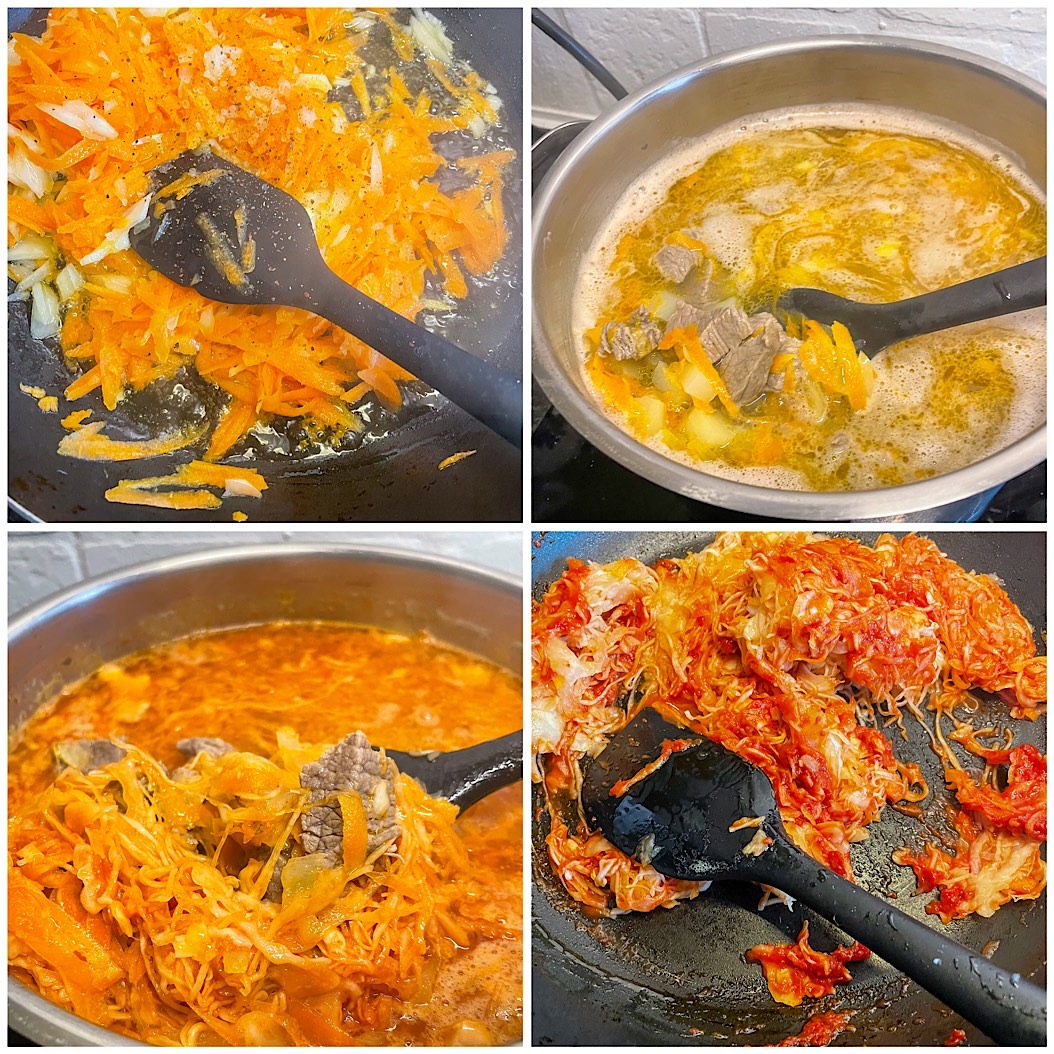
Step 2 - Sauté the Vegetables. Heat 2 tablespoons of vegetable oil in a frying pan over medium heat. Add the finely chopped onion and grated carrot, and sauté for about 5 to 7 minutes, stirring occasionally, until softened and lightly golden. Meanwhile, peel and dice the potatoes. Transfer the sautéed onion and carrot into the pot with the strained stock and shredded beef, then add the diced potatoes. Simmer for 10 minutes.
Step 3 - Cook the Sauerkraut. In the same frying pan, heat another tablespoon of vegetable oil over medium heat. Add the sauerkraut and sauté for 5 to 7 minutes, stirring occasionally. Stir in the tomato paste and cook for another 2 minutes, letting the flavours meld. Transfer the sauerkraut mixture into the pot with the broth and vegetables. Season with salt and black pepper to taste. Simmer for another 15 to 20 minutes.
Step 4 - Finish and Serve. Just before turning off the heat, stir in the minced garlic. Take the pot off the heat and let the soup rest for at least 15 minutes before serving - this really does make a difference to the flavour. Ladle the shchi into bowls, add a generous dollop of sour cream, and garnish with fresh dill, parsley, or green onions. Serve with rye bread on the side.
How to Serve and Store Shchi
Shchi is best served hot, straight from the pot, with a generous spoonful of full-fat sour cream stirred in at the table. The sour cream is not optional here - it rounds out the tang from the sauerkraut and makes the broth feel rich and almost creamy. A slice of dark rye bread on the side is traditional and genuinely delicious; the dense, slightly sour bread is a natural match for the bold flavours of the soup. Fresh dill is the most traditional garnish, but parsley and green onions both work well.
Shchi keeps beautifully. Let it cool completely, then store in an airtight container in the fridge for up to 4 days. The flavour actually improves overnight as everything continues to meld together, so leftovers are often even better than the first bowl. Reheat gently on the hob over medium-low heat, adding a splash of water or stock if it has thickened. This soup also freezes well - portion into freezer-safe containers and freeze for up to 3 months. Defrost overnight in the fridge before reheating.
You Might Also Like These Soups
If you love a good hearty bowl, these recipes are worth bookmarking too.
→ Cold Borscht - Lithuanian Beetroot Soup Recipe A chilled, vibrant beetroot soup served cold — refreshing, creamy, and perfect for warm days.
→ Chicken Borscht Recipe A lighter take on classic borscht made with chicken - just as flavourful, but quicker to make.
→ Borscht on Meaty Bones - Rich, Hearty Traditional Beet Soup From Scratch The most traditional version of borscht, slow-cooked on meaty bones for a deeply rich, full-bodied broth.
→ Authentic Russian Soljanka Recipe - Hearty Meat & Pickle Soup From Scratch A bold, tangy Russian meat soup packed with mixed meats, pickles, and olives - bold flavours in every spoonful.
→ Russian Chicken Soup Recipe A simple, wholesome homestyle chicken soup with a clean golden broth and comforting, classic flavours.
→ Cod Ukha Recipe - Classic Russian Fish Soup A delicate, clear Russian fish soup made with cod - light, aromatic, and beautifully simple.

Top Tips and Notes for the Best Shchi
- Use bone-in beef for the best stock. Beef short ribs or beef shank are ideal here because the bones release collagen as they simmer, which gives the broth a wonderful body and richness that boneless stewing beef simply cannot match. The marrow also adds flavour that goes right into the stock. If you can only find stewing beef, it will still work, but try to include at least one piece with a bone if possible. The quality of the stock is the backbone of this entire dish.
- Always start with cold water. This is one of those steps that really matters. Starting with cold water and bringing it slowly to a boil draws out impurities from the meat gradually, which means you get a cleaner, clearer, better-tasting broth. If you start with hot water, those impurities set quickly and cloud the stock. Skimming the foam in the first 20 minutes of simmering is equally important — just remove it with a spoon and discard it.
- Do not skip sautéing the sauerkraut. Cooking the sauerkraut in a hot pan with oil before adding it to the soup makes a noticeable difference. The heat mellows the raw sharp edge of the fermented cabbage and concentrates its flavour, while the oil carries those flavours throughout the dish. Adding the tomato paste to the pan at this stage and cooking it briefly also removes any tinny, raw flavour and gives it a deeper, richer taste.
- The broth colour comes from the tomato paste and carrot. If your finished soup looks quite orange or reddish, that is completely normal. The grated carrot releases its pigment into the broth during cooking, and the tomato paste deepens the colour further. This is exactly what an authentic shchi recipe looks like — rustic, bold, and rich in colour. If you prefer a lighter broth, reduce the tomato paste to 2 tablespoons.
- Taste and adjust seasoning at the end. Sauerkraut is naturally salty, and the amount varies between brands. Always taste your soup before adding extra salt. Season with salt and freshly ground black pepper only once the sauerkraut has had time to simmer and release its flavour into the broth. If the soup tastes too sour, a small pinch of sugar — half a teaspoon — can help balance it without dulling the flavour completely.
- Let the soup rest before serving. This is one of the most important steps and one of the easiest to skip. Allowing shchi to sit off the heat for at least 15 minutes gives all the components time to settle and the flavours time to meld properly. The sauerkraut softens slightly, the beef soaks up more broth, and the garlic works through the whole pot. If you can make this a day ahead, do — it genuinely tastes better the next day.

Frequently Asked Questions About Shchi
What is shchi?
Shchi is a traditional Russian cabbage soup that has been eaten in Russia for centuries. It is made with either fresh or fermented cabbage (sauerkraut), beef, vegetables, and a simple seasoning of salt, pepper, and garlic. The version with sauerkraut is known as sour shchi and is the most popular variety. It is considered a national dish of Russia and is still made regularly in Russian homes today, usually from scratch with a proper homemade beef stock.
Can I use fresh cabbage instead of sauerkraut?
Yes, you can. Fresh cabbage gives you a milder, lighter soup without the tangy, sour flavour that sauerkraut brings. If you use fresh cabbage, shred it finely and add it directly to the soup pot along with the potatoes, simmering until tender. The flavour will be quite different — less bold and more neutral — but it is still a classic version of the dish. Some Russian families make both versions depending on the season and what they have available.
How long does shchi need to simmer?
Making shchi from scratch takes about 2 to 2.5 hours in total — around 1.5 to 2 hours to cook the beef stock until the meat is fully tender, plus another 25 to 30 minutes for the vegetables and sauerkraut. Most of this is hands-off time, with occasional skimming at the start. The slow simmering is not something you can skip; it is what develops the deep, rich flavour that makes this soup so satisfying.
Can I make shchi in a slow cooker or pressure cooker?
Yes, both work well. In a slow cooker, cook the beef with the onion and carrot on low for 6 to 8 hours to make the stock, then strain, add the sautéed vegetables and sauerkraut, and cook on high for a further hour. In a pressure cooker or Instant Pot, the beef stock can be ready in about 45 minutes under pressure, which cuts the total time significantly. In both cases, still sauté the onion, carrot, and sauerkraut in a separate pan before adding them — this step makes a real difference to the flavour.
Is shchi gluten-free?
es, this recipe is naturally gluten-free. All the main ingredients — beef, sauerkraut, vegetables, tomato paste, garlic, and oil — contain no gluten. The only thing to check is the sauerkraut label, as some commercial brands add flavourings or preservatives that may contain gluten. If you are serving it with rye bread, note that rye contains gluten, so swap it for a gluten-free alternative if needed.
Can I make a vegetarian version of shchi?
Yes. Skip the beef and use a good vegetable stock as the base instead. Dried mushrooms — particularly porcini or shiitake — work brilliantly here as they add a deep, umami-rich flavour that mimics the depth of a meat stock. Soak a small handful in boiling water for 30 minutes, then add them along with the strained soaking liquid to the pot. The rest of the recipe stays the same, and you will still get a hearty, deeply flavourful soup.
What is the difference between shchi and borscht?
Both are traditional Eastern European soups, but they are quite different. Shchi is primarily a cabbage or sauerkraut soup with a clear or slightly reddish broth and a tangy, savoury flavour. Borscht is a beetroot soup with a vibrant deep-red colour and a sweet, earthy flavour. Both can be made with beef and are served with sour cream, but borscht always contains beetroot while shchi does not. If you love one, there is a very good chance you will love the other too.
Shchi Soup Recipe

Shchi is a traditional Russian sauerkraut and beef soup with a rich, tangy broth and tender shredded beef. Made from scratch with a homemade beef stock, sautéed vegetables, and sauerkraut cooked down with tomato paste, this is a hearty, wholesome soup that gets even better the next day. Serve hot with sour cream and rye bread for an authentic Russian experience.
Ingredients
For the Stock:
- 600g (21oz) beef on the bone — short ribs or beef shank — or stewing beef
- 1 onion, peeled and halved
- 1 carrot, roughly chopped
- 2-3 litres (8½ cups) cold water
For the soup:
- 4 tablespoon vegetable oil, divided
- 1 onion, finely chopped
- 1 carrot, grated
- 2 medium potatoes, peeled and diced
- 300g (10½oz / approx. 2 cups) sauerkraut, rinsed if very sour
- 3–4 tablespoon tomato paste
- 2 cloves garlic, minced
- Salt and black pepper, to taste
To Serve:
- Sour cream
- Fresh dill, parsley, or green onions
- Rye bread
Instructions
- Put the beef, halved onion, and roughly chopped carrot into a large pot. Cover with 2 litres of cold water. Bring to a boil over high heat, then immediately reduce the heat to a low simmer. Skim off any foam that rises to the surface during the first 15 to 20 minutes. Simmer uncovered for 1.5 to 2 hours, until the beef is completely tender and the broth is golden and well-flavoured. Remove the beef from the pot, discard the onion and carrot, and strain the broth through a fine sieve into a clean pot. Shred the beef into bite-sized pieces and return it to the strained broth.
- Heat 2 tablespoons of vegetable oil in a frying pan over medium heat. Add the finely chopped onion and grated carrot. Sauté, stirring occasionally, for 5 to 7 minutes until softened and lightly golden. Peel and dice the potatoes into even, roughly 2 cm pieces. Add the sautéed onion and carrot to the pot with the beef and broth, then add the diced potatoes. Bring back to a simmer and cook for 10 minutes.
- In the same frying pan, heat the remaining 2 tablespoons of vegetable oil over medium heat. Add the sauerkraut and sauté for 5 to 7 minutes, stirring occasionally, until heated through and slightly mellowed. Stir in the tomato paste and cook for a further 2 minutes, stirring well to coat the sauerkraut evenly. Transfer the sauerkraut mixture into the pot with the broth and vegetables. Season generously with salt and black pepper. Simmer for another 15 to 20 minutes, allowing all the flavours to develop together.
- Just before turning off the heat, stir in the minced garlic. Remove the pot from the heat and allow the soup to rest uncovered for at least 15 minutes before serving. Ladle into bowls and top each with a generous spoonful of sour cream. Garnish with freshly chopped dill, parsley, or green onions. Serve with rye bread on the side.