
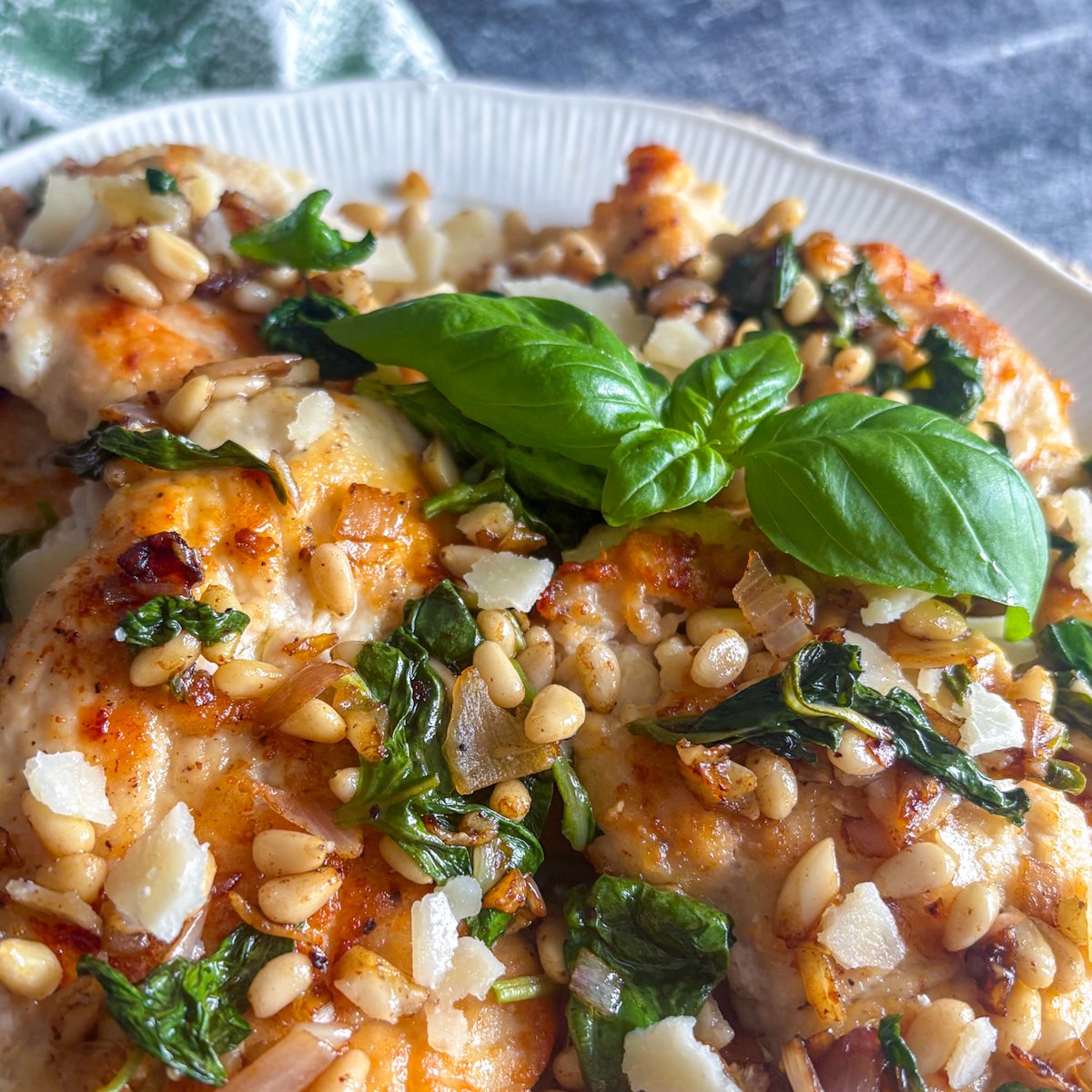
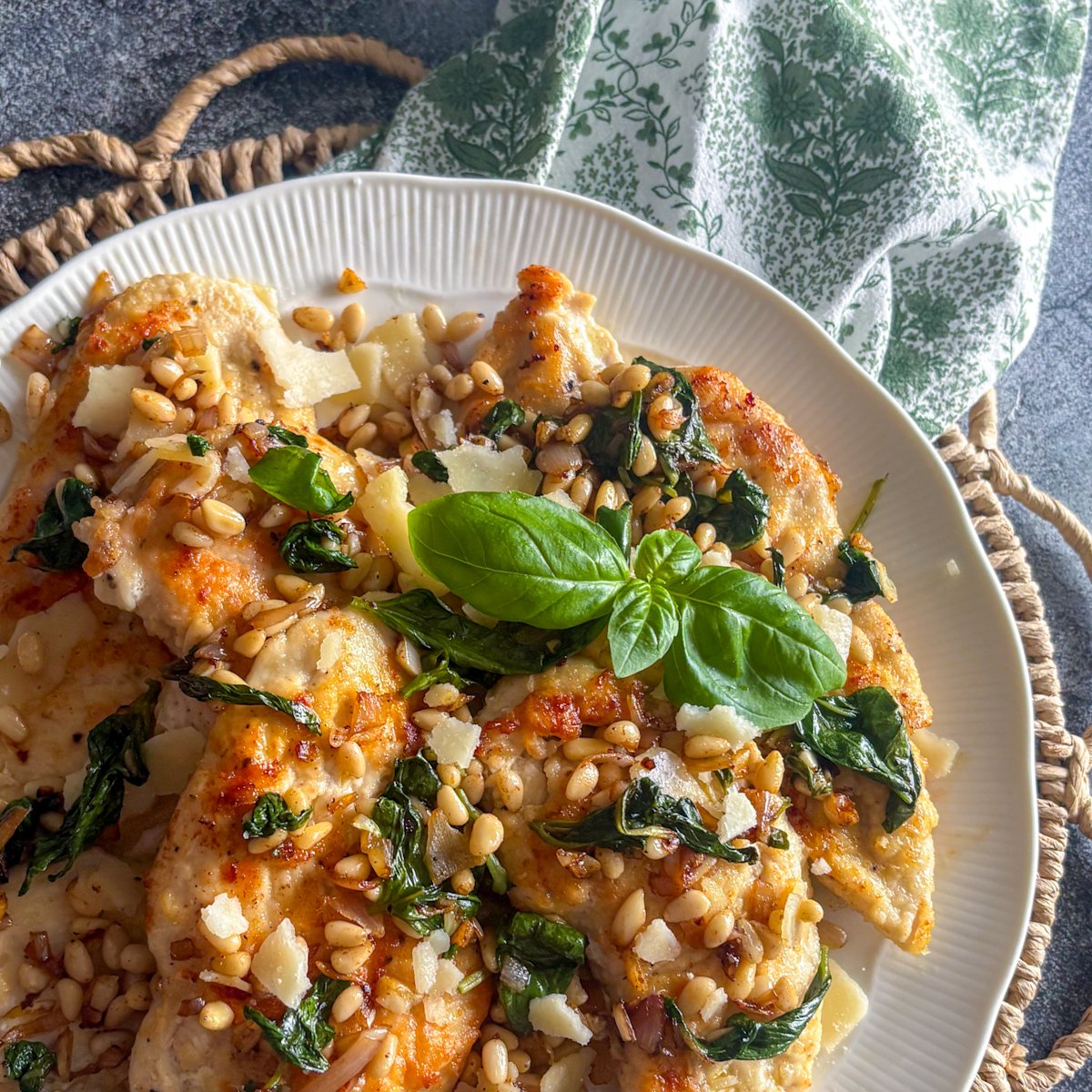
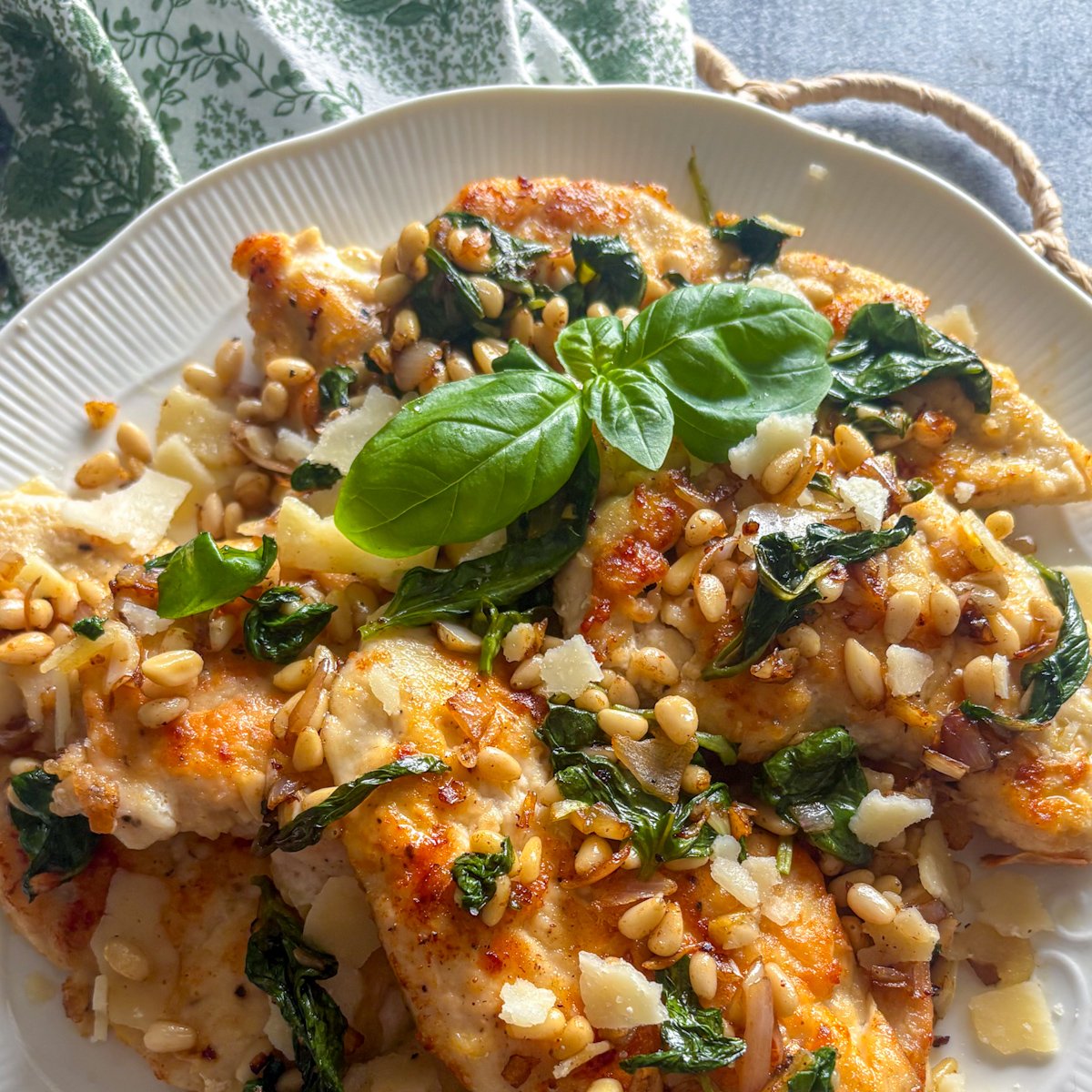
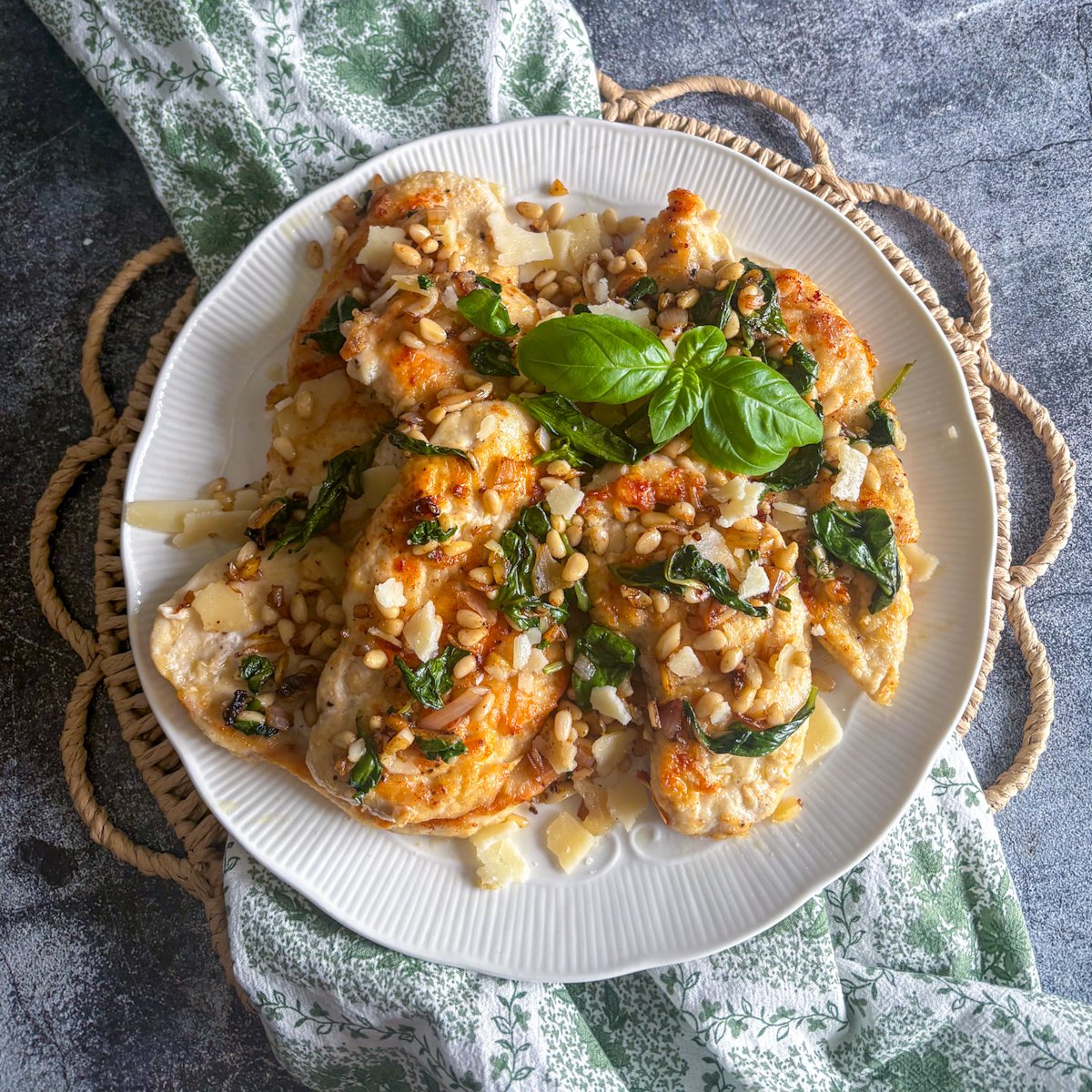
Pan-fried chicken cutlets come out thin, golden and tender, finished with wilted basil, toasted pine nuts and shaved Parmesan. The whole dish takes 45 minutes from start to finish, including chilling, and needs nothing more than one frying pan and a meat hammer.
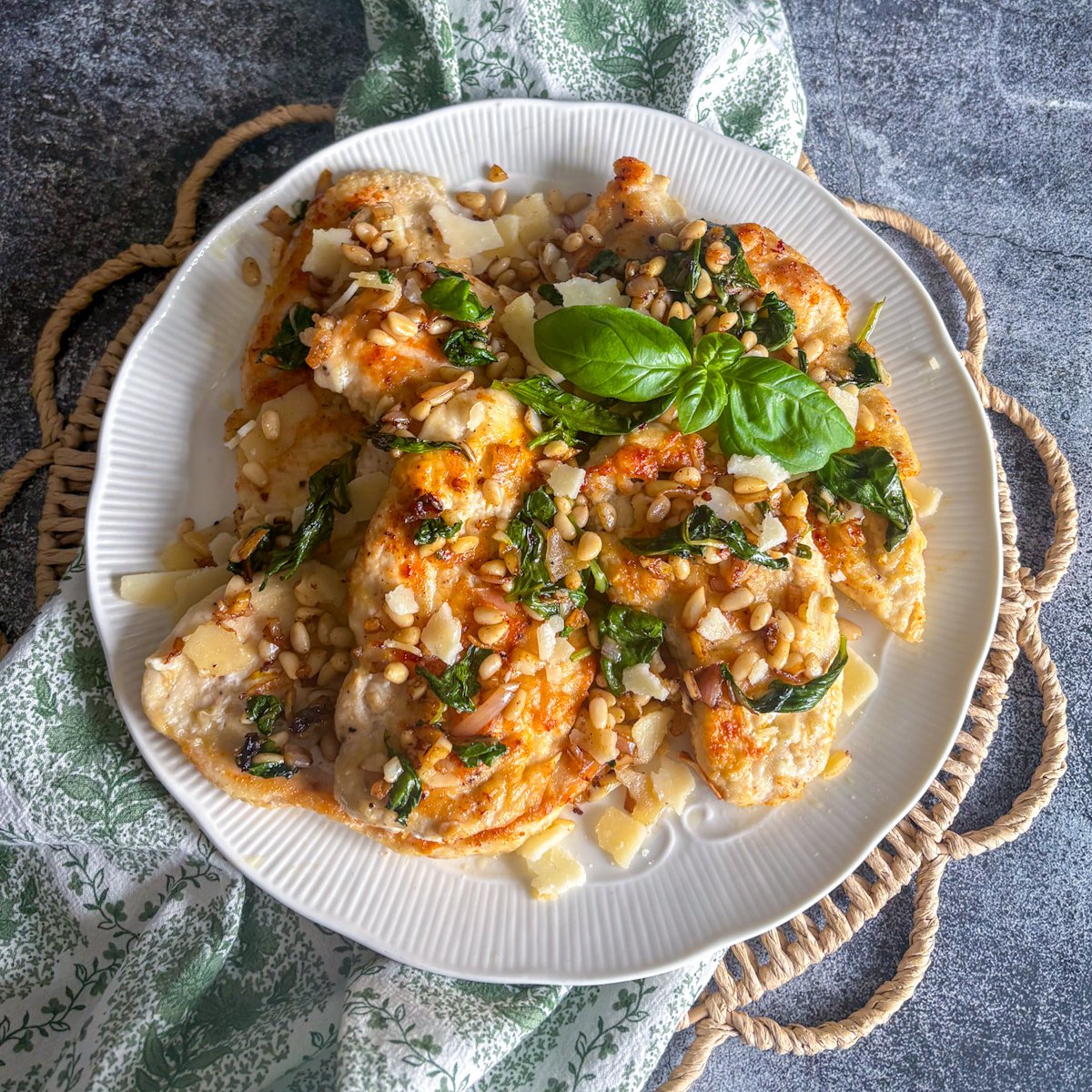
Pan-fried chicken cutlets are made by halving chicken breasts horizontally, flattening them with a meat hammer and cooking them fast in hot olive oil, so the outside turns golden before the inside has any chance to dry out. A light coating of plain flour gives the cutlets their crust and thickens the oil left behind in the pan, which then becomes the base for the basil topping. Shallot, garlic, toasted pine nuts and a splash of balsamic vinegar go in with the heat switched off, so the basil wilts without turning dark. It feeds four people cheaply, it goes with almost any side you have in, and every part of it happens in the same pan.
Jump to:
- Ingredients for Pan-Fried Chicken Cutlets
- How to Make Pan-Fried Chicken Cutlets
- How to Serve and Store Pan-Fried Chicken Cutlets
- More Easy Recipes You Might Enjoy
- What Pan-Fried Chicken Cutlets Cost Around the World
- Tips and Notes for the Best Pan-Fried Chicken Cutlets
- Pan-Fried Chicken Cutlets FAQ
- Related
- Pairing
- Easy Pan-Fried Chicken Cutlets with Basil and Pine Nuts
Ingredients for Pan-Fried Chicken Cutlets
Quantities for the pan-fried chicken cutlets are in the recipe card at the bottom. A supermarket basil plant gives you two or three times more leaves than a packet for roughly the same money, and for pine nuts go to Aldi or Lidl where prices are a lot cheaper.
- Chicken breasts – Large boneless skinless breasts halve neatly into two even cutlets each, which is what keeps the cooking time down to a few minutes.
- Fine sea salt – Seasoning before the flour goes on means the meat itself tastes right, rather than only the crust.
- Freshly ground black pepper – Ground fresh, it has enough bite to hold its own against the Parmesan and the balsamic.
- Extra virgin olive oil – It fries the chicken and then carries the basil topping, so the same flavour runs right through the dish.
- Plain flour – A thin coating gives the cutlets their golden crust and thickens whatever is left in the pan afterwards.
- Shallot – Milder and sweeter than an onion, and it softens in the minute you have before the garlic goes in.
- Garlic – Four cloves sounds like a lot until you taste it against the basil and the Parmesan.
- Pine nuts – Toasted first in a dry pan, they turn sweet and buttery instead of tasting raw and slightly resinous. It takes less than 1 minute to toast the nuts, so please do not skip this step. You can also toast a double batch and use them for salad toppings.
- Fresh basil – Added off the heat so it wilts into the oil while keeping its colour.
- Balsamic vinegar – One teaspoon cuts through the oil and pulls the whole topping together.
- Parmesan – Shaved over at the end, it softens against the hot chicken without fully melting.
How to Make Pan-Fried Chicken Cutlets
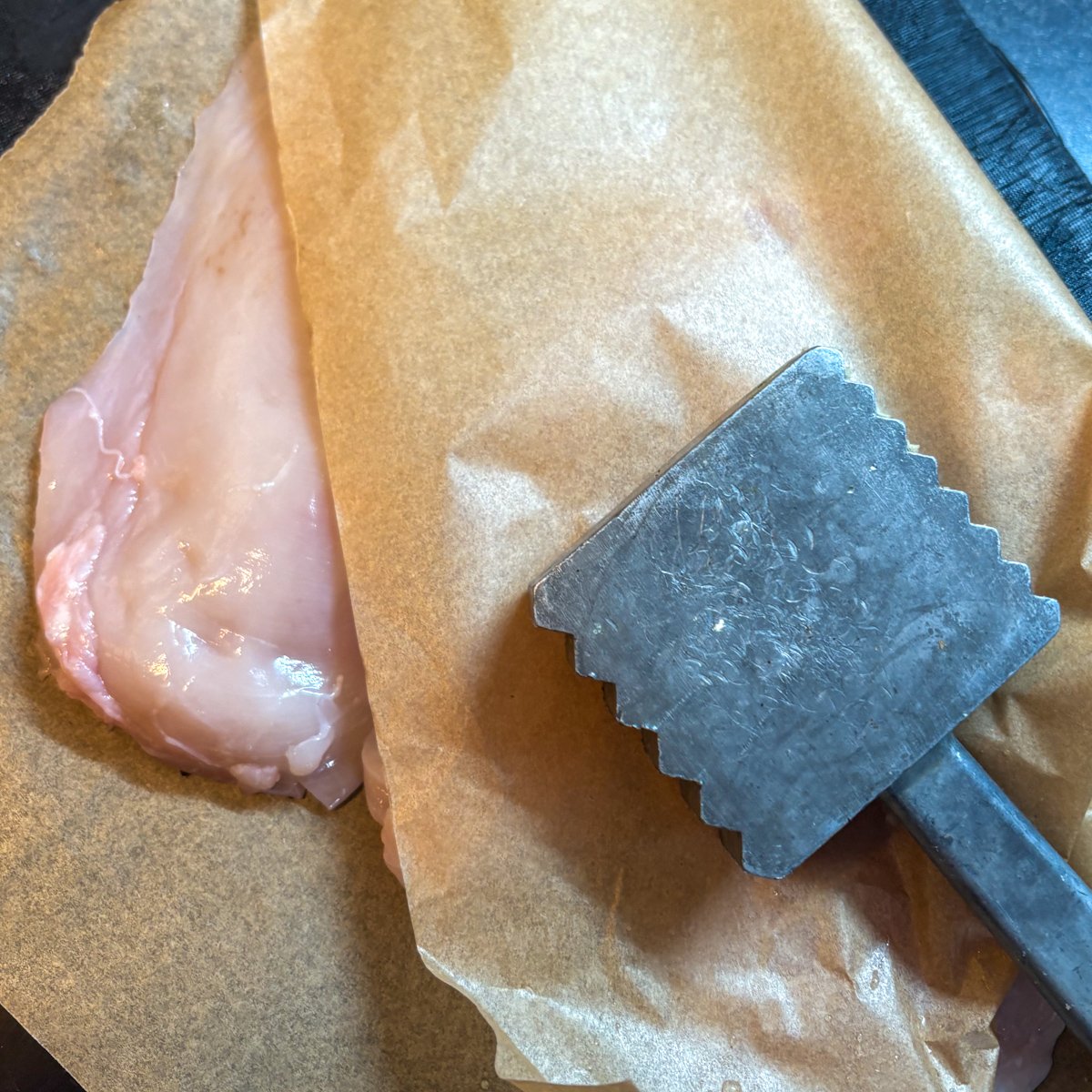
- Step 1: To make the cutlets, halve each chicken breast horizontally to give two thin pieces. Lay each one between cling film or parchment paper and work over it with the flat side of a meat hammer until the thickness is even from end to end. Pat the cutlets dry with kitchen towel, season both sides with salt and pepper, spread them out on a large plate and chill in the fridge for 15 minutes.
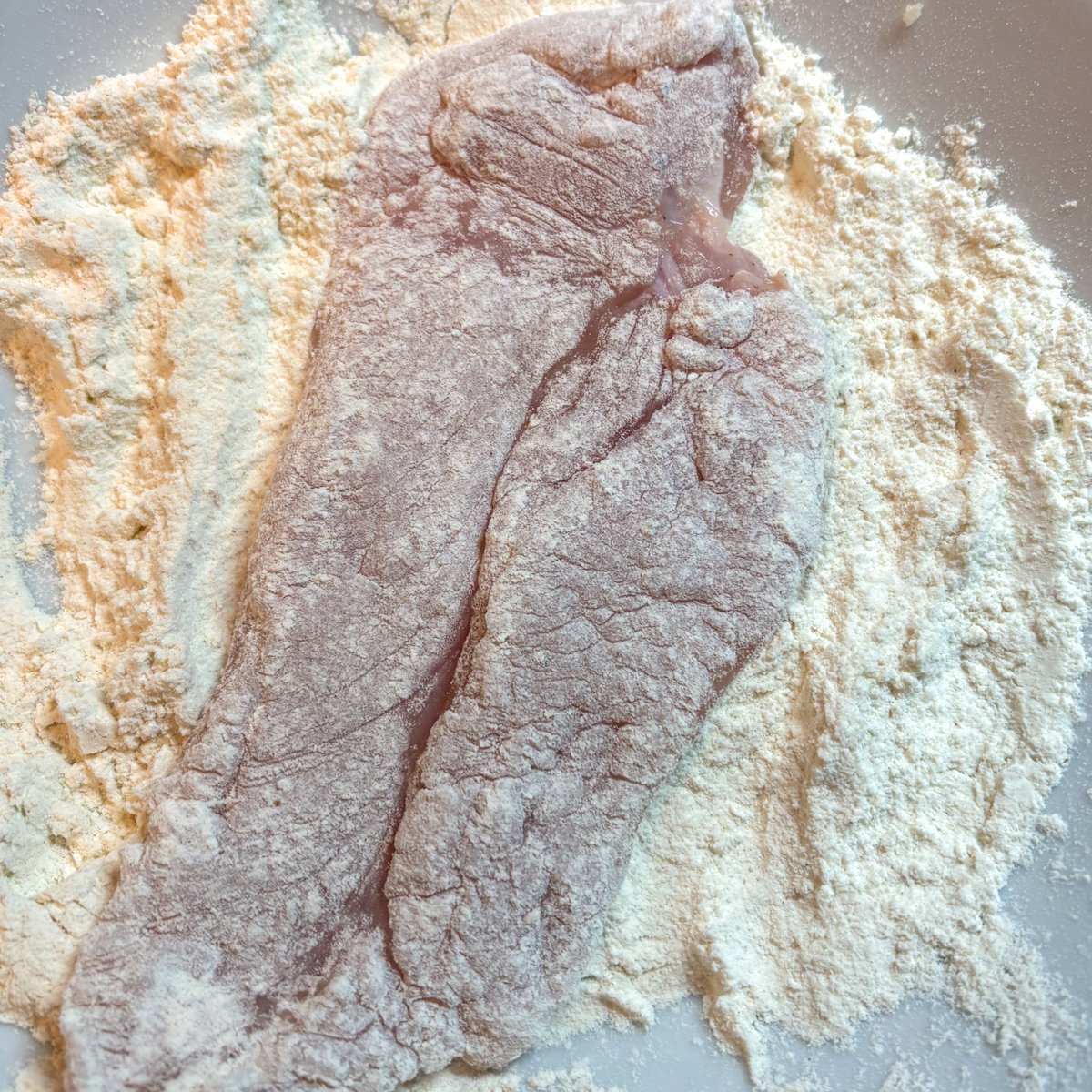
- Step 2: Tip the flour into a shallow dish and coat each cutlet in it, shaking off the excess. Coating them one at a time is worth the extra minute, because the coating stays even and there are no sticky pieces to pull out of a pile. Set the coated cutlets aside on a large plate until the pan is ready.
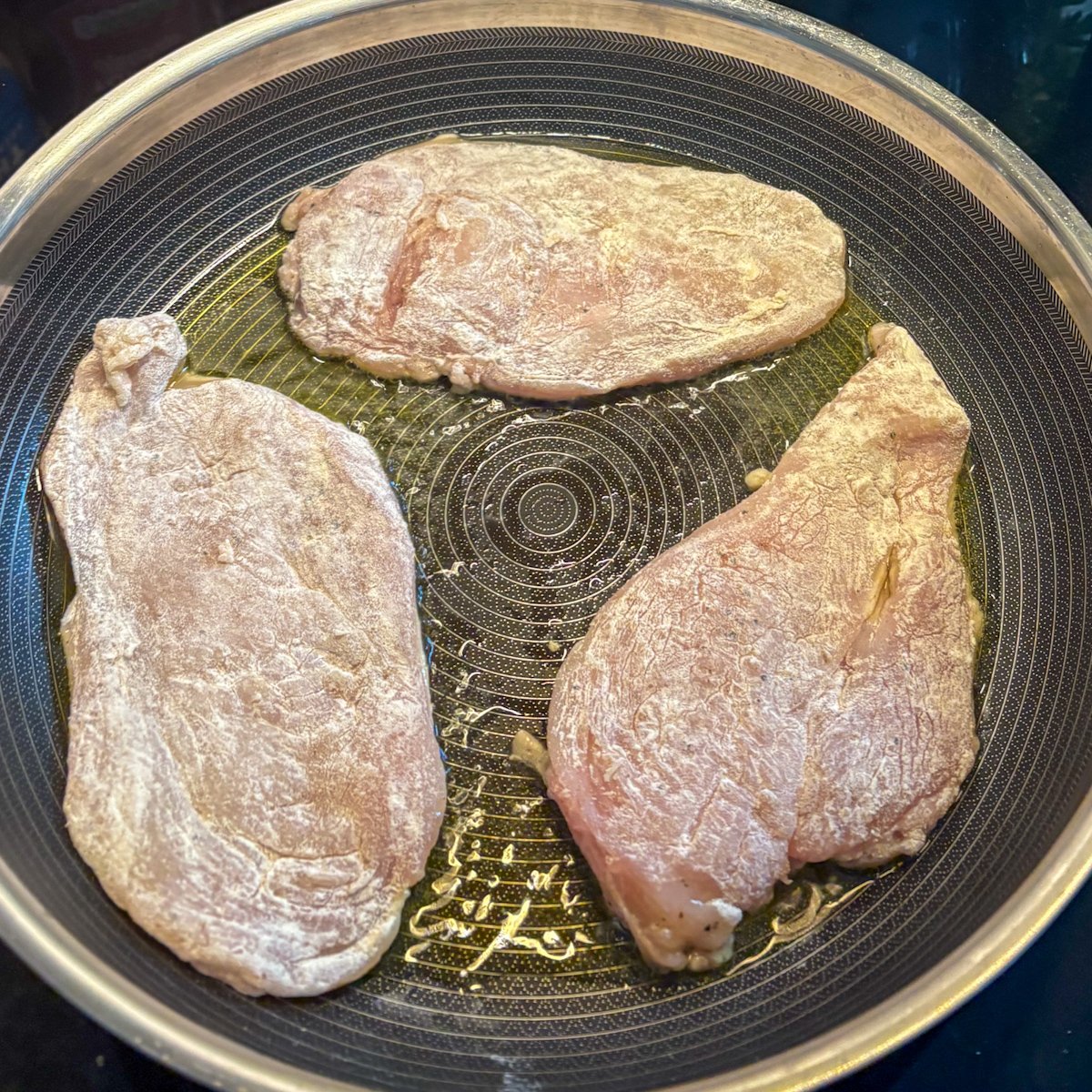
- Step 3: Heat around 2 tablespoons of oil in a large frying pan. Once it is properly hot, add the cutlets three or four at a time depending on the size of the pan, and fry for 2–3 minutes on each side depending on how thick they are. Transfer them to a plate and cook the next batch. Add more oil if the pan looks dry, and there is no need to wipe it clean between batches unless the flour has burnt and stuck. When the last of the pan-fried chicken cutlets is done, keep the pan on the hob but turn the heat down.
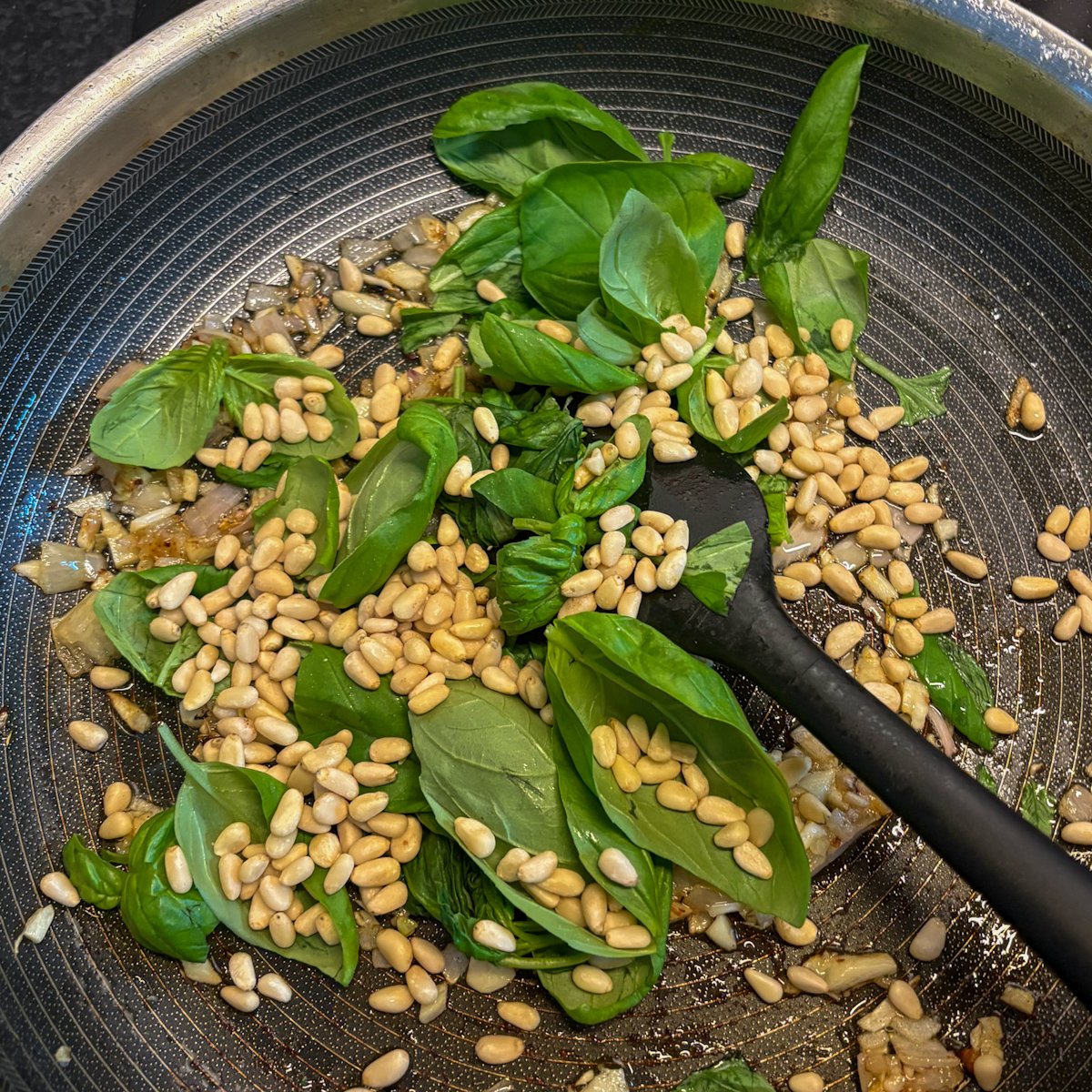
- Step 4: Add 1 tablespoon of olive oil and, once it is hot, the finely chopped shallot, stirring for a minute. Add the garlic next for 30 seconds, until it smells fragrant. Turn the heat off completely, add the basil with a sprinkle of salt and black pepper, and toss with kitchen tongs until it has wilted but is still green, around 30 seconds. Stir in the pine nuts and balsamic vinegar last, then spoon the whole lot over the chicken to serve.
To toast pine nuts: just heat a dry frying pan and add pine nuts. Fry for 30 seconds, stirring them to prevent burning.
How to Serve and Store Pan-Fried Chicken Cutlets
Pan-fried chicken cutlets are best served straight from the pan, while the Parmesan is still softening on top. Pan-fried chicken cutlets do not sit around well, so it is worth having everything else ready before the last batch comes out. Buttered new potatoes, plain rice or a bowl of pasta all work underneath them, and a green salad with a sharp dressing or a tray of roasted tomatoes keeps things lighter.
Leftovers keep in an airtight container in the fridge for up to three days, and the basil topping is best stored separately, since it holds its colour far better that way. To reheat, a hot dry frying pan for a minute on each side brings the crust back properly, while a microwave turns the coating soft. Cooked pan-fried chicken cutlets also freeze well for up to two months if they are wrapped individually so they do not stick together, then defrosted overnight in the fridge before reheating. The basil topping is not worth freezing, as it takes two minutes to make fresh.
More Easy Recipes You Might Enjoy
If this is the kind of quick weeknight dinner you cook often, these are worth a look too.
- For something budget-friendly made with mince, try Easy Pork Mince Patties — soft, well-seasoned patties that fry in minutes and stretch a small amount of meat a long way.
- When you have more time on a Sunday, there is Oven Braised Pork Gigot Chops — a cheap cut cooked low and slow until it falls apart.
- Another quick pan dinner is Turkey Steaks in Tomato Sauce — lean turkey simmered in a simple sauce that goes with rice or pasta.
- If you want something even faster, have a look at Turkey Steaks — pan-fried turkey ready in around 15 minutes with very little washing up.
What Pan-Fried Chicken Cutlets Cost Around the World
Chicken breast carries most of the cost of pan-fried chicken cutlets, and pine nuts are the ingredient that swings the total the most. The figures below are approximate and based on four servings.
- United Kingdom – Around £9–10 for the whole dish, roughly £2.40 a serving. Chicken breast is cheapest at Aldi and Lidl, with Tesco and Sainsbury's own-brand packs close behind. Pine nuts cost far less in the Aldi or Lidl than in other stores.
- Ireland – About €12–13 in total, close to €3.10 a serving. Dunnes Stores, SuperValu and Tesco Ireland all carry good chicken fillets, while Lidl and Aldi usually come in a euro or two cheaper per kilo.
- United States – Roughly $14–16, around $3.75 a serving. Walmart and Kroger are the cheapest for boneless skinless chicken breasts, and Trader Joe's has the best value pine nuts by a distance.
- Australia – Close to A$20–22, near A$5.25 a serving. Coles and Woolworths both run regular specials on chicken breast fillets, and Aldi is the cheaper stop for pine nuts and Parmesan.
- Italy – Around €11–12, roughly €2.80 a serving. Basil, Parmigiano Reggiano and good olive oil all cost less here, though pinoli from Esselunga, Coop or Conad will still be the priciest thing in the basket.
Tips and Notes for the Best Pan-Fried Chicken Cutlets
- Even thickness matters more than thinness. The meat hammer is there to level the breast out from one end to the other, and that does more for the finished dish than how thin you manage to get it. A cutlet measuring 1cm at one end and 5mm at the other will give you one dry half every single time. I tap from the middle outwards with the flat side of the hammer, firmly but without hammering, and stop as soon as the surface looks level. Even thickness is the biggest single difference between good pan-fried chicken cutlets and dry ones, so parchment paper is worth using here if you have a heavy hand, as it stands up better than cling film.
- Do not skip the 15 minutes in the fridge. Salt needs a little time to work into the surface of the meat, and the chill firms the cutlets up so they keep their shape in the flour. Fifteen minutes is enough, though half an hour does no harm at all if you are prepping ahead. It also gives you a natural window to chop the shallot and garlic and get the flour dish ready. Pan-fried chicken cutlets come together fast once the pan is hot, so anything you can do in advance helps.
- Flour them just before they go into the pan. Flour sitting on damp chicken turns gluey after ten minutes or so, and a gluey coating slides off in the oil rather than crisping. I coat one cutlet at a time and get them straight into the pan while the batch before is still frying. If you do have to coat them all in advance, keep them in a single layer rather than stacked. Stacking presses the coating into a paste between the pieces.
- The pan needs to be properly hot before the first cutlet goes in. If the oil is only warm, the flour absorbs it and you end up with a pale, greasy coating instead of a crisp one. Pan-fried chicken cutlets brown in two to three minutes a side only when the oil is hot enough to start with. I wait until it moves easily around the pan and shimmers slightly, then test with the corner of a cutlet, which should sizzle straight away. Turn the heat down a little between batches if the flour left in the pan starts to darken.
- Give each cutlet room. Three or four at a time is plenty in a 28cm frying pan, and any more than that drops the temperature far enough for the chicken to steam instead of browning. Steamed cutlets go grey and rubbery, and no amount of extra time in the pan will fix them. I would rather cook three batches and keep the first two warm under foil than crowd the pan once. A full batch of pan-fried chicken cutlets only takes about fifteen minutes at the hob anyway.
- Toast the pine nuts separately and watch them. Thirty seconds to a minute in a dry frying pan over medium heat is usually all they need, stirring the whole time. They go from pale to golden to burnt very quickly, and burnt pine nuts taste bitter enough to spoil the topping. Tip them straight out onto a cold plate, because they carry on cooking in the residual heat of the pan. Doing this before the chicken saves you washing the pan twice.
- Turn the heat off before the basil goes in. Basil in a hot pan goes black and bitter within seconds, and the leaves collapse into something closer to spinach. The heat left in the pan is more than enough to wilt it while keeping the colour bright. I toss it with kitchen tongs for about 30 seconds, just until the leaves have softened and taken on the oil. If your pan holds heat well, cast iron especially, slide it off the hob completely.
- Leave the browned bits in the pan between batches. Those flecks of toasted flour are what give the basil topping its depth, so wiping the pan out after every batch throws most of that flavour away. The only reason to clean it is if something has genuinely burnt and stuck, which usually means the heat was too high. A little fresh oil is enough to keep things moving. This is also why the topping for pan-fried chicken cutlets is made in the same pan rather than a clean one.
- Buy the basil as a plant rather than a packet. A supermarket basil plant costs roughly what a bag of cut leaves costs and gives you two or three times as much, and whatever you do not use will sit happily on the windowsill for a week. Pick the leaves off whole and leave the thicker stalks behind. Torn leaves bruise and darken faster than whole ones do. If the plant looks tired, give it a good drink the day before and it will pick up.
- Adjust the balsamic to the vinegar you have. A teaspoon of ordinary supermarket balsamic is about right, but a thick aged balsamic is sweeter and much stronger, so start with half and taste. The vinegar goes in with the heat off so it keeps its sharpness rather than cooking away. Lemon juice works if you have no balsamic in the cupboard, though it takes the topping somewhere brighter and less sweet. Either way, add it at the very end and taste it before it goes over the pan-fried chicken cutlets.
Pan-Fried Chicken Cutlets FAQ
What exactly is a chicken cutlet?
A cutlet is a chicken breast sliced horizontally into two thinner pieces and then flattened to an even thickness. It is the same cut of meat, prepared so it cooks in a few minutes rather than twenty. Pan-fried chicken cutlets are sometimes sold ready-prepared as chicken escalopes or breast fillets, which saves you the halving and the pounding.
Do I have to pound the chicken?
Yes, if you want them to cook evenly. Halving a breast gives you two pieces that are still thicker at one end, and that difference is enough for one end to dry out while the other is still cooking. A minute with the flat side of a meat hammer sorts it out and makes the cooking time predictable.
Can I make these without flour?
You can, though you lose the crust and the pan sauce along with it. The flour is what browns into that golden coating and what thickens the oil left behind for the basil topping. If you need a gluten-free version, fine rice flour or cornflour both work, though rice flour gives a crisper result than cornflour does.
How long do you fry chicken cutlets for?
Pan-fried chicken cutlets need two to three minutes on each side in properly hot oil. Thinner cutlets closer to 5mm will be closer to two minutes, and anything nearer a centimetre wants the full three. Go by colour rather than the clock, since every hob and pan behaves slightly differently.
How do I know when the chicken is cooked through?
The surest way is a meat thermometer in the thickest part, reading 74°C (165°F). Without one, cut into the thickest cutlet in the batch and check that the meat is white all the way through with no pink and that any juices run clear. Cutlets this thin are usually done the moment both sides are golden.
Can I use chicken thighs instead?
Boneless skinless thighs make very good pan-fried chicken cutlets and are cheaper than breast. Open them out flat, trim any thick pockets of fat and flatten them the same way, then allow an extra minute or so on each side. The meat is richer and more forgiving, so it is harder to overcook.
Can I use dried basil?
Dried basil will not work in this topping. The whole point of the fresh leaves is the way they wilt into the hot oil and stay green, and dried basil simply turns to dust in the pan. If you have no fresh basil, wilted rocket or baby spinach with a handful of chopped parsley is a better substitute.
What can I use instead of pine nuts?
Flaked almonds are the closest swap and toast in the same way, and chopped walnuts work well if you do not mind a slightly bitter edge. Sunflower seeds are the cheapest option and still give you the crunch. Toast whatever you use in a dry pan first, since that is where most of the flavour comes from.
Related
Looking for other recipes like this? Try these:
- Baked Mediterranean Meatballs with Roasted Vegetables Recipe
- Mussel Pasta in Creamy Garlic Butter Sauce
- Herb Butter Roast Chicken with Crispy Golden Skin
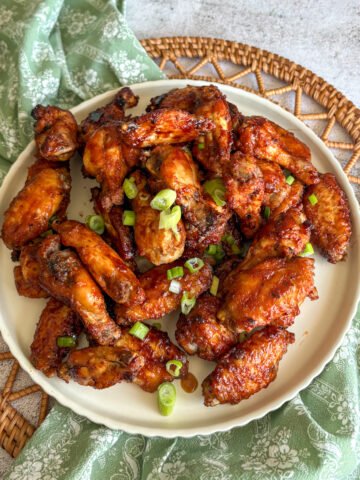
- Sticky Baked Guinness Chicken Wings with a Smoky Dry Rub
Pairing
These are my favourite dishes to serve with Pan-Fried Chicken Cutlets:
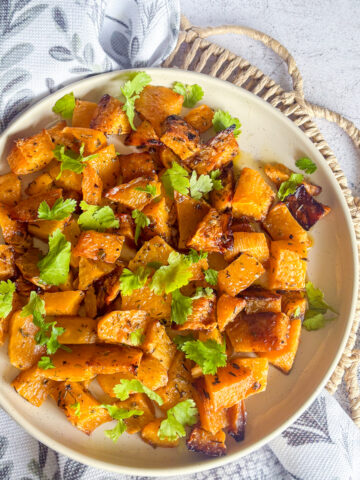
Easy Pan-Fried Chicken Cutlets with Basil and Pine Nuts
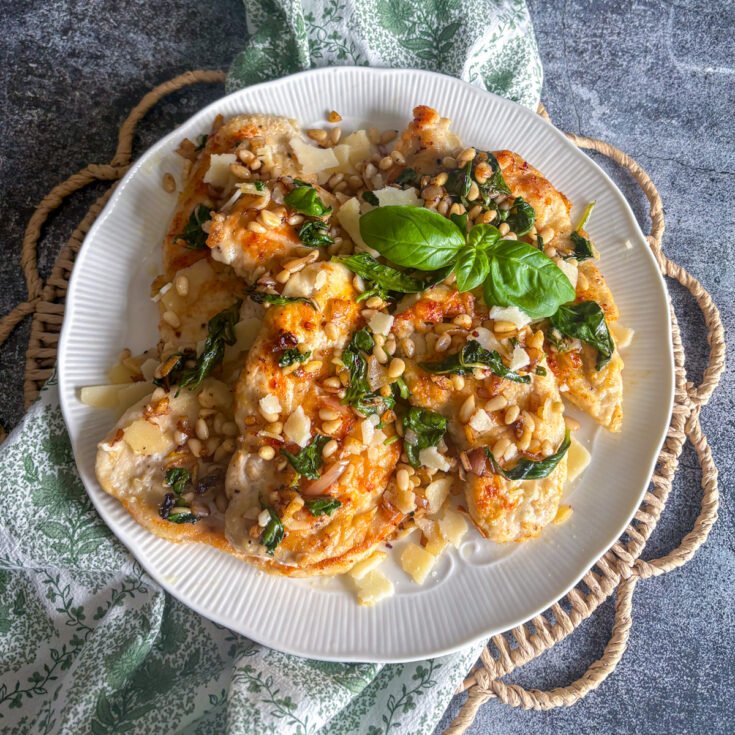
Pan-fried chicken cutlets, thin and golden, topped with basil wilted in garlic and shallot oil, toasted pine nuts and shaved Parmesan. Chicken breasts are halved and flattened so they cook in minutes, and the topping is made in the same pan. Ready in 45 minutes and enough for four.
Ingredients
- 4–5 large boneless skinless chicken breasts (about 900g / 2 lb)
- Pinch of fine sea salt, plus a little extra for the basil
- Freshly ground black pepper
- 4–5 tbsps extra virgin olive oil, for frying
- 1 tablespoon extra virgin olive oil, for the topping
- 50g plain flour (scant ½ cup)
- 1 shallot, finely chopped
- 4 garlic cloves, finely chopped
- 2–3 tbsps pine nuts, toasted
- 30g fresh basil leaves (1 oz), roughly 1 supermarket basil plant
- 1 teaspoon balsamic vinegar
- 30g Parmesan (1 oz), shaved, to serve
Instructions
- Halve each chicken breast horizontally to give two thin pieces. Lay each one between cling film or parchment paper and work over it with the flat side of a meat hammer until it is an even thickness from end to end. Pat the cutlets dry with kitchen towel, season both sides with sea salt and black pepper, spread them out on a large plate and chill for 15 minutes.
- Tip the flour into a shallow dish. Coat the cutlets one at a time, shaking off the excess, and set them aside on a large plate.
- Heat around 2 tablespoons of the oil in a large frying pan over a medium-high heat. When the oil is hot, add three or four cutlets, without crowding the pan, and fry for 2–3 minutes on each side until golden and cooked through. Transfer to a plate and repeat with the remaining cutlets, adding more oil if the pan looks dry. There is no need to wipe the pan between batches unless the flour has burnt and stuck. Keep the pan on the hob and turn the heat down.
- Add the last tablespoon of oil to the pan. When it is hot, add the shallot and cook for 1 minute, stirring. Add the garlic and cook for a further 30 seconds until fragrant. Turn the heat off completely, add the basil with a sprinkle of salt and black pepper, and toss with kitchen tongs for about 30 seconds until wilted but still green. Stir in the pine nuts and the balsamic vinegar, spoon the mixture over the chicken and finish with shaved Parmesan.