

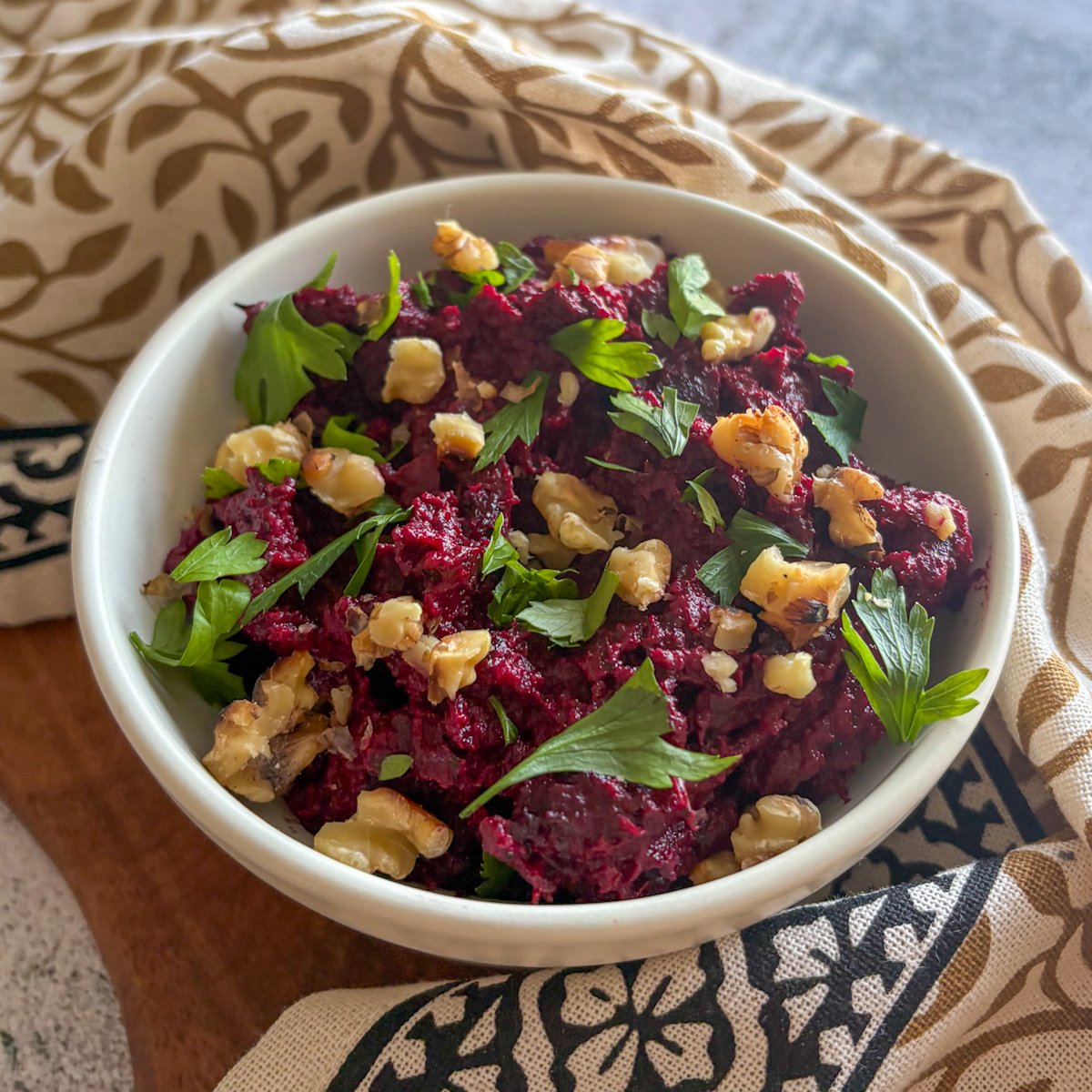
This beetroot and walnut dip is a vibrant Georgian classic made with roasted beetroot, a whole bulb of sweet roasted garlic, and toasted walnuts. Blended until smooth and seasoned with khmeli-suneli, it makes a stunning appetiser for a fraction of the price of shop-bought dips.
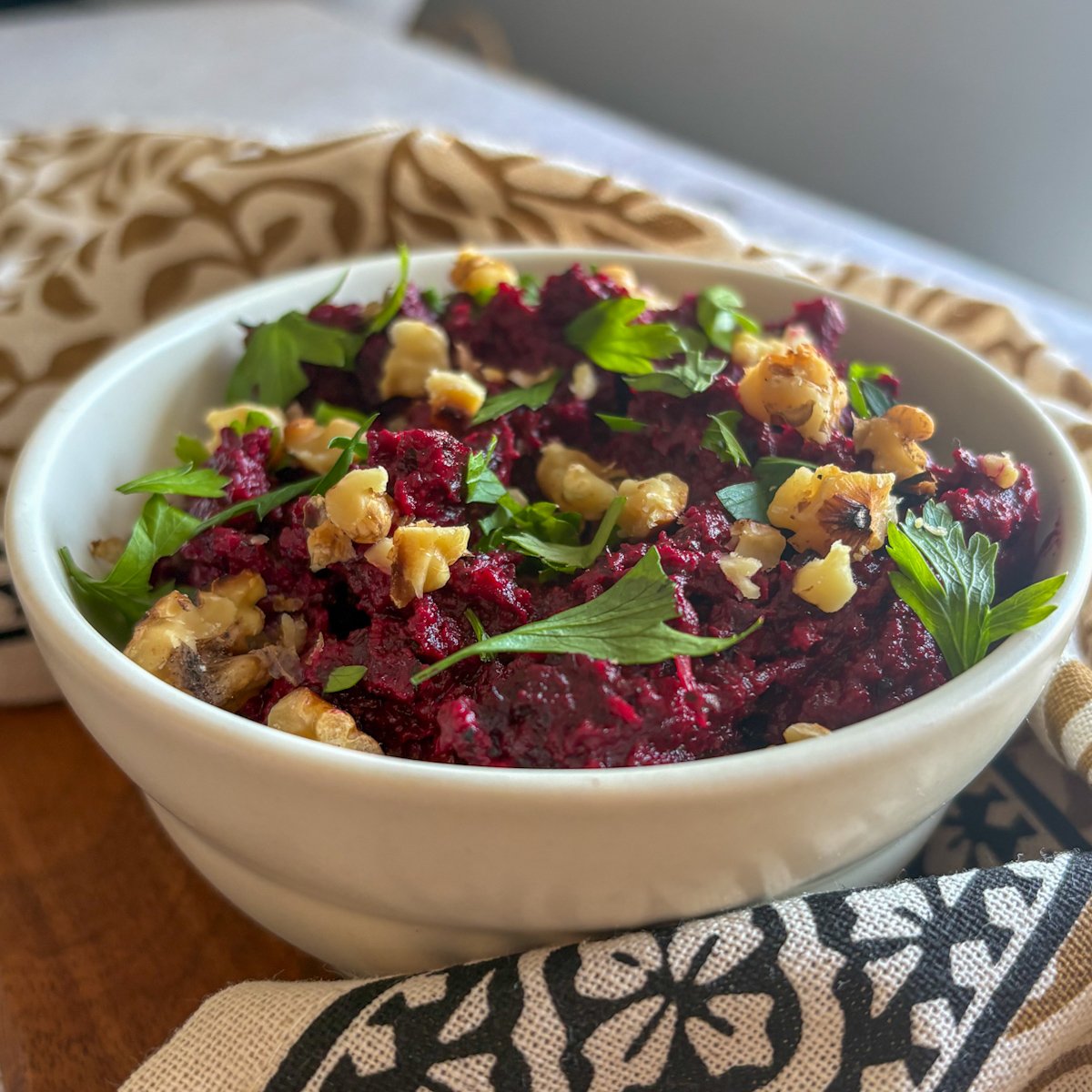
Beetroot and walnut dip, known in Georgia as pkhali, combines earthy roasted beetroot with rich walnuts and a whole bulb of mellow roasted garlic. The vegetables roast hands-off in foil, then everything goes into a blender with khmeli-suneli spice blend for an authentic Georgian flavour. The dip is naturally vegan, gluten-free, and costs very little to make, yet the deep ruby colour looks striking on any table. Make it ahead, chill it, and serve with warm bread, crackers, or crunchy vegetables.
Jump to:
- Ingredients for Beetroot and Walnut Dip
- How to Make Beetroot and Walnut Dip
- How to Serve and Store Beetroot and Walnut Dip
- More Easy Beetroot Recipes You Might Enjoy
- Beetroot and Walnut Dip – Price Comparison
- Top Tips for the Best Beetroot and Walnut Dip
- FAQ About Beetroot and Walnut Dip
- Related
- Pairing
- Beetroot and Walnut Dip (Georgian Pkhali) Recipe
Ingredients for Beetroot and Walnut Dip
- Beetroot – the base of the dip, roasted in foil to concentrate its earthy sweetness and deep ruby colour.
- Garlic – a whole bulb, roasted until soft and mellow so it blends into the dip without any raw sharpness.
- Olive oil – coats the beetroot and garlic for roasting and helps them turn tender and sweet.
- Sea salt – seasons the vegetables during roasting and balances the dip at the end.
- Roasted walnuts – give the dip its rich, nutty body and thick texture, with extra saved for the garnish.
- Khmeli-suneli – the traditional Georgian spice blend that defines the flavour of this dip; see the notes for easy substitutes.
- Dried parsley – adds a gentle herby background that works well with the beetroot.
- Black pepper – a small amount for warmth without heat.
- Fresh coriander – scattered over just before serving for a fresh, aromatic finish.
- Kitchen foil – for wrapping the beetroot and garlic so they roast in their own steam.
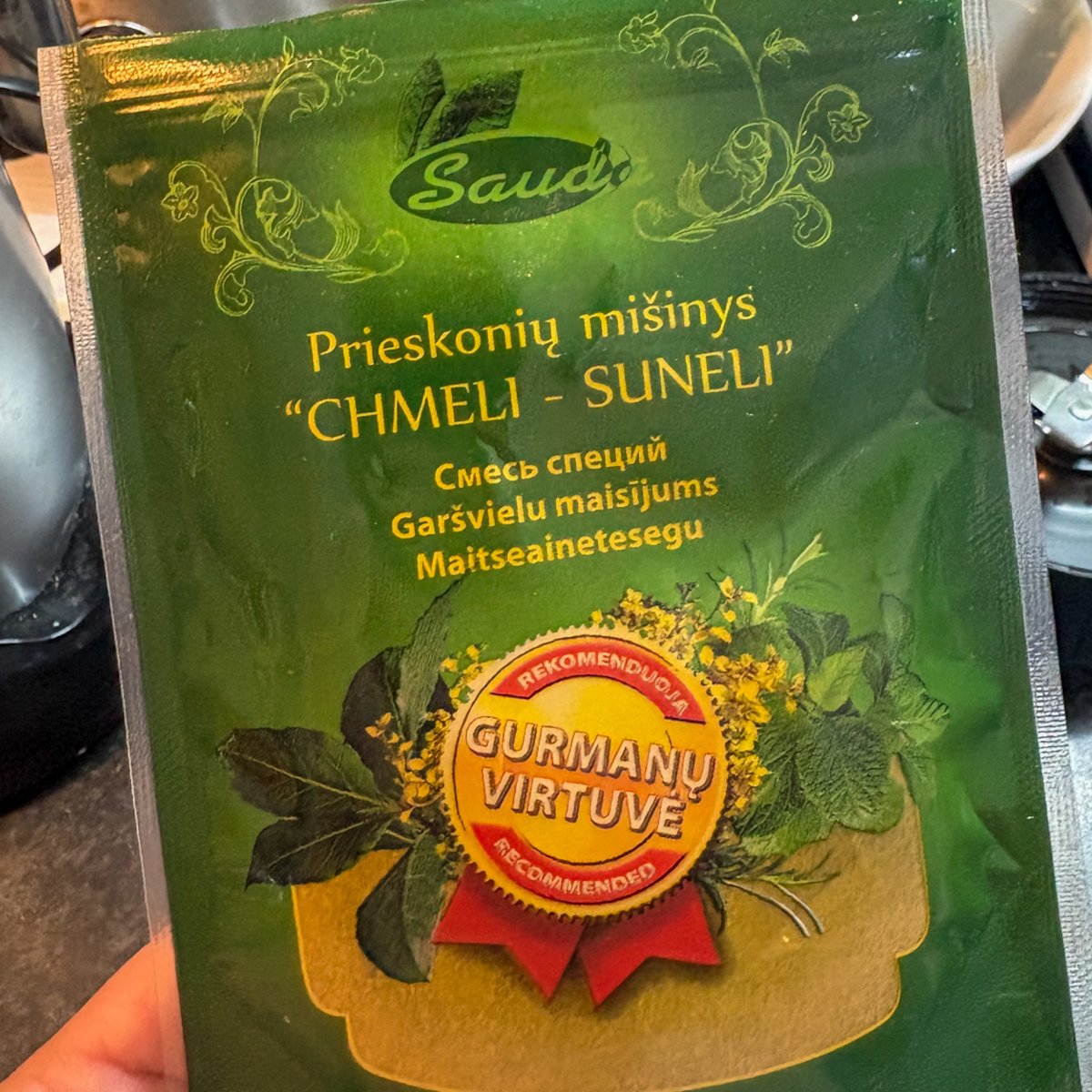
Khmeli-suneli is a fragrant Georgian spice mix, usually built around blue fenugreek, coriander, marigold and dried herbs like dill and marjoram. I buy mine in Eastern European shops, where a small packet costs very little, and larger supermarkets with a world foods aisle sometimes stock it too. One teaspoon is enough to give the whole dip its warm, slightly nutty Georgian character without overpowering the beetroot. If you don't have it to hand, don't skip the spice entirely — use the substitute mix from the notes above, as the dip needs that herby depth to taste right.
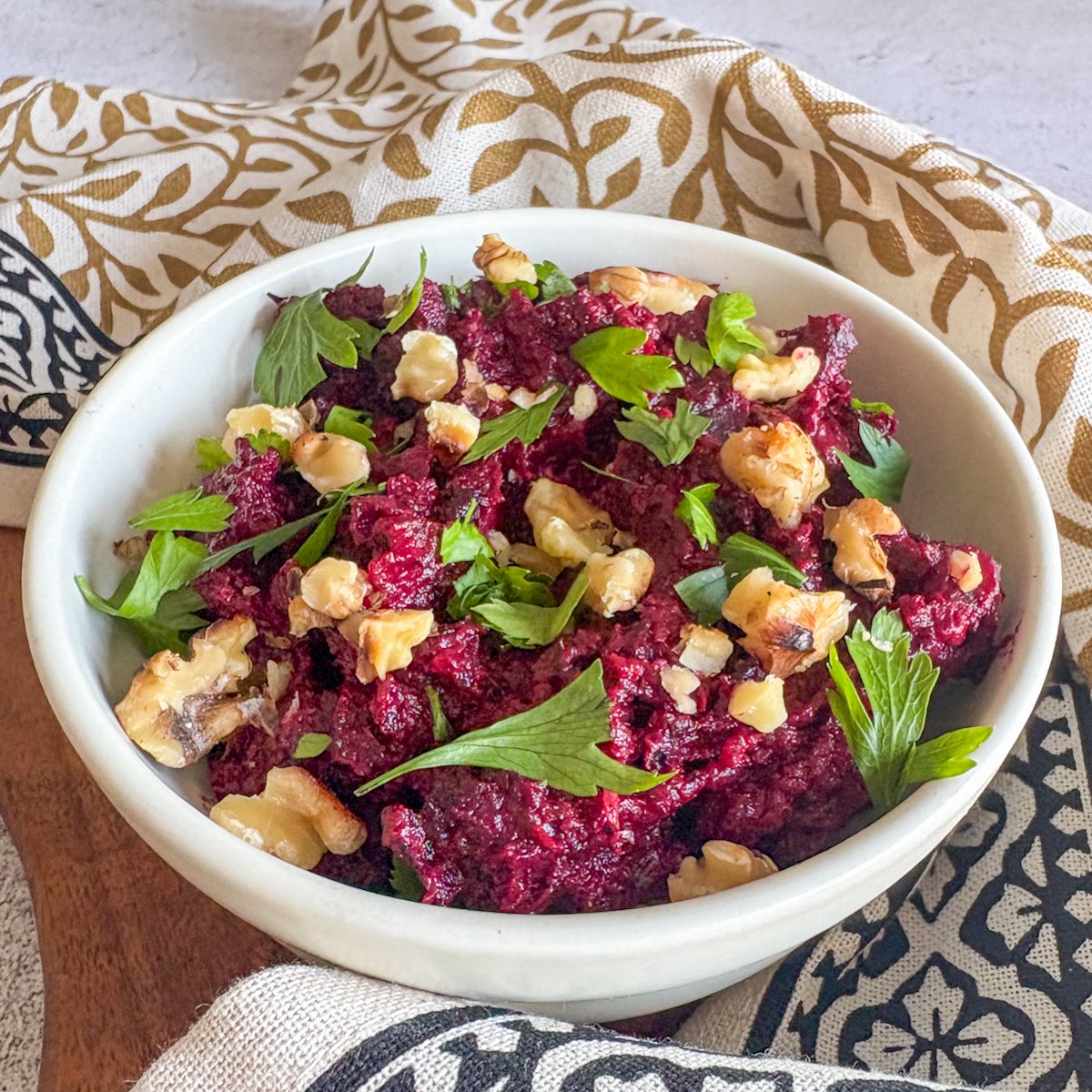
How to Make Beetroot and Walnut Dip
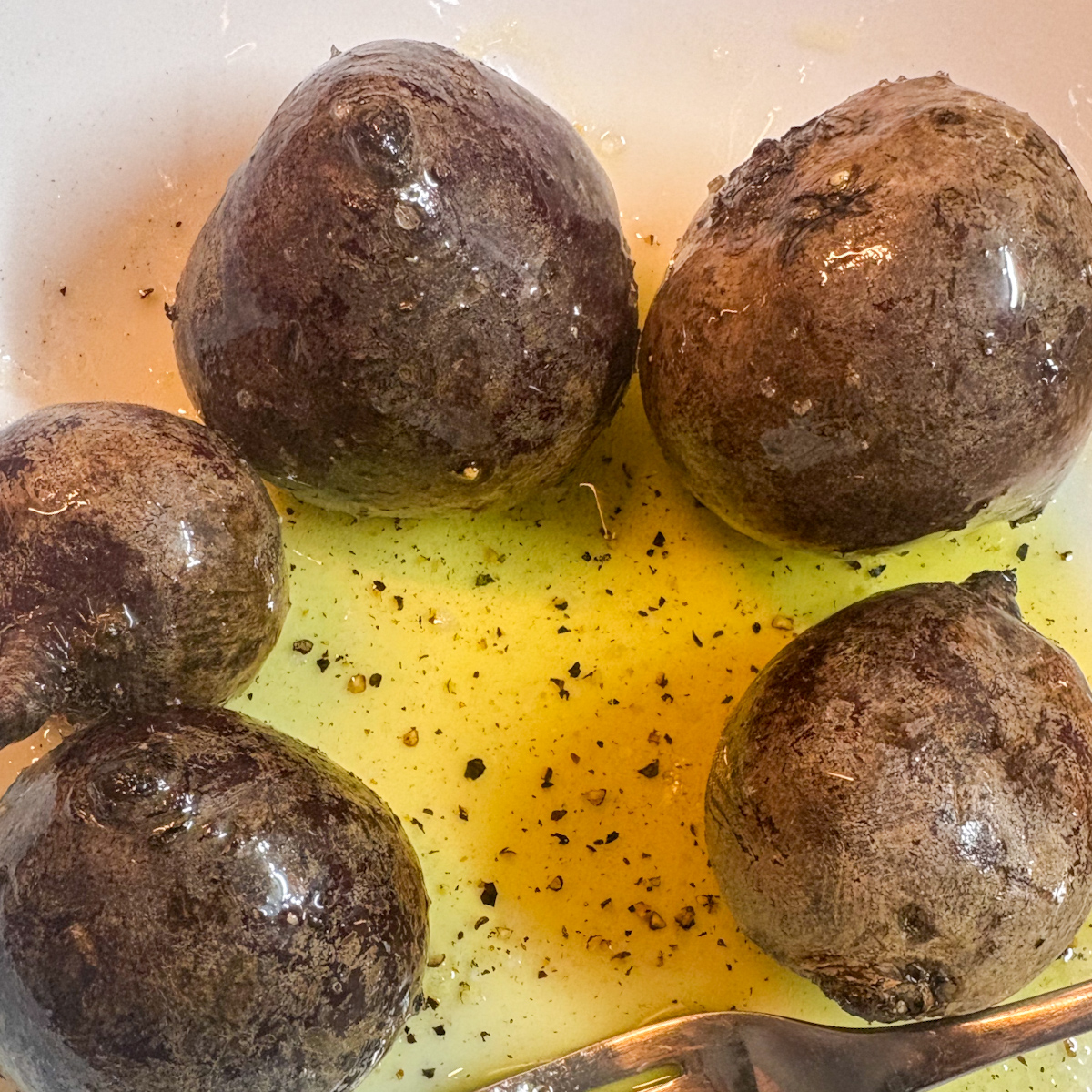
- Step 1: Wash and scrub the beetroot, then pat dry with paper towel. Put them in a bowl, add olive oil, salt and black pepper, then wrap each beetroot in kitchen foil - you can find my full guide in this roasted beet salad recipe. Cut the top off the garlic bulb, place the whole unpeeled bulb in the middle of a piece of foil, drizzle with olive oil, sprinkle with salt and wrap tightly - there are more notes on roasting garlic in my roasted garlic mashed potatoes. Roast both in an oven at 190°C (375°F) for about an hour, or use an air fryer as a fantastic, energy-saving alternative – small beetroots take only around 25–30 minutes to become fully tender in the air fryer, a brilliant time-saver. They are ready when a toothpick or cake tester glides through the foil and into the centre with little to no resistance.
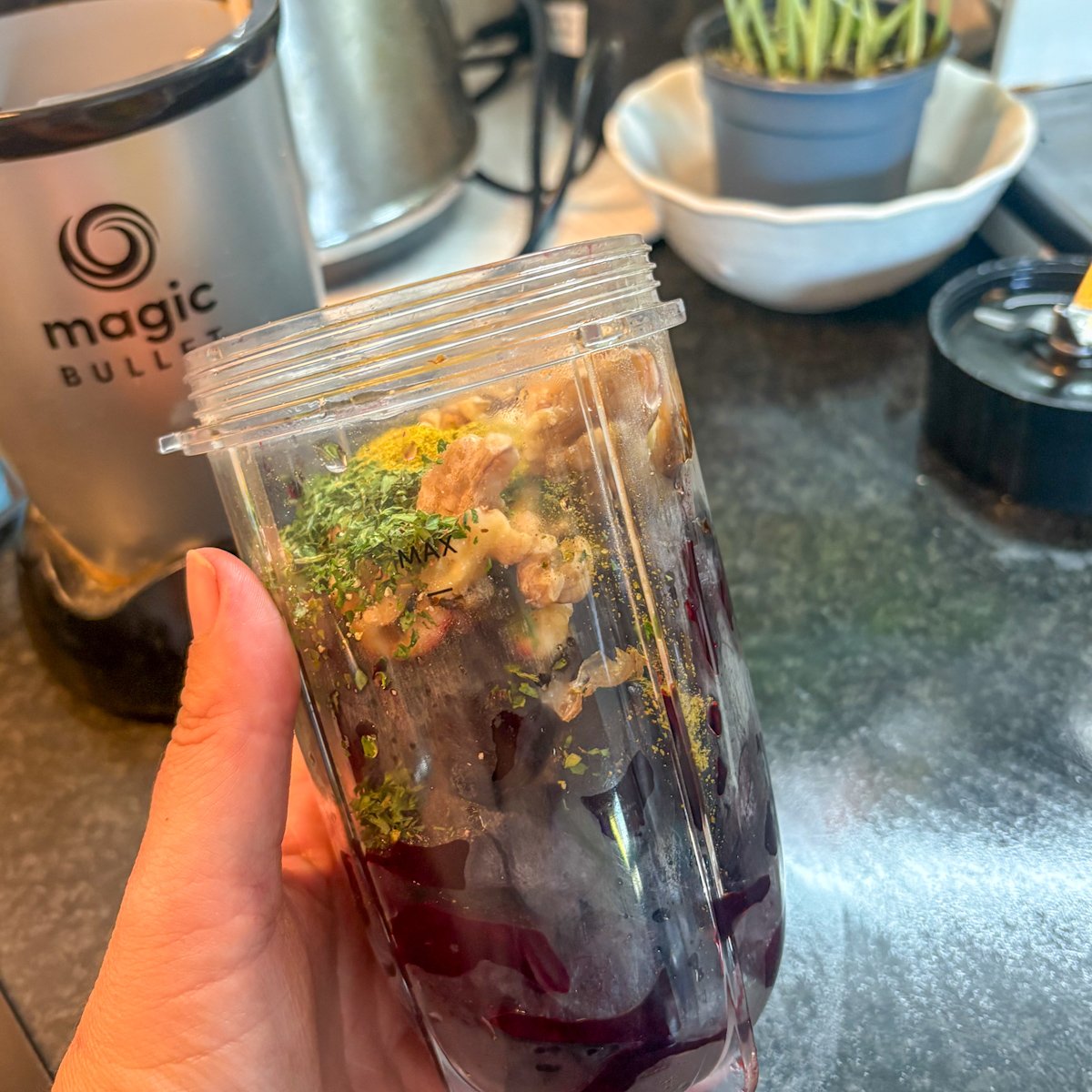
- Step 2: When the vegetables are ready, take them out and leave until cool enough to handle, then rub the skins off the beetroot (use gloves to avoid staining). Put the roasted beetroot into a blender or food processor, squeeze in the roasted garlic, then add the walnuts, khmeli-suneli, dried parsley, remaining sea salt, and black pepper. Blend until smooth, scraping down the sides as needed. Taste and adjust the salt. If using a small blender, work in batches.
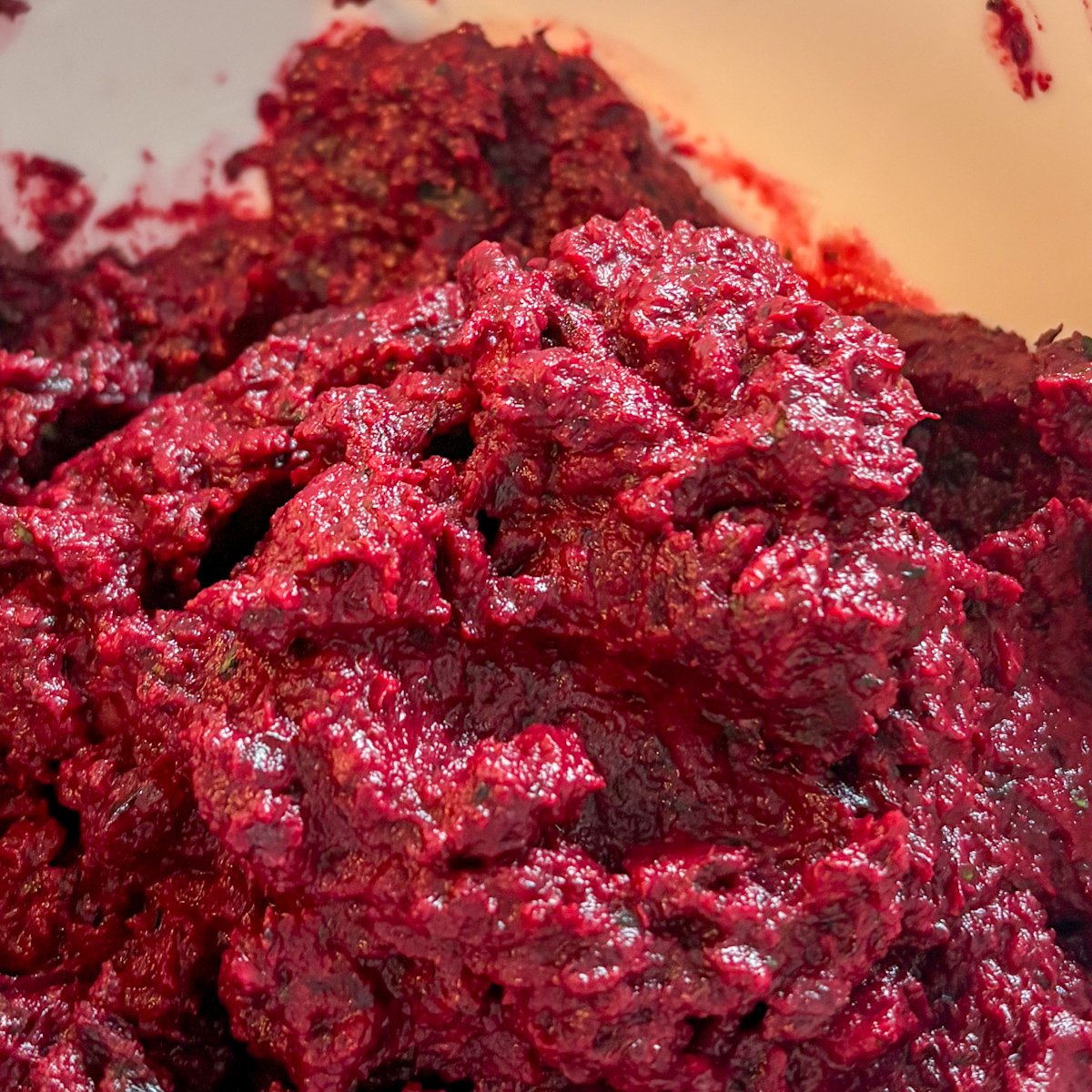
3. Step 3: Transfer to a bowl, cover, and chill in the fridge for at least 1 hour before serving. Garnish with fresh herbs and more toasted walnuts on top.
How to Serve and Store Beetroot and Walnut Dip
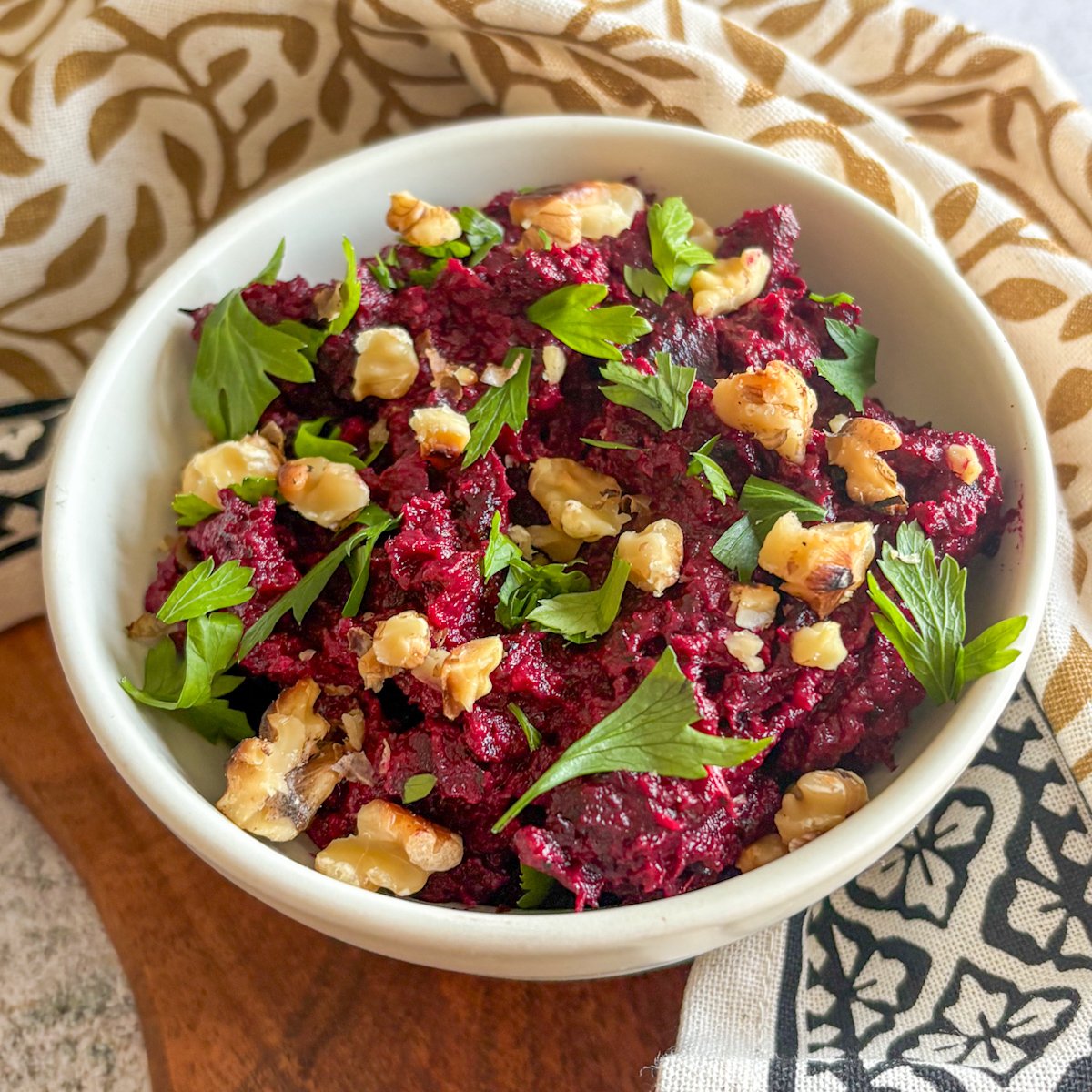
Serve this beetroot and walnut dip chilled or at room temperature, garnished with fresh coriander and extra walnuts. It is brilliant with warm flatbread, crusty sourdough, rye bread, crackers, or crunchy vegetable sticks like cucumber, carrot and celery. In Georgia, pkhali is traditionally shaped into small balls and served as part of a supra feast spread, so you can roll it into bite-sized rounds for a party platter. It also works as a sandwich spread or a colourful side for grilled meats and halloumi.
Store the dip in an airtight container in the fridge for up to 4 days – the flavour actually improves after a day as the garlic and spices settle in. Give it a quick stir before serving, as a little moisture may separate on top. You can freeze it for up to 2 months in a freezer-safe container; defrost overnight in the fridge and stir well before serving. Avoid leaving the dip at room temperature for more than a couple of hours, especially in warm weather.
More Easy Beetroot Recipes You Might Enjoy
If you enjoyed this beetroot and walnut dip, here are more simple recipes from the blog worth saving.
- For another way with roasted beets, try my Roasted Beet Salad Recipe — sweet foil-roasted beetroot tossed with a simple dressing for an easy, colourful side.
- If you love quick beetroot dishes, my Beetroot Salad Recipe — creamy sour cream and horseradish beetroot salad that comes together in under 10 minutes.
- For something warm and comforting, have a look at this One-Pan Braised Beetroot Recipe — tender braised beetroot cooked in one pan with minimal washing up.
- Fans of blended vegetable spreads should try my Vegetable Caviar Recipe — a classic Eastern European courgette and pepper spread that is delicious on rye bread or as a dip.
- And for another beetroot favourite from Slavic kitchens, there is my Vinaigrette Salad Recipe - a traditional Russian beetroot salad with root vegetables that makes a hearty, budget-friendly side.
Beetroot and Walnut Dip – Price Comparison
This beetroot and walnut dip is remarkably cheap to make, with walnuts being the only ingredient that costs more than pennies.
- In the UK, 500g of loose beetroot costs around £0.80–£1.00 at Tesco, Aldi or Lidl, a garlic bulb about £0.30, and 100g of walnuts roughly £1.50–£1.80, bringing the whole dish to approximately £2.80–£3.30, or around £0.50–£0.55 per serving based on six servings.
- In Ireland, the same shop at Tesco, Dunnes or SuperValu comes to about €3.50–€4.20, which works out at roughly €0.60–€0.70 per serving.
- In the USA, beets and walnuts are pricier, so expect around $4.50–$6.00 for the whole dish, or $0.75–$1.00 per serving.
- In Australia, beetroot and walnuts from Coles or Woolworths put the dish at approximately AU$5.50–AU$7.00, around AU$0.90–AU$1.15 per serving.
- In Poland, where beetroot is a staple and costs very little, the whole dish comes in at roughly 12–16 zł, or about 2–2.70 zł per serving, making it one of the cheapest ways anywhere to put an impressive appetiser on the table.
Compared with shop-bought premium dips at £2–£3 for a small 150g–170g tub, this homemade beetroot and walnut dip gives you roughly four times the quantity for a similar price.
Top Tips for the Best Beetroot and Walnut Dip
- Choose small beetroots when you can. Smaller beetroots are naturally sweeter and less woody than large ones, which makes a noticeable difference in a blended dip. They also roast much faster, taking only 25–30 minutes in an air fryer compared with an hour or more for large specimens.
- Don't skip roasting in favour of boiling. Boiled beetroot leaches colour and flavour into the water, leaving you with a paler, wetter dip. Roasting in foil concentrates the natural sugars and keeps all the earthy sweetness locked inside the root. It also means the beetroot stays dry, which gives the beetroot and walnut dip a thick, scoopable texture rather than a runny one. If you are truly short on time, pre-cooked vacuum-packed beetroot (not in vinegar) will work, though the flavour will be milder.
- Wear gloves when peeling. Beetroot juice stains hands, nails, and chopping boards with impressive determination. Once the roasted beetroot is cool enough to handle, the skins rub off easily with a gloved thumb, no peeler needed. Work over the foil the beetroot roasted in to catch drips and save your worktop. If you do end up with pink fingers, a squeeze of lemon juice and salt scrubbed over your hands helps lift the stain.
- Squeeze the garlic, don't peel it. Once roasted, a whole garlic bulb becomes soft, sweet and spreadable, completely different from the sharp raw cloves. Simply hold the bulb at the root end and squeeze from the bottom, and the cloves will slide out like a paste. Make sure you cut the top off the bulb before roasting, or you will have nothing to squeeze through. One whole roasted bulb sounds like a lot, but the flavour is mellow and rounded rather than pungent.
- Toast the walnuts if they aren't already roasted. Raw walnuts taste flat and slightly bitter compared with toasted ones, and the difference carries right through the finished beetroot and walnut dip. Spread them on a dry tray and toast at 180°C (350°F) for 6–8 minutes, or in a dry frying pan for 3–4 minutes, until fragrant. Watch them closely, because walnuts go from golden to burnt in under a minute. Save a small handful of the best-looking pieces for the garnish.
- Blend in batches if your blender is small. A compact bullet-style blender handles this recipe perfectly well, but only if you split the mixture in two. Overfilling forces the blades to spin without catching the ingredients, leaving you with lumps at the top and paste at the bottom. Blend each batch until smooth, then stir both together in a bowl so the seasoning is even. Scrape down the sides between pulses to catch stray walnut pieces.
- Adjust the texture to your liking. Traditional Georgian pkhali is dense and thick enough to shape into balls, so this recipe deliberately keeps the mixture firm. If you prefer a looser, more spreadable beetroot and walnut dip, add a teaspoon of olive oil or a splash of cold water at a time while blending. For a chunkier, rustic finish, pulse the blender briefly instead of running it continuously. The dip will also firm up slightly in the fridge as the walnuts absorb moisture.
- Don't skip the chilling time. One hour in the fridge is the minimum, but the flavour genuinely improves with longer resting. The khmeli-suneli, garlic and walnuts need time to settle into the beetroot, and a freshly blended dip can taste disjointed by comparison. If you are making it for guests, prepare the dip the day before and let it chill overnight. Take it out of the fridge 15 minutes before serving so the flavours aren't dulled by the cold.
- Taste and season after chilling, not just before. Cold mutes salt and spice, so a dip that tasted perfectly seasoned warm from the blender can seem flat once chilled. Give the beetroot and walnut dip a final taste just before serving and adjust with a small pinch of salt or an extra dusting of khmeli-suneli if needed. Stir any adjustment through thoroughly so it doesn't sit on the surface. This small habit is the difference between a good dip and one that guests ask about.
FAQ About Beetroot and Walnut Dip
What is pkhali?
Pkhali is a family of traditional Georgian dishes made from minced vegetables blended with walnuts, garlic, herbs and spices. The beetroot version, sometimes called charkhlis pkhali, is one of the most popular and recognisable thanks to its deep ruby colour. It is usually served cold as part of a spread of appetisers, often shaped into small balls and garnished with pomegranate seeds or fresh herbs.
Can I make this beetroot and walnut dip without khmeli-suneli?
Yes, although khmeli-suneli gives the most authentic Georgian flavour, several substitutes work well. Mix ground coriander with dried fenugreek (blue fenugreek if you can find it), dried dill and a pinch of dried marjoram for the closest match. A simpler option is ground coriander with a little dried mint and a pinch of ground fenugreek. Even a mild curry powder or za'atar will produce a tasty dip, just with a different character.
Can I use pre-cooked beetroot instead of roasting?
You can, and it saves a good chunk of time on busy days. Choose plain vacuum-packed cooked beetroot, not the type preserved in vinegar, which would overpower the walnuts and spices. Bear in mind that roasted beetroot has a sweeter, more concentrated flavour, so the dip will taste slightly milder with pre-cooked beetroot. Pat the beetroot dry before blending so the dip doesn't turn watery.
How long does beetroot and walnut dip last in the fridge?
Stored in an airtight container, the dip keeps well for up to 4 days in the fridge. The flavour actually deepens after the first day as the garlic and khmeli-suneli continue to infuse the beetroot. Always use a clean spoon when serving to keep it fresh for longer. If any liquid separates on the surface, simply stir it back in before serving.
Why is my dip watery?
The most common cause is moisture from the beetroot, especially if it was boiled or not patted dry. Roasting in foil keeps the beetroot dry and concentrated, which is why this method is recommended. If your dip does turn out loose, blend in a small handful of extra walnuts, which absorb liquid and thicken the mixture naturally. Chilling for a few hours also firms the texture noticeably.
Is beetroot and walnut dip healthy?
It is a genuinely nutritious choice compared with many shop-bought dips. Beetroot provides fibre, folate, potassium and antioxidants, while walnuts add protein, healthy omega-3 fats and vitamin E. The dip contains no dairy, no added sugar and only a modest amount of olive oil. As with any nut-based dish, it is calorie-dense, so a couple of generous spoonfuls make a sensible portion.
Related
Looking for other recipes like this? Try these:
- How to Make Whipped Feta Dip with Lemon and Olives
- Sticky Baked Guinness Chicken Wings with a Smoky Dry Rub
- How to Cook Padron Peppers (Easy Blistered Tapas in 5 Minutes)
- Summer Peas with Bacon and Ricotta (Hot or Cold)


Pairing
These are my favorite dishes to serve with beetroot and walnut dip:
- Rocket Pesto Pasta Salad with Chicken and Cashews
- Easy Pesto Pasta Salad with Parsley Pesto and Mozzarella
- Summer Peach and Burrata Salad with Prosciutto
- Pasta Salad with Dill Vinaigrette - Easy Summer Recipe




Beetroot and Walnut Dip (Georgian Pkhali) Recipe
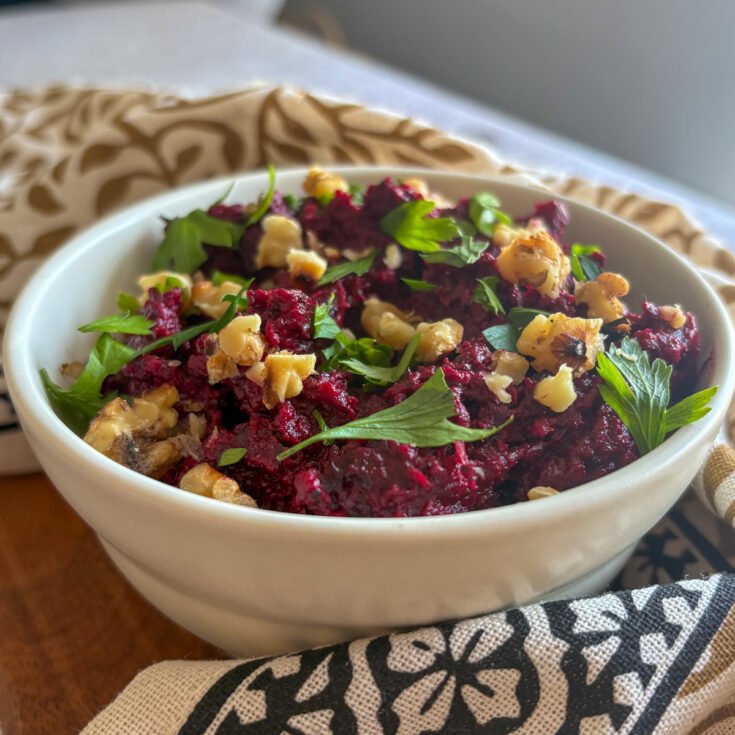
This easy beetroot and walnut dip is a Georgian pkhali made with roasted beetroot, a whole bulb of roasted garlic, toasted walnuts and khmeli-suneli. Vegan, gluten-free, and perfect for making ahead.
Ingredients
- 500g (about 4 medium) beetroot, scrubbed
- 1 whole garlic bulb
- 2 tablespoons olive oil
- Kitchen foil for roasting beetroot and garlic
- Pinch of sea salt, plus more to taste
- 100g (1 cup) roasted walnuts, plus extra for garnish
- 1 teaspoon khmeli-suneli (see notes for substitutes)
- 1 tablespoon dried parsley
- ¼ teaspoon black pepper
- Fresh coriander for serving
Instructions
- Wash and scrub the beetroot, then pat dry with paper towel. Toss with olive oil, salt and black pepper, then wrap each beetroot in kitchen foil. Cut the top off the garlic bulb, place the whole unpeeled bulb on foil, drizzle with olive oil, sprinkle with salt and wrap tightly. Roast in a conventional oven at 190°C (375°F) for about 45minutes, or in an air fryer, where small beetroots take around 25–30 minutes. They are ready when a toothpick glides through the foil into the centre with little to no resistance.
- Leave the vegetables until cool enough to handle, then rub the skins off the beetroot (use gloves to avoid staining). Put the roasted beetroot into a blender or food processor, squeeze in the roasted garlic, and add the walnuts, khmeli-suneli, dried parsley, remaining sea salt and black pepper. Blend until smooth, scraping down the sides as needed. Taste and adjust the salt. If using a small blender, work in batches.
- Transfer to a bowl, cover, and chill in the fridge for at least 1 hour before serving. Garnish with fresh coriander and extra walnuts.
Notes
Khmeli-suneli is the traditional Georgian spice blend that gives this dip its authentic flavour. If you can't source it, substitute with a mix of ground coriander, dried fenugreek (blue fenugreek if available), dried dill and a pinch of dried marjoram. A simpler swap is ground coriander plus a little dried mint and a pinch of ground fenugreek. In a pinch, a mild curry powder or za'atar will change the character but still work. Store the dip in an airtight container in the fridge for up to 4 days, or freeze for up to 2 months.