

Russian millet porridge is a creamy, buttery breakfast dish made with hulled yellow millet, whole milk and a generous knob of butter. It is an easy, budget-friendly recipe, ready in under 45 minutes with a handful of pantry staples.
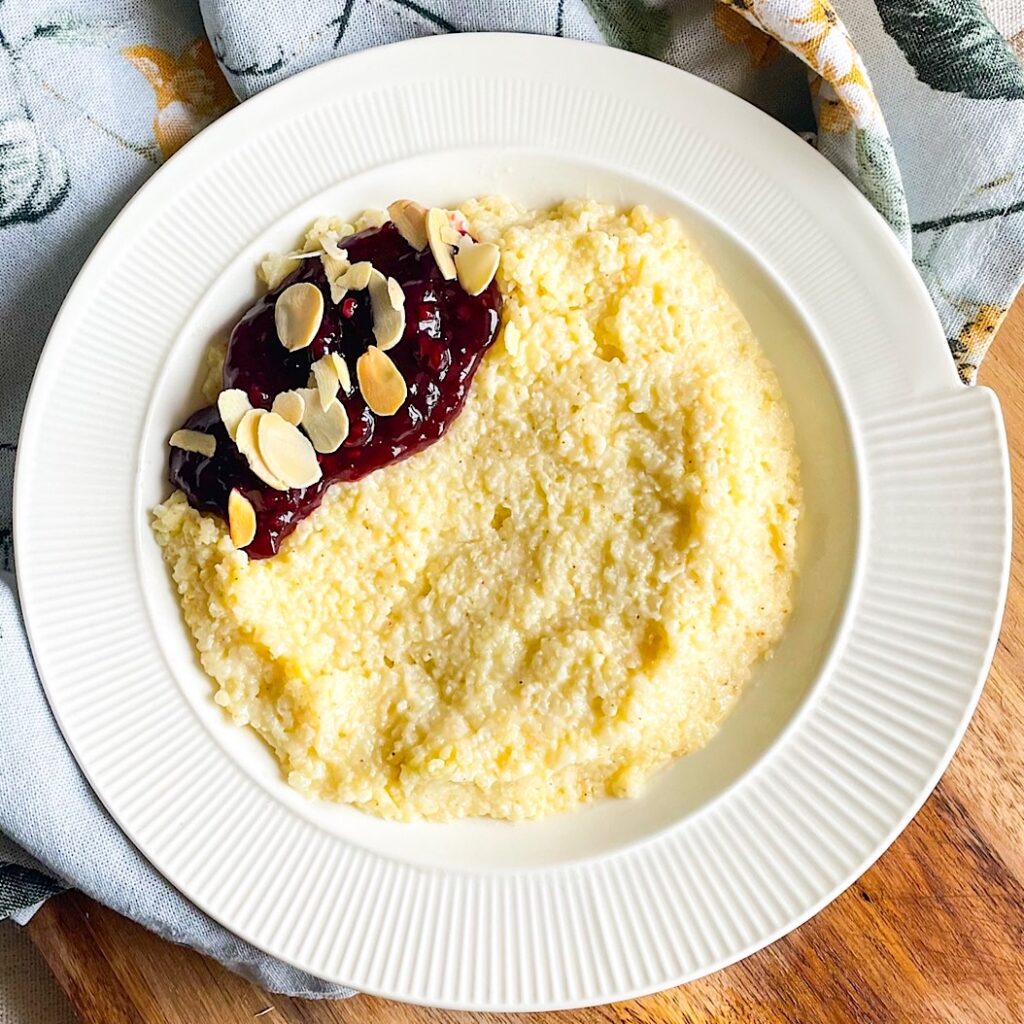
This is the porridge I grew up on, and it still feels like the most comforting bowl I can make on a slow morning. The grains turn soft and fluffy, the milk gives everything a silky finish, and a spoonful of jam on top pulls the whole dish together. Russian millet porridge costs very little to make, it feeds a family from one small pot, and it holds up nicely for the days ahead. If you have never cooked pshennaya kasha before, this is a gentle, honest place to start.
Jump to:
Ingredients for Russian Millet Porridge
Here is what you need to make this traditional Russian porridge:
- Millet grains – hulled yellow millet is the base of the dish and gives it that golden colour and tender bite. You can find a good quality millet in Eastern-European stores.
- Water – used in the first stage of cooking to soften the grains before the milk goes in.
- Whole milk – brings the creamy texture and mild sweetness that makes the porridge feel rich without being heavy.
- Unsalted butter – melted into the finished pot for that classic buttery flavour and silky finish.
- Granulated sugar – a small amount balances the grain and lifts the milk.
- Sea salt – a pinch sharpens every other flavour in the pot.
How to Cook Millet Porridge
This is a simple recipe and I have broken the method down into four clear steps.
Step 1: Rinse the millet well. Tip the grains into a fine sieve and wash under cold running water until the water runs clear. Move the millet to a bowl, cover with boiling water and leave it for 5 minutes so the grains can swell. If you have more time, let it soak for up to 30 minutes.
Step 2: Tip the rinsed millet into a pot, add fresh water and set it over medium heat. Once it comes to the boil, skim off any foam on the surface, lower the heat and cook until most of the water has gone. Stir now and then so nothing catches on the bottom.
Step 3: Season the grains with salt and a little sugar to taste. Pour in the warm milk and stir well, making sure the liquid covers the millet completely. Bring the pot back to a gentle boil, stirring as you go.
Step 4: Cover with a lid, drop the heat to the lowest setting and let the porridge simmer for about 20 minutes, stirring often. The porridge should thicken and the grains should turn tender. Turn off the heat, drop in a generous piece of butter, cover again and leave it to rest for 10 minutes. For the full old-school finish, wrap the pot in a thick towel or tuck it under a warm blanket for half an hour. That is exactly how my grandmother did it, and yes, it really does make the porridge softer.
How to Serve and Store Russian Millet Porridge
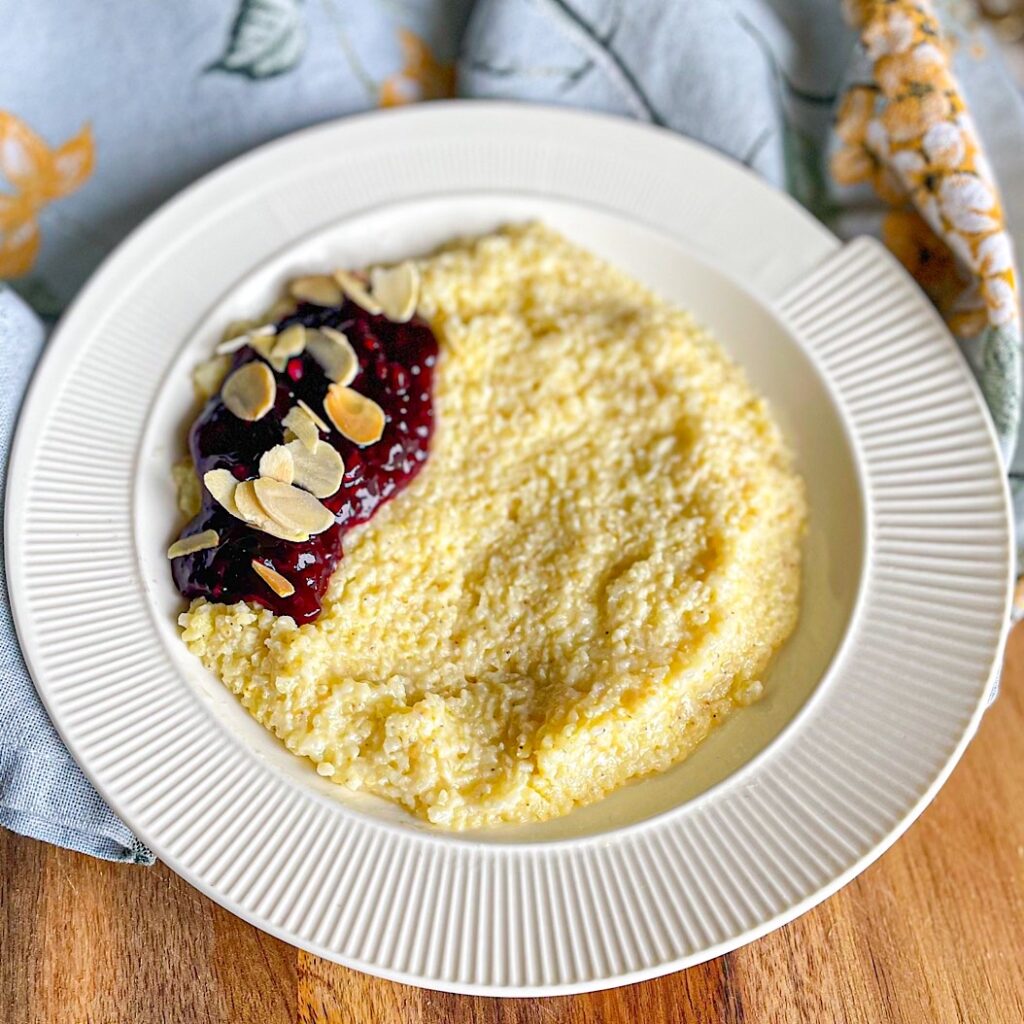
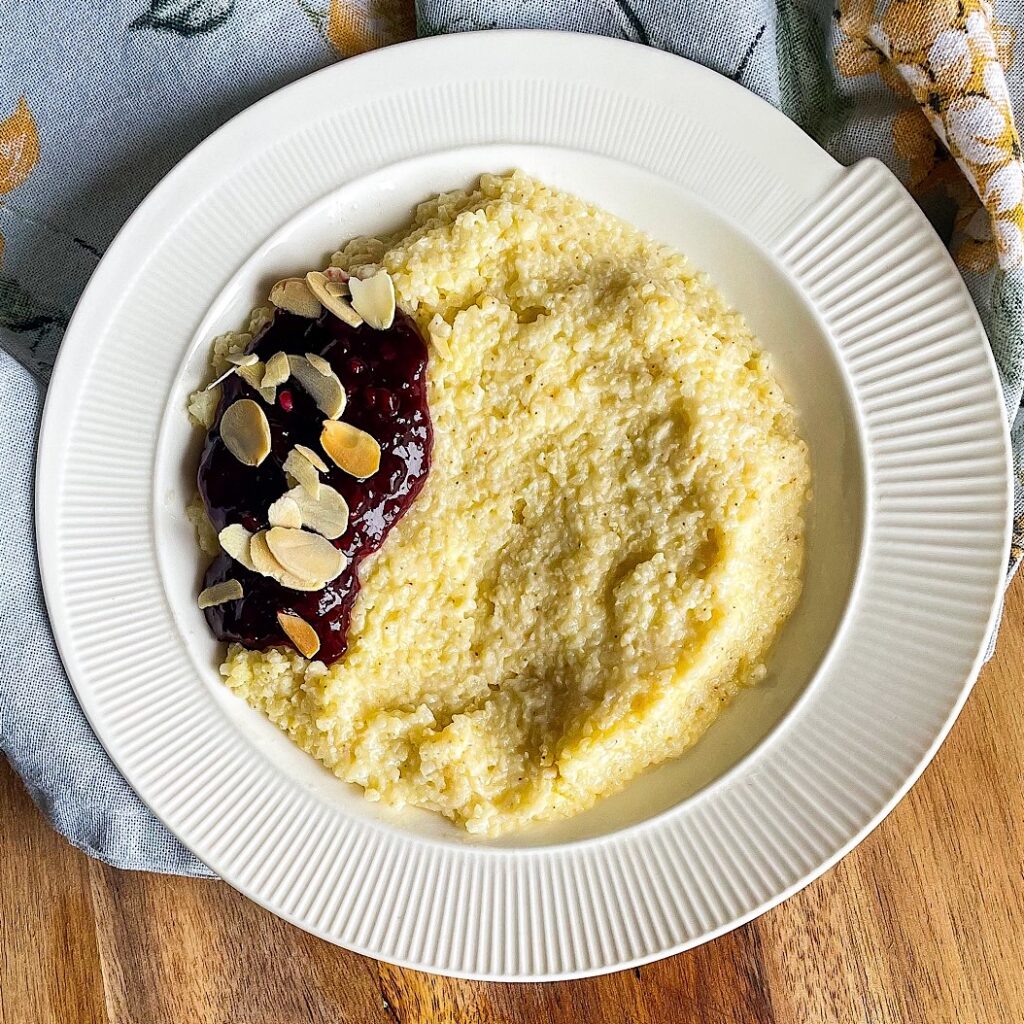
Serve this Russian millet porridge hot, straight from the pot, with an extra cube of butter melting on top. I love it best with a spoonful of raspberry or cherry jam, a drizzle of honey, or a handful of fresh berries. Condensed milk is the classic Slavic topping if you want something sweeter, and toasted almond flakes add a lovely crunch. For a savoury bowl, skip the sugar and finish with a little extra salt and butter.
Leftover Russian millet porridge keeps well in the fridge for up to 3 days in a covered container. The porridge will thicken as it sits, so reheat it in a small saucepan with a splash of milk or water, stirring until it loosens and warms through. You can also microwave a single portion for about a minute and a half. I would not recommend freezing it, as the texture turns grainy once thawed.
Top Tips and Notes for the Best Russian Millet Porridge
- Always rinse the millet with boiling water. Millet has a natural coating of saponins that can leave a slightly bitter, soapy taste if you skip this step. A quick pour of hot water over the drained grains washes that bitterness away and gives you a cleaner flavour in the finished pot. It takes less than a minute and makes a real difference to how the porridge tastes at the end. This is the single most important habit when you cook Russian millet porridge at home.
- Cook in water first, then finish in milk. Starting in water lets the grains swell and absorb moisture evenly without the milk scorching on the bottom of the pan. Once most of the water has gone, the milk can work its way in and give the dish its creamy body. This two-stage method is how Russian home cooks have made millet porridge for generations. It takes a few minutes longer but the result is worth it.
- Stir frequently once the milk goes in. Milk and grain together love to stick and catch, especially on low heat. A wooden spoon dragged across the bottom every minute or so keeps the porridge smooth and stops it from browning underneath. You do not need to stand over it constantly, but do not wander too far either. A quick stir every couple of minutes is enough.
- Rest the porridge under a lid before serving. After the heat goes off, those 10 minutes with the lid on let the millet finish steaming in its own warmth. The texture of your Russian millet porridge turns softer and more even, and the butter has time to melt into every grain. It is tempting to skip this, but it really is worth the wait. Think of it as the resting step for a roast, just shorter.
- Adjust the liquid for your preferred texture. More milk gives you a looser, almost soupy porridge that kids tend to love. Less milk gives you a thicker, spoon-standing bowl that holds toppings well. Start with the recipe as written and then tweak next time based on what your family prefers. There is no single correct consistency for Russian millet porridge.
- Do not be shy with the butter. A generous knob melted into the finished pot is what gives this dish its signature richness and rounds out the flavour of the milk. Good unsalted butter works best, so you can control the salt yourself. In Russia we have a saying that you cannot spoil kasha with butter, and it holds true here. Add it at the very end, off the heat, so it melts slowly into the grains.
Russian Millet Porridge FAQ
What is pshennaya kasha?
Pshennaya kasha is the Russian name for millet porridge, one of the oldest grain dishes in Slavic cooking. It is made from hulled yellow millet cooked slowly in water and milk until the grains turn soft and creamy. For centuries it was a daily food in Russian households, and it is still served as a comforting breakfast today. Millet pairs in a great way with different toppings. Why not to try Pumpkin Millet Porridge?
Is Russian millet porridge healthy?
Yes, millet is a naturally gluten-free whole grain that is rich in magnesium, phosphorus and B vitamins. It offers slow-release energy, which makes it a filling and balanced way to start the day. Cooked with milk and a little butter, it becomes a complete, nourishing meal that suits both children and adults.
How long does it take to cook millet porridge?
From start to finish, the whole process takes about 40 to 45 minutes. That includes rinsing, a short soak, the first stage in water and the final simmer in milk. Most of the time is hands-off, so you can set the table or make tea while it cooks.
Why is my millet porridge bitter?
Unrinsed millet often tastes bitter because of the natural saponin coating on the grains. Always rinse the millet under cold water until the water runs clear, then pour boiling water over it before draining. This simple step removes the bitterness and gives you a clean, mild flavour every time.
Can I cook millet porridge the night before?
Yes, it reheats very well. Store it in a covered container in the fridge for up to 3 days, then warm it through in a pan with a splash of milk to loosen the texture. Many people even prefer the flavour the next day, once everything has had time to mellow.
Can I make this recipe for kids?
Yes, this is one of the most popular breakfasts for Russian children. The texture is soft, the flavour is mild and the dish is naturally gluten-free. You can make it slightly sweeter for little ones and blend it briefly for a smoother consistency if needed.
Can I make this porridge in a slow cooker?
es, millet works nicely in a slow cooker if you want a fully hands-off method. Combine rinsed millet, water, milk, salt and sugar, then cook on low for about 3 hours until the grains are tender. Stir in the butter at the end and let it rest for a few minutes before serving.
Russian Millet Porridge (Pshennaya Kasha)
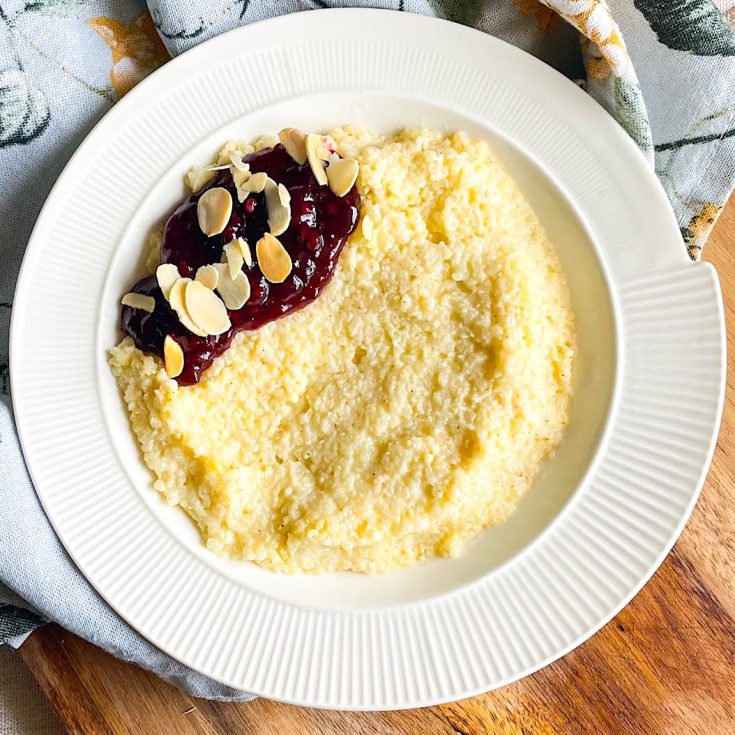
Russian millet porridge is a creamy, buttery breakfast made with hulled yellow millet cooked in water and whole milk. This traditional pshennaya kasha is mildly sweet, soft and comforting, finished with a generous knob of butter for that classic rustic flavour.
Ingredients
- 200 g millet grains (1 cup)
- 400 ml water (1⅔ cups)
- 400 ml whole milk (1⅔ cups), warmed
- 40 g unsalted butter (3 tbsp)
- 1–2 tablespoon granulated sugar, to taste
- ½ teaspoon sea salt
Instructions
- Place the millet in a fine sieve and rinse under cold running water until the water runs clear. Transfer the grains to a bowl, cover with boiling water and leave to sit for 5 to 30 minutes, then drain.
- Tip the drained millet into a medium, heavy-bottomed saucepan, pour in the water and place over medium heat. Once it reaches a boil, skim off any foam, lower the heat and cook until most of the water has been absorbed, stirring occasionally so the grains do not catch.
- Add the salt and sugar to the pot, then pour in the warm milk and stir well to combine. The liquid should cover the millet completely. Bring back to a gentle boil, stirring as you go.
- Cover with a lid, reduce the heat to the lowest setting and simmer for about 20 minutes, stirring often, until the porridge has thickened and the grains are tender. Remove from the heat, add the butter, cover again and let it rest for 10 minutes. For an even softer finish, wrap the pot in a thick towel and leave it for up to 30 minutes before serving.