
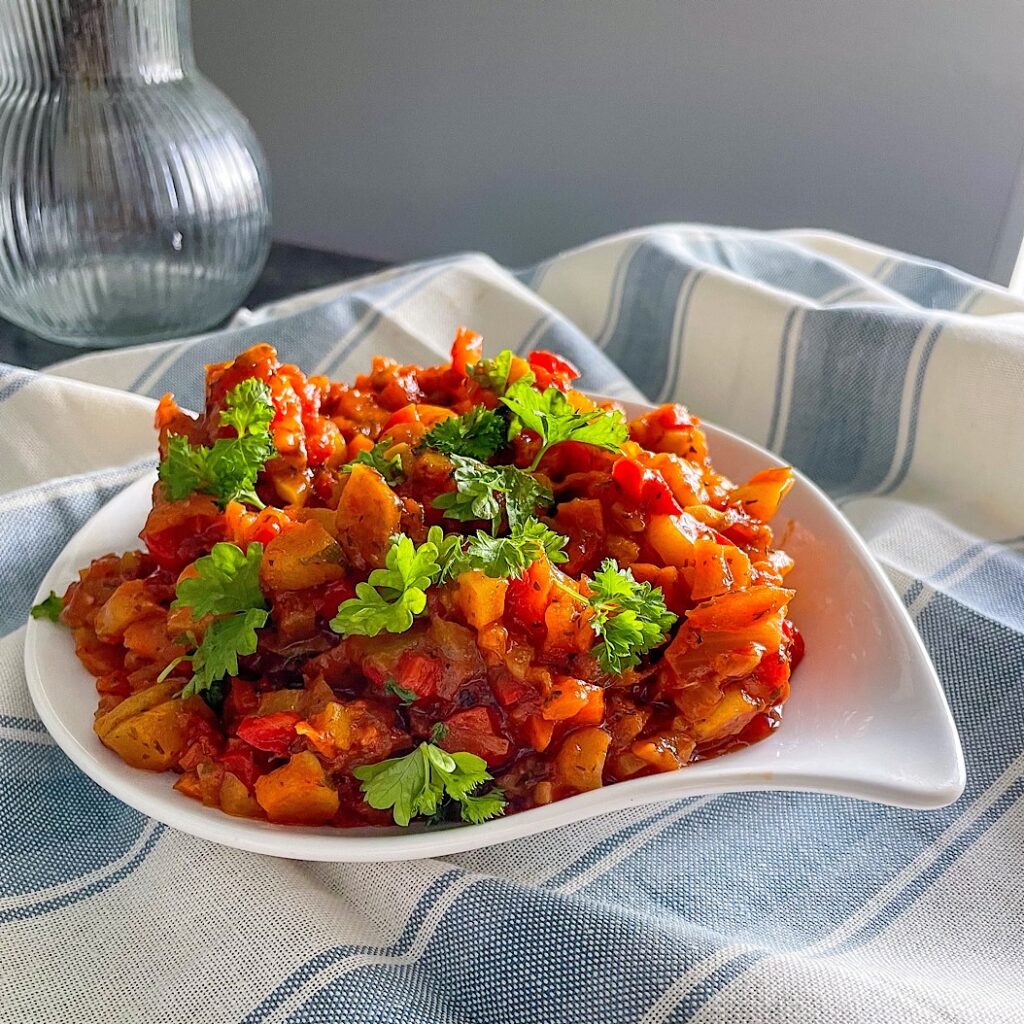
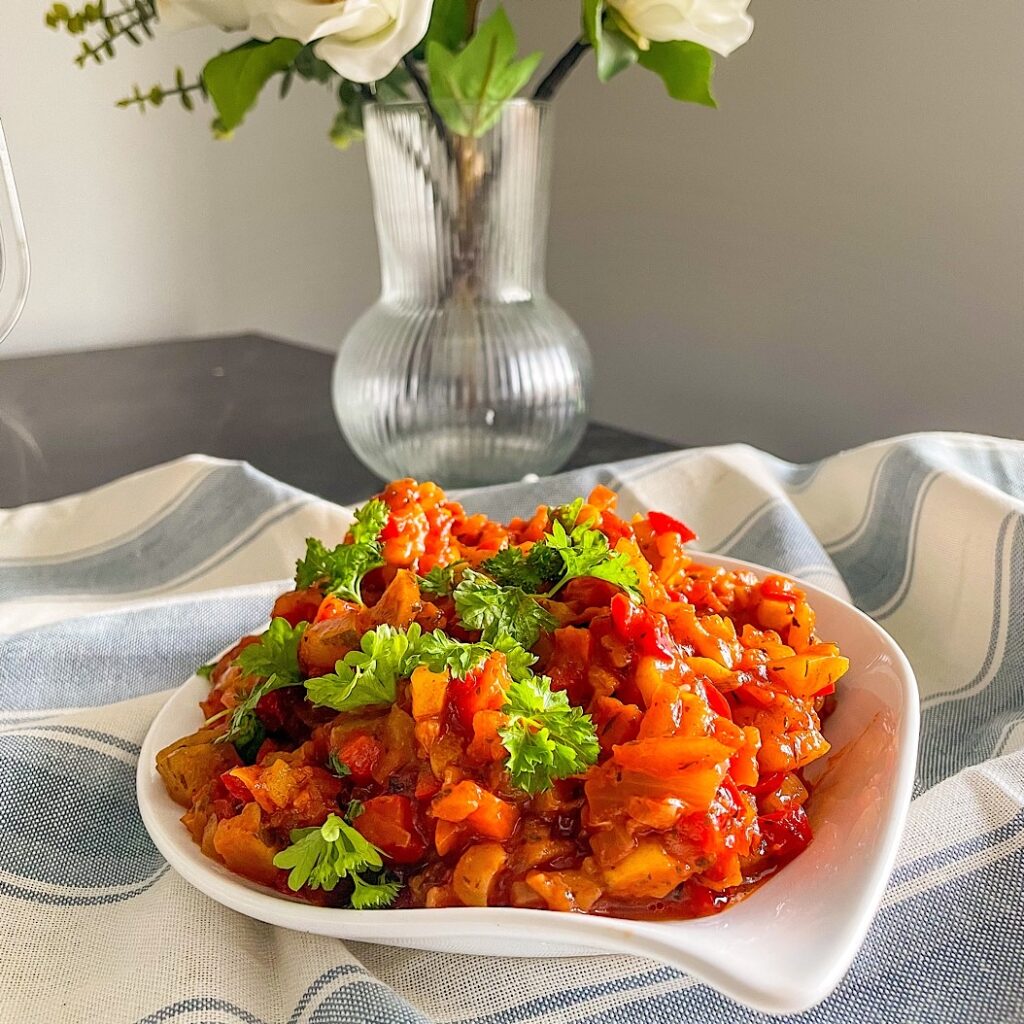
This vegetable caviar is a rich, chunky courgette and pepper spread cooked slowly with carrots, onions and tomato paste for a deeply savoury flavour. It is an easy, budget-friendly recipe that works as a dip, a side dish or a topping for rye bread.
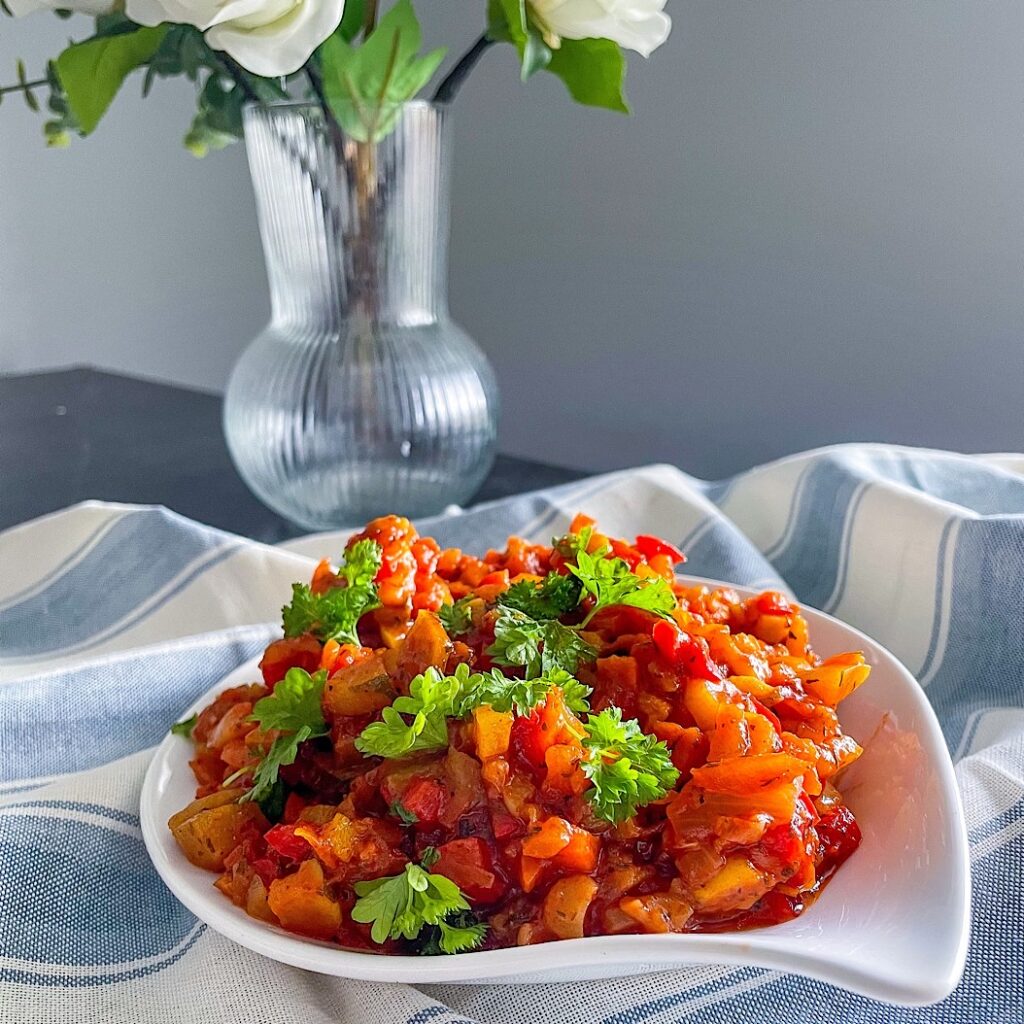
The flavour of this vegetable caviar is deep and slightly sweet, with a gentle tang from the tomato paste and a mellow heat if you decide to add chilli. It uses everyday vegetables, costs very little, and feeds a crowd. You can serve it warm with mashed potatoes, spread it cold over rye bread, or keep a jar in the fridge for quick lunches. The texture is up to you – chunky and rustic, or blended smooth into a silky dip. Either way, it tastes even better the next day, once the flavours have had time to settle.
Jump to:
What Is Vegetable Caviar?
Vegetable caviar is a slow-cooked mix of finely chopped vegetables, simmered down until soft and jammy. It comes from the Eastern European tradition, where cooks would use up the late-summer harvest of courgettes, peppers and tomatoes. The name has nothing to do with fish roe – it simply describes the small, glossy texture of the diced vegetables once cooked. My version of vegetable caviar leans on courgettes and red peppers, with carrots and onions building a sweet base.
Ingredients for Homemade Vegetable Caviar
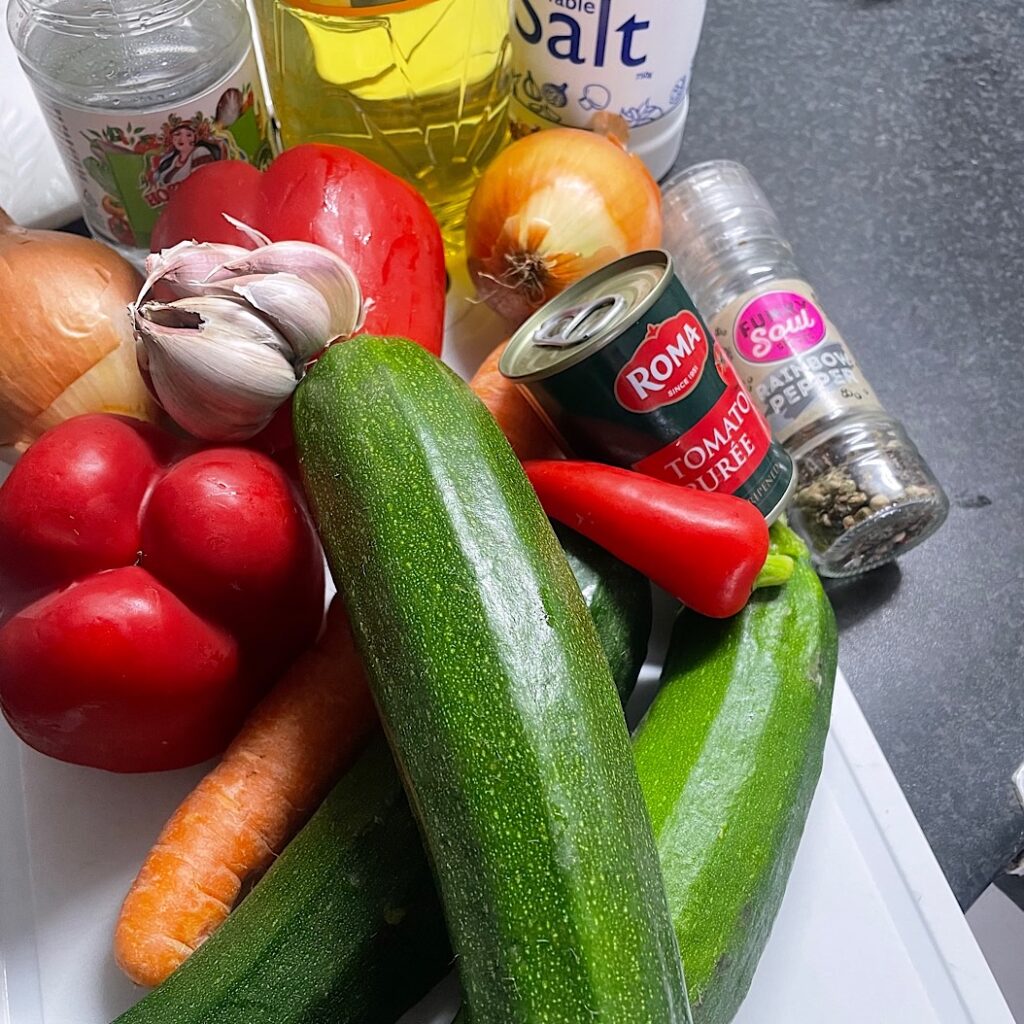
Vegetable caviar is all about using simple vegetables in a way that brings out their best qualities. Each ingredient in this dish has a purpose—whether it’s for flavour, texture, colour, or balance, nothing here is accidental.
- Courgettes – Mild in flavour and rich in moisture, courgettes break down beautifully during cooking and form the soft, creamy base of the caviar.
- Red Peppers – Naturally sweet and aromatic, they add depth, vibrant colour, and balance the earthy vegetables.
- Onions – Sautéed until golden, onions bring a mellow sweetness and form the savoury backbone of the dish.
- Carrots – They contribute a natural sweetness and help thicken the mixture as they cook down.
- Garlic – Adds a bold, aromatic kick that cuts through the sweetness and deepens the overall flavour.
- Chilli Pepper – Offers a gentle heat and brightness, lifting the dish without overwhelming the other ingredients.
- Tomato Paste – Provides richness, acidity, and umami depth, while also helping to bring all the vegetables together.
- Rapeseed Oil – A neutral oil perfect for sautéing, allowing the vegetables’ flavours to shine without interference.
- Salt and Pepper – Essential seasonings to enhance and balance the natural flavours in the dish.
- White Vinegar – Brings a subtle tang and balances the sweetness; also helps preserve the caviar if storing longer.
- Sugar – A touch of sugar rounds out the acidity from the tomato paste and vinegar, bringing harmony to the dish.
How to Make Vegetable Caviar – Step by Step
Making vegetable caviar is all about patience and layering flavours slowly. With a bit of chopping and a good simmer, you’ll have a rich, comforting dish ready to enjoy warm or cold.
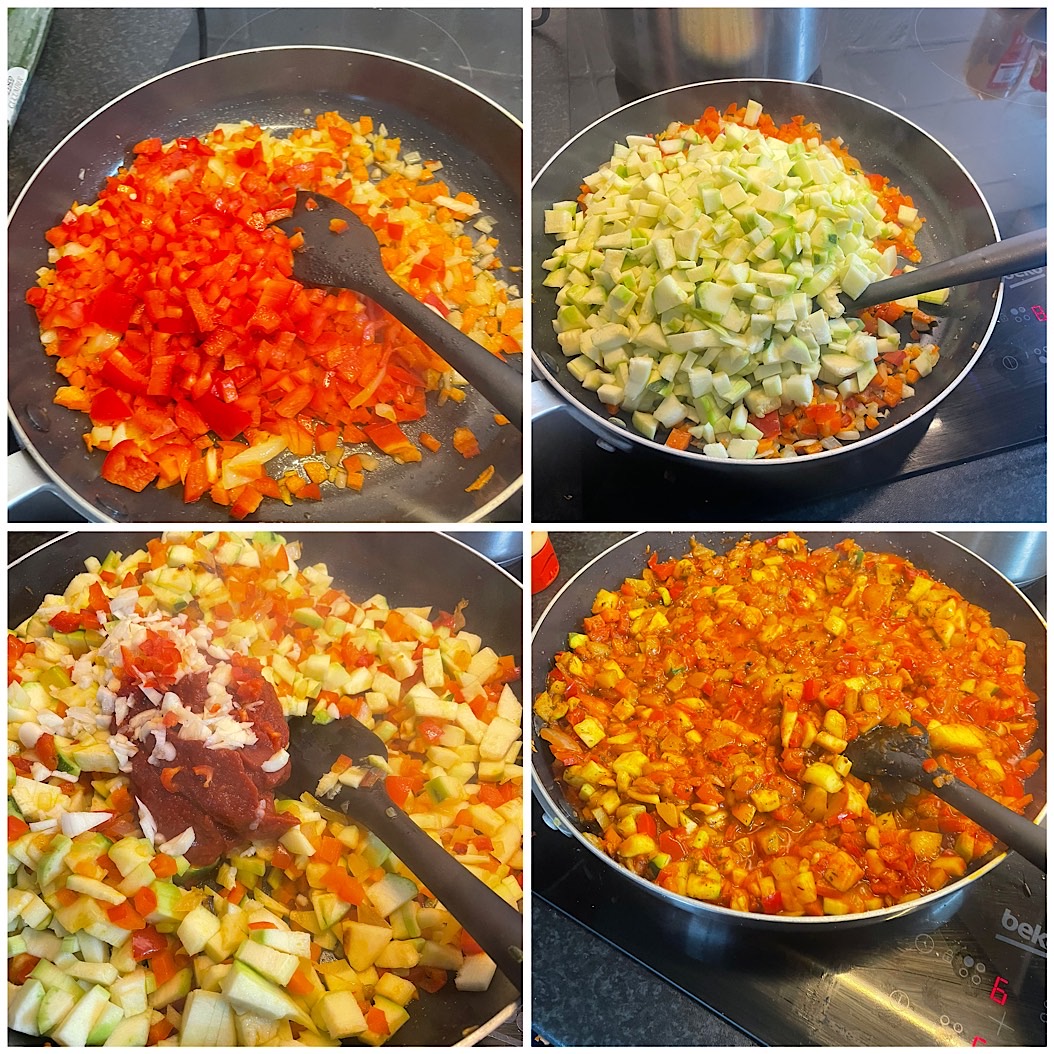
- Prepare the vegetables – Peel the carrots and onions, deseed the peppers, and chop all the vegetables into small, evenly sized cubes. If you plan to blend the caviar later, you can keep the pieces slightly larger. Finely chop the garlic and chilli pepper (if using).
- Sauté in stages – Heat rapeseed oil in a large skillet. Start by sautéing the carrots and onions for 5 minutes, then add the chopped peppers and cook for another 5 minutes, stirring occasionally.
- Add courgettes and simmer – Stir in the courgettes and let them cook for 10 minutes until they begin to soften. Add the tomato paste, garlic, chilli, salt, and pepper, then cover and simmer on low heat for 45 minutes, stirring occasionally.
- Finish and balance – Once the vegetables are fully softened and combined, stir in the vinegar (if using) and sprinkle in the sugar to balance the acidity. Mix well, let it cool slightly, and serve as preferred—chunky or blended.
How to Serve and Store Vegetable Caviar
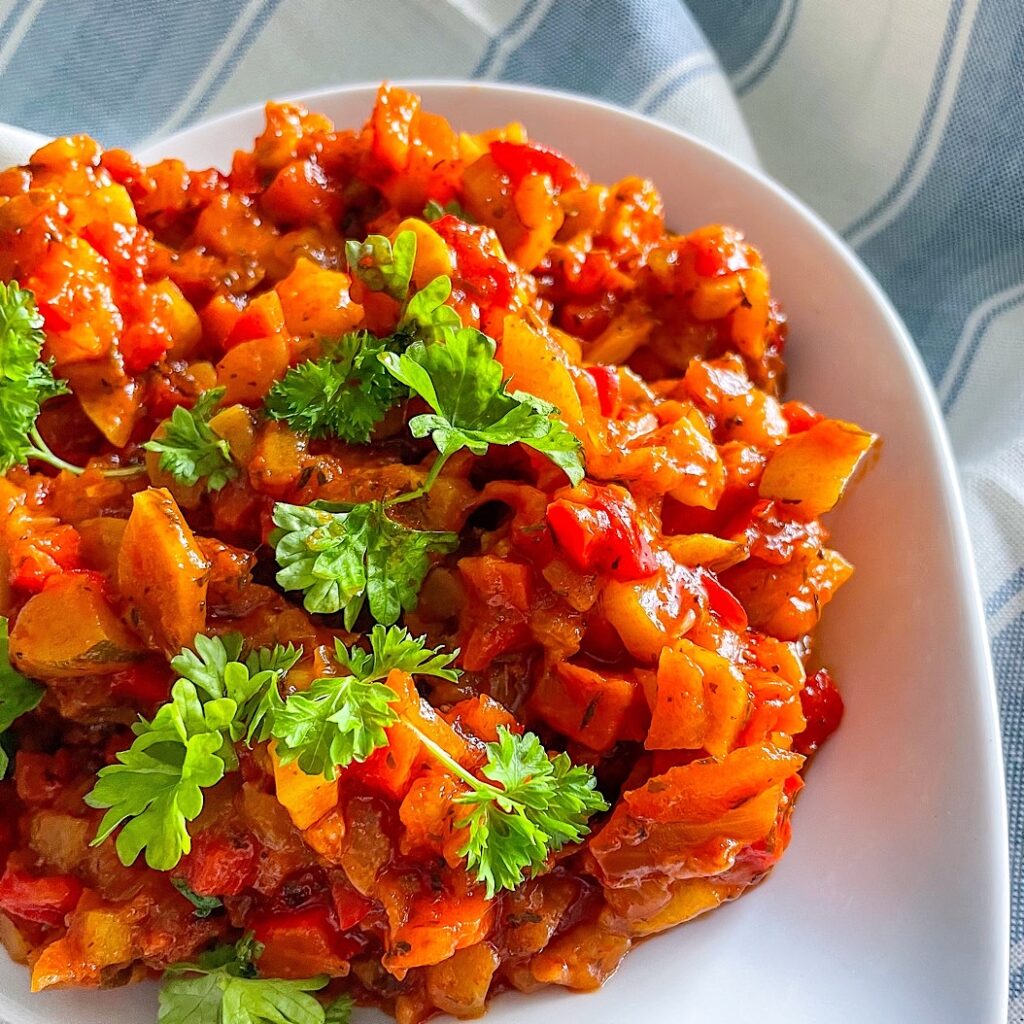
This vegetable caviar is wonderfully flexible. I love it spread thickly on warm rye bread or sourdough, with a little extra cracked pepper on top. It also works as a side dish next to grilled meats, roast chicken, or mashed potatoes, and makes a great dip with crackers or crisps for sharing. Served cold, it feels light and fresh; served warm, it becomes hearty and comforting.
To store, let the caviar cool fully, then transfer it to a clean glass jar or an airtight container. It will keep in the fridge for up to 5 days, and the flavour actually improves after a day or two. You can also freeze it in portions for up to 3 months – just defrost overnight in the fridge before reheating gently or eating cold.
More Easy Vegetable Recipes to Try
If you enjoy this vegetable caviar, here are a few more vegetable recipes from the blog you might like.
- Looking for another courgette idea? Try my Turkey Courgette Boats Recipe – tender courgettes filled with a savoury turkey mince filling, perfect for a light dinner.
- For something even quicker, take a look at Sauteed Courgettes - How to cook courgettes (easy and quick) – a simple skillet side dish ready in under 15 minutes.
- If you love roasted vegetables, my Easy Roasted Vegetables Recipe is a reliable, all-purpose tray bake using everyday vegetables and herbs.
- For a summery twist, try this Roasted Summer Vegetables Recipe – a colourful tray of courgettes, peppers and tomatoes roasted until sweet and tender.
- And if you want something a little more filling, my Roasted Vegetables and Halloumi Recipe combines golden halloumi with roasted vegetables for an easy meal in one tray.
Tips and Notes for the Best Vegetable Caviar
- Chop everything to a similar size. Even cubes cook at the same rate, which gives the caviar a balanced texture rather than a mix of mushy and firm pieces. I aim for cubes about half a cm across for a chunky finish. If you plan to blend the mixture into a smooth spread, you can chop a bit more roughly. Consistency in cutting really does make a noticeable difference in the final dish.
- Use a wide, heavy skillet. A large pan with a heavy base lets the vegetables sit in a single layer and cook evenly without steaming. If the pan is too small, the vegetables will release water and stew rather than soften properly. Cast iron or a good non-stick skillet both work well. The wider surface also helps the moisture evaporate, which concentrates the flavour beautifully.
- Do not rush the sauté stage. Sweating the carrots and onions slowly builds the sweet, savoury base of the whole dish. If the heat is too high, they will brown on the outside while staying hard inside, and you will lose that gentle background flavour. Keep the heat at medium and stir often. Patience here is the secret to a really deep, layered taste.
- Choose firm, fresh courgettes. Younger, smaller courgettes have fewer seeds and a denser flesh, which holds up better during the long simmer. Older courgettes can turn watery and break down too much, leaving the vegetable caviar soggy. If you only have larger ones, scoop out the seedy centre before dicing. Fresh, firm courgettes also give the caviar a lovely pale green note in the finished dish.
- Adjust the chilli to your taste. Half a chilli pepper gives a gentle warmth that supports rather than dominates the other flavours. If you love spice, use a whole one or leave the seeds in for extra heat. For a child-friendly version, leave the chilli out altogether – the dish is still full of flavour without it. You can also stir in a pinch of smoked paprika instead for warmth without the heat.
- Balance acidity at the end. Adding the vinegar and a pinch of sugar right at the finish brightens the whole dish without making it sour. Always taste before you season further – the tomato paste, vegetables and even the salt all affect how the acidity reads. If your batch tastes flat, a tiny extra splash of vinegar usually fixes it. If it feels too sharp, a bit more sugar will round it out.
- Let it rest before serving. Like most slow-cooked dishes, vegetable caviar tastes much better after sitting for a few hours, or even overnight. The flavours settle together, and the texture becomes more cohesive. I often make it the day before I plan to serve it. A quick taste-and-adjust the next day will tell you if it needs a little more salt or pepper.
- Decide on chunky or smooth in advance. This recipe works beautifully both ways, but the texture changes the dish quite a bit. Chunky caviar is rustic and hearty, perfect as a side or a topping. Blended caviar becomes silky and spreadable, ideal for sandwiches or as a dip. If you want both, blend half the batch and keep the rest chunky for variety.
Vegetable Caviar FAQ
What is vegetable caviar made of?
Vegetable caviar is traditionally made from a mix of finely chopped vegetables such as courgettes, peppers, carrots, onions and garlic, all simmered slowly with tomato paste. The name comes from the small, glossy texture of the diced vegetables, not from any fish content. It is completely vegetarian and vegan, depending on the cooking fat used. Different families and regions have their own versions, with some adding aubergine or extra herbs.
How long does vegetable caviar last in the fridge?
Stored in a clean, airtight container, vegetable caviar will keep well in the fridge for up to 5 days. The flavour actually improves over the first day or two as everything settles. Always use a clean spoon when scooping it out to avoid contamination. If you notice any change in smell or appearance, it is best to discard it.
How do I make vegetable caviar smooth and spreadable?
For a smooth, spreadable texture, simply blend the cooked vegetables once they have cooled slightly. A handheld stick blender works well directly in the pan, or you can transfer the mixture to a food processor. Pulse in short bursts until you reach the consistency you like – fully smooth or with a little texture. This version is especially good on bread or as a dip.
Is vegetable caviar healthy?
Vegetable caviar is made entirely from vegetables, with just a little oil for sautéing and a small amount of sugar, so it is a nutritious choice. It is high in fibre, vitamins and antioxidants from the courgettes, peppers and carrots. To keep it as healthy as possible, use a moderate amount of oil and avoid adding extra salt. It is naturally vegan, vegetarian and gluten-free.
Vegetable Caviar
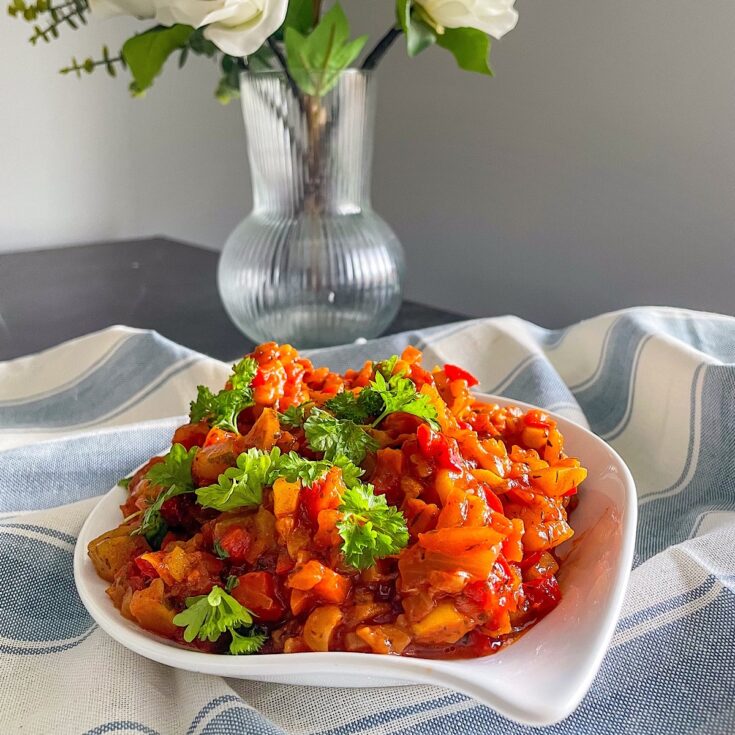
Vegetable caviar is a rich, slow-cooked spread made with courgettes, red peppers, carrots and tomato paste. It is an easy homemade recipe that works as a dip, side dish or topping for rye bread. Serve it warm or cold – either way, the flavours are deep, tangy and comforting.
Ingredients
- 3 zucchinis (courgettes), diced
- 2 red peppers, deseeded and chopped
- 2 onions, finely chopped
- 2 carrots, peeled and diced
- 1 garlic head, peeled and minced
- ½ chilli pepper, finely chopped (optional, for a spicy kick)
- 3–4 tablespoon tomato paste
- Salt and pepper, to taste
- Rapeseed oil, for frying
- 1 tablespoon white vinegar (optional)
- ½ teaspoon sugar
Instructions
- Peel the carrots and onions, deseed the peppers, and chop all the vegetables into small, evenly sized cubes. If you plan to blend the caviar at the end, you can leave the pieces slightly larger. Finely chop the garlic and chilli pepper if using.
- Heat the rapeseed oil in a large skillet over medium heat. Add the carrots and onions and sauté for 5 minutes, stirring now and then. Add the chopped peppers and cook for another 5 minutes, until softened.
- Stir in the diced courgettes and cook for 10 minutes, allowing them to release their moisture. Add the tomato paste, garlic, chilli, salt and black pepper. Cover with a lid and simmer on low heat for 45 minutes, stirring occasionally so nothing catches.
- Once the vegetables are fully softened and glossy, stir in the white vinegar (if using) and sprinkle over the sugar to balance the acidity. Mix well, taste, and adjust the salt or pepper if needed.
- Remove from the heat and let the caviar cool slightly before serving. Enjoy it chunky as a side dish, or blend it into a smooth spread for crackers and rye bread.