
Marinated olives and feta is a no-cook Mediterranean appetiser made with creamy feta, briny green olives, garlic, lemon peel and herbs. Ready in under 10 minutes of hands-on work, this easy, budget-friendly recipe sits in the fridge overnight and comes out bold, zesty and completely moreish.
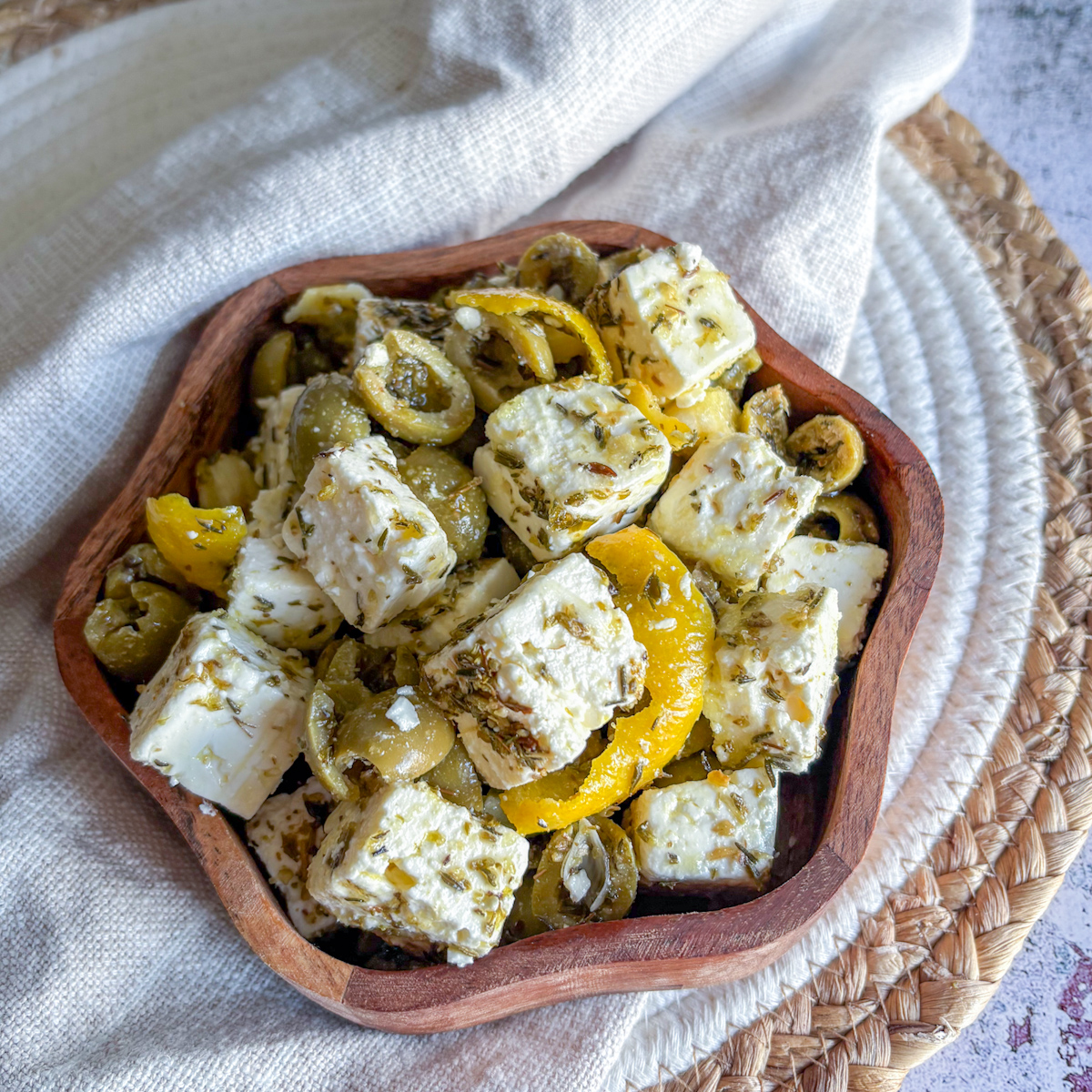
It takes just ten minutes to throw together, then the fridge does the rest of the work. The feta turns buttery and soaks up all the garlic and herbs, the olives pick up a citrus note from the lemon peel, and the olive oil becomes this gorgeous golden dressing you'll want to mop up with bread. No cooking, no fuss, just a few good ingredients doing exactly what they should. It keeps well for days, travels well to picnics, and always disappears faster than I plan for.
Jump to:
What You Need for This Marinated Olives and Feta Recipe
Here is what you need to make this marinated feta and olives recipe:
- Block feta – a proper block (not pre-crumbled) holds its shape when cubed and gives you that creamy, buttery centre once marinated.
- Pitted green olives – their firm bite and mild brine work beautifully with feta, and pitted ones save you time at the chopping board.
- Lemon peel – the peel carries all the citrus oils without the sharp juice, giving a bright, fragrant lift to the marinade.
- Garlic cloves – fresh garlic adds a warm, punchy depth that mellows and softens as it steeps in the oil.
- Extra virgin olive oil – a good EVOO is the backbone here; it carries the flavours and becomes a dressing in its own right.
- Dried oregano – the classic Greek herb, earthy and slightly peppery, and it holds its flavour well in a cold marinade.
- Dried thyme – adds a subtle woody note that rounds out the oregano and ties everything together.
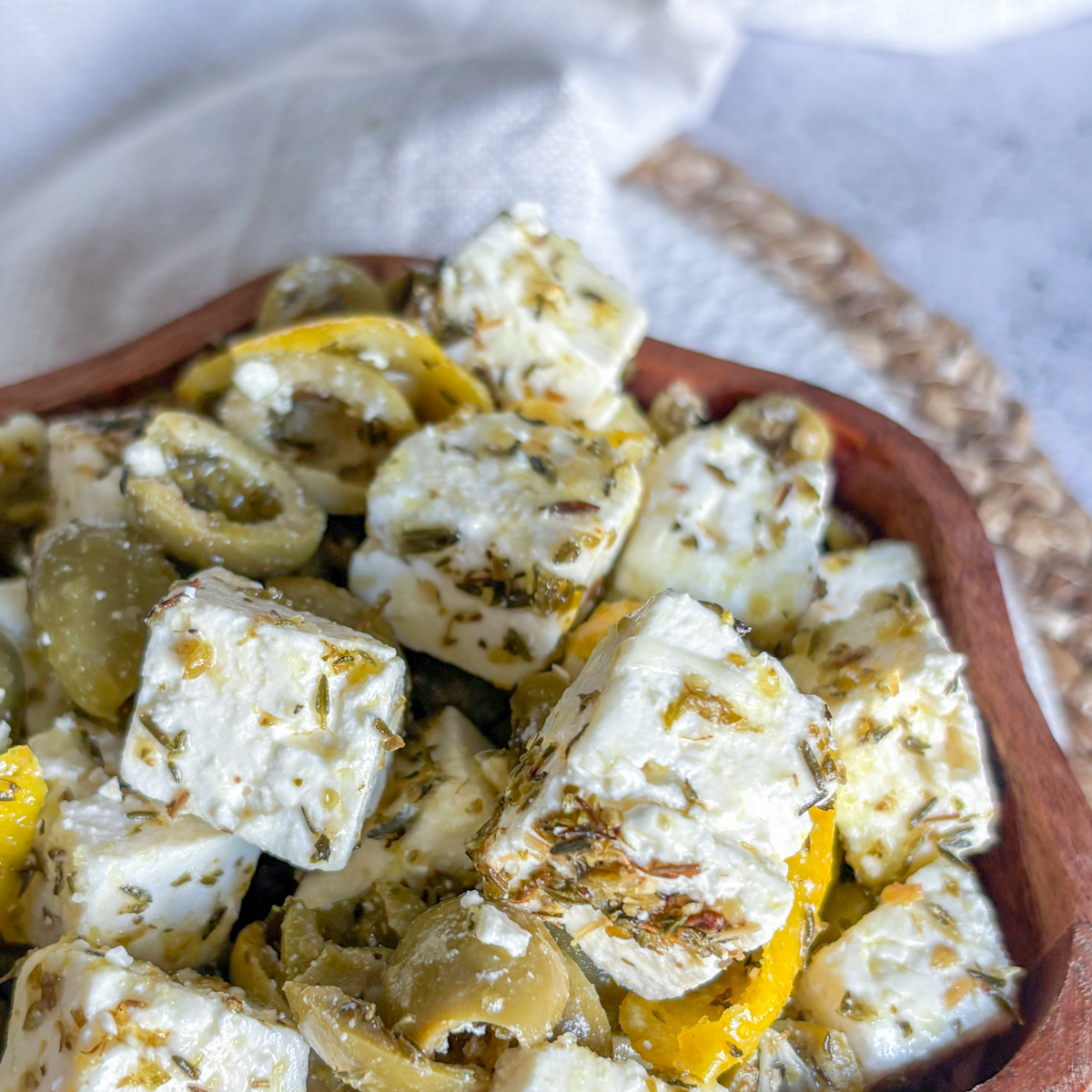
How to Make Marinated Olives and Feta
Here is this easiest process:
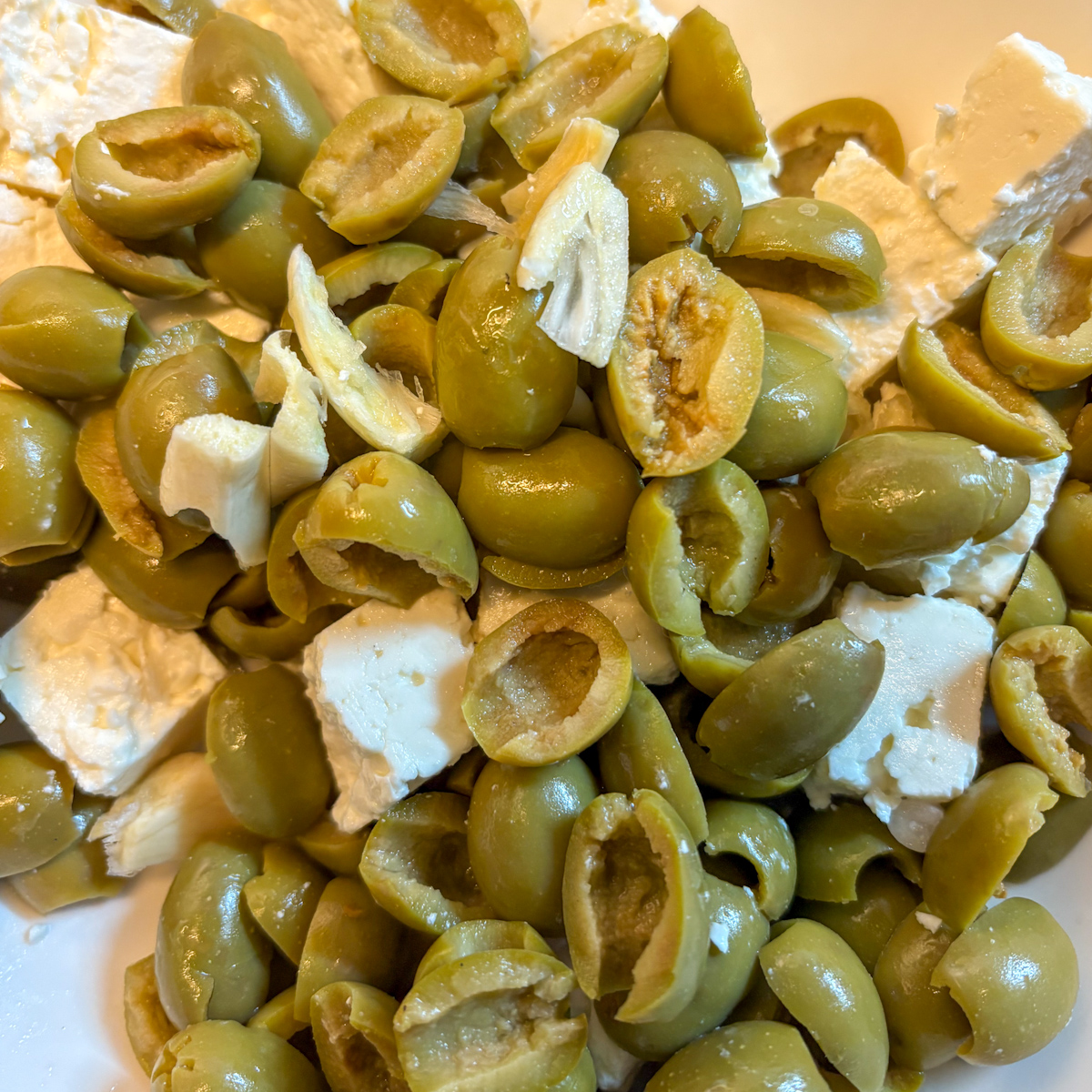
- Step 1: Cut the olives in half and chop the feta into bite-sized cubes. Tip both into a large mixing bowl.
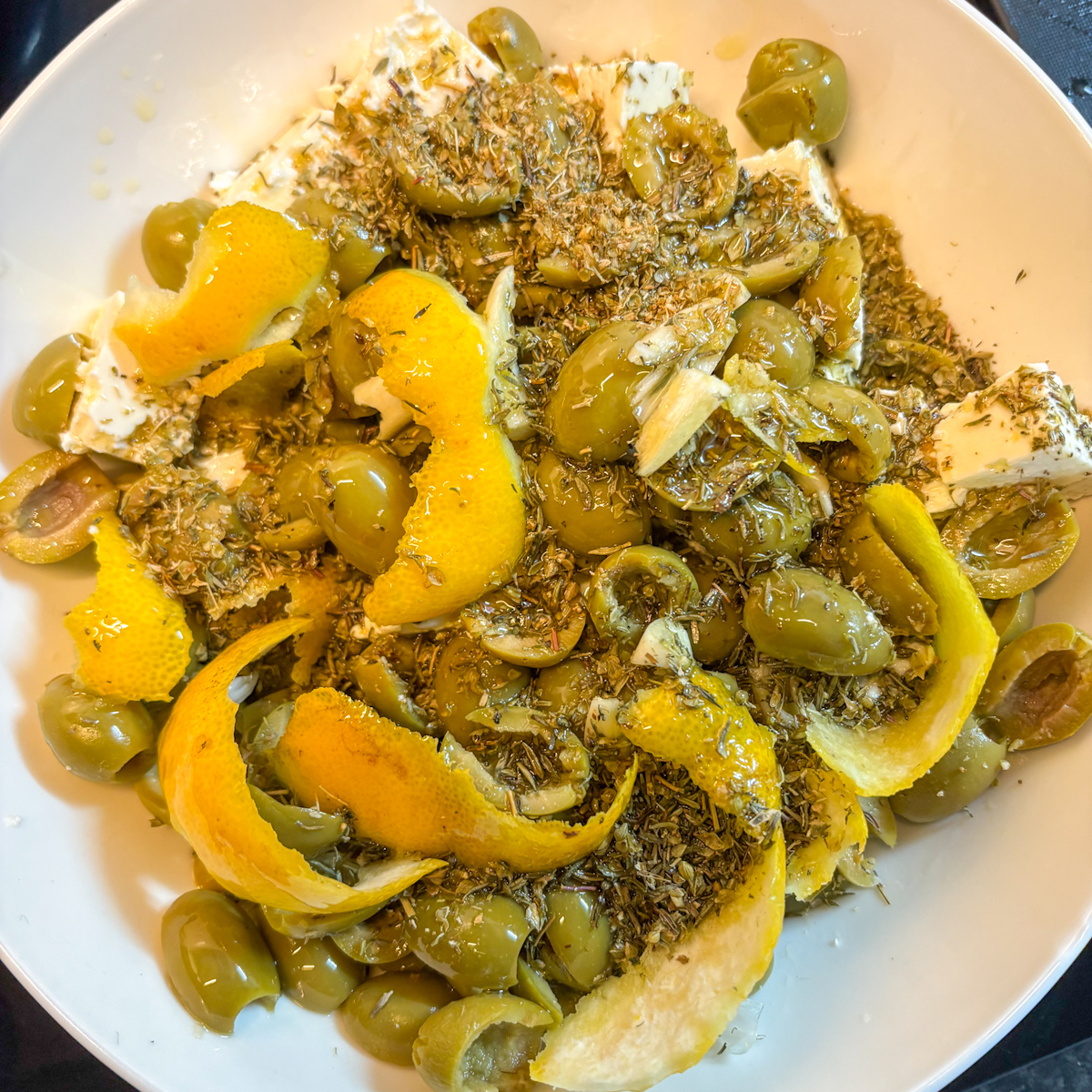
- Step 2: Peel and smash the garlic cloves with the flat of a knife, then chop them roughly. Peel strips of zest from the lemon using a sharp knife, keeping the white pith off. Add the garlic and lemon peel to the bowl, then scatter over the dried oregano and thyme.
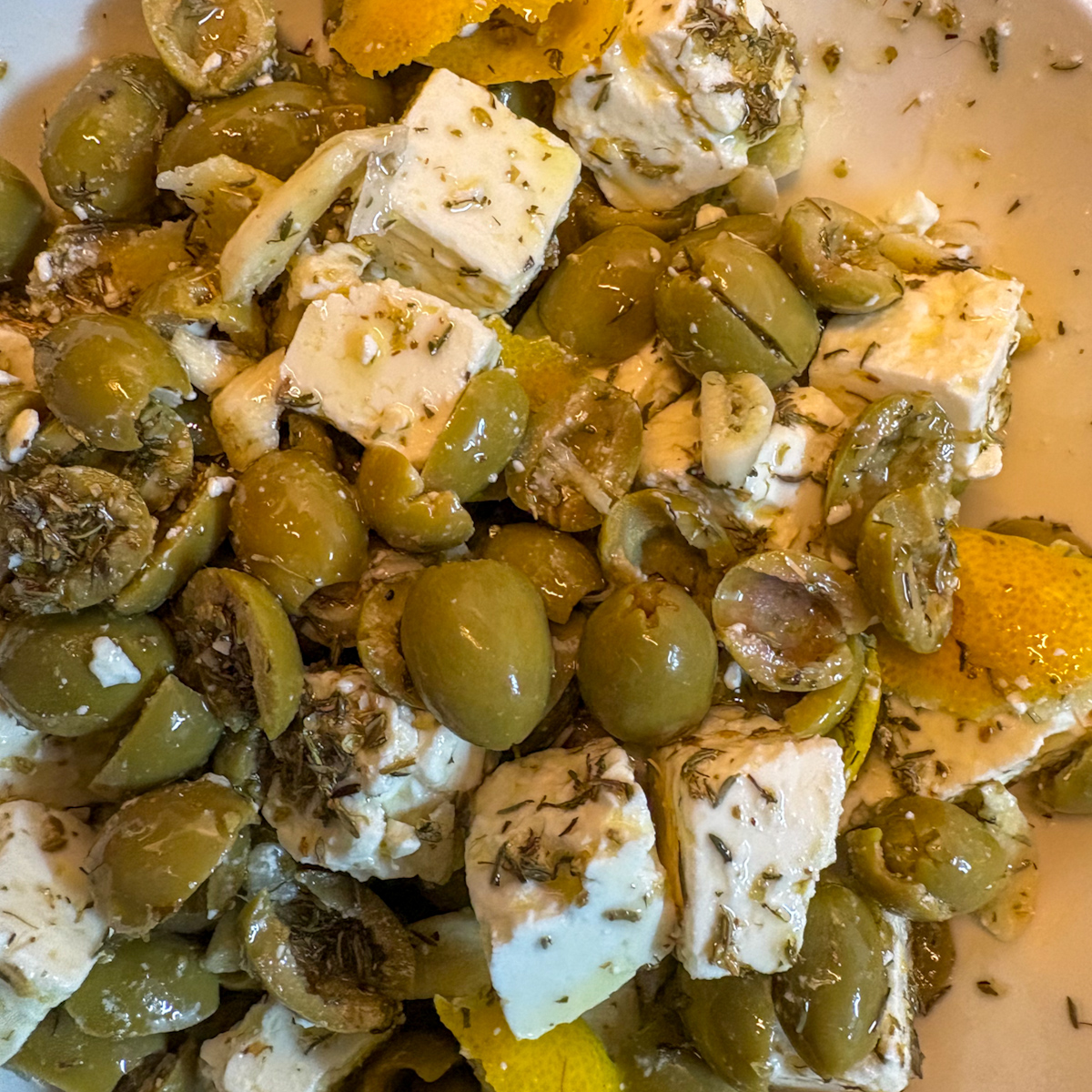
- Step 3: Pour the olive oil over everything and toss gently until each piece of feta and every olive is coated in oil and herbs
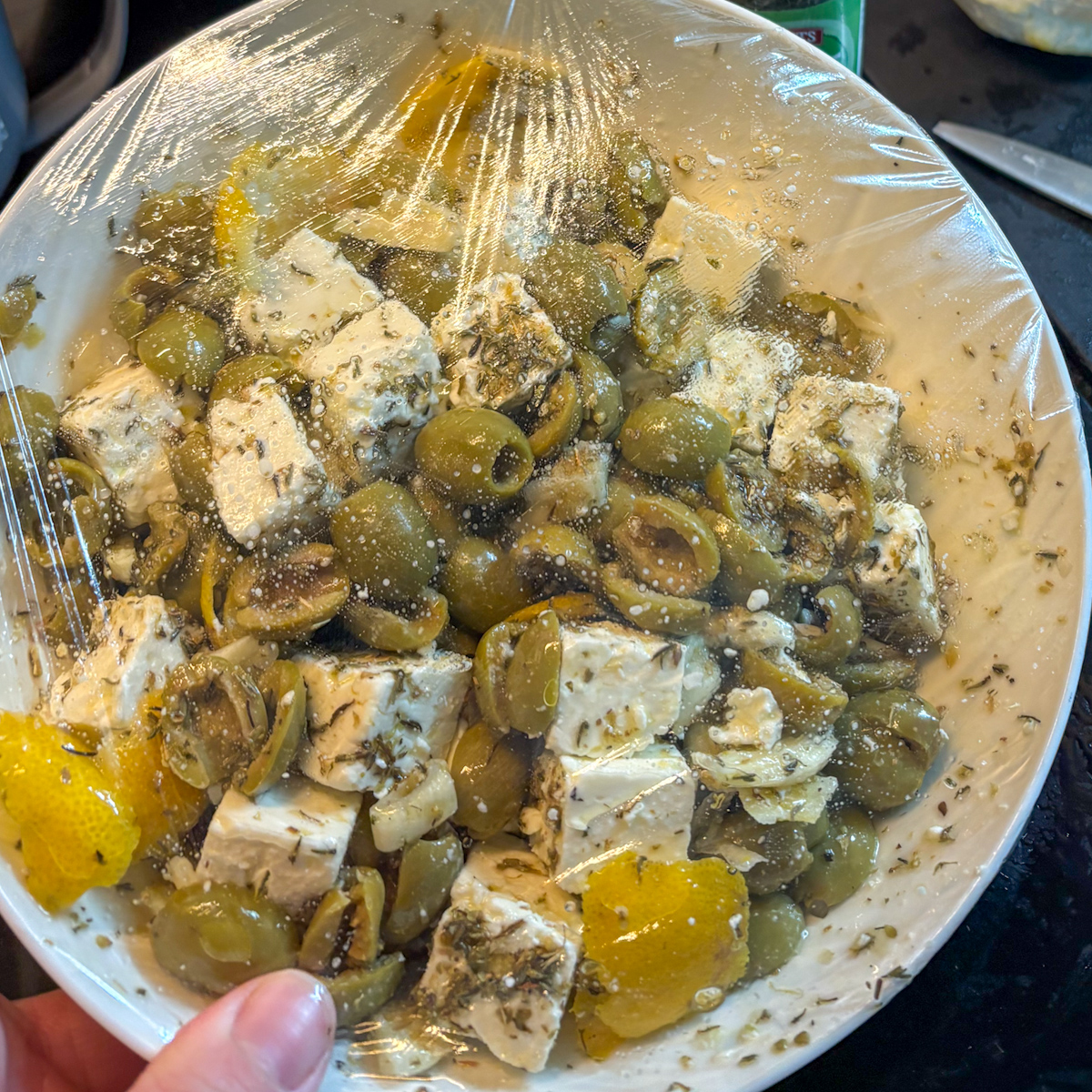
- Step 4: Cover the bowl with cling film or a tight lid, and chill in the fridge for at least a couple of hours. Overnight is far better, as the flavours need time to settle and infuse properly.
How to Serve and Store
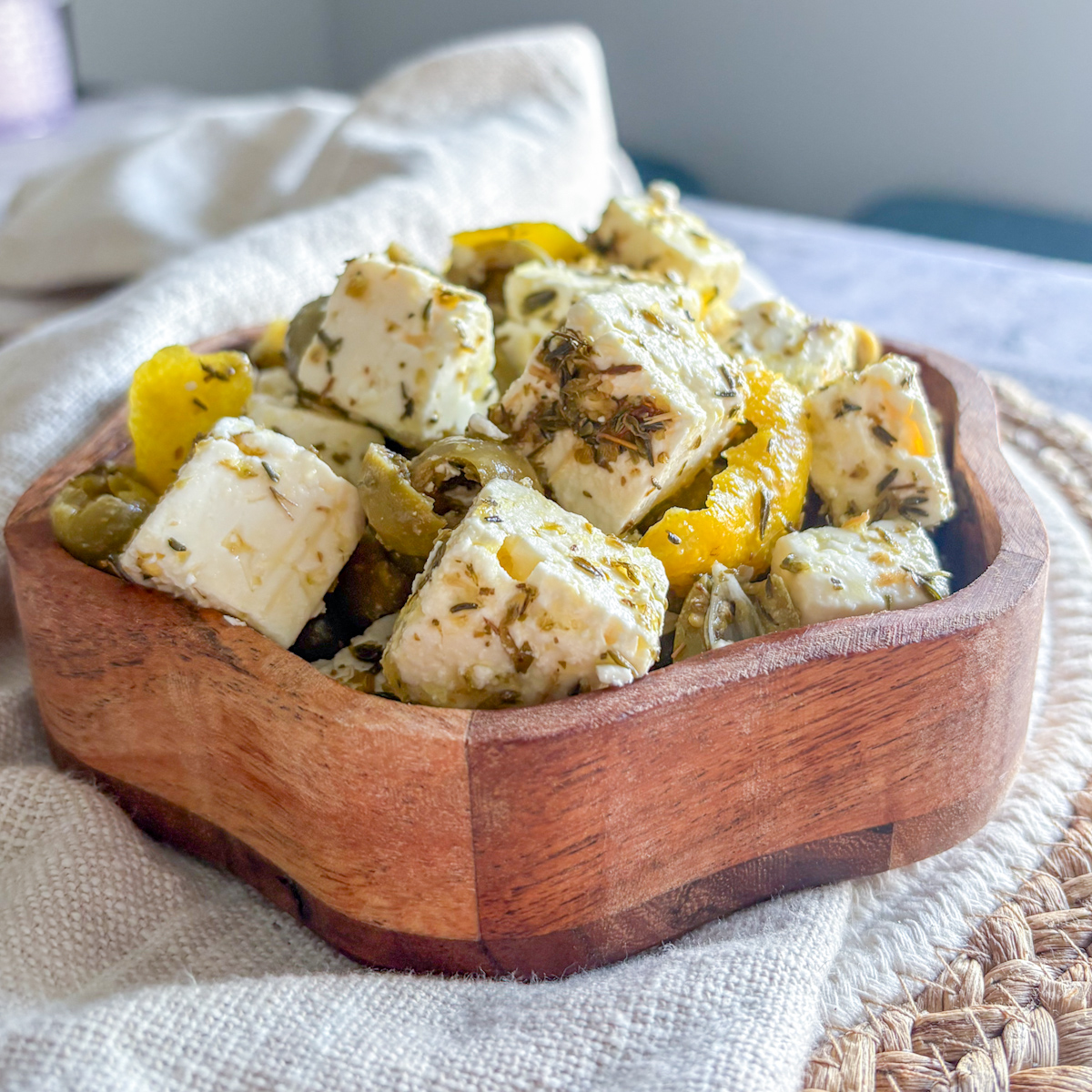
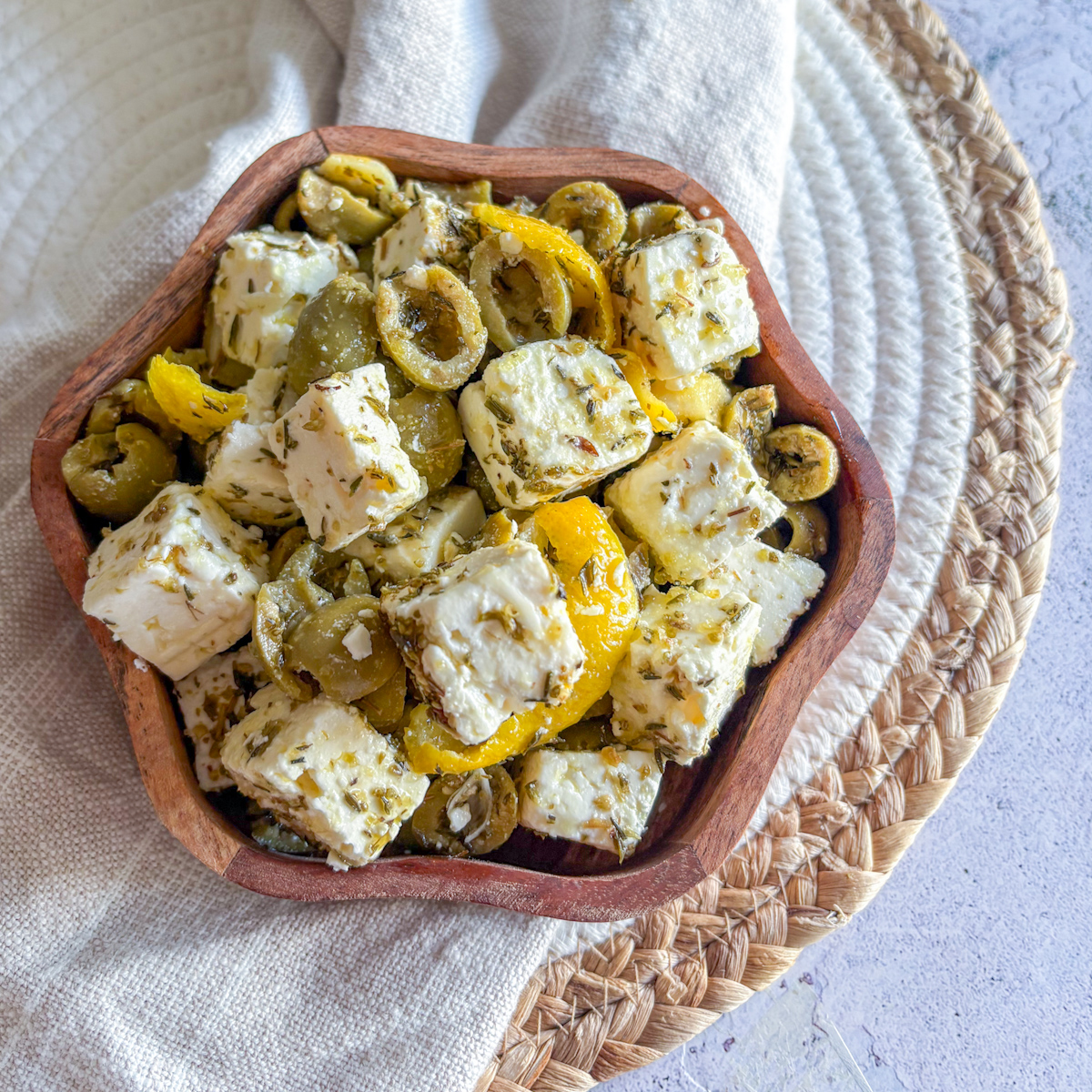
I serve this marinated olives and feta straight from the fridge with warm pita, crusty sourdough or rye bread for scooping up the oil. It also sits beautifully on a meze board alongside hummus, roasted peppers and sun-dried tomatoes, or tossed through a simple green salad for a quick lunch.
For storing, keep the feta and olives in a clean glass jar or airtight container, fully submerged in the olive oil, and they'll hold in the fridge for up to 5 days. The flavour actually gets better on day two and three, so this is a brilliant make-ahead dish. Don't freeze it – feta turns grainy and the texture is ruined once thawed.
More Appetisers to Try
If you enjoyed this marinated olives and feta recipe, here are a few other easy starters from the blog worth a look.
- Looking for another crowd-pleasing bite? Try Stuffed Mini Peppers Recipe – sweet peppers filled with creamy cheese, perfect alongside this feta dish.
- For something warm and crispy, check out Easy Pan-Fried Chickpeas Recipe – golden, crunchy chickpeas that work brilliantly as a snack or salad topper.
- If you need something to dip into the leftover oil, Rye Bread Grenki (Rye Bread Croutons) Recipe is your answer – crunchy, garlicky croutons made for scooping.
- Another lovely make-ahead option is Roasted Red Onions Recipe – sweet, jammy onions that pair beautifully with cheese boards.
- And if you're into anything pickled or tangy, Pickled Courgettes Recipe is a summer favourite – crunchy, bright and wonderfully refreshing.
Tips and Notes for the Best Marinated Olives and Feta
- Use block feta, never crumbled. Pre-crumbled feta is usually drier and often contains anti-caking agents that stop the oil and herbs clinging properly. A proper block, ideally Greek and made with sheep's milk, gives you that creamy, buttery centre and clean salty edge. When you cube it, the pieces stay intact during marinating rather than falling apart into mush. This small swap is the single biggest difference between an average appetiser and a really memorable one.
- Peel the lemon, don't zest it. Using a sharp knife or vegetable peeler to take wide strips of peel gives you all the fragrant citrus oils without any bitterness from the white pith. Fine zest can clump and become too sharp in this oil marinade, whereas wide strips release their flavour slowly and look lovely in the finished dish. If you accidentally take some pith, just scrape it off with a knife. Always use an unwaxed lemon if you can, and give it a good wash first.
- Smash the garlic before chopping. Pressing down on the clove with the flat of your knife breaks the cell walls and releases far more flavour than slicing alone. Once smashed, a rough chop is all you need – no need for a fine mince, as the garlic will soften and mellow in the oil over time. If you mince it too finely, the flavour can turn sharp.
- Don't skip the resting time. I know it's tempting to dig in straight away, but the magic really happens in the fridge. The feta needs time to absorb the garlic, herbs and lemon, and the oil needs time to pick up the brine from the olives. Two hours is the absolute minimum, but overnight gives you that proper, deeply flavoured result. Plan ahead and make marinated olives and feta the night before you need it.
- Choose your olives carefully. Not all green olives are equal – cheap ones can be rubbery and overly sour, which will throw off the whole dish. Look for Greek or Spanish varieties like Halkidiki, Nocellara or Manzanilla, ideally from a deli counter or a good jar. Taste one before you start; if it's too harsh on its own, it won't mellow out in the marinade. Kalamata olives also work if you want a richer, darker flavour.
- Save the leftover oil. Once the marinated olives and feta are gone, you'll be left with this incredible herby, garlicky, lemony oil. Don't throw it out. Use it to dress tomatoes, drizzle over grilled chicken, stir into pasta or pour over warm flatbreads. It keeps in the fridge for another week and turns almost anything into something better.
FAQ
How long should I marinate olives and feta?
For the best flavour, marinate for at least 2 hours, but ideally overnight (8 to 12 hours). This gives the feta enough time to absorb the garlic, herbs and citrus, and lets the olive oil take on the brine from the olives. If you leave it for 24 hours, the flavour is even deeper, though the feta becomes softer. Anything beyond 3 to 4 days and you start to lose the fresh character of the herbs.
What kind of olives work best?
Firm, good-quality green olives are ideal – Halkidiki, Nocellara, Castelvetrano or Manzanilla all work brilliantly. Kalamata olives are also lovely if you prefer something darker and more robust. Avoid cheap, soft olives from the long-life shelf, as they tend to be overly salty and rubbery. A trip to the deli counter is worth it here.
Is this dish gluten-free and vegetarian?
Yes, marinated olives and feta are naturally gluten-free and vegetarian. Feta is made from sheep's or goat's milk (sometimes a mix), and all the other ingredients are plant-based. Just double-check the label on your olives and feta for any additives if you're cooking for someone with strict dietary needs. Serving it with gluten-free crackers or veg sticks keeps the whole thing suitable for coeliacs.
Can I freeze marinated olives and feta?
Unfortunately, no. Freezing completely ruins the texture of feta – it becomes grainy, crumbly and watery once defrosted. The olives also lose their firm bite. This is a fridge-only dish, but since marinated olives and feta keep for 5 days chilled, you've got plenty of time to work through it. Make a smaller batch if you're worried about waste.
What can I serve with marinated olives and feta?
It's brilliantly versatile. Serve it with warm pita, sourdough, crackers, or rye bread for dipping; add it to a meze or antipasto board alongside hummus and roasted vegetables; toss it through pasta or a grain bowl; or spoon it over a green salad. It also pairs beautifully with a glass of crisp white wine or a chilled rosé.
Related
Looking for other recipes like this? Try these:
- How to Make Whipped Feta Dip with Lemon and Olives
- Sticky Baked Guinness Chicken Wings with a Smoky Dry Rub
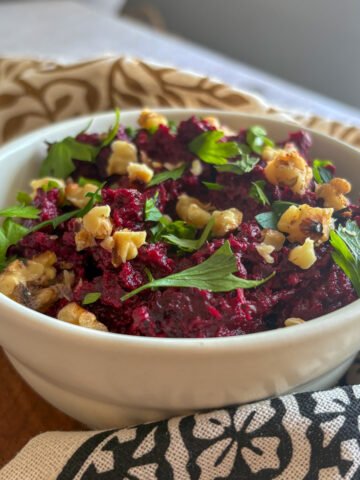
- Easy Beetroot and Walnut Dip with Roasted Garlic (Georgian Pkhali)
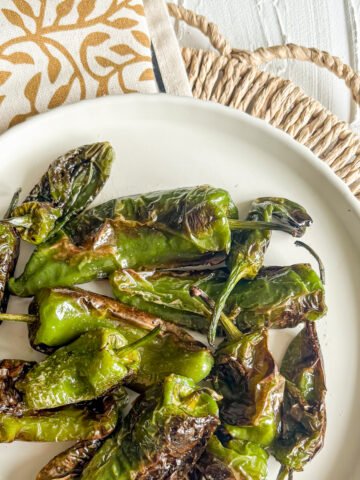
- How to Cook Padron Peppers (Easy Blistered Tapas in 5 Minutes)

Pairing
These are my favorite dishes to serve with marinated feta and olives:
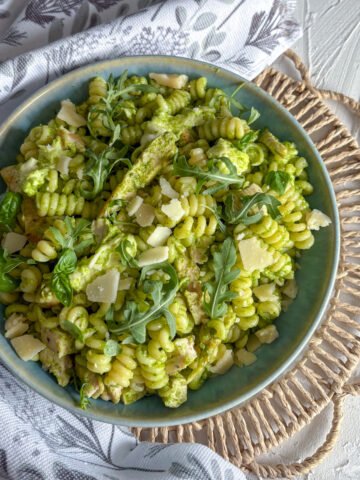
- Rocket Pesto Pasta Salad with Chicken and Cashews
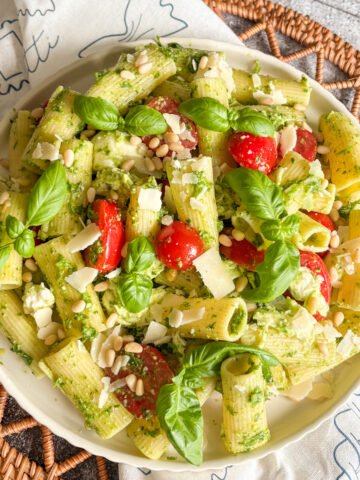
- Easy Pesto Pasta Salad with Parsley Pesto and Mozzarella
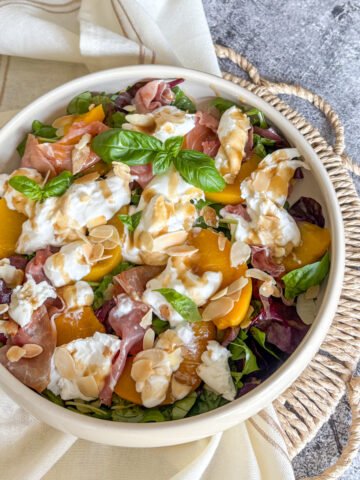
- Summer Peach and Burrata Salad with Prosciutto
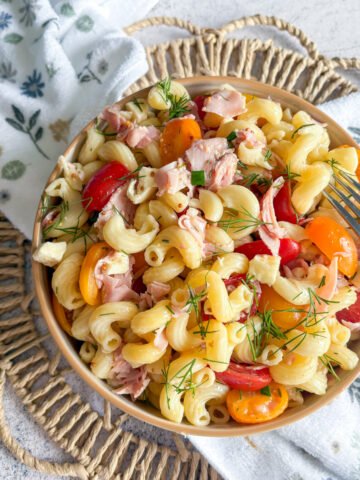
- Pasta Salad with Dill Vinaigrette - Easy Summer Recipe
Marinated Olives and Feta Recipe
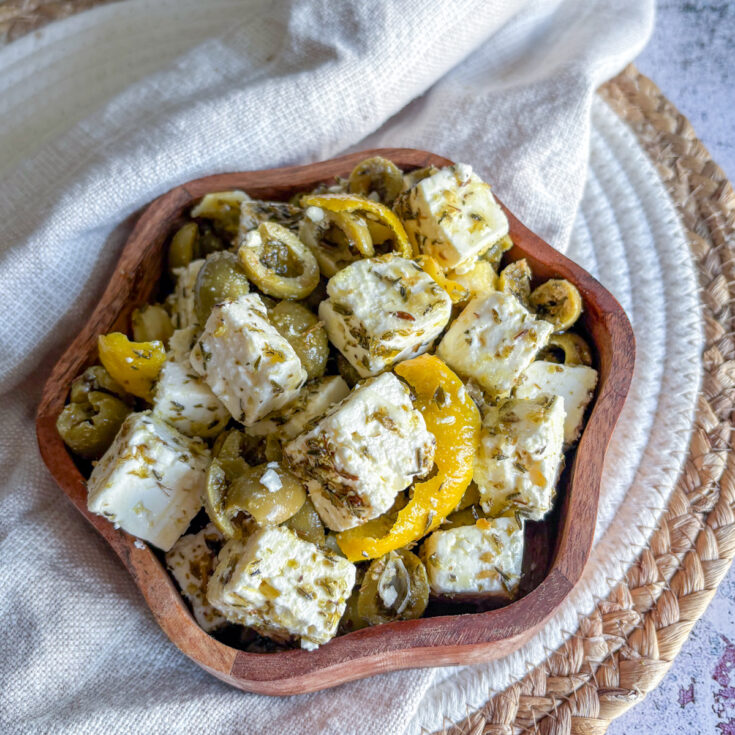
Marinated olives and feta is a bold, Mediterranean-inspired appetiser with creamy feta cubes, briny green olives, garlic, lemon peel and herbs steeped in extra virgin olive oil. It's a no-cook, make-ahead dish that's ready in 10 minutes of prep and sits overnight in the fridge. Perfect for meze boards, parties, or a simple snack with bread.
Ingredients
- 200 g block feta (7 oz)
- 1 jar pitted green olives, approx. 300 g (10.5 oz), drained
- Peel of 1 lemon
- 3–4 garlic cloves
- 50 ml extra virgin olive oil (3 ½ tbsp)
- 1 teaspoon dried oregano
- 1 teaspoon dried thyme
Instructions
Drain the olives and cut each one in half. Pat the feta dry with kitchen paper and cut it into bite-sized cubes, roughly 2 cm. Tip the olives and feta into a large mixing bowl.
Smash the garlic cloves with the flat of a knife, peel, and finely chop them. Using a sharp knife or a vegetable peeler, take wide strips of peel from the lemon, avoiding the white pith. Add the garlic and lemon peel to the bowl, then scatter over the dried oregano and thyme.
Pour over the extra virgin olive oil and gently toss everything together until each piece is coated in oil and herbs. Cover the bowl with cling film or transfer to a jar with a tight lid. Chill in the fridge for at least 2 hours, preferably overnight, to let the flavours infuse. Bring to room temperature 20 to 30 minutes before serving.