

Homemade cottage cheese made from scratch with just 2 ingredients and ready in under 1 hour. This easy cottage cheese recipe gives you fresh, creamy curds with a mild, slightly tangy flavour that works for breakfast, baking and savoury dishes.
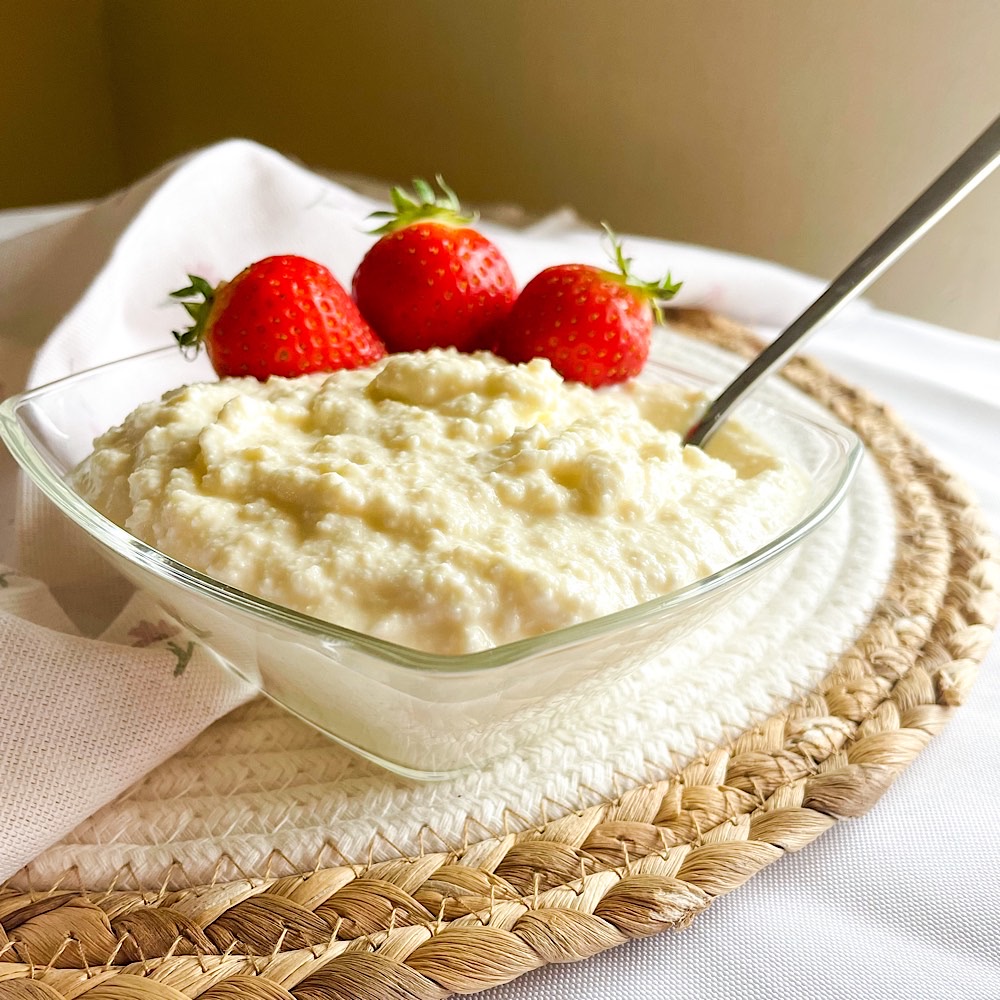
Once you make cottage cheese at home, shop-bought tubs lose their appeal fast. The texture is fluffier, the flavour is cleaner, and you decide exactly what goes into the pot — no thickeners, no preservatives, no funny aftertaste. I make a batch of homemade cottage cheese most weeks for breakfast with strawberries and honey, and it never lasts more than two days in the fridge.
The whole process takes one pot, a colander and a piece of cloth. No rennet, no thermometer fuss, no overnight waiting. For roughly the price of three litres of full-fat milk you get a generous tub of fresh curds plus a jug of whey for baking, which makes this one of the cheapest dairy projects in my kitchen.
Jump to:
Ingredients for Homemade Cottage Cheese
Here is what you need to make this easy homemade cottage cheese recipe with vinegar:
- Full-fat milk — the higher the fat content, the richer and creamier the final curds. Skimmed or semi-skimmed milk gives a dry, rubbery result, so stick with whole milk for the best texture.
- White vinegar — the acid that splits the warm milk into curds and whey. Either 9% or 5% strength works, you just adjust the amount.
- Sour cream (for serving, optional) — softens the curds and adds a gentle tang when you whisk it through.
- Vanilla essence (for serving, optional) — a small drop lifts the dairy flavour without turning it into dessert.
- Icing sugar (for serving, optional) — dissolves smoothly into the curds with no grit.
- Fresh berries, jam, honey, nuts and seeds (for serving, optional) — any of these turn a plain bowl of curds into a proper breakfast or pudding.
How to Make Cottage Cheese at Home — Step by Step
This is a simple recipe and I break it down into easy steps. Read through once before you start so you can catch the milk at the right moment.
Step 1: Heat the milk. Pour the milk into a large heavy-bottomed pot and set it over medium heat. Stir often with a wooden spoon so nothing catches at the base. Watch the surface closely and pull the pot off the heat just before it boils — small bubbles around the edge and steam rising are your cue. If you have a thermometer, aim for around 90°C. Letting it boil toughens the curds, and stopping too early gives a poor yield.
Step 2: Add the vinegar and rest. Turn off the heat, pour in the vinegar and stir gently for a few seconds. You will see the milk separate almost straight away into soft white curds and pale yellow whey. Cover the pot with a lid and leave it alone for 20 minutes so the curds finish forming.
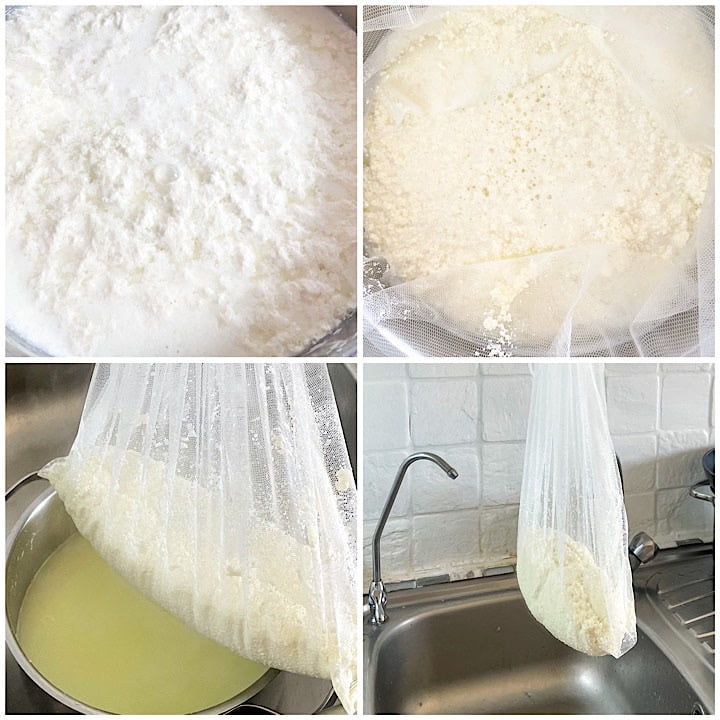
Step 3: Line your colander. Set a colander over a deep bowl or pot and line it with cheesecloth or a fine fabric straining bag. I skip the traditional cheesecloth and use the small mesh fabric bags sold for vegetables in any supermarket. They cost about €1 for two, work brilliantly, and I just rinse and reuse them after every batch.
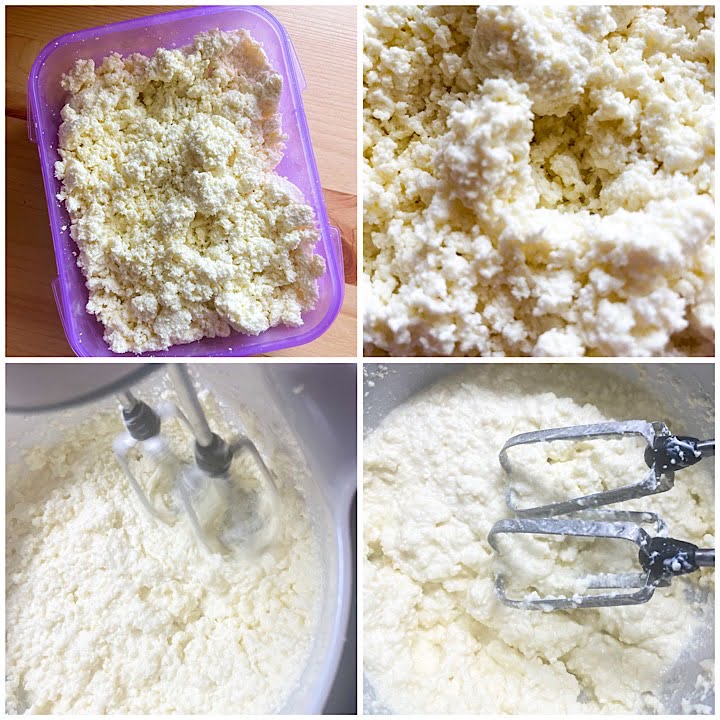
Step 4: Drain the curds. Spoon the curds from the pot into the lined colander. I like to gather everything into the mesh veggies bag, tie the top, and hang it above the sink so the whey drips out properly. Ten minutes gives soft, moist homemade cottage cheese. Hang it longer for a drier, firmer texture. To serve, tip the drained curds into a bowl, add sour cream and whisk with a hand mixer until creamy, then sweeten with vanilla and a little icing sugar and top with fresh berries, jam or honey.
How to Serve and Store Homemade Cottage Cheese
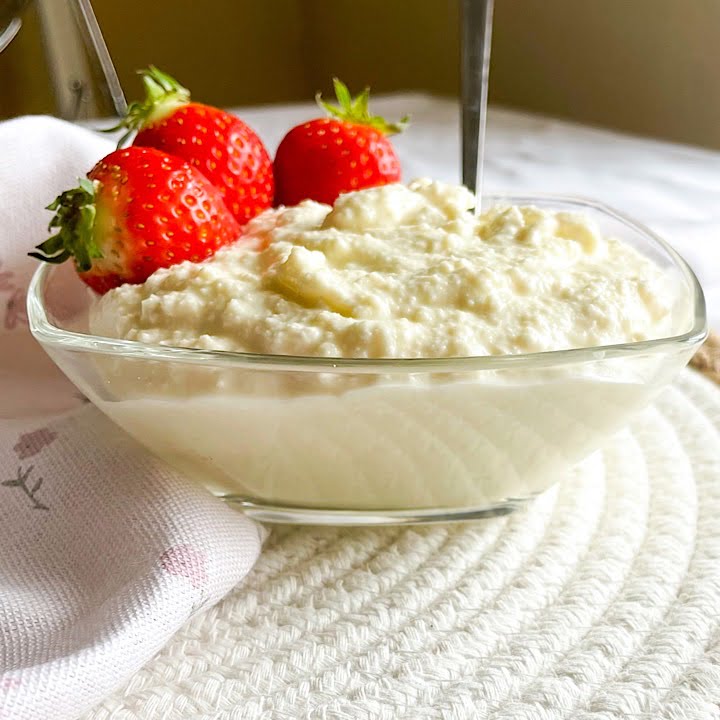
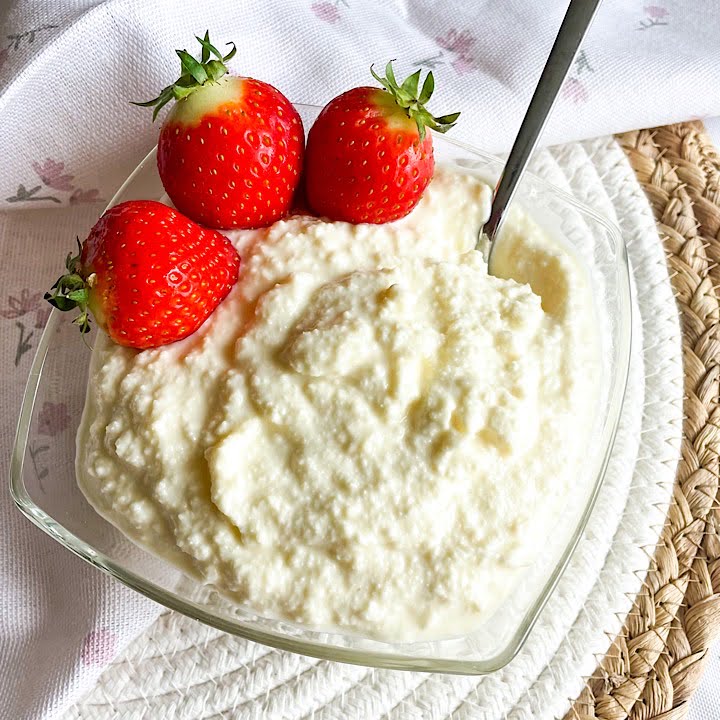
I usually serve homemade cottage cheese in a bowl with sour cream whisked through, a spoon of honey on top and a handful of strawberries, raspberries or blueberries on the side. It also goes well with jam, chopped nuts and seeds, or a drizzle of maple syrup. For a savoury plate, mix it with chopped cucumber, dill and a pinch of salt and spoon it onto rye bread. The drained curds are also brilliant in baking — think syrniki, cheesecakes, pancakes and pastry fillings.
Store the homemade cottage cheese in an airtight container in the fridge and use it within 3 days. The flavour is freshest on day one, and you may notice a little extra whey collecting at the bottom of the container after a day or two — just drain it off or stir it back in. I do not recommend freezing, as the texture turns grainy and watery once thawed. Keep the leftover whey in a jar in the fridge for up to a week and use it in bread dough, pancakes or smoothies.
Top Tips and Notes for the Best Homemade Cottage Cheese
- Always go for full-fat milk. The fat in the milk is what gives homemade cottage cheese its soft, creamy mouthfeel and a decent yield from every batch. If you use semi-skimmed or skimmed milk, the curds will be dry, squeaky and disappointing. I use whole milk with at least 3.5% fat, and if I can find non-homogenised farm milk I always grab it. The flavour is noticeably richer and the yield is slightly higher too.
- Do not let the milk boil. Boiling milk pushes the proteins too far and you end up with tight, rubbery curds instead of the soft, pillowy texture that makes homemade cottage cheese so good. Pull the pot off the heat the moment you see steam rising and small bubbles forming around the edge. A surface temperature of around 90°C is the sweet spot. If you accidentally boil it, the cheese will still set, but the texture will be tougher and the yield slightly lower.
- Stir the milk regularly while heating. Milk loves to scorch on the bottom of the pot, and burnt milk gives the whole batch a smoky, unpleasant flavour. Use a heavy-bottomed pan and stir with a wooden spoon every minute or so, scraping the base as you go. Medium heat is faster than low but still gentle enough to keep things safe. If you ever smell burning, do not stir from the bottom — pour the milk straight into a clean pot and carry on.
- Adjust vinegar to its strength. Vinegar comes in different strengths and the amount you need for homemade cottage cheese changes accordingly. For 9% white vinegar I use 4 tablespoons per 3 litres of milk, and for 5% white vinegar I use 6 to 7 tablespoons. Add it gradually and stir gently — if the milk has not separated cleanly within 30 seconds, add another half tablespoon. The whey should look pale yellow and clear once the curds have formed.
- Use vegetable mesh bags instead of cheesecloth. This is my favourite kitchen shortcut. The fine mesh fabric bags sold for storing vegetables work just as well as proper cheesecloth, cost almost nothing, and survive dozens of washes. They are easy to tie at the top, easy to hang above the sink, and the holes are exactly the right size to hold the curds while letting the whey through. Just give them a hot rinse with a little washing-up liquid after each use.
- Control the texture by changing the drain time. Drain time is the single biggest factor in how your homemade cottage cheese turns out. Ten minutes gives a soft, moist, spoonable curd that is lovely with berries and honey. Thirty minutes gives a firmer, drier cheese that holds its shape and works well in baking. If you want a really dry curd for syrniki or cheesecake, hang the bag for an hour or press it under a weight in the fridge.
- Keep the whey — do not throw it away. The pale yellow liquid left behind after making homemade cottage cheese is full of milk proteins and lactose, and it makes baked goods tender and fluffy. I use it in place of water or buttermilk in pancake batter, soda bread, scones and pizza dough. It also goes into smoothies and soups for a small protein boost. Strain it through a fine sieve, store it in a clean jar in the fridge, and use within a week.
- Save money by buying milk on offer. This recipe is one of the cheapest ways to make homemade cottage cheese at home, but you can push the price even lower by buying full-fat milk close to its use-by date — supermarkets often discount it heavily. From 3 litres of milk you get roughly 600 to 700 grams of finished curds, which works out at a fraction of the supermarket price.
Frequently Asked Questions
How do I make cottage cheese without rennet?
This recipe uses vinegar instead of rennet, which makes it suitable for vegetarians and far easier for home cooks. Rennet creates a firmer, more elastic curd typical of pressed cheeses, while acid coagulation gives you the soft, fresh curds you want for cottage cheese. You do not need any special equipment, cultures or starters — just heat, milk and a splash of acid.
What kind of milk should I use?
Always use full-fat, whole milk for the best texture and flavour. Pasteurised whole milk from the supermarket works perfectly, and non-homogenised or farm milk gives an even richer result. Avoid UHT milk where possible, as the long-life processing changes the proteins and the curds will not form as cleanly. Skimmed and semi-skimmed milk are not recommended because the lack of fat produces dry, rubbery curds.
How long should I drain cottage cheese?
Drain time controls the final texture, so it depends on how you plan to use the cheese. Ten minutes gives a soft, moist curd that is perfect for eating with a spoon. Twenty to thirty minutes gives a medium-firm texture good for sandwiches and salads. For baking projects like cheesecake or syrniki, hang the curds for a full hour or longer until almost no whey drips out.
Why did my milk not curdle?
The most common reasons are milk that was not hot enough, vinegar that was too weak, or UHT milk that has been over-processed. Make sure the milk reaches around 90°C — hot enough that steam rises and bubbles form around the edge, but not actively boiling. If you wait two minutes after adding vinegar and still see no separation, add another tablespoon and stir gently. Switching to a different brand of milk often solves the problem too.
How much cottage cheese does 3 litres of milk make?
You can expect roughly 600 to 700 grams of drained homemade cottage cheese from 3 litres of full-fat milk. The exact yield depends on the fat content of the milk, how long you drain the curds, and the brand you use. Higher-fat and non-homogenised milk give a slightly bigger yield. If your yield seems very low, the milk may have been UHT or the vinegar may not have been strong enough.
Can I make this recipe with less milk?
Absolutely — this recipe scales up and down without any trouble. For 1 litre of milk, use roughly 1 to 1.5 tablespoons of 9% vinegar, or 2 to 2.5 tablespoons of 5% vinegar. Keep the method exactly the same, just use a smaller pot and check the milk a little earlier as it heats up faster. The drain time stays roughly the same.
Homemade Cottage Cheese Recipe
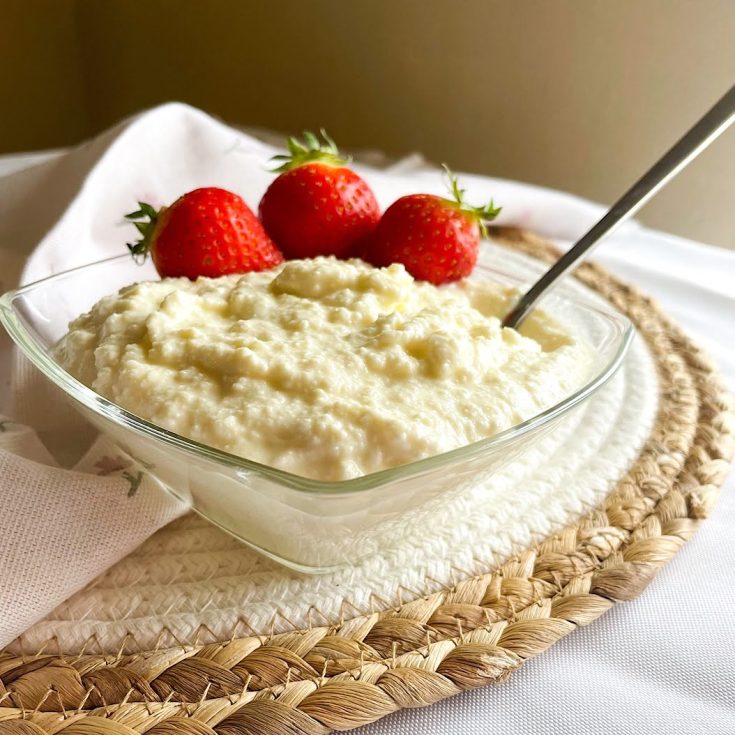
Homemade cottage cheese made from scratch with full-fat milk and vinegar. Soft, creamy curds with a mild, fresh flavour, ready in under 1 hour with no rennet and no special equipment. Serve with sour cream, berries and honey, or use in baking.
Ingredients
- 3 litres full-fat milk (approx. 12½ cups / 100 fl oz)
- 4 tablespoon white vinegar (9%) or 6–7 tablespoon white vinegar (5%)
- 3 tablespoon sour cream
- ½ teaspoon vanilla essence
- 1 tablespoon icing sugar
- Fresh berries, jam, honey, nuts or seeds, to taste
Instructions
- Pour the milk into a large heavy-bottomed pot and set it over medium heat. Stir often with a wooden spoon so the milk does not catch at the base. Heat until small bubbles form around the edge and steam rises from the surface — around 90°C if you are using a thermometer. Do not let the milk boil.
- Turn off the heat and pour in the vinegar. Stir gently for a few seconds until the milk separates into white curds and pale yellow whey. Cover the pot with a lid and leave undisturbed for 20 minutes.
- Line a colander with cheesecloth or a fine mesh fabric bag and set it over a deep bowl. Spoon the curds from the pot into the lined colander. Gather the cloth at the top, tie it, and hang it above the sink for 10 minutes for a soft texture, or up to an hour for a drier, firmer cheese.
- Tip the drained curds into a serving bowl. For a creamy finish, add sour cream, vanilla essence and icing sugar, then whisk with a hand mixer until smooth. Top with fresh berries, jam or honey and serve straight away.




[…] If you can’t find tvorog, you can strain regular full-fat cottage cheese in a cheesecloth for a few hours to remove excess moisture. It is also not a nuclear science to make your own cottage cheese at home. […]