
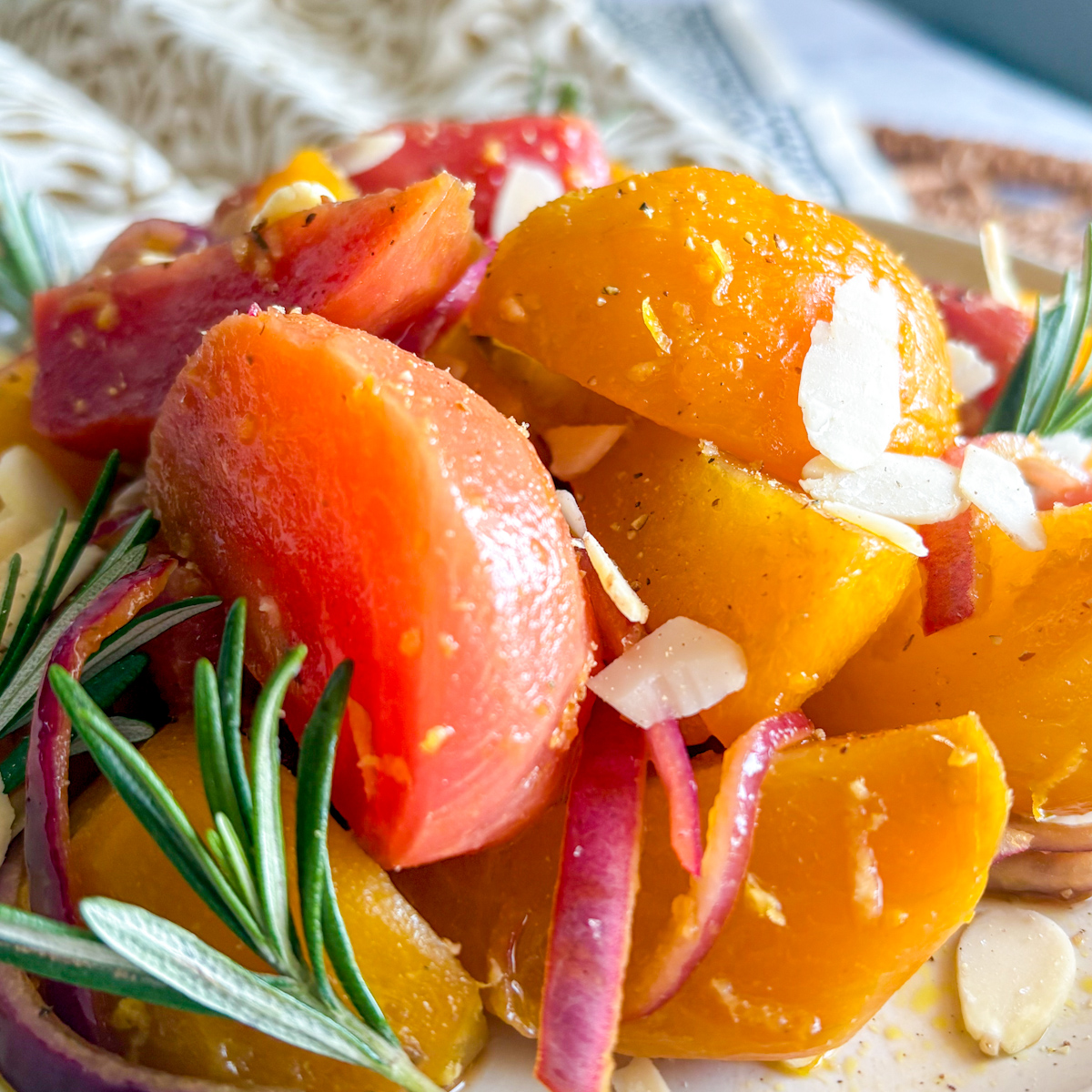
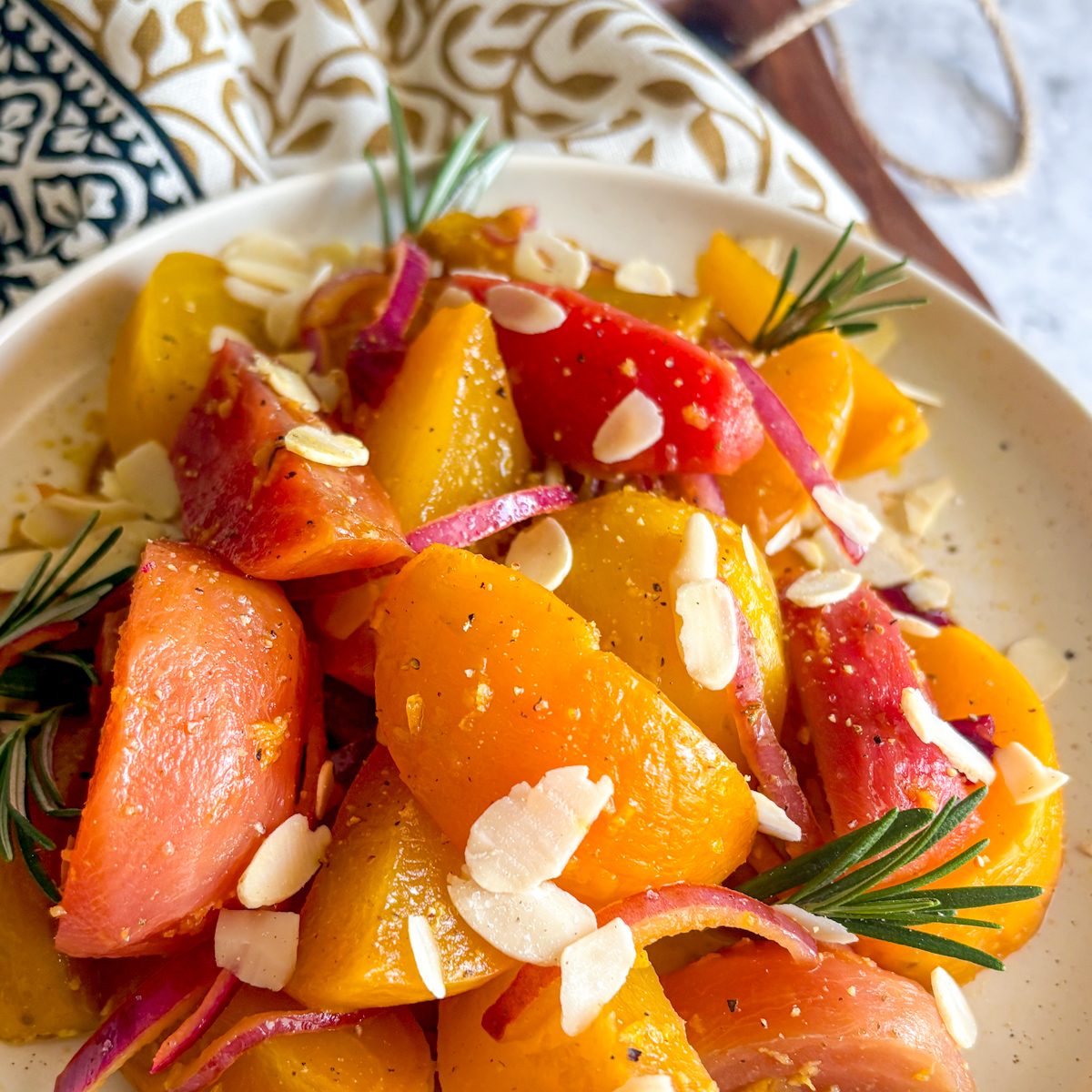
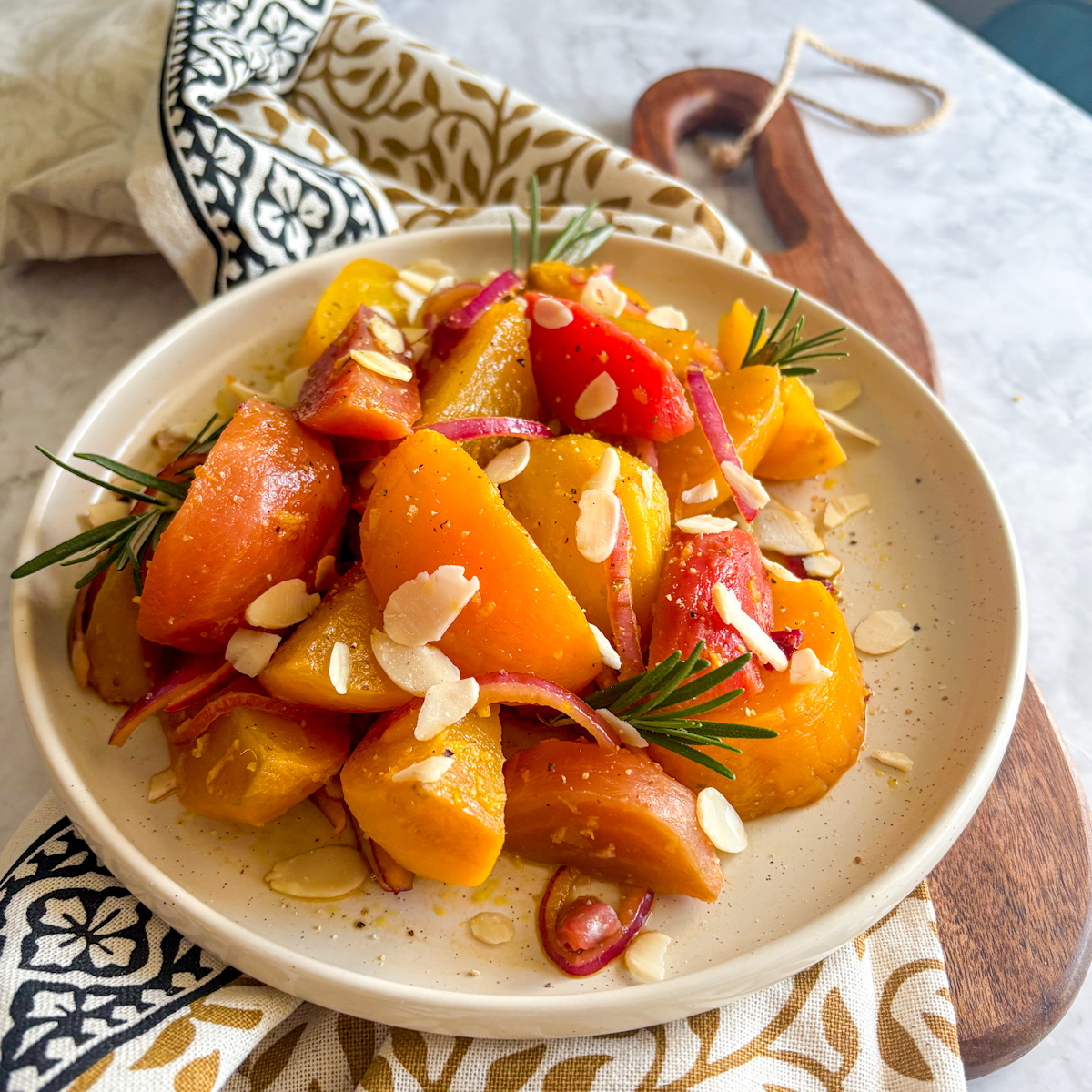
Braised beetroot is a one-pan side dish — fresh beetroot simmered with rosemary and thyme, then tossed in a sticky white wine vinegar glaze with red onion, lemon zest and flaked almonds. Ready in under an hour, naturally vegan and easy enough for a weeknight.
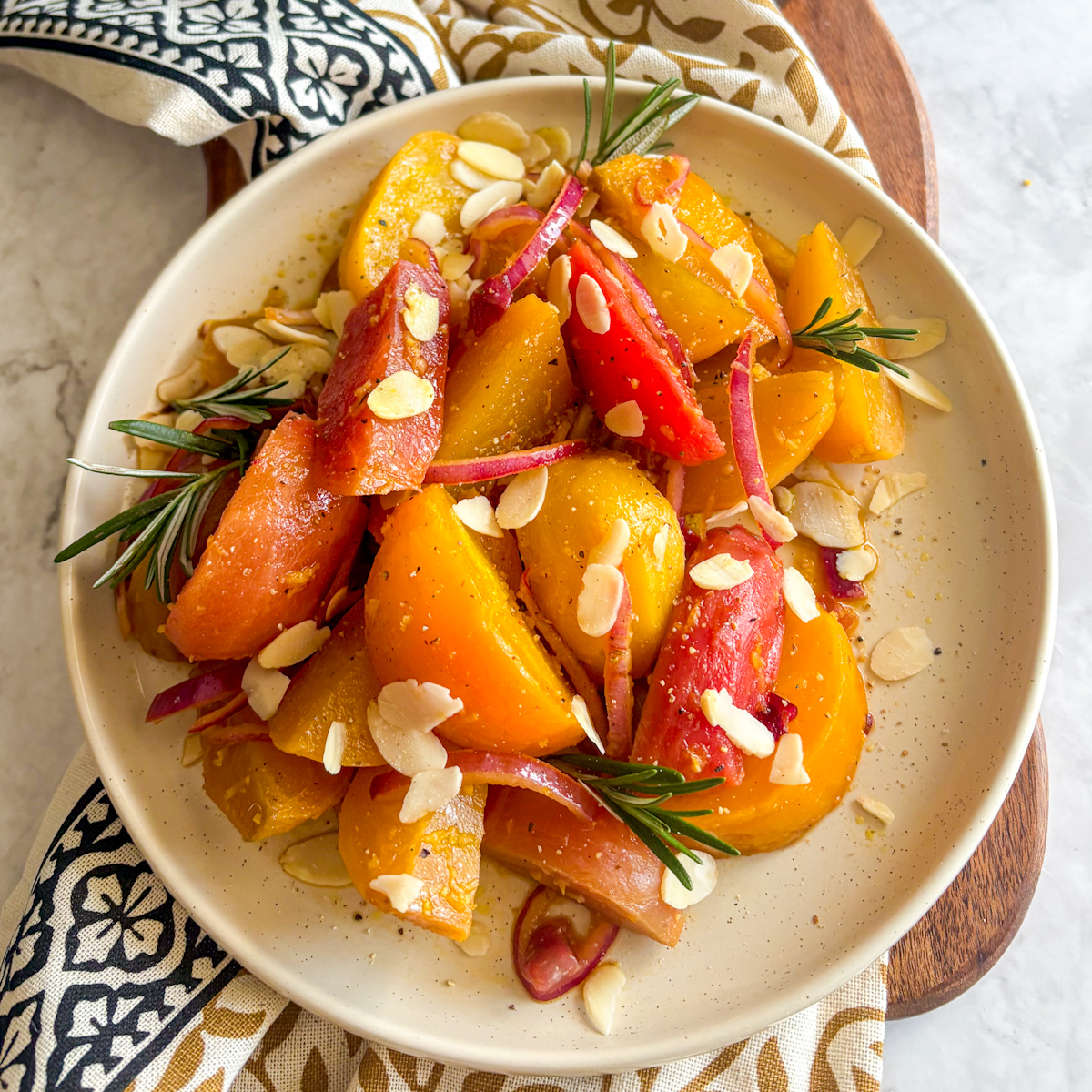
Most beetroot recipes ask you to roast for an hour, wrap things in foil, peel them raw, or all three. This braised beetroot recipe skips all of that. You halve the beetroot, simmer them gently in herb-infused water on the hob, then peel them after they've cooked — the skins slip off in seconds. The cooking liquid reduces down with vinegar, oil and a small spoon of sugar into a glossy glaze that coats every wedge. The flavour is earthy, sweet-and-tangy, herby and clean, with a crunchy almond finish on top. It's the sort of healthy beetroot side dish that pairs with almost any main, costs very little to make, and tastes even better the day after.
Jump to:
Ingredients for This Braised Beetroot Recipe
I keep the ingredient list short on purpose, so the earthy flavour of the beetroot leads and everything else supports.
- Fresh beetroot — the main ingredient. A mix of red, golden and candy stripe beetroot looks beautiful, but a single colour works just as well.
- Water — for the simmer that softens the beetroot without losing the shape.
- Sea salt — seasons the cooking liquid and draws out the natural sweetness.
- Fresh rosemary sprigs — piney and fragrant, infusing the cooking liquid as the beetroot cook.
- Fresh thyme sprigs — softer than rosemary, with a quiet floral note that balances it.
- White wine vinegar — the backbone of the glaze. Sharp enough to cut through the sweetness of the beetroot.
- Olive oil — gives the glaze a little body and richness without weighing it down.
- Golden caster sugar or soft brown sugar — balances the vinegar. Caster gives a clear, light glaze; brown sugar adds depth. Dark brown works too, but the glaze will be darker with a more intense flavour.
- Red onion — sliced paper-thin. Adds a gentle bite and tints the glaze a soft pink.
- Lemon zest — brightens everything in the pan and lifts the earthy notes.
- Lemon juice — a small splash at the end for sharpness.
- Black pepper — fresh-ground, generous.
- Flaked almonds — for crunch and a nutty finish.
How to Braise Beetroot in a Pan — Step by Step
The whole method runs in four steps: simmer, lift out, glaze, finish.
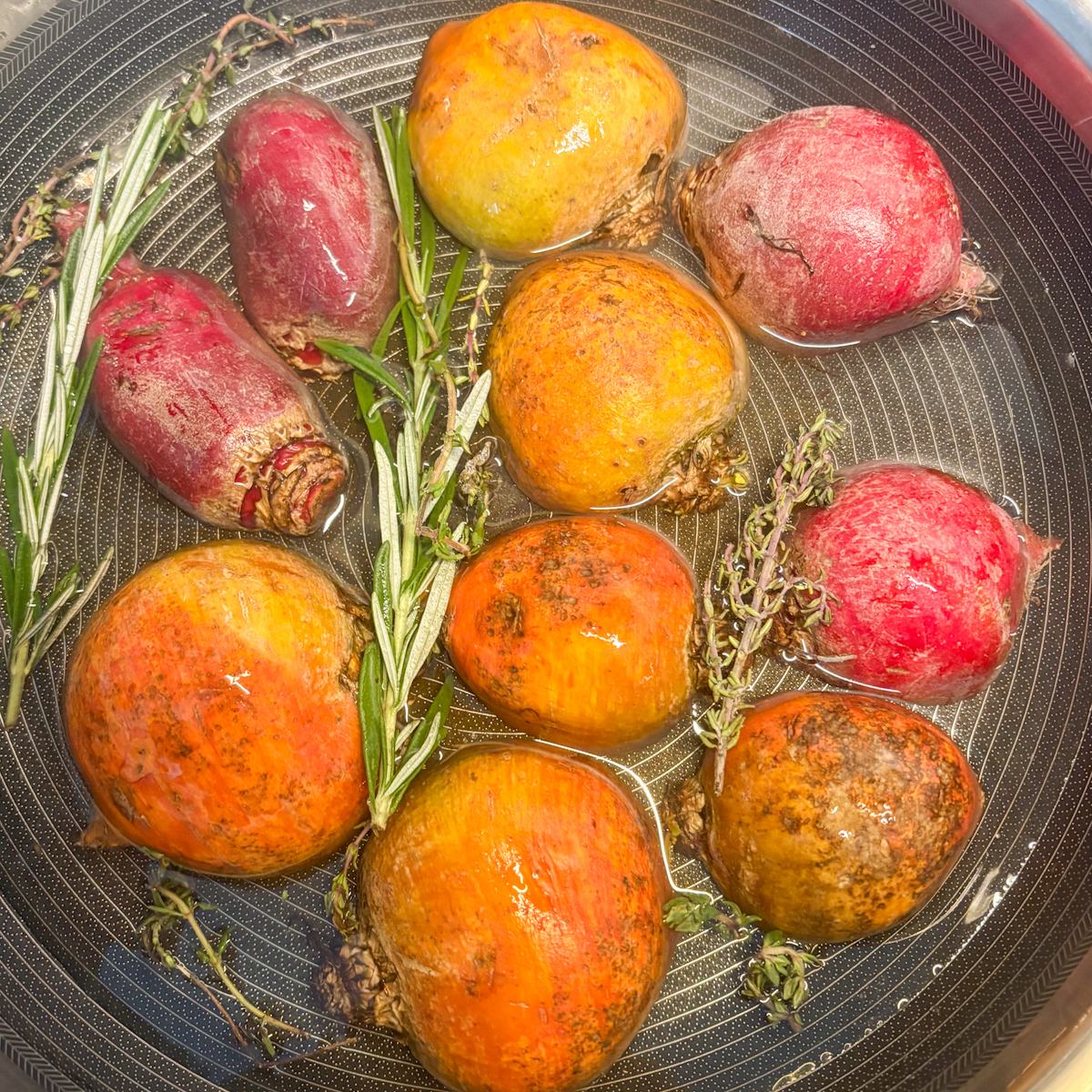
- Step 1: Take a large skillet with a tight-fitting lid. Cut each beetroot in half and arrange them cut-side down in the pan, in a single layer. Pour in the water, scatter the salt over the top, and bring it up to a steady boil over high heat. Lower the heat. Tuck the rosemary and thyme sprigs around the beetroot, cover with the lid, and simmer gently for 40 to 45 minutes. Test with a fork — it should slide in with a little resistance. The beetroot should feel soft but still hold its shape.
- Step 2: Move the beetroot to a plate to cool. Lift out the rosemary and thyme and discard. Turn the heat back to high and let most of the liquid evaporate, leaving 2 to 3 tablespoons in the pan. While the beetroot cools enough to handle, slip the skins off with your fingers and cut the flesh into wedges.
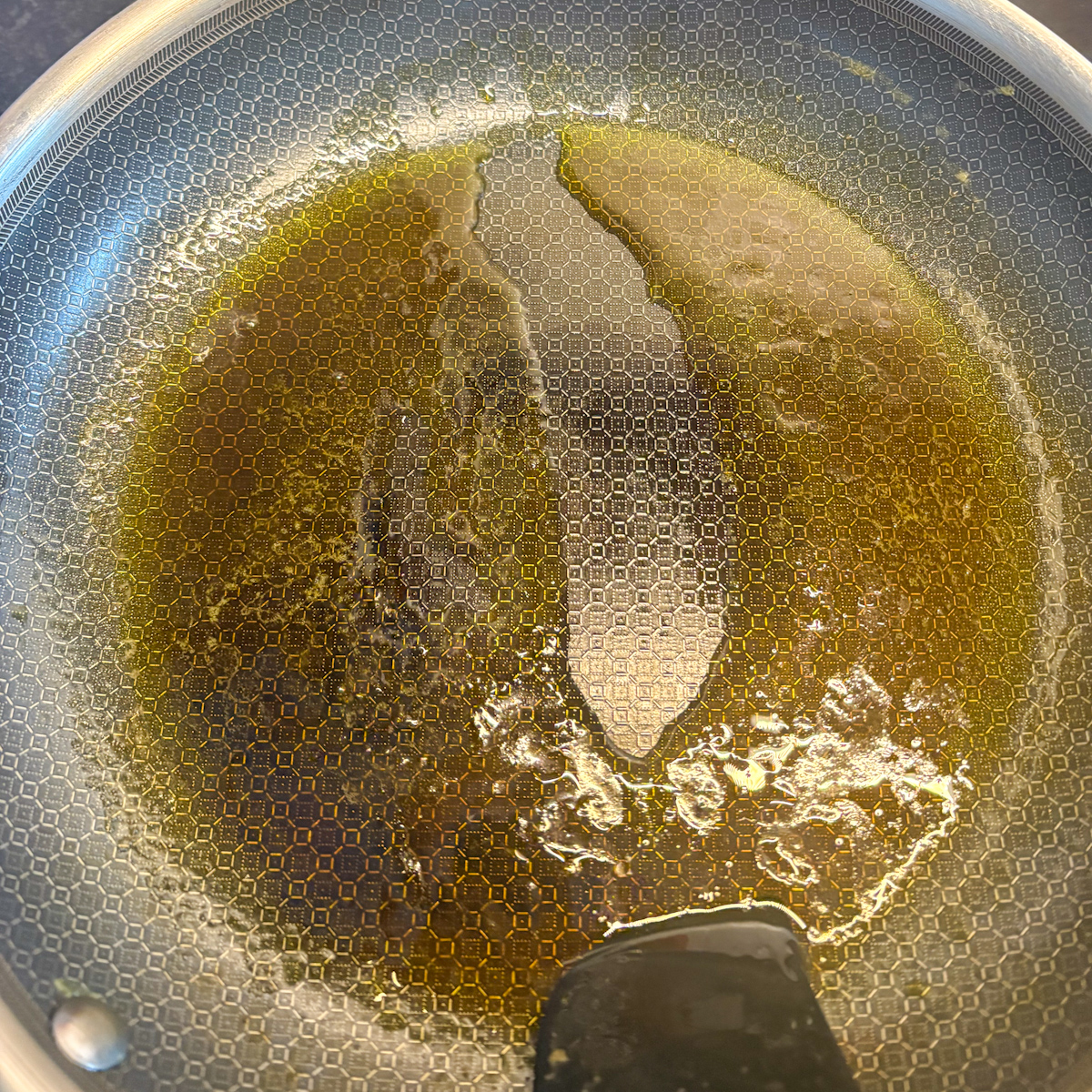
- Step 3: Add the vinegar, olive oil and sugar to the reduced liquid. Stir over the heat until the sugar dissolves and the glaze thickens — it's ready when a spatula leaves a wide, clean trail across the pan. Take it off the heat.
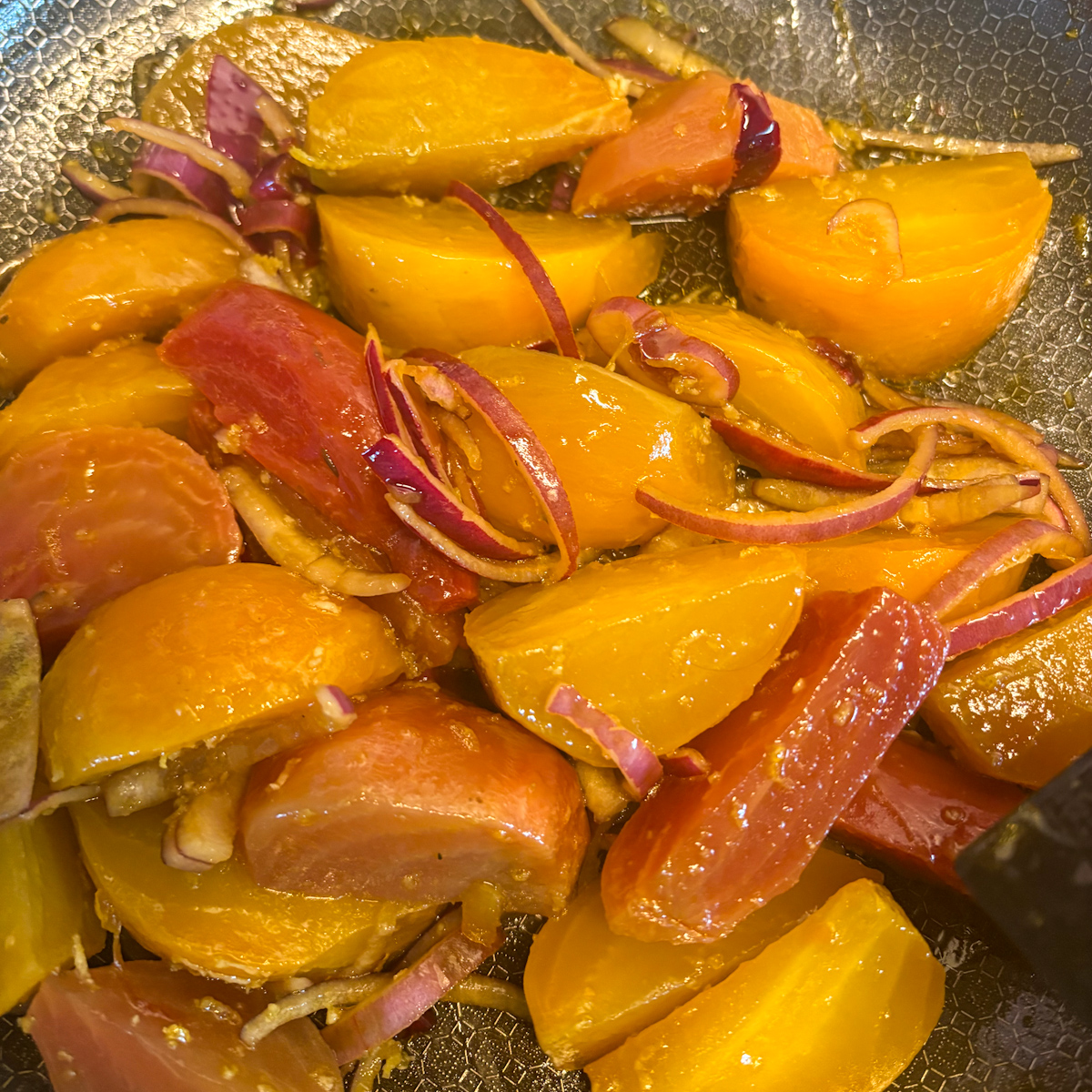
- Step 4: Add the beetroot wedges, sliced red onion, lemon zest, lemon juice and a generous crack of black pepper. Stir to coat. Taste, add a pinch more salt if needed, then tip onto a serving dish and scatter with flaked almonds.
How to Serve and How to Store Braised Beetroot
I serve braised beetroot warm or at room temperature — both work, though the glaze stays glossiest when warm. It pairs with roast chicken, slow-cooked lamb, pork belly, grilled mackerel or seared steak. For a vegetarian plate, sit it next to creamy goat's cheese, soft polenta or a peppery rocket salad. It also holds its own as part of a mezze spread with hummus, flatbreads and pickles.
Leftovers keep in an airtight container in the fridge for up to 3 days, and the flavour deepens overnight as the beetroot soaks up more of the glaze. To reheat, warm gently in a pan over low heat, or leave on the counter for half an hour to come back to room temperature. It is a great dish to take for work lunch or even for a picnic, as it keeps really well. I wouldn't freeze this one — beetroot holds a lot of water, and the texture turns soft and watery on thawing.
More Easy Vegetable Side Dishes to Try
If you enjoyed this braised beetroot, here are a few more simple sides on the blog worth a look.
- For a green side with bite, try this Easy Charred Broccolini Recipe with Toasted Garlic Almonds — quick, smoky and finished with the same flaked almond crunch.
- This Easy Pan-Steamed Asparagus Recipe with Garlic Butter, Lemon & Parmesan is another one-pan vegetable side, ready in about 10 minutes.
- For something more substantial, this Roasted Cauliflower Salad Recipe is healthy, hearty and on the table in 25 minutes.
- If you liked the braising method here, try this Slow-Braised Courgettes with Mint, Garlic & Chilli Recipe — same patient hob cooking, very different flavour.
- For a quick weeknight side, my Garlic Broccoli Recipe takes only minutes and pairs with most mains.
- For another simple roasted veg, try this Easy Roasted Aubergine Recipe with Olive Oil and Fresh Herbs — soft, herby and ready in under 30 minutes.
How Much Does It Cost to Make Braised Beetroot?
Beetroot is one of the cheapest vegetables you can buy, which makes this braised beetroot recipe genuinely budget-friendly.
- In the UK, a kilogram of fresh beetroot costs around £1.50–£2.00 at Tesco, Sainsbury's, Asda or Morrisons, with farmers' markets often cheaper for in-season bunches. The full recipe — beetroot, herbs, vinegar, oil, almonds — works out at roughly £3.50–£4.00 for four servings, which is under £1 per portion.
- In Ireland, expect to pay around €1.80–€2.50 per kilo at Tesco Ireland, Dunnes Stores, SuperValu, Aldi or Lidl.
- In the United States, fresh beets run higher at roughly $2.50–$3.50 per pound at Whole Foods, Trader Joe's, Walmart and most supermarkets, though local farmers' markets tend to be more affordable.
- In Australia, beetroot sits at around AUD $4–$6 per kilo at Woolworths and Coles.
- In Germany, prices land roughly at €1.80–€2.50 per kilo at REWE, Edeka, Aldi and Lidl.
Wherever you live, this remains one of the best-value vegetable side dishes on the table.
Top Tips and Notes for the Best Braised Beetroot
- Use a mix of colours when you can. Mixing red, golden and candy stripe beetroot makes a far prettier finished dish. The flavour stays similar across the colours, but the visual contrast — ruby red sitting next to golden yellow — turns this from a plain side dish into something worth serving to guests. Farmers' markets and farm shops are usually the best place to find them in the UK from late summer through autumn. Sainsbury's and Waitrose also stock mixed bunches in season.
- Don't peel the beetroot before cooking. Peeling raw beetroot is slow, messy and stains everything it touches. After braising, the skins slip off easily — usually with just your fingers, no peeler needed. Cooking with the skin on also keeps the colour and natural sweetness locked into the flesh, where you want it. If a few patches resist, a small paring knife will deal with them in seconds.
- Use a wide pan with a tight-fitting lid. A large skillet or shallow casserole works far better than a deep saucepan, because the beetroot need to sit in a single layer with the cut side down. That direct contact between cut surface and hot pan, with a small amount of water, gives an even, gentle cook. The lid is non-negotiable — without it, the water evaporates before the beetroot is tender, and you'll be topping up the pan halfway through. A heavy lid that traps the steam is ideal.
- Test for doneness with a fork, not a knife. A knife will slide through almost anything, even when it isn't fully cooked, so it gives a false read. A fork is more honest — it should go in with a little resistance, not slip through like butter. If the beetroot collapses around the fork, you've gone too far and the wedges will struggle to hold their shape later. If the fork bounces off, give them another 5 minutes with the lid on.
- Reduce the glaze until the spatula leaves a trail. This is the single most important moment in the whole recipe. Stir the glaze over high heat and watch the pan — when you drag a spatula through it and the line stays visible for a second or two before the glaze flows back, it's ready. Stop too early and the glaze is thin and watery on the beetroot; reduce too far and it seizes up the moment it cools. Run the trail test once and you'll know it for life.
- Use the herbs whole, not chopped. Whole sprigs of rosemary and thyme infuse the cooking liquid slowly and evenly, and they're easy to lift out before you make the glaze. Chopped herbs release flavour too quickly and leave little needles and leaves stuck through every wedge of beetroot, which isn't what you want. Keep the herbs in whole sprigs, let them work, and discard them before the glaze stage. The herb perfume stays in the pan even after they've gone.
Braised Beetroot Recipe — Frequently Asked Questions
Can I use pre-cooked vacuum-packed beetroot?
You can, but the result is different. Pre-cooked beetroot is already soft, so you'd skip the simmering step and go straight to the glaze. The texture turns slightly wetter and softer than freshly braised beetroot, and the flavour is flatter because they haven't cooked alongside the herbs. It's a fair shortcut on a busy night, but fresh is always the better version.
How long does braised beetroot keep in the fridge?
Stored in an airtight container, it keeps well for up to 3 days. The vinegar in the glaze actually helps preserve it, and the flavour develops nicely overnight as the beetroot soaks up more of the glaze. Bring it back to room temperature or warm it gently before serving — straight from the fridge it tastes muted.
What's the difference between braising and roasting beetroot?
Roasting uses dry heat, which concentrates the sugars and gives a slightly caramelised edge to the flesh. Braising uses a small amount of liquid and gentle heat, which keeps the flesh moist and lets it absorb the herb flavour from the cooking liquid. Braising is also faster and uses one pan instead of an oven tray plus foil. Both methods are good — they just give different results.
Why are my beetroot still tough after 45 minutes?
The most likely cause is that they're larger than medium, or the simmer was too gentle for the heat to get all the way through. Check the water level — if it has evaporated, top it up with a splash of hot water from the kettle, replace the lid, and keep going. A larger beetroot can need an extra 15 to 20 minutes. A poorly fitting lid also slows things down because the steam escapes.
Can I make braised beetroot ahead of time?
Yes — this is one of those side dishes that's better the next day. Make it up to 2 days ahead, keep it covered in the fridge, then warm it gently in a pan or bring it back to room temperature before serving. The glaze firms up in the fridge but loosens again as soon as it warms. It's a useful one for dinner-party prep.
How do I stop my hands from staining when peeling beetroot?
Wear thin disposable gloves if you have them — that's the easiest fix. If you don't, give your hands a quick rub with lemon juice and salt straight after peeling, then wash with warm soapy water. Pink fingers are temporary and fade within a day. Wooden boards and tea towels are harder to clean, so keep an old chopping board for beetroot work if you can.
Related
Looking for other recipes like this? Try these:
- Budget-Friendly Pearl Barley with Mushrooms
- Summer Peas with Bacon and Ricotta (Hot or Cold)
- Easy Chickpeas in Tomato Sauce Recipe (Budget-Friendly Struggle Meal)
- Easy Roasted Turnips Recipe with Herbs and Olive Oil
Pairing
These are my favorite dishes to serve with braised beets:
- Baked Mediterranean Meatballs with Roasted Vegetables Recipe
- How to Cook Pan-Fried Chicken Cutlets with Basil
- Mussel Pasta in Creamy Garlic Butter Sauce
- Herb Butter Roast Chicken with Crispy Golden Skin

Easy Braised Beetroot with Herbs and Almonds
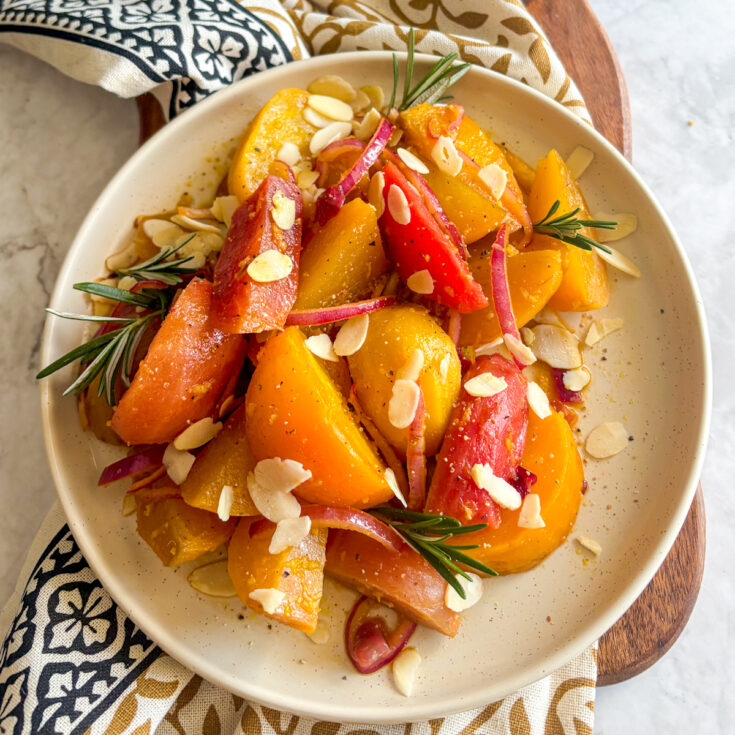
Braised beetroot is a one-pan side dish made with fresh beetroot simmered in rosemary and thyme, then tossed in a sticky white wine vinegar glaze with red onion, lemon and flaked almonds. Easy, healthy and ready in under an hour. Naturally vegan and gluten-free, with deep earthy flavour and a sweet-and-tangy finish.
Ingredients
- 5–6 medium beetroot, about 800 g (1¾ lb), mixed colours if available
- 200 ml (¾ cup) water
- 1 teaspoon sea salt
- 3–4 fresh rosemary sprigs
- 3–4 fresh thyme sprigs
- 3 tablespoon white wine vinegar
- 2 tablespoon olive oil
- 1 tablespoon golden caster sugar (or soft brown sugar)
- 1 medium red onion, very thinly sliced
- 1 teaspoon grated lemon zest
- 1 teaspoon lemon juice
- Freshly ground black pepper, to taste
- 30 g (¼ cup) flaked almonds, for serving
Instructions
- Halve the beetroot. Place a large skillet with a tight-fitting lid over high heat. Arrange the beetroot cut-side down in a single layer, pour in the water and add the salt, then bring to the boil.
- Lower the heat. Tuck the rosemary and thyme sprigs around the beetroot, cover with the lid, and simmer gently for 40 to 45 minutes, until a fork slides in with a little resistance. Top up with a splash of hot water if the pan starts to run dry.
- Lift the beetroot onto a plate to cool. Discard the herbs. Turn the heat back to high and reduce the cooking liquid until only 2 to 3 tablespoons remain. While the beetroot cools, slip the skins off with your fingers and cut the flesh into wedges.
- Add the vinegar, olive oil and sugar to the reduced liquid. Stir over the heat until the sugar dissolves and the glaze thickens — it's ready when a spatula leaves a clear trail across the bottom of the pan. Take off the heat.
- Add the beetroot wedges, sliced red onion, lemon zest, lemon juice and a generous crack of black pepper. Stir to coat. Taste and add a pinch more salt if needed.
- Tip onto a serving dish and scatter with flaked almonds. Serve warm or at room temperature.