

Oladi pancakes are small, thick Russian pancakes made on a warm kefir batter, ready in under 30 minutes. They are airy, soft inside, golden brown on the edges, and built from six simple pantry ingredients you almost certainly have at home.
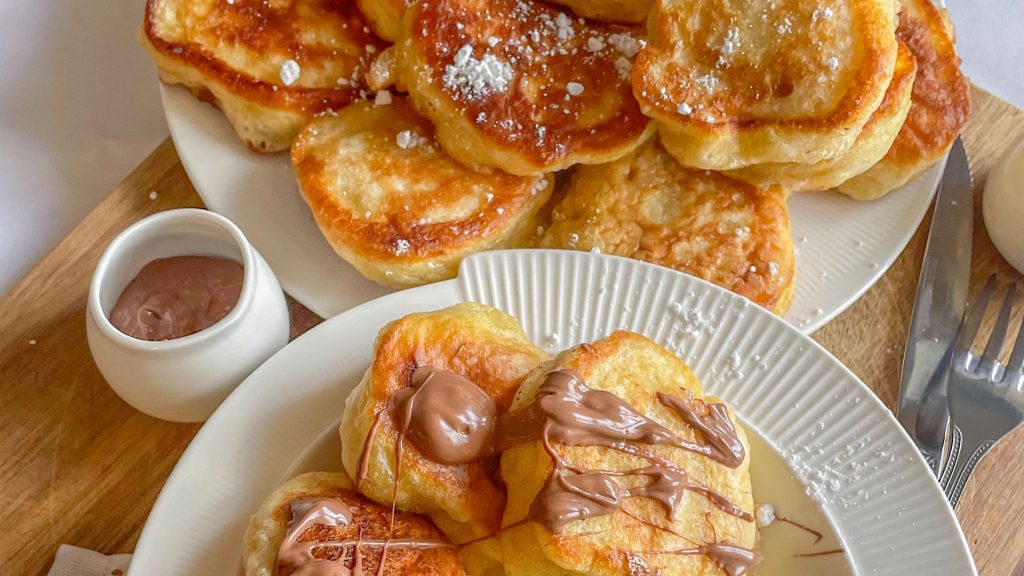
This is the recipe I grew up with, and the one my family still asks for on slow weekend mornings. The kefir does most of the work — it reacts with the bicarbonate of soda and gives the batter that light, porous crumb you simply cannot get from regular milk. No yeast, no waiting around, no fancy equipment.
You whisk the batter, rest it for fifteen minutes, then fry the oladi pancakes in a shallow layer of oil and serve them hot with sour cream, jam, or honey. The texture is what sets them apart from American-style pancakes — small, tall, slightly chewy on the outside, soft and pillowy in the middle. Once you make them properly, you'll understand why every household across Russia, Ukraine, and Belarus has its own version of this dish.
What Are Oladi Pancakes?
Oladi pancakes are a traditional staple of Russian, Ukrainian, and Belarusian home cooking. The word "oladi" is the standard plural form, while "oladushki" is the affectionate diminutive — the same way we'd say "little pancakes" in English. Both words describe the exact same dish, and you'll often see them written together as oladi (oladushki) in older recipes. The Ukrainian oladi recipe and the Russian one are essentially identical; this is a shared Eastern European breakfast tradition.
These small thick Russian pancakes are completely different from blini. Blini are large, thin, and made from a runny batter — closer to a French crepe. Oladi are smaller, much fluffier, and the batter is thick enough to hold its shape on the pan. They sit somewhere between a pancake and a fritter, fried in a shallow layer of oil until the edges go crispy and the centre stays pillowy soft.

Why This Easy Oladi Recipe Works
The kefir-soda reaction is the whole secret behind fluffy oladi pancakes. Kefir is a fermented milk drink, slightly tangy, and naturally acidic. When you sift bicarbonate of soda into a warm kefir batter, the acid activates the soda straight away. You'll see bubbles forming on the surface within seconds, and the batter will lighten and grow. That's what gives the oladi their signature airy, porous crumb.
The other thing that makes this easy oladi recipe reliable is temperature. Cold kefir straight from the fridge slows everything down. Warm kefir, a room-temperature egg, and a properly hot pan — that's the trio you need. Get those three things right and the pancakes turn out fluffy every single time.
Ingredients for Fluffy Oladi Pancakes
Here is what you need to make these traditional Russian kefir pancakes at home:
- Kefir — the heart of the recipe. It needs to be warm, not hot, so the soda reacts properly and the batter thickens to the right consistency.
- Egg — adds structure and richness. Use a room-temperature egg; a cold one will lower the temperature of the batter and slow the rise.
- Plain flour — gives the body. The exact amount varies depending on how thick your kefir is, so add it gradually rather than all at once.
- Caster sugar — a small amount for balance. Oladi pancakes are not a sweet pancake; the sugar is there to take the edge off the kefir's tang.
- Salt — sharpens the flavour and balances the sugar.
- Bicarbonate of soda — the only raising agent in the recipe. Sifted in at the end, it reacts with the kefir and lifts the batter.
- Vegetable oil — for shallow frying. A neutral oil like sunflower works best because it won't compete with the flavour of the pancakes.
How to Make Oladi Pancakes — 4 Easy Steps
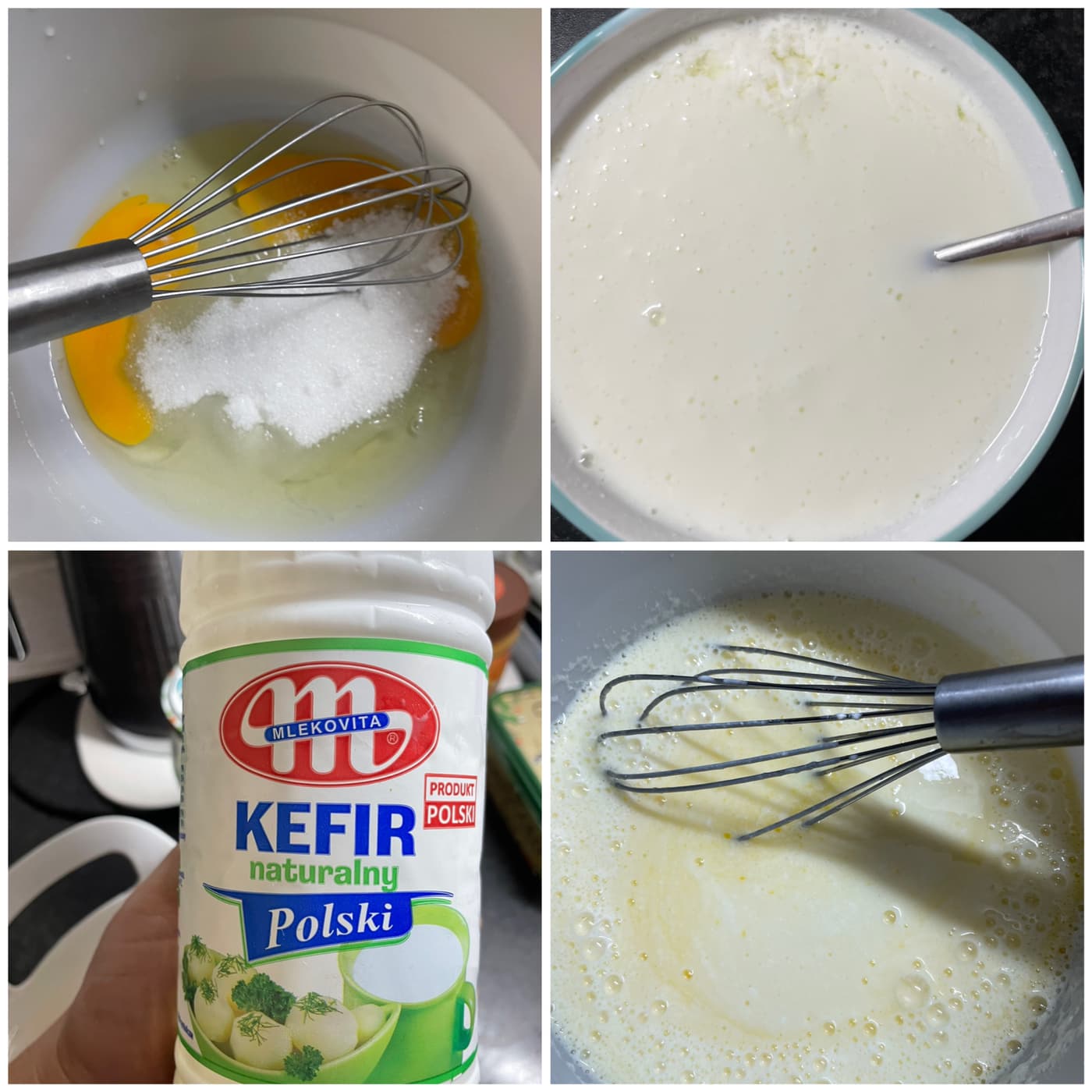
Step 1. In a large bowl, beat the egg with the sugar and a pinch of salt until the sugar dissolves and the mixture looks pale and smooth.
Step 2. Pour the kefir into a microwave-safe cup and warm it in three short bursts of 30 seconds, stirring between each one. It should be warm to the touch and you'll see the whey starting to separate slightly. Pour the warm kefir into the egg mixture in stages, whisking as you go.
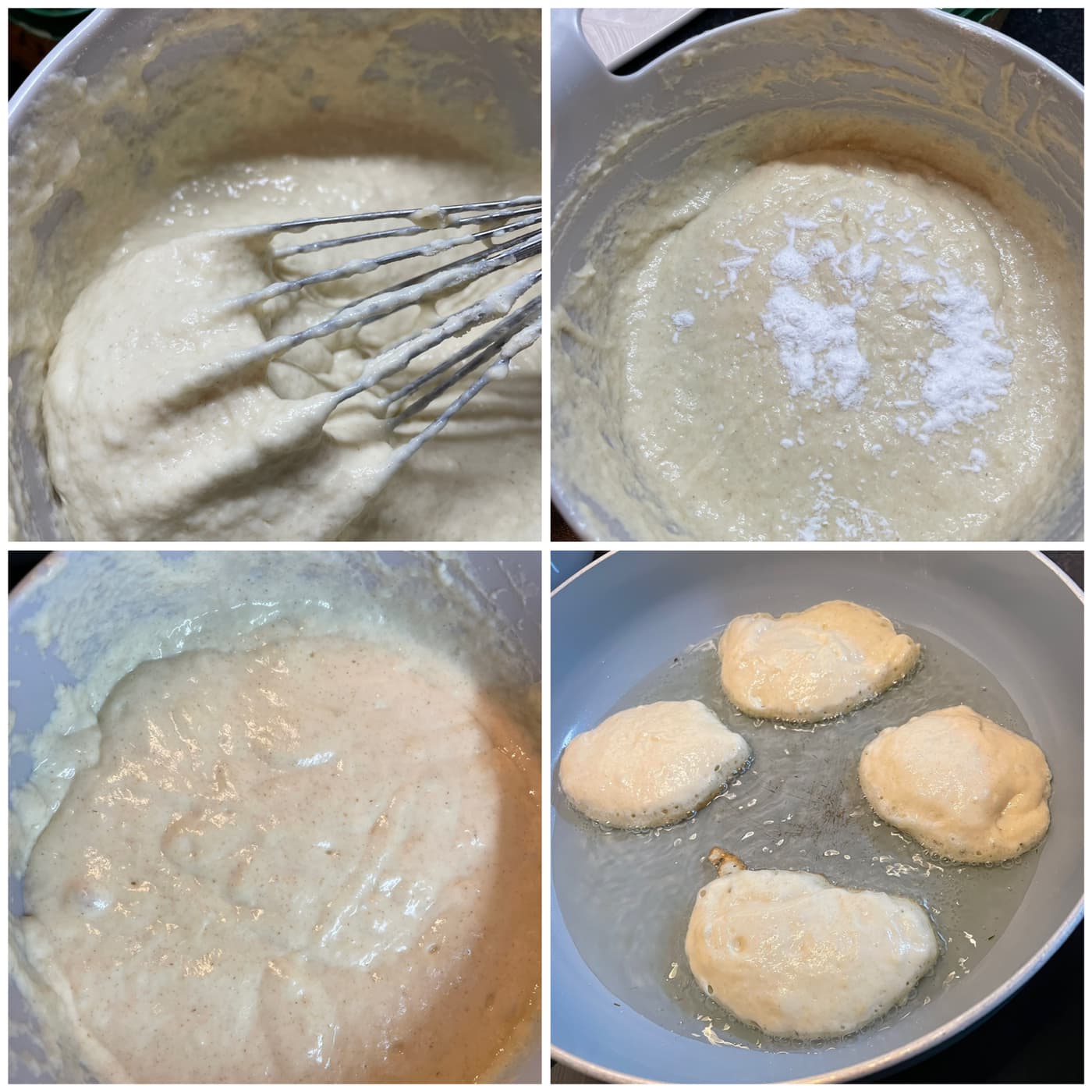
Step 3. Add the flour two tablespoons at a time, whisking in one direction. The batter should be thick, smooth, and homogeneous — somewhere between Greek yoghurt and a soft dough. The exact amount of flour depends on the kefir, so trust your eyes rather than the scales.
Step 4. Sift the bicarbonate of soda over the batter and mix briskly for a few seconds — no longer. You'll see bubbles rising immediately. Rest the batter for 10 to 15 minutes without stirring it again. Heat 3-4 tablespoons of oil in a frying pan over medium heat, scoop the batter from the edge of the bowl with a spoon (never the middle), drop it onto the pan, and fry until the bottom is golden brown and bubbles appear on the surface. Flip the pancakes and fry the other side. Drain the cooked oladi pancakes on kitchen paper before serving.
How to Serve and Store Oladi Pancakes
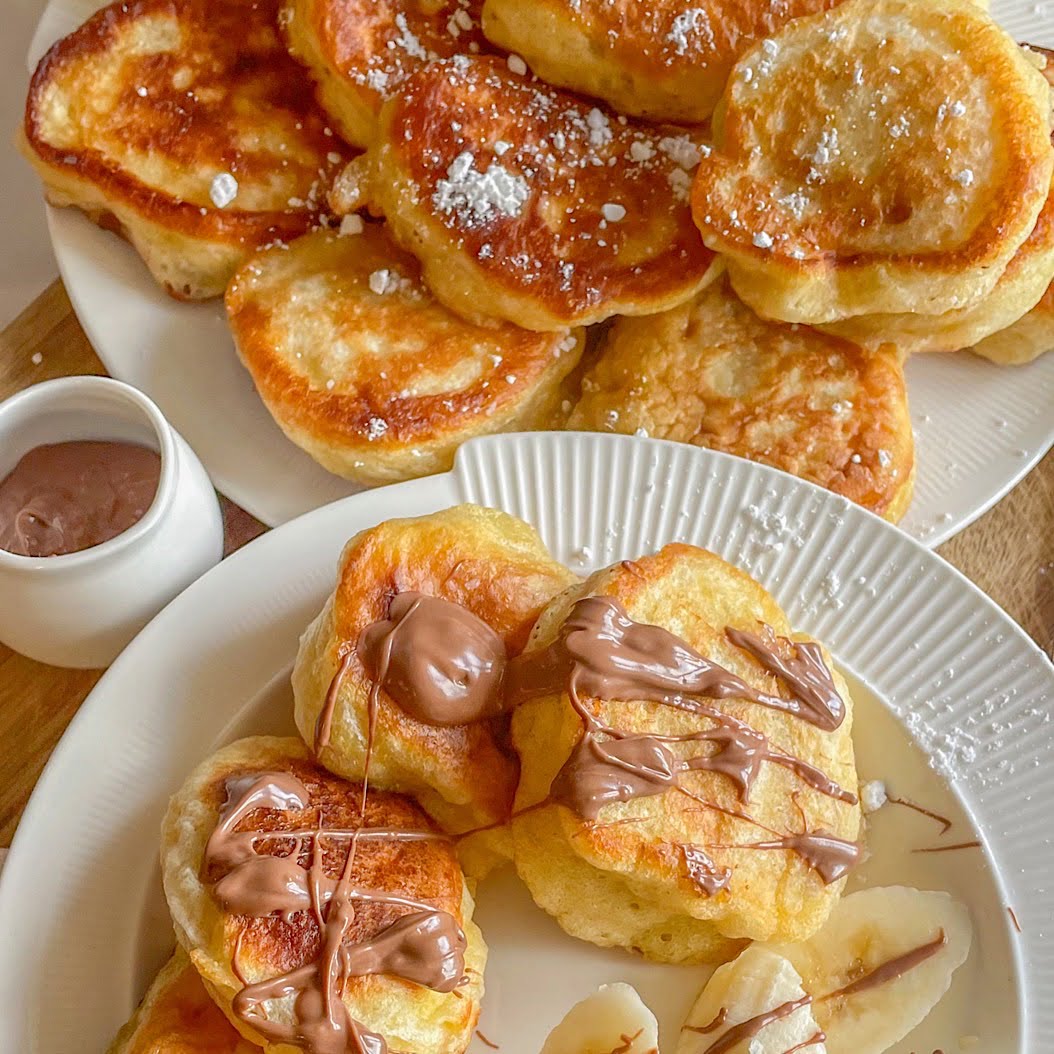
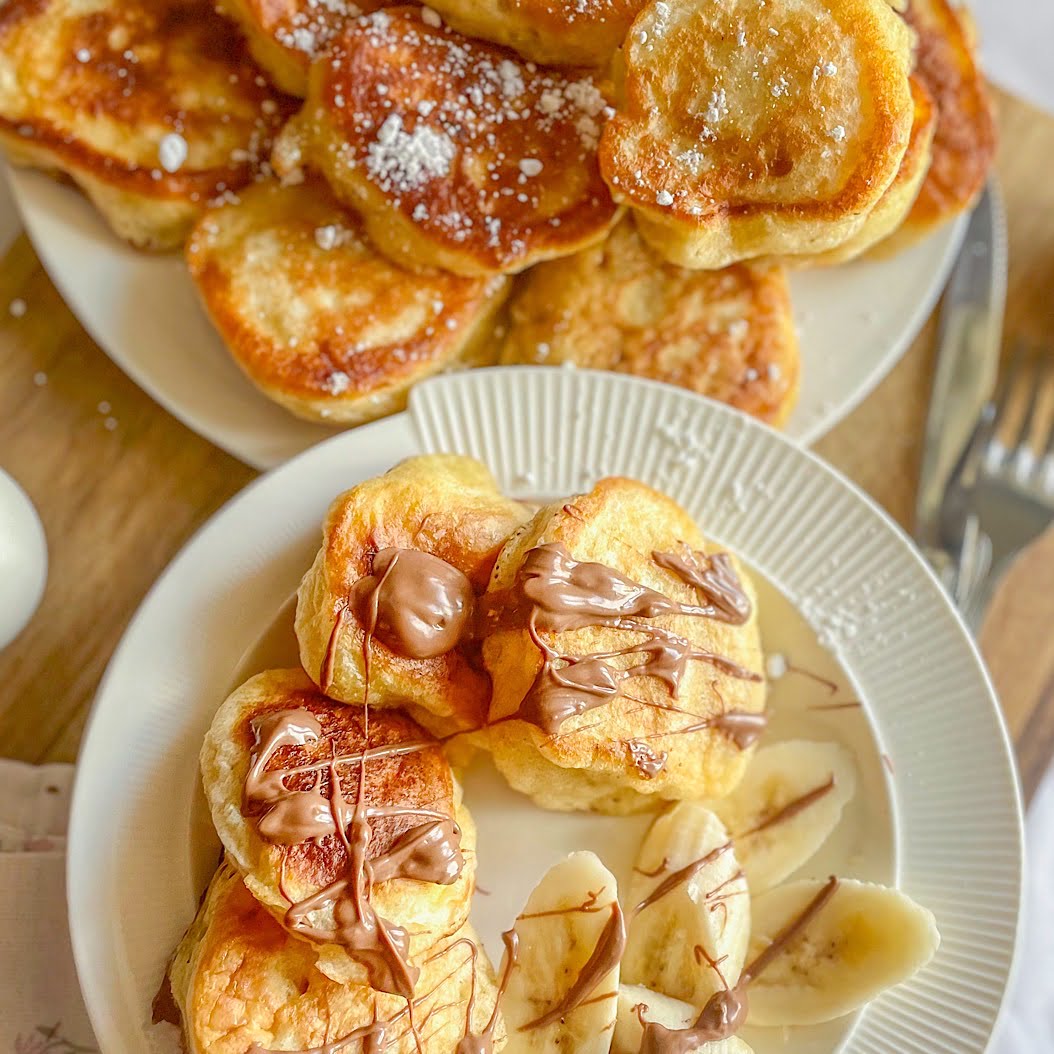
Serve oladi pancakes hot, straight from the pan. The classic combination is a generous spoonful of cold sour cream and a drizzle of honey or sweetened condensed milk, with a small jar of fruit jam — cherry, blackcurrant, or apricot — on the side. In our house there's always a pot of strong black tea on the table at the same time. These pancakes also stay airy as they cool, so they work just as well at room temperature for a packed breakfast or an afternoon snack. Oladi pancakes with sour cream is the most authentic way to eat them, but if you want something more modern, try them with chocolate spread, fresh berries, or sliced banana.
Leftover oladi pancakes keep well in an airtight container in the fridge for up to 3 days. To reheat, warm them in a dry pan for a minute on each side, or in the oven at 160°C for 5 minutes. The microwave works in a pinch, though you'll lose the crispy edges. They freeze beautifully too — layer between sheets of baking paper, freeze flat, then transfer to a freezer bag. Defrost at room temperature and warm through in a pan before serving.
Other Recipes You Might Like
If you enjoyed making these oladi pancakes, here are a few more breakfast recipes from the blog you might want to try next.
- For a creamy, lemony alternative, have a go at my The Best Ricotta Pancakes Recipe - soft, light pancakes with a delicate texture from fresh ricotta cheese.
- If you're in the mood for something richer, try my Brioche French Toast: The Best French Toast Recipe - buttery brioche soaked in vanilla custard and pan-fried until golden.
- Another classic worth bookmarking is my Homemade Buttermilk Pancakes Recipe - fluffy American-style pancakes that are the closest cousin to oladi.
- For weekend brunch hosting, my French Toast Croissant Casserole Recipe is a winner - flaky croissants baked in a sweet custard until set.
- And if you're trying to use up the bread bin, my Cheapskate's French Toast with Stale Buns turns yesterday's buns into a proper breakfast for almost no money.
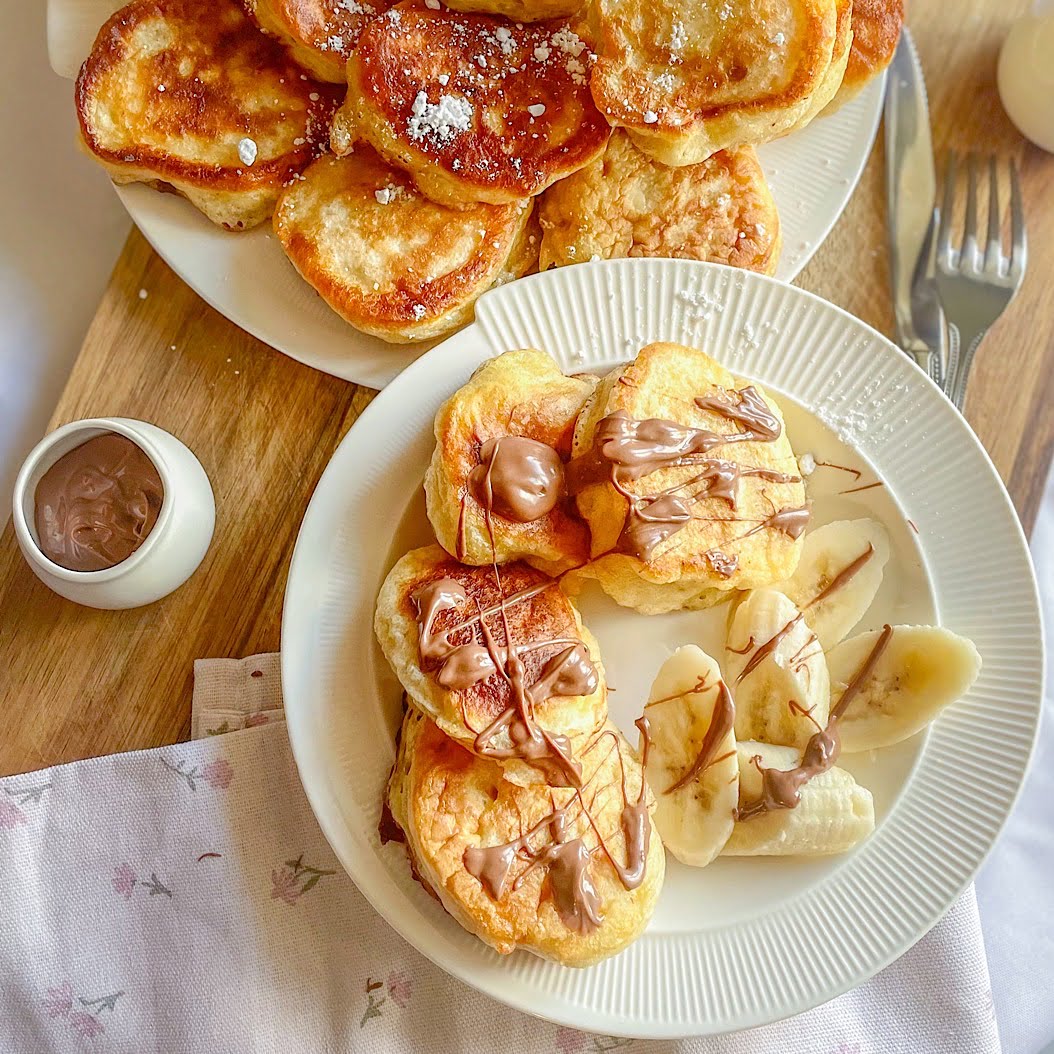
10 Tips for the Best Oladi Pancakes
1. Use warm kefir, never cold. Cold kefir slows the reaction with the bicarbonate of soda and produces flat, dense pancakes. Pour the kefir into a microwave-safe cup and heat in three 30-second bursts, stirring between each one. You're aiming for warm, not hot — too much heat will curdle the kefir and partially cook the egg later. Warm kefir is the single most important detail for fluffy oladi pancakes.
2. Bring the egg to room temperature. A cold egg straight from the fridge will lower the temperature of the batter and stop the soda from reacting properly. Take it out an hour ahead, or sit it in a bowl of warm water for ten minutes before you start. This small step makes a real difference to how high your pancakes rise. Room-temperature ingredients across the board is the quiet rule of every fluffy Russian oladi recipe.
3. Add the flour gradually, not all at once. Different brands of kefir have different thicknesses, and the same goes for flour. Add two tablespoons at a time, whisking after each addition, and stop when the batter feels thick and viscous. If you tip everything in at once, you risk a runny or overly stiff mixture, both of which give poor results. Trust the consistency, not the exact gram weight on the recipe card.
4. Whisk in one direction. This sounds like an old wives' tale, but it genuinely helps. Whisking in one direction develops a smooth, even texture without breaking down the air pockets you're trying to build. Switching back and forth knocks the air out and leaves you with a flatter pancake. It's the kind of tip a babushka would tell you, and it actually works.
5. Sift the bicarbonate of soda — don't tip it in. Sifting spreads the soda evenly across the surface of the batter so it activates uniformly. If you dump it in one spot you'll get patches of bitter, soapy taste and uneven rising. Use a fine sieve and tap it gently over the bowl. This is the small detail that separates good oladi pancakes from great ones.
6. Mix the soda in quickly, then stop. The kefir-soda reaction starts the moment they meet. Mix briskly for about ten seconds to spread it through the batter, then leave it alone. Over-mixing pops the bubbles you've just created and you'll be back to square one. Less is genuinely more here.
7. Rest the batter for 10 to 15 minutes — and don't stir it again. This rest period lets the flour hydrate fully and allows the gas bubbles to spread evenly through the mixture. After the rest, the batter is alive and working for you. Stirring it again deflates everything and undoes the rise. Just leave the bowl alone, set a timer, and walk away.
8. Use enough oil and keep the pan properly hot. Oladi are shallow-fried, not dry-cooked. You need 3-4 tablespoons of oil in the pan, and the pan needs to be hot enough that the batter sizzles the moment it lands. If the oil is cool, the pancakes will absorb it and turn greasy instead of crisping up. Top the oil up between batches as needed.
9. Scoop the batter from the edge of the bowl, never the middle. The middle of the bowl is where the air bubbles have settled and risen the most. Scooping from there flattens the batter and gives you denser pancakes. Slide your spoon down the side of the bowl, lift gently, and drop straight onto the pan. Use a teaspoon or wet finger to nudge the batter into shape if needed.
10. Cook on medium heat, not high. High heat burns the outside before the inside has a chance to cook through. Medium heat gives you that even golden brown crust and a fully cooked, soft middle. Add a little more oil between batches and adjust the heat down if the pan starts running too hot. Patience here is the difference between fluffy and burnt.
Oladi Pancakes FAQ
What are oladi pancakes?
Oladi pancakes are small, thick Russian pancakes made with kefir and a small amount of bicarbonate of soda as a raising agent. They sit somewhere between an American pancake and a fritter — fluffy and soft inside, crispy on the edges from being shallow-fried in oil. They are a traditional staple of Russian, Ukrainian, and Belarusian breakfasts and are usually served with sour cream, jam, or honey.
What's the difference between oladi vs blini?
Blini are thin, large, crepe-like pancakes made from a runny batter, often served with smoked salmon, caviar, or jam. Oladi are smaller, much thicker, and fried in more oil so they puff up. The two are completely different dishes, although both belong to the same Eastern European pancakes tradition.
Can I use buttermilk instead of kefir?
Yes, buttermilk is the closest substitute and works very well in this recipe. The acidity is similar, so the reaction with the baking soda will still produce a light, fluffy pancake. The flavour will be slightly less tangy than with kefir, but the texture will be almost identical.
Why are my oladi flat?
Flat oladi usually come down to one of three things: cold kefir, an over-mixed batter, or a pan that wasn't hot enough. Make sure the kefir is warm before you add the soda, mix it through quickly without overworking the batter, and rest it without stirring again. Drop the batter onto a properly hot, oiled pan and you'll get a proper rise.
Can I make the oladi batter ahead of time?
No, this is one of those batters that has to be cooked straight after resting. The bicarbonate of soda starts reacting the moment it hits the kefir, and after about 30 minutes most of the gas has escaped. If you want to prepare ahead, mix the wet and dry ingredients separately and combine them just before frying.
Can I freeze cooked oladi pancakes?
Yes, they freeze well for up to 2 months. Cool them completely, then layer between sheets of baking paper and freeze flat in a single layer before transferring to a freezer bag. Reheat from frozen in a 160°C oven for 8-10 minutes, or defrost in the fridge overnight and warm through in a dry pan.
Why does my batter need to rest?
Resting allows the flour to fully hydrate and gives the gluten time to relax, which makes the pancakes more tender. It also gives the bubbles from the kefir-soda reaction time to spread evenly through the batter. Skipping the rest gives you a heavier, less consistent pancake every time.
Oladi Pancakes — Fluffy Russian Kefir Pancakes
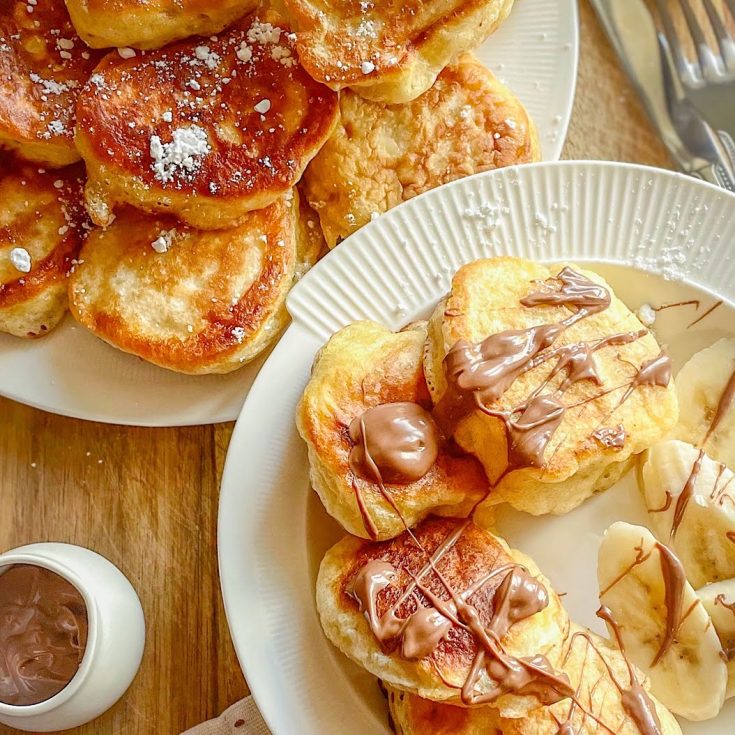
Oladi pancakes are small, thick Russian pancakes made on a warm kefir batter, ready in under 30 minutes. Light, airy, and golden brown with crispy edges, they are made from six simple pantry ingredients. The traditional kefir-and-soda combination gives them their signature pillowy texture without yeast or long resting times.
Ingredients
- 250 ml kefir (1 cup), warmed
- 1 egg, room temperature
- 220-240 g plain flour (1¾ – 2 cups)
- 2 tablespoons caster sugar
- pinch of salt
- ½ teaspoon bicarbonate of soda
- vegetable oil, for frying
Instructions
- In a large bowl, beat the egg with the sugar and a pinch of salt until the sugar dissolves and the mixture looks pale and smooth.
- Pour the kefir into a microwave-safe cup and heat in three 30-second bursts, stirring between each one. The kefir should be warm to the touch and you should see the whey starting to separate slightly. Pour the warm kefir gradually into the egg mixture, whisking constantly.
- Add the flour two tablespoons at a time, whisking in one direction. The batter should be thick, smooth, and homogeneous — somewhere between Greek yoghurt and a soft dough. The amount of flour can vary slightly depending on the kefir, so adjust to consistency.
- Sift the bicarbonate of soda over the batter and mix briskly for about ten seconds — no longer. Bubbles will start appearing straight away as the kefir reacts with the soda.
- Rest the batter for 10 to 15 minutes without stirring it again. This lets the flour hydrate and the gas bubbles spread evenly.
- Heat 3-4 tablespoons of vegetable oil in a frying pan over medium heat. Scoop the batter from the edge of the bowl with a spoon, drop it onto the hot pan, and shape with a teaspoon or a wet finger if needed.
- Fry until the bottom is golden brown and bubbles appear on the surface, about 2-3 minutes. Flip and fry the other side for another 2 minutes. Top up the oil between batches as needed.
- Place the cooked pancakes on a paper towel to absorb the excess oil. Serve hot with sour cream, honey, sweetened condensed milk, jam, and a pot of strong tea.

[…] In Russia and many Slavic countries, millet porridge is a breakfast favourite, especially among children. Many people grew up eating it before school, often topped with a generous spoonful of butter, honey, or jam. It’s one of those nostalgic dishes that instantly bring back memories of childhood, warm kitchens, and family traditions. Whether served plain or with sweet additions, Russian Millet Porridge has been a go-to morning meal for centuries, loved for its comforting taste and nourishing qualities. If you want to try another great dish from our childhood, then try those Oladushki! […]