
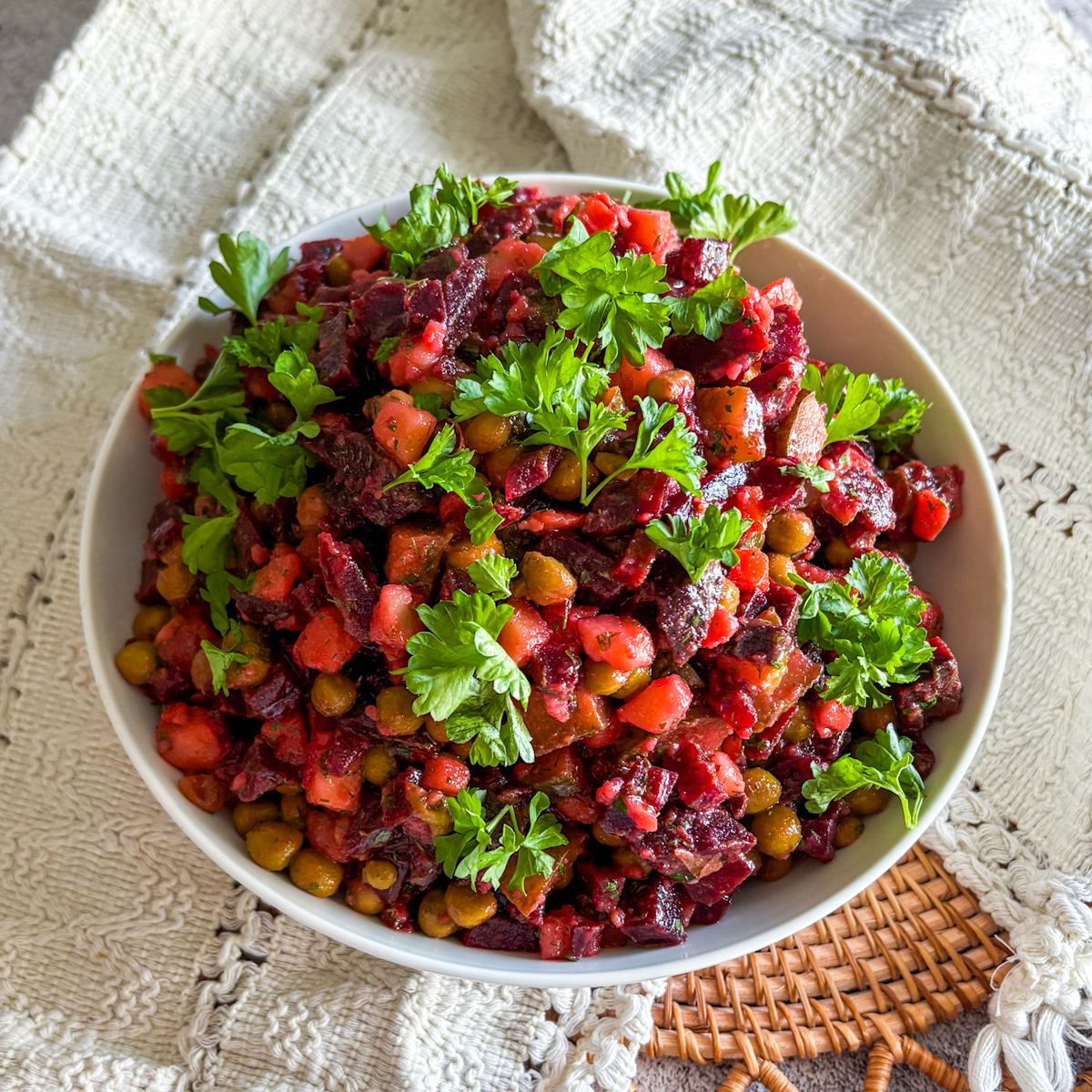
Vinaigrette salad is a traditional Russian beetroot salad packed with boiled root vegetables, tangy pickles and a silky mustard dressing. This easy vinaigrette salad recipe is ready in under an hour, budget-friendly and naturally vegan.
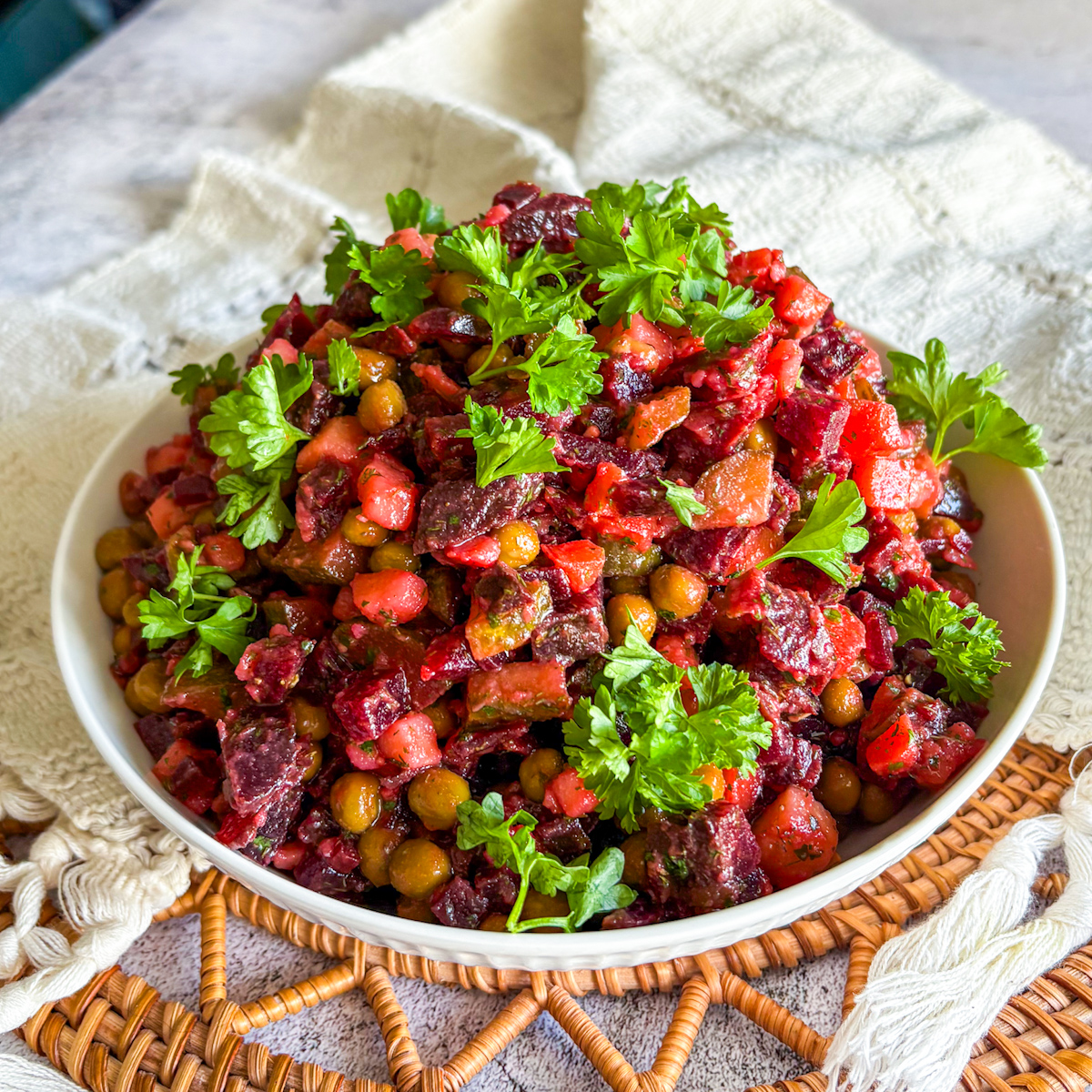
I have been making this vinaigrette salad for years, and it never lets me down. It is the sort of dish I grew up eating at family gatherings, and the flavour only gets better after a night in the fridge. The vegetables are hearty, the dressing is tangy and bright, and the colour alone makes the bowl look festive on any table. You get a proper chunky texture from the diced beetroot, potatoes and carrots, plus a lovely pop from the sweet peas and pickled cucumbers. It is the kind of recipe you make once and then keep on repeat all winter long, especially when you want something wholesome that feeds a crowd without much fuss.
Jump to:
- Ingredients for Authentic Russian Vinaigrette Salad Recipe
- How to Make Russian Vinaigrette Salad – Step by Step
- How to Serve and Store Vinaigrette Salad
- Useful Tips and Notes to Make the Best Vinaigrette Salad
- FAQ About Vinaigrette Salad
- Related
- Pairing
- Vinaigrette Salad Recipe (Classic Russian Beetroot Salad)
Ingredients for Authentic Russian Vinaigrette Salad Recipe
Here is what you need to make this traditional Russian beetroot salad recipe at home.
- Cooked beetroot – the heart of this salad, giving it that deep crimson colour and earthy, slightly sweet flavour. I use pre-cooked beetroot to save time.
- Potatoes – boiled with their skins on, they add a soft, starchy bite that balances the tang of the dressing.
- Carrots – boiled whole for a gentle sweetness and a lovely orange contrast against the beetroot.
- Canned sweet peas – they bring a soft, sweet pop and a bit of colour variation. Tinned peas are traditional here.
- Pickled cucumbers – these add the crunchy, tangy note that makes this salad sing. Gherkins work perfectly.
- Mustard – the backbone of the dressing, giving it bite and body.
- Garlic – minced finely to add warmth and depth without overpowering the other flavours.
- Olive oil – the base of the dressing, keeping everything silky and well-coated.
- White wine vinegar – a splash of acidity to lift the whole bowl and balance the sweetness of the root vegetables.
- Dried dill – a classic pairing with beetroot and pickles, giving that familiar Eastern European flavour.
- Sea salt and fresh ground black pepper – to season everything properly.
- Fresh parsley – scattered over the top before serving for a bit of green and freshness.
How to Make Russian Vinaigrette Salad – Step by Step
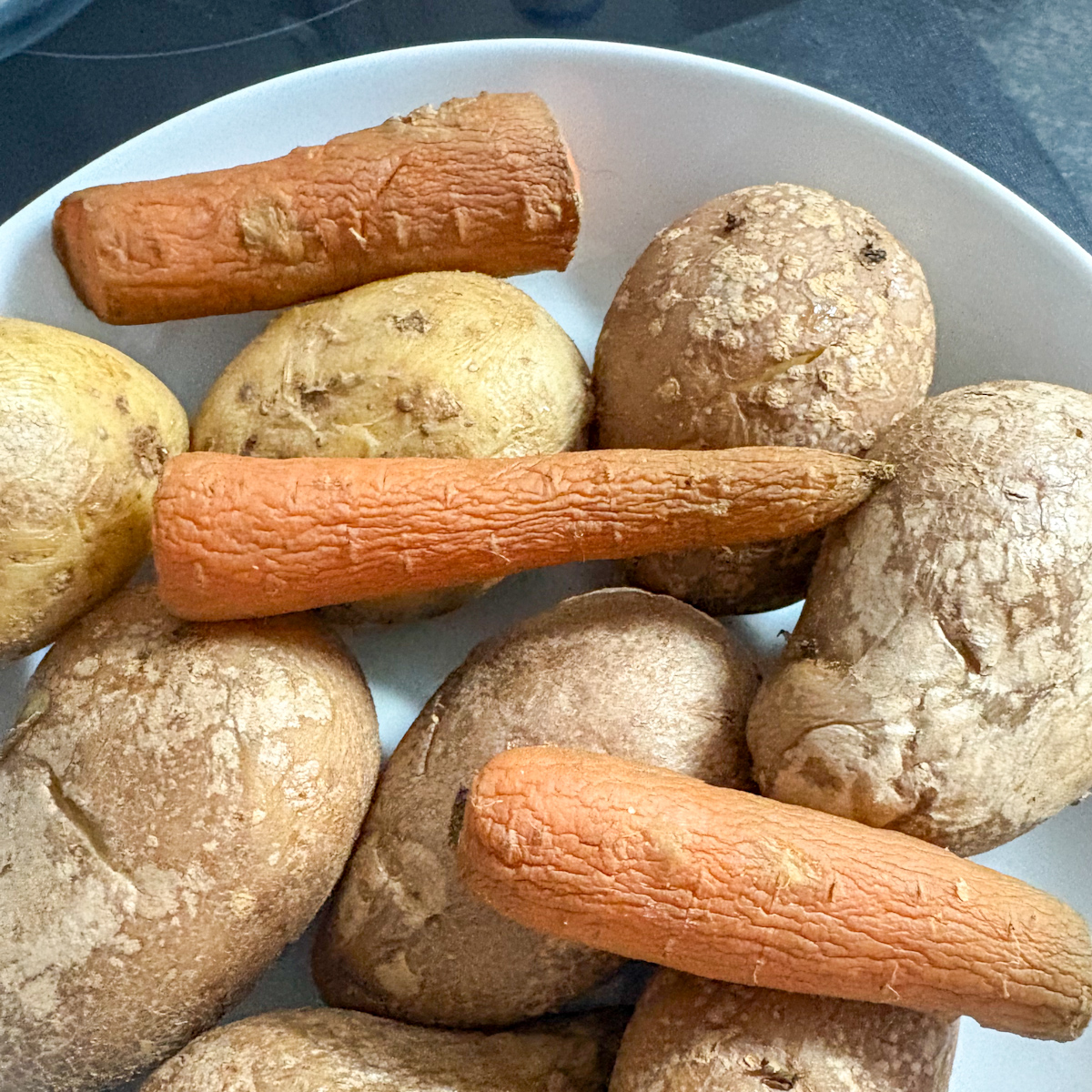
- Step 1: Boil the potatoes and carrots in their skins until tender, then drain and leave them to cool completely. I always use pre-cooked beetroot from a pack because it saves time and keeps the kitchen clean. Once the potatoes and carrots are cool enough to handle, peel them.
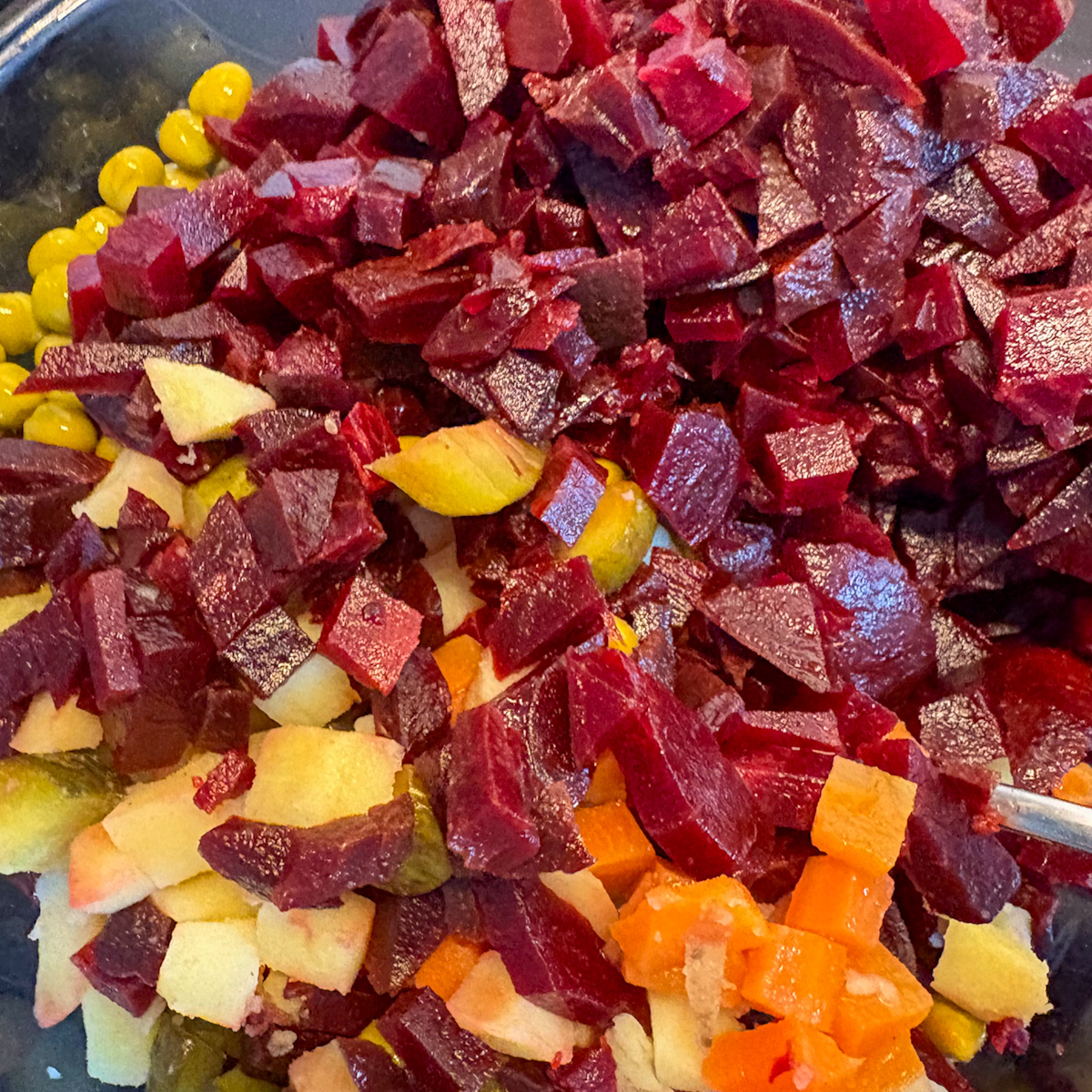
- Step 2: Dice the beetroot, potatoes, carrots and pickled cucumbers into small, even cubes. Keeping the pieces roughly the same size makes a big difference to the texture. Place everything into a large mixing bowl and add the drained sweet peas.
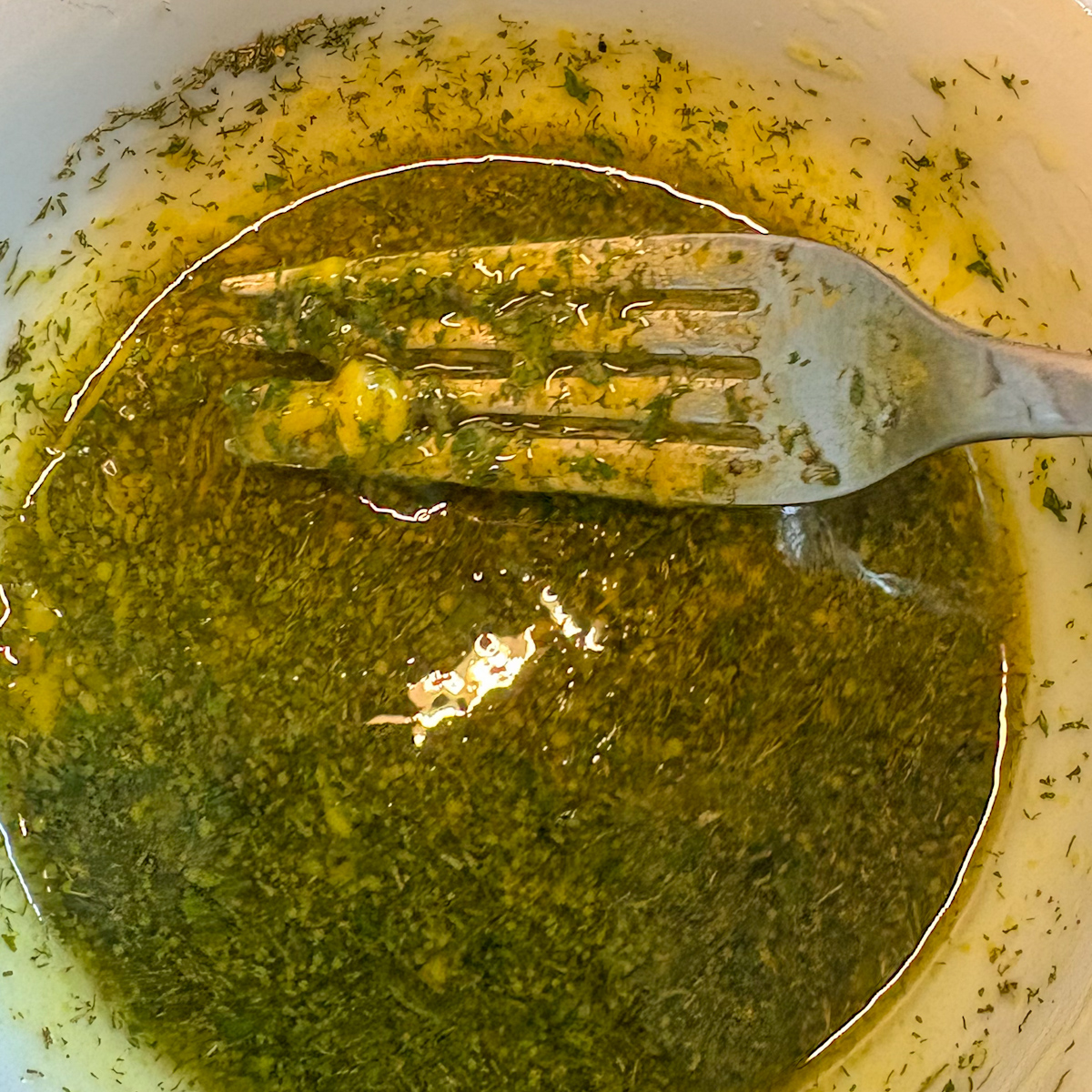
- Step 3: Make the dressing in a small bowl by whisking together the minced garlic, dried dill, mustard, olive oil, white wine vinegar, sea salt and pepper. Keep whisking until it looks smooth, glossy and fully combined.
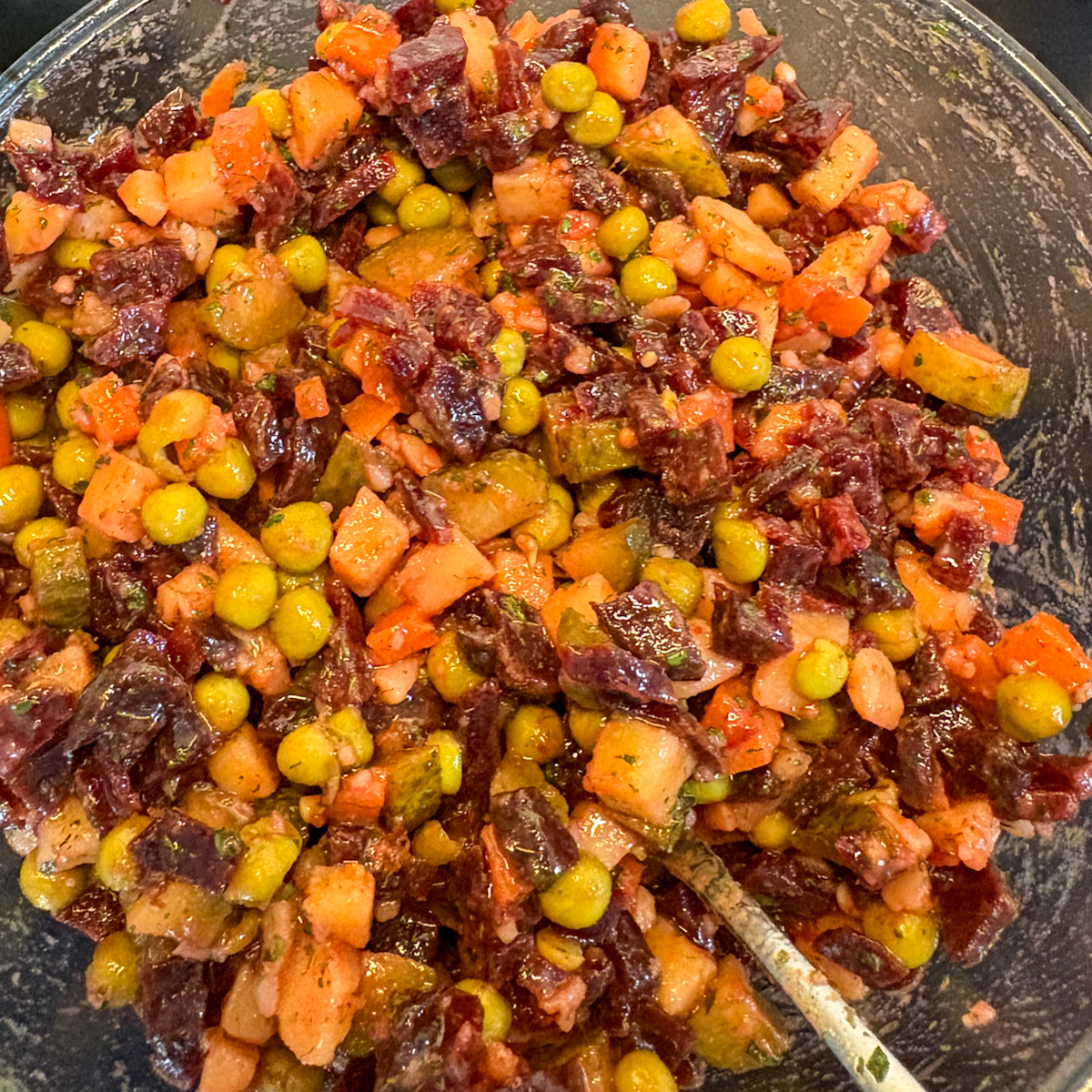
- Step 4: Pour the dressing over the vegetables and mix gently but thoroughly so every piece is coated. Cover the bowl and chill in the fridge for a couple of hours, or ideally overnight, so the flavours develop and the vegetables soak up the dressing.
How to Serve and Store Vinaigrette Salad
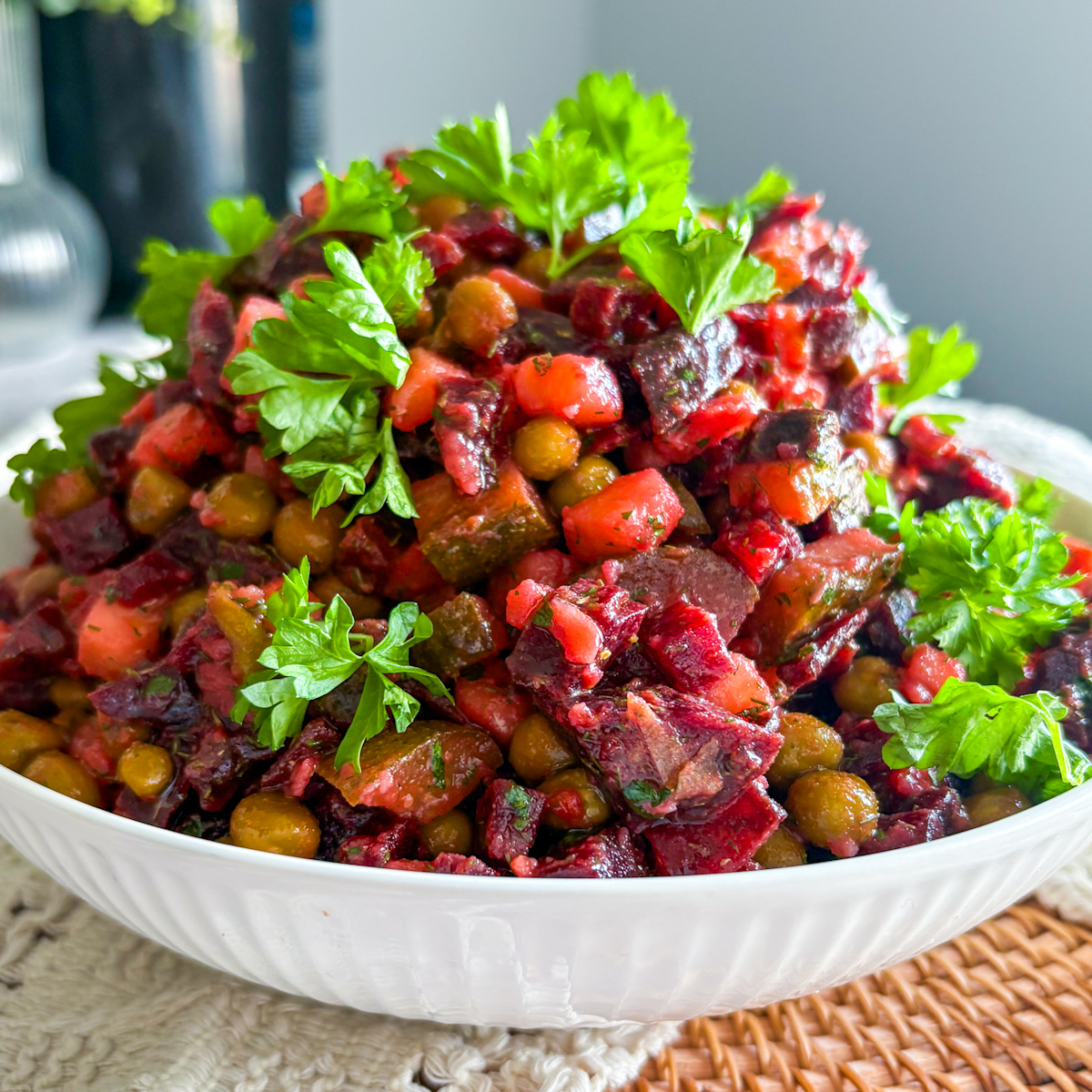
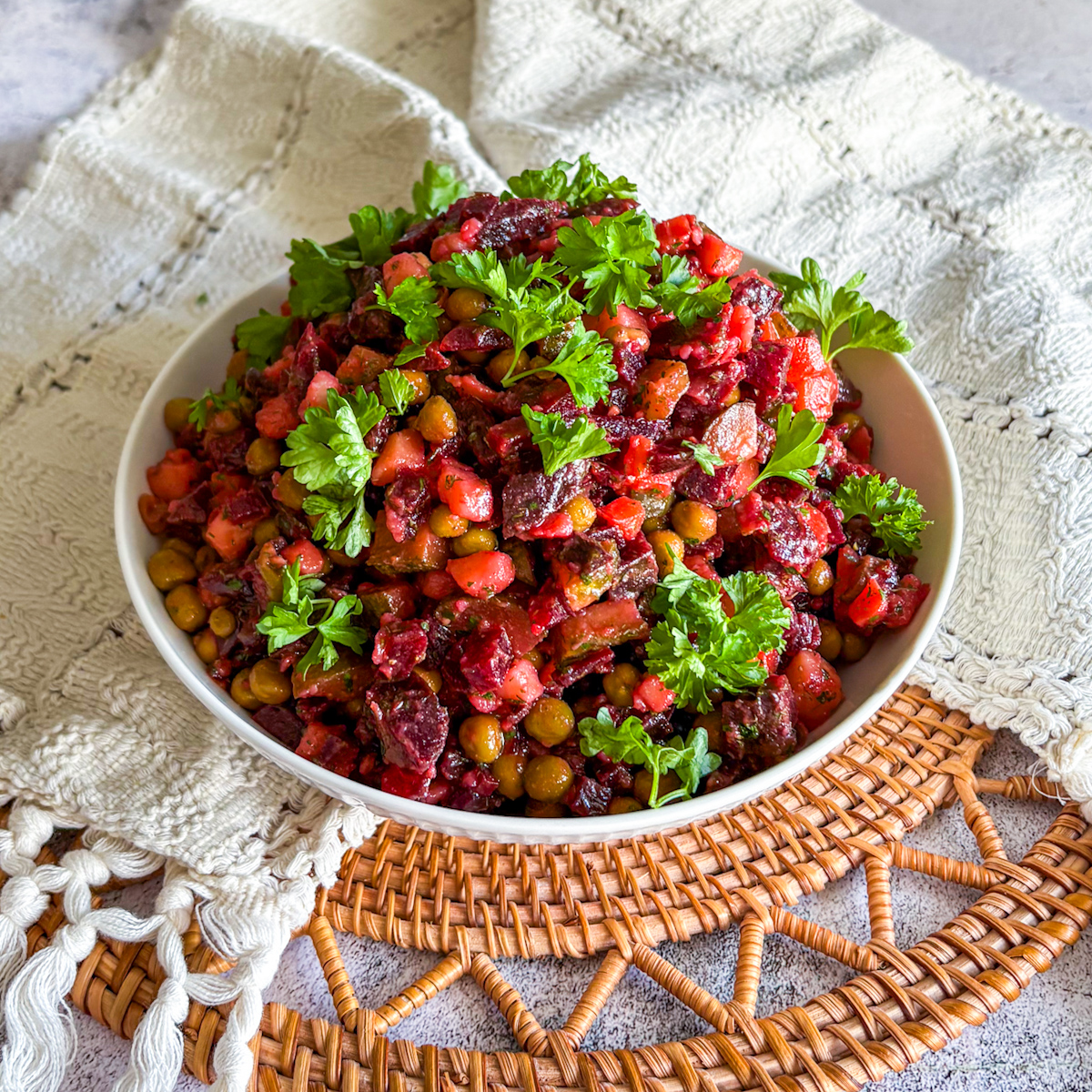
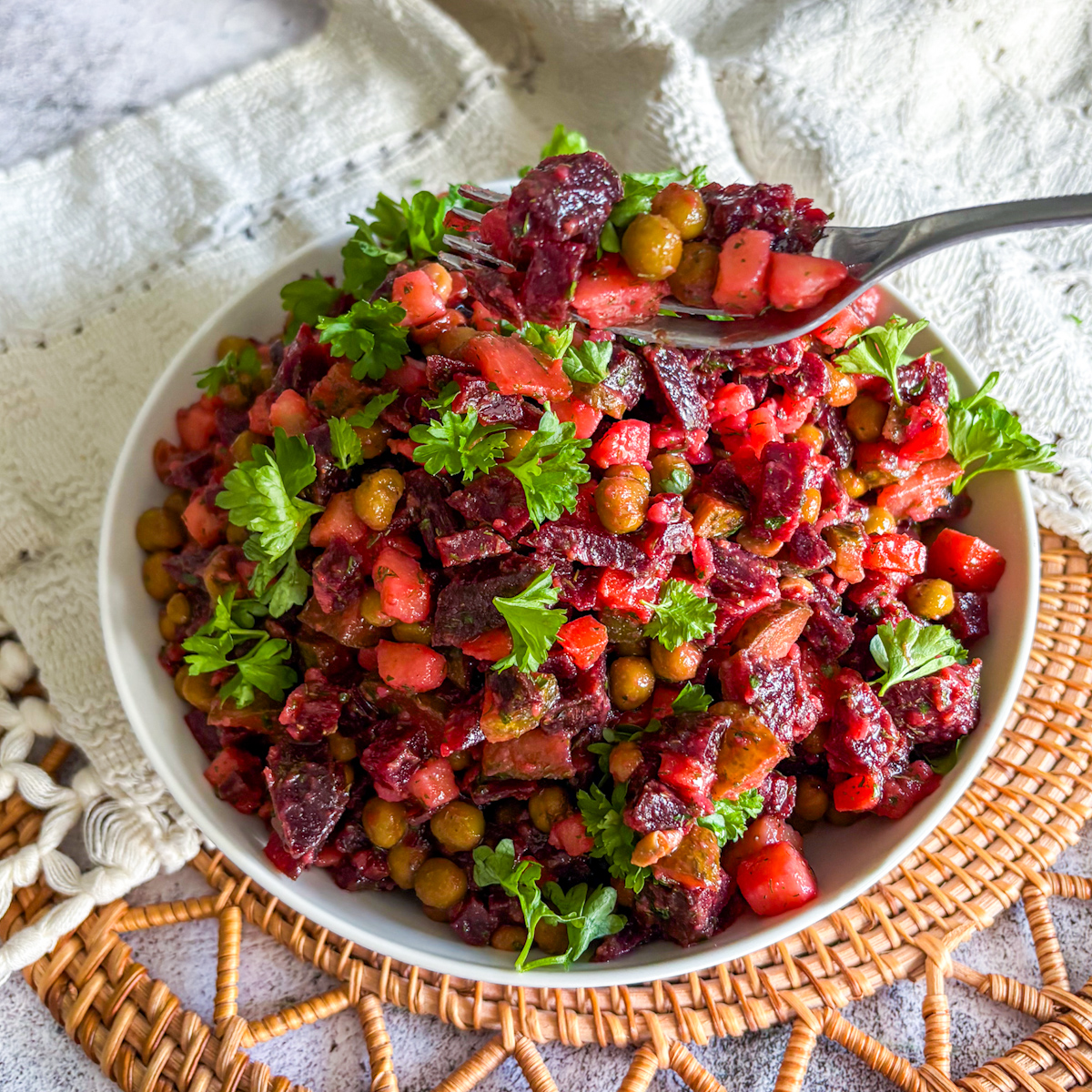
I like to serve this vinaigrette salad cold, straight from the fridge, with a generous scatter of fresh parsley on top. It works brilliantly as a starter, a side dish next to roasted meats or fish, or as a light lunch with a slice of dark rye bread. For a festive spread, spoon it into a wide shallow bowl so the colour really shows off.
Stored in an airtight container in the fridge, it keeps well for up to three days, and honestly, it tastes even better on day two once all the flavours have settled in. I would not recommend freezing this salad, as the potatoes and beetroot turn mushy once thawed. If you are making it ahead for a party, prep everything the day before, dress it, and give it a gentle stir just before serving.
More Recipes You Might Like
- If you love root vegetable salads, give my Roasted Beet Salad Recipe a try – it is a warm, caramelised take on beetroot with a lovely dressing.
- For something fresh and zingy on the side, my Marinated Cherry Tomatoes Recipe is a crowd-pleaser that comes together in minutes.
- If you enjoy traditional Russian salads, you will also love my Olivier Salad With Frankfurters Recipe – the creamy, mayonnaise-based cousin of this dish.
- For a crunchy, tangy pickle to serve alongside, try my Pickled Cauliflower with Carrots Recipe, which keeps for ages in the fridge.
- And if you are after another simple vegetable side, my Carrot and Parsley Salad Recipe with Honey Mustard Dressing is bright, fresh and ready in under fifteen minutes.
Useful Tips and Notes to Make the Best Vinaigrette Salad
- Boil vegetables with the skin on. Keeping the skins on while boiling protects the flavour and stops the potatoes and carrots from turning waterlogged. The skins also help the vegetables hold their shape, which matters when you are dicing them into neat cubes later. Peel them once they are cool enough to handle, using a small paring knife or even your fingers for the potatoes. This small step makes a real difference to the final texture.
- Cool the vegetables properly before cutting. Warm vegetables are much harder to dice cleanly and they also release moisture that can water down the dressing. I usually boil mine the night before and leave them in the fridge overnight. This gives you firmer, cleaner cubes and a much better-looking bowl. It also saves time on the day you actually want to eat the salad.
- Cut everything to the same size. Uniform dicing is not just about looks — it changes how the salad eats. When every piece is roughly the same size, you get a little bit of each ingredient in every forkful, which is how this salad is meant to be enjoyed. Aim for cubes about 1 cm across. Take your time with the knife work; it really pays off.
- Drain the peas and pickles well. Extra liquid is the enemy of a good vinaigrette salad. If the peas are swimming in brine or the pickles are dripping wet, your dressing will end up watery and the flavours will be dulled. Tip them into a sieve and give them a good shake before adding them to the bowl. You can even pat the pickles dry with kitchen paper for the best result.
- Let the salad rest in the fridge. This is the single most important step for flavour. A couple of hours is the minimum, but overnight is where the magic happens. The vegetables soak up the dressing, the beetroot colours everything a deeper red, and the whole thing tastes more rounded. If you serve it straight away, it will still be good, but it will not be at its best.
- Taste and adjust before serving. After the salad has chilled, the seasoning can mellow and sometimes need a small top-up. Give it a taste straight from the fridge and add a pinch more salt, a grind of pepper or a tiny splash of vinegar if it feels flat. Every batch of pickles and mustard is slightly different, so your dressing may need a little tweak. Trust your taste buds.
FAQ About Vinaigrette Salad
What is vinaigrette salad?
Vinaigrette salad, known as vinegret or винегрет in Russian, is a traditional cold salad made with boiled root vegetables, pickled cucumbers and peas, dressed with oil and vinegar. It is a classic dish on Russian and Eastern European tables, especially during the colder months and festive occasions. The name comes from the French vinaigrette dressing, which inspired the original recipe centuries ago.
Is vinaigrette salad vegan?
Yes, this classic vinaigrette salad is naturally vegan when you stick to the traditional ingredients. There is no meat, dairy or eggs involved, and the dressing is built around olive oil, mustard and vinegar. It is also gluten-free, so it works for a lot of dietary needs without any changes.
Why is my vinaigrette salad watery?
The most common culprit is not draining the peas and pickles properly before adding them. Warm vegetables that have not cooled fully can also release moisture into the bowl. Make sure everything is cold and well drained before you dress the salad, and you will not have this problem.
What is the difference between vinaigrette salad and Olivier salad?
Both are traditional Russian salads, but they are quite different. Olivier salad is mayonnaise-based and usually contains meat or sausage, eggs. Vinaigrette salad is lighter, dressed with oil and vinegar, and built around beetroot and other boiled root vegetables, which makes it naturally vegan.
How long does vinaigrette salad keep in the fridge?
Stored in an airtight container, it keeps well for up to three days in the fridge. The flavours are at their best on days one and two; by day three the vegetables start to soften more. I would not recommend freezing it, as the texture suffers badly once thawed.
Related
Looking for other recipes like this? Try these:
- Rocket Pesto Pasta Salad with Chicken and Cashews
- Easy Pesto Pasta Salad with Parsley Pesto and Mozzarella
- Summer Peach and Burrata Salad with Prosciutto
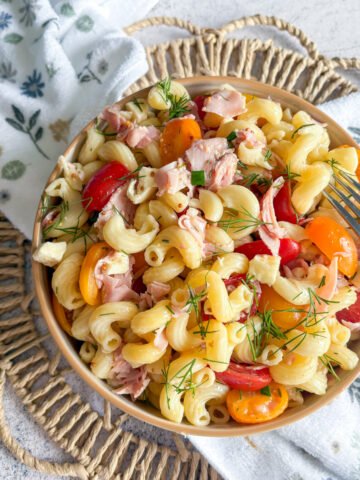
- Pasta Salad with Dill Vinaigrette - Easy Summer Recipe
Pairing
These are my favorite dishes to serve with [this recipe]:
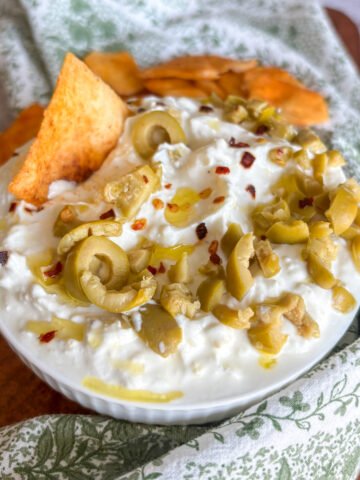
- How to Make Whipped Feta Dip with Lemon and Olives
- Sticky Baked Guinness Chicken Wings with a Smoky Dry Rub
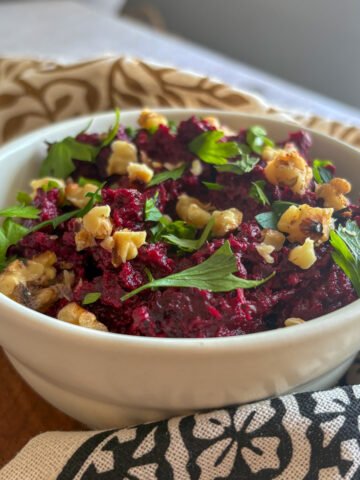
- Easy Beetroot and Walnut Dip with Roasted Garlic (Georgian Pkhali)
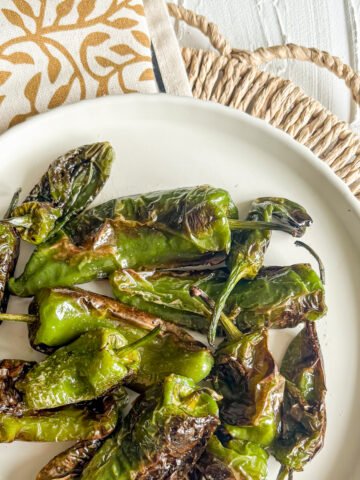
- How to Cook Padron Peppers (Easy Blistered Tapas in 5 Minutes)

Vinaigrette Salad Recipe (Classic Russian Beetroot Salad)
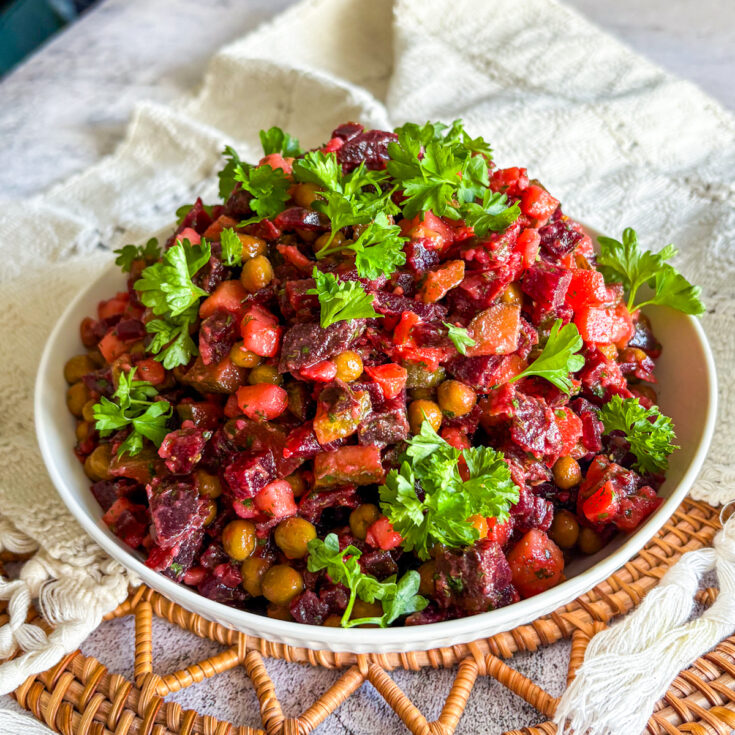
Vinaigrette salad (винегрет) is a traditional Russian beetroot salad made with boiled root vegetables, pickled cucumbers, sweet peas and a tangy mustard dressing. This classic vinaigrette salad recipe is easy, vegan and full of colour. Perfect as a make-ahead side dish or a light meal.
Ingredients
- 500 g pack cooked beetroot (1 lb)
- 5 medium potatoes
- 2 carrots
- 300 g canned sweet peas (10.5 oz)
- 4 medium pickled cucumbers
- 2 tablespoon mustard
- 2 garlic cloves, minced
- 50 ml olive oil (3½ tbsp)
- 1 teaspoon white wine vinegar
- 1 teaspoon dried dill
- Sea salt, to taste
- Fresh ground black pepper, to taste
- Fresh parsley, for serving
Instructions
- Place the potatoes and carrots into a large pan with their skins on, cover with cold water and bring to the boil. Simmer until tender when pierced with a knife, around 25–30 minutes. Drain and leave to cool completely, then peel.
- Dice the cooked beetroot, potatoes, carrots and pickled cucumbers into small, even cubes about 1 cm across. Tip everything into a large mixing bowl along with the drained sweet peas.
- In a small bowl, whisk together the minced garlic, dried dill, mustard, olive oil, white wine vinegar, sea salt and black pepper until the dressing looks smooth and silky.
- Pour the dressing over the vegetables and mix gently until everything is well coated. Cover the bowl and chill in the fridge for at least 2 hours, or ideally overnight, so the flavours develop and the vegetables absorb the dressing.
- Before serving, give the salad a gentle stir, taste and adjust the seasoning if needed, and scatter fresh parsley over the top.