
Blistered padron peppers are the easiest tapas you can make, ready in five minutes with just three ingredients. Mild, smoky and lightly charred, they need nothing more than olive oil and a good pinch of sea salt.
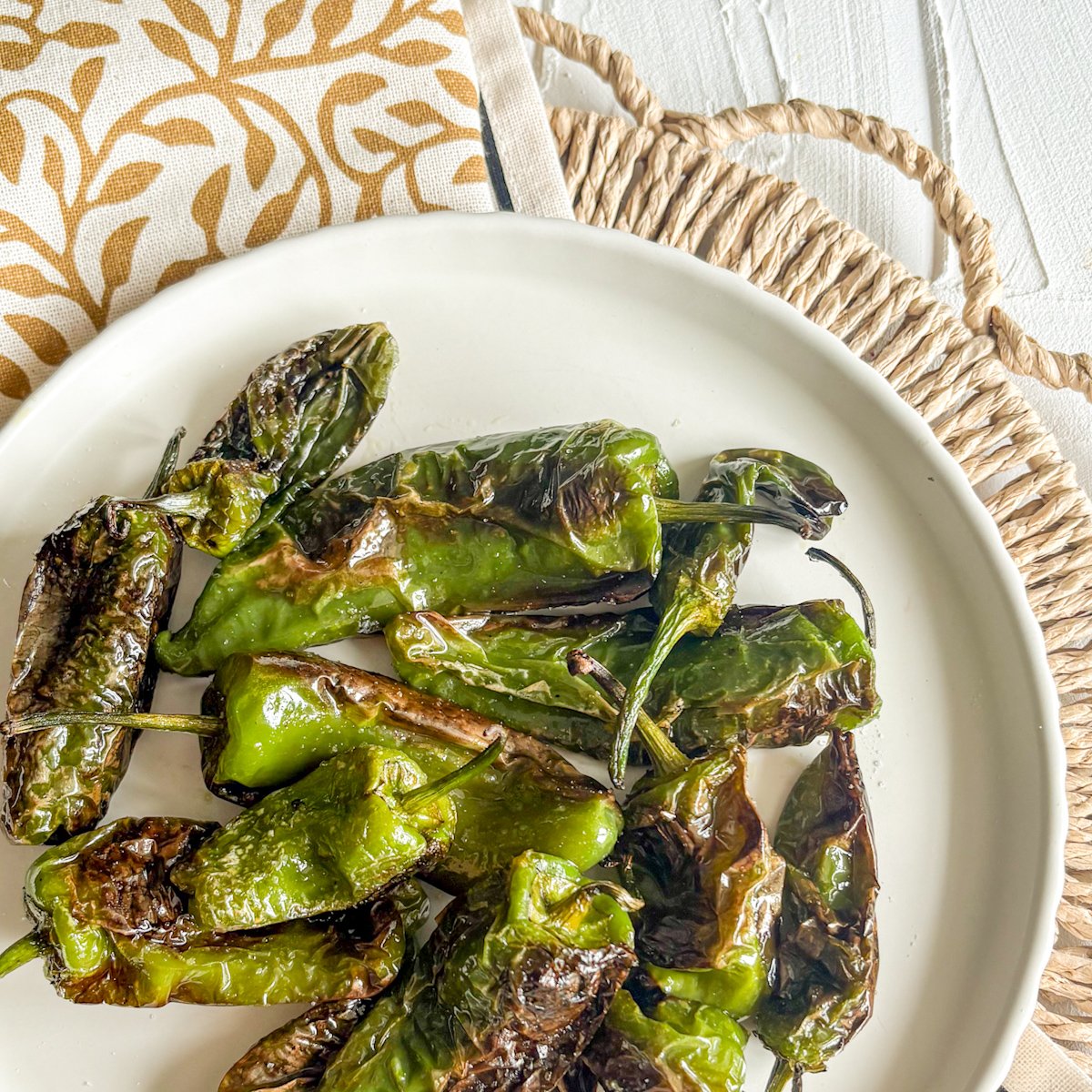
Padron peppers are small green Spanish peppers, blistered in a very hot pan until the skins char and the flesh turns soft. The whole dish comes together in one skillet with olive oil and flaky sea salt, and takes about five minutes from pan to plate. There is no chopping and no de-seeding, so the prep is almost nothing. They are cheap, they feed a crowd with no effort, and they work as a quick starter or a side with almost any summer meal.
Jump to:
What Are Padron Peppers and How Do They Taste?
Padron peppers come from Galicia in north-west Spain, named after the town of Padrón. They are picked young and green, about 5cm long, with thin skin and a mild, grassy flavour. Most of them are gentle and slightly sweet, but there is a fun catch: roughly one in ten brings a real kick of heat, similar to a mild jalapeño. The Galician saying sums it up - some are hot, some are not. That little gamble is part of why these peppers are so well loved at tapas tables. When cooked, the flesh softens and almost falls away from the core, which is exactly what you want.
Because most padron peppers are so mild, they are usually fine for children, with the small chance of a spicy one as the only thing to watch for. There is no need to de-seed them. The seeds stay inside, the peppers stay whole, and you simply eat around the stem.
Ingredients for Fried Padron Peppers
You only need three things, which is part of the charm of this recipe.
- Padron peppers — the heart of the dish. Buy them fresh and green, and give them a quick wash before cooking.
- Olive oil — extra virgin olive oil gives the best flavour and helps the skins blister. Use enough to coat the pan well.
- Sea salt — flaky sea salt or coarse ground salt, added right at the end. The salt is what brings everything together.
That really is the full list. No garlic, no spice mix, nothing else needed.
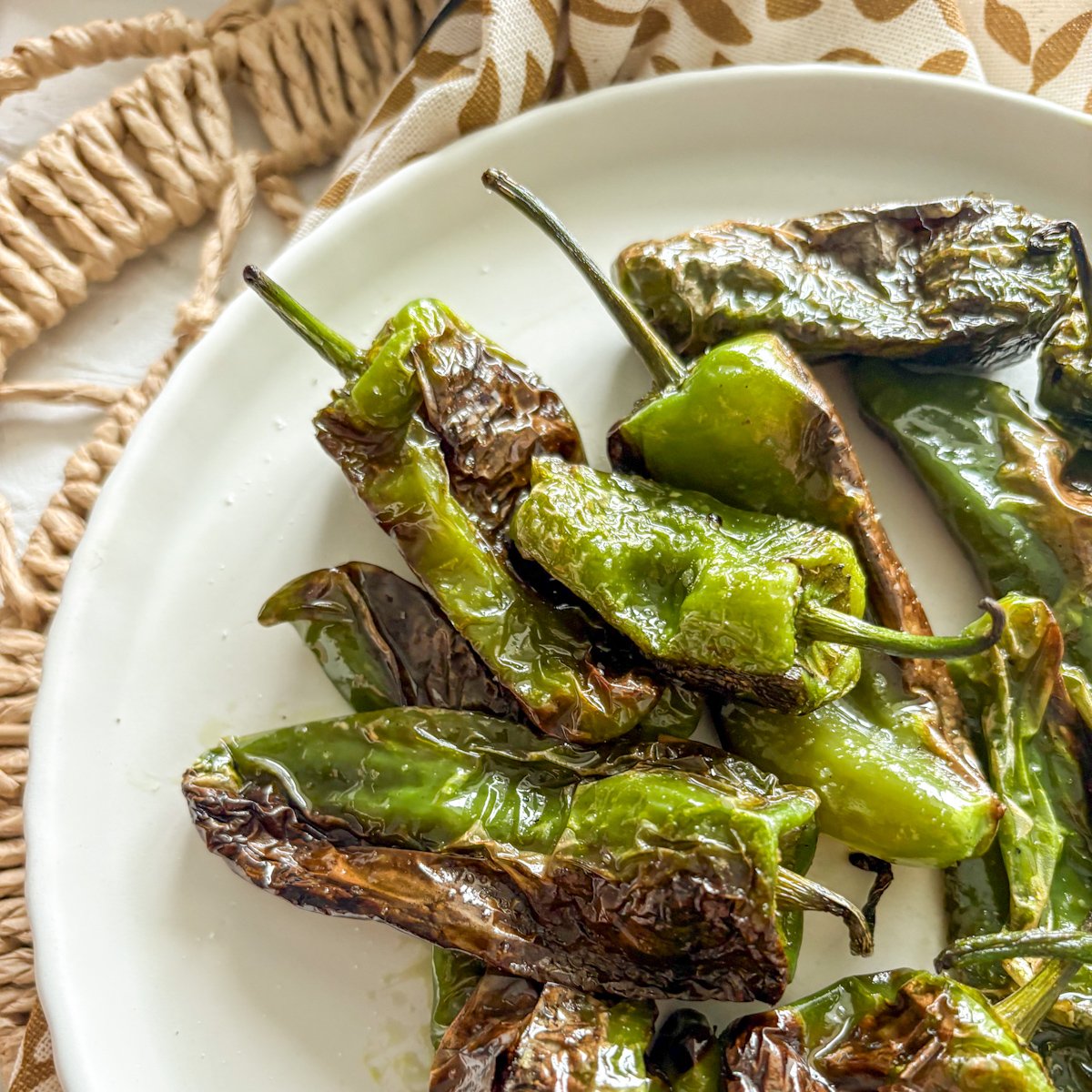
How to Cook Padron Peppers in a Pan
This is one of the simplest things you can cook. There is no preparation beyond a quick rinse, and you do not chop or de-seed anything. Wash the peppers, grab a large skillet, and you are ready.
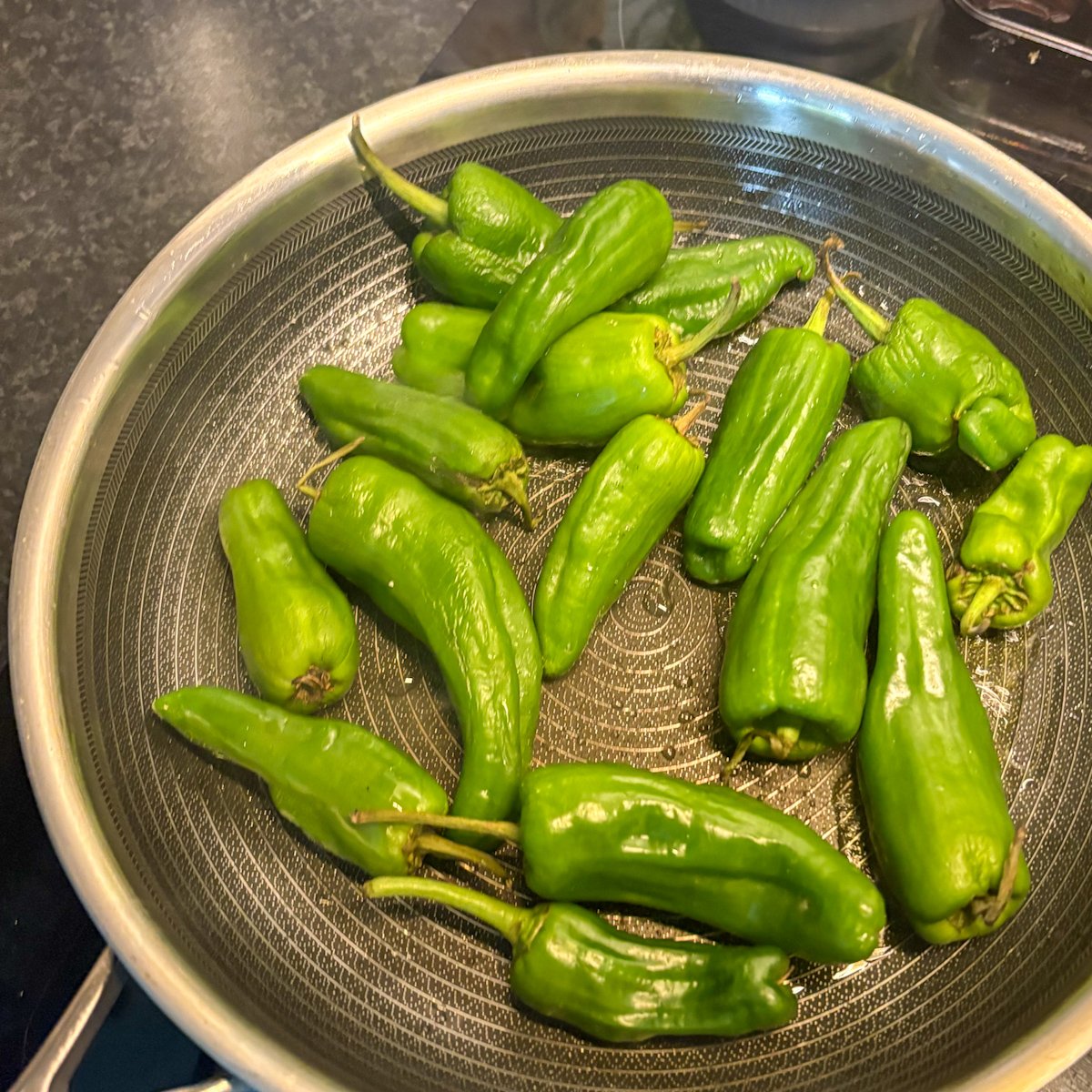
- Step 1: Heat a large skillet over high heat. Add the olive oil and let it get very hot, almost to the smoking point. Add the peppers in a single layer.
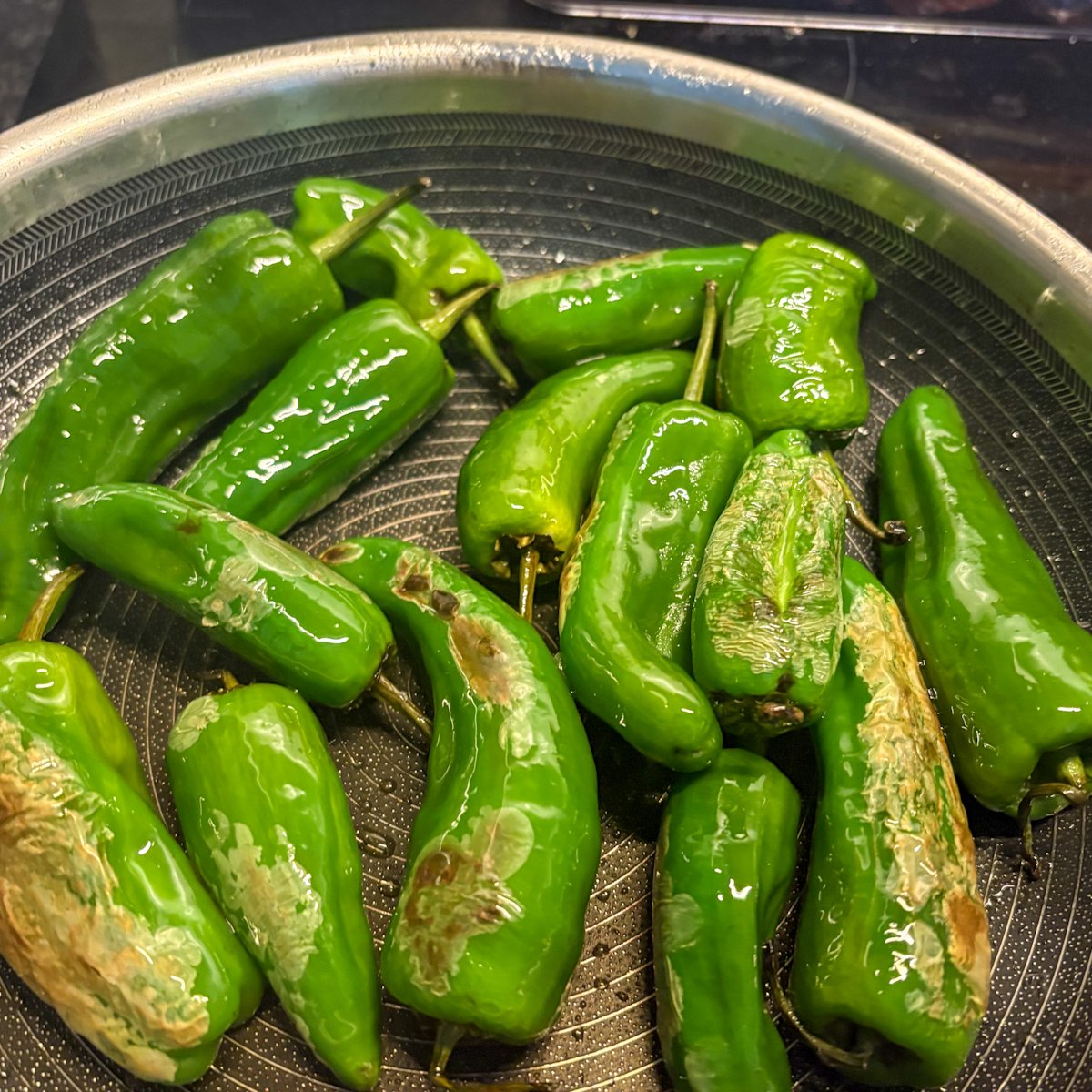
- Step 2: Fry them for about three minutes until blistered, stirring frequently so they char on the sides without burning. Do not overcook them, as padron peppers can turn bitter if fried for too long.
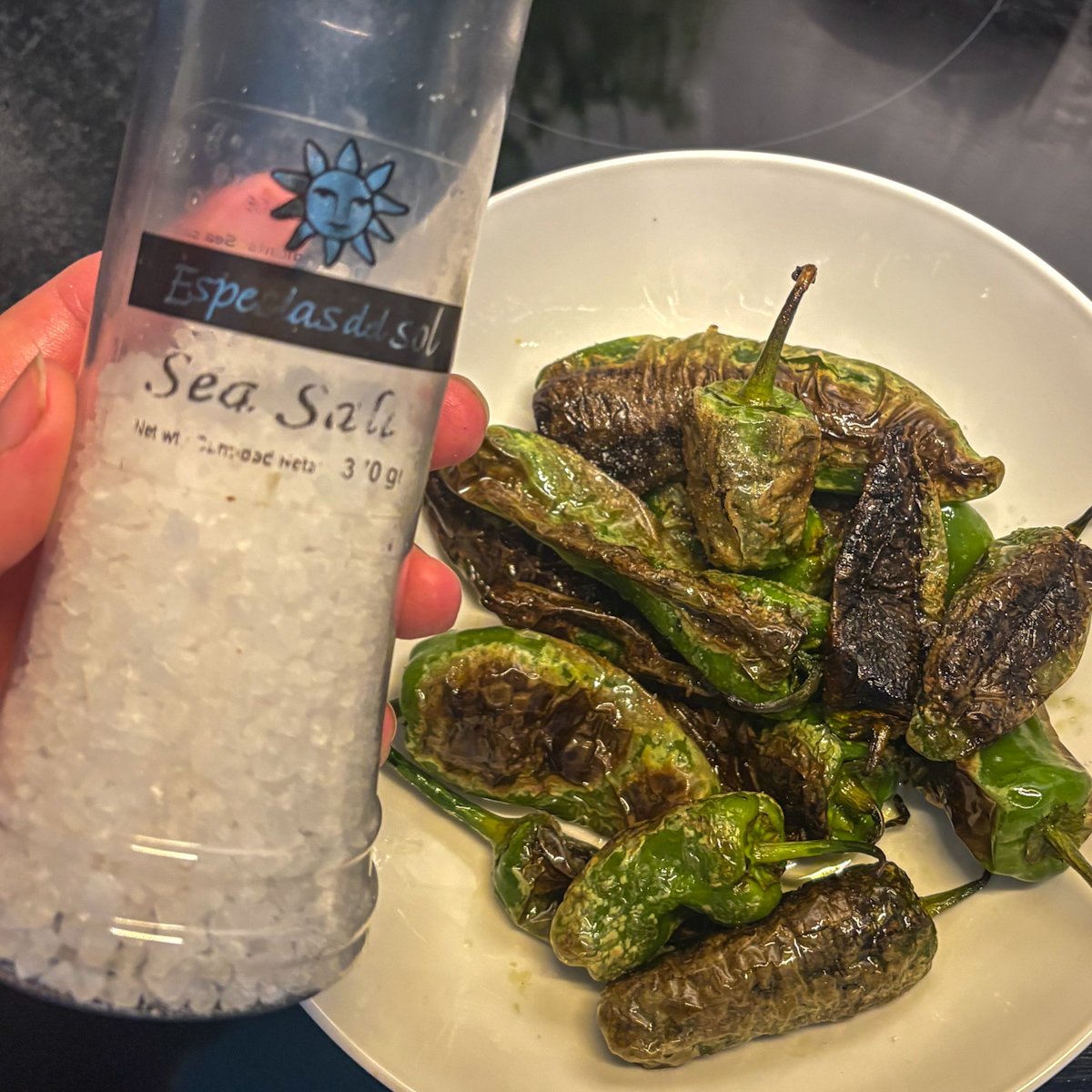
Tip the peppers into a serving dish and sprinkle generously with sea salt. Serve straight away while hot.
That is the whole method. Hot pan, a few minutes, a good pinch of salt.
How to Serve and Store Blistered Padron Peppers
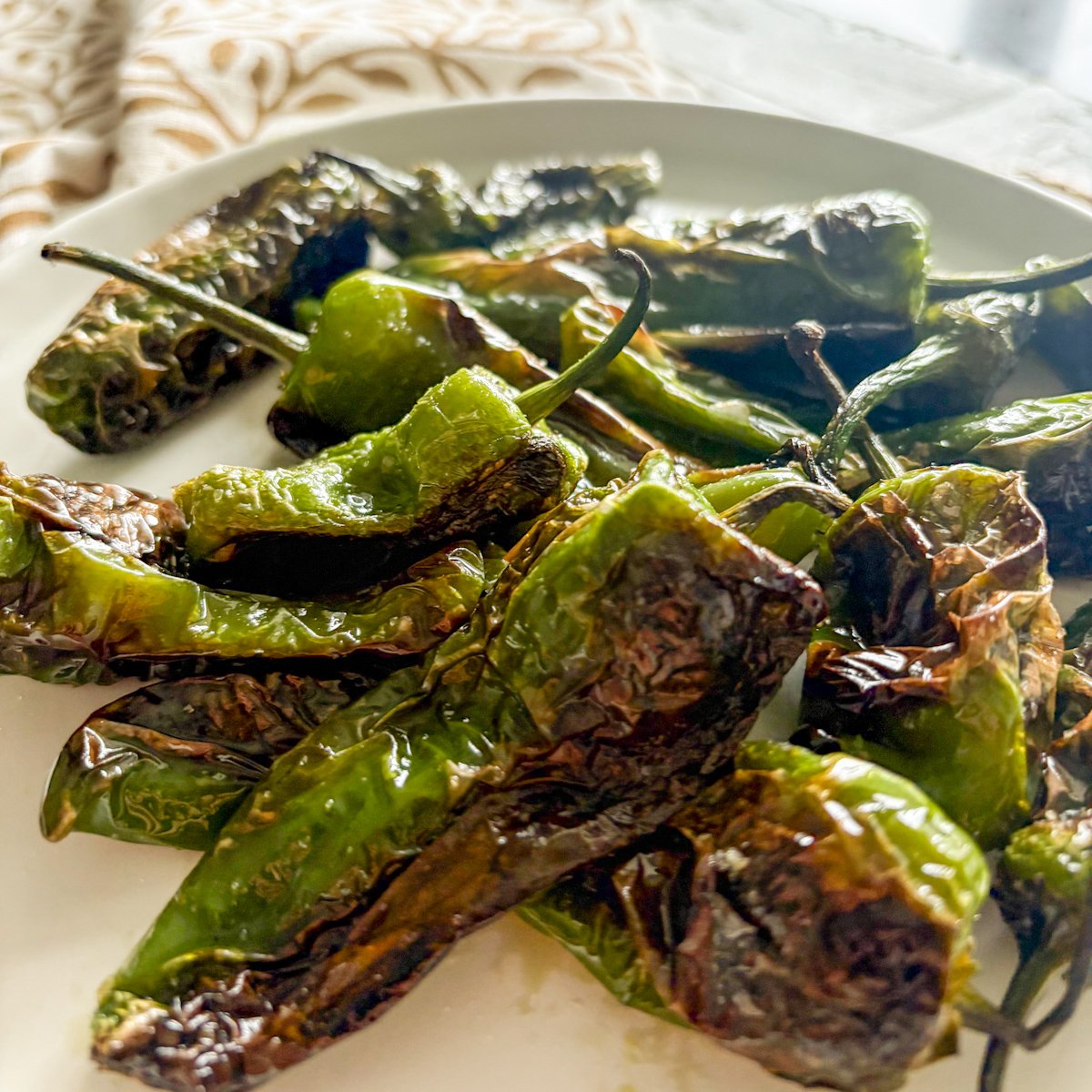
Serve these peppers hot, straight from the pan, with the salt still catching the light. Pick them up by the stem and eat the whole pepper apart from the stalk. They are a classic Spanish tapas, so they sit happily alongside olives, cheese, cured meats and a glass of something cold. They also work next to grilled meats at a summer barbecue, or as a quick starter before a bigger meal. A squeeze of lemon over the top is a nice touch if you like a little brightness.
These peppers are best eaten fresh, as soon as they come off the heat. If you do have leftovers, keep them in an airtight container in the fridge for two to three days and snack on them cold, or warm them through gently in a pan. They do not freeze well, so it is better to cook only what you plan to eat.
More Easy Recipes You Might Enjoy
If you loved these padron peppers, here are a few more simple starters and sides from the blog worth trying next.
- For another easy no-cook nibble, take a look at my Marinated Olives and Feta Recipe — soft feta and herby olives that come together with no cooking at all.
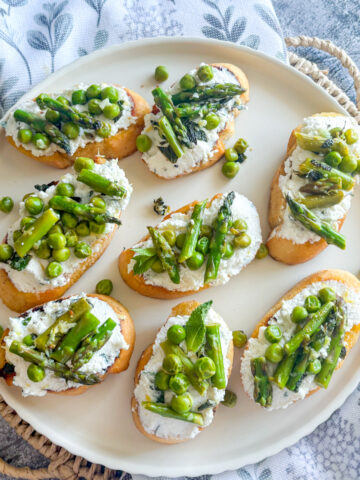
- If you fancy something fresh and light, try my Easy Pea and Asparagus Crostini Recipe with Ricotta and Mint — bright spring crostini topped with creamy ricotta.
- For an easy sharing board, my Marinated Olives and Whipped Feta Recipe — whipped feta and marinated olives that everyone can dip into.
- If you want something crunchy on the side, take a look at my Rye Bread Grenki (Rye Bread Croutons) Recipe — crisp garlicky croutons that are great with dips and soups.
- And for another moreish little bite, try my Stuffed Mini Peppers Recipe — Ultimately Cheese — sweet mini peppers filled with a soft, cheesy centre.
How Much Do Padron Peppers Cost to Make?
This is a genuinely cheap dish to put together, which is part of why padron peppers are such a good buy.
- In the UK, a pack costs around £1.85 at Waitrose and roughly £2.75 at Asda or Co-op for a small pack, and you can also find them in Tesco and Sainsbury's.
- In Ireland, Dunnes Stores and SuperValu sell a 200g pack for about €1.99 to €2.50.
- In the USA, a similar pint of fresh padron peppers runs around $3 to $5 at Whole Foods or seasonally at Trader Joe's.
- In Spain, where they grow, they are cheaper still and sold loose at markets for a euro or two.
- In Australia, expect to pay around AUD $5 to $7 for a punnet at greengrocers or larger supermarkets.
Add a splash of olive oil and a pinch of sea salt and the full dish still costs only a couple of pounds, making these blistered padron peppers one of the best-value tapas you can serve.
Top Tips and Notes for the Best Padron Peppers
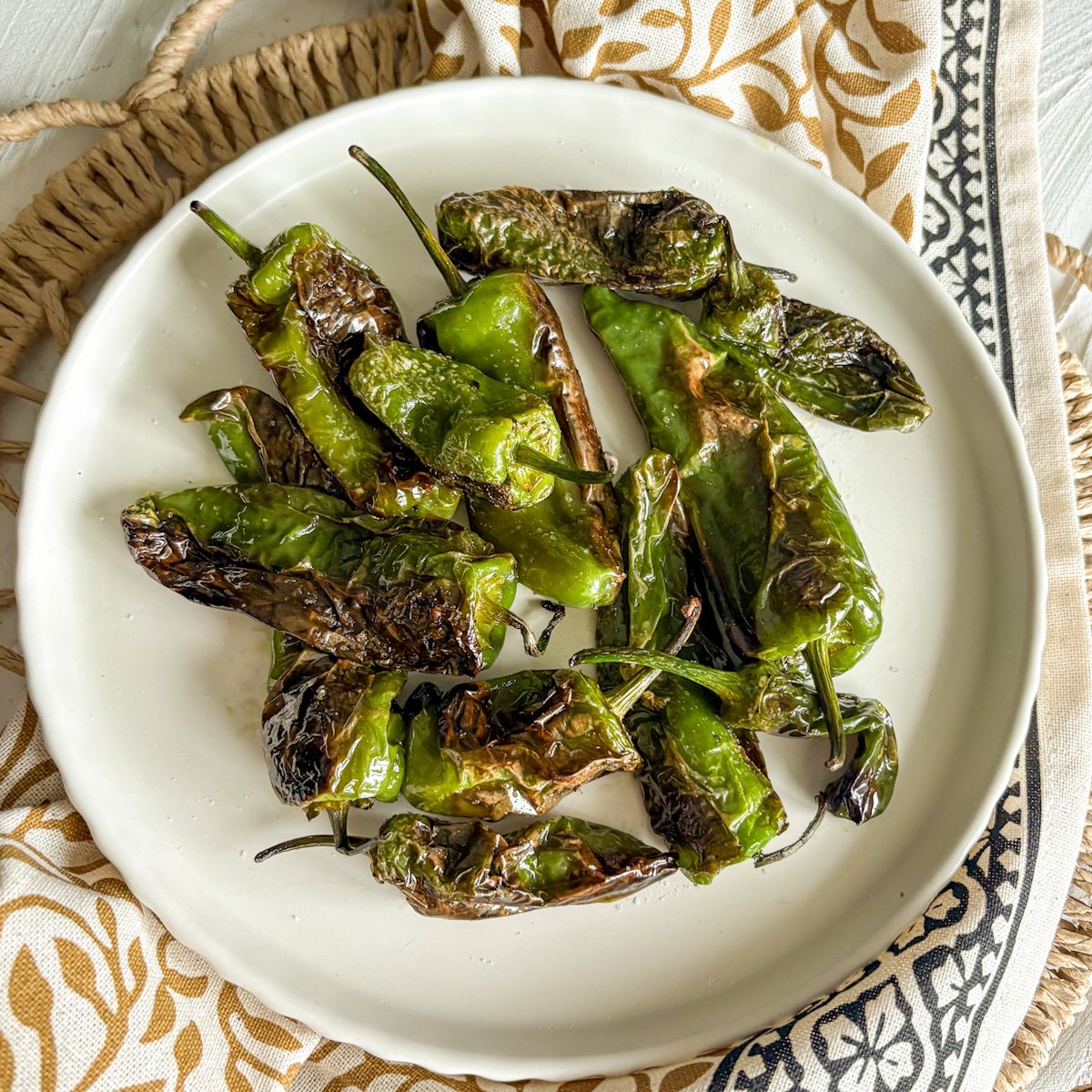
- Get the pan really hot before the peppers go in. The whole point of this dish is the blister, and you only get that from a properly hot skillet. Heat the pan first, then add the oil, and wait until it shimmers and is close to smoking. If the pan is too cool, the peppers will steam and go soft instead of charring, and you lose the smoky flavour that makes them special. A cast iron skillet holds heat best and gives the most even char.
- Do not overcrowd the skillet. Lay the peppers out in a single layer with a little space between them so each one touches the hot surface. If you pile them in, they release moisture and end up stewing rather than frying. Cook them in two batches if your pan is small, as it is worth the extra couple of minutes. Crowded peppers blister unevenly and never develop that lovely charred skin.
- Keep them moving, but not constantly. Stir or toss the peppers every thirty seconds or so, rather than flipping them nonstop. They need a moment of stillness against the hot pan to blister properly, then a turn to char the next side. Tongs make this easy and keep your hands away from any oil that spits. The aim is blistered, charred skin on several sides, not a uniform colour all over.
- Watch the time so they do not turn bitter. Padron peppers are quick, and three to five minutes is usually all they need. Overcooking is the main thing that goes wrong, because the flesh can turn bitter and the skins go from charred to burnt. As soon as most peppers have blistered and softened, take them off the heat. It is better to pull them a touch early than to leave them too long.
- Salt at the end, not the start. Always add the sea salt after cooking, once the peppers are on the serving dish. Salt added to the pan can draw out moisture and stop the skins blistering well. Flaky sea salt sprinkled over the hot peppers sticks to the oily skins and gives little bursts of seasoning in each bite. This timing makes a real difference to the final taste.
- Use good olive oil and do not be shy with it. The oil is one of only three ingredients, so its flavour really shows. A decent extra virgin olive oil adds a fruity, peppery note that cheap oil simply does not have. Use enough to coat the base of the pan generously, as this helps the skins blister and stops them sticking. The peppers soak up a little of that flavour as they cook.
- Try them in the air fryer for a hands-off version. If you would rather not stand at the stove, padron peppers cook beautifully in an air fryer. Toss them in a little olive oil, spread them in the basket, and cook at around 200°C for six to eight minutes, shaking halfway. They come out blistered and soft with almost no effort and no oil spitting. Finish with sea salt exactly as you would from the pan.
- Fire up the grill or barbecue in summer. These peppers are made for outdoor cooking and pair brilliantly with grilled meats. Toss them in oil and cook them in a grill basket over direct heat, turning until they blister and char. The slight smokiness from the grill suits them perfectly and frees up your hob for everything else. They make a lovely, low-effort addition to any summer barbecue spread.
- Embrace the heat lottery. Most padron peppers are mild and sweet, but around one in ten is properly spicy, and there is no way to tell by looking. This little surprise is part of the fun and a great talking point when you serve them. If you are cooking for very young children or anyone wary of spice, just warn them that the odd one bites back. The risk is small, but it is real, so eat with a sense of humour.
Padron Peppers Recipe FAQ
Are padron peppers spicy?
Most padron peppers are mild and slightly sweet, sitting low on the heat scale at around 500 to 2,500 Scoville units. However, roughly one in ten delivers a noticeable kick, closer to a mild jalapeño. There is no reliable way to spot the hot ones in advance, so eating them is a little like a gentle game of chance.
What do padron peppers taste like?
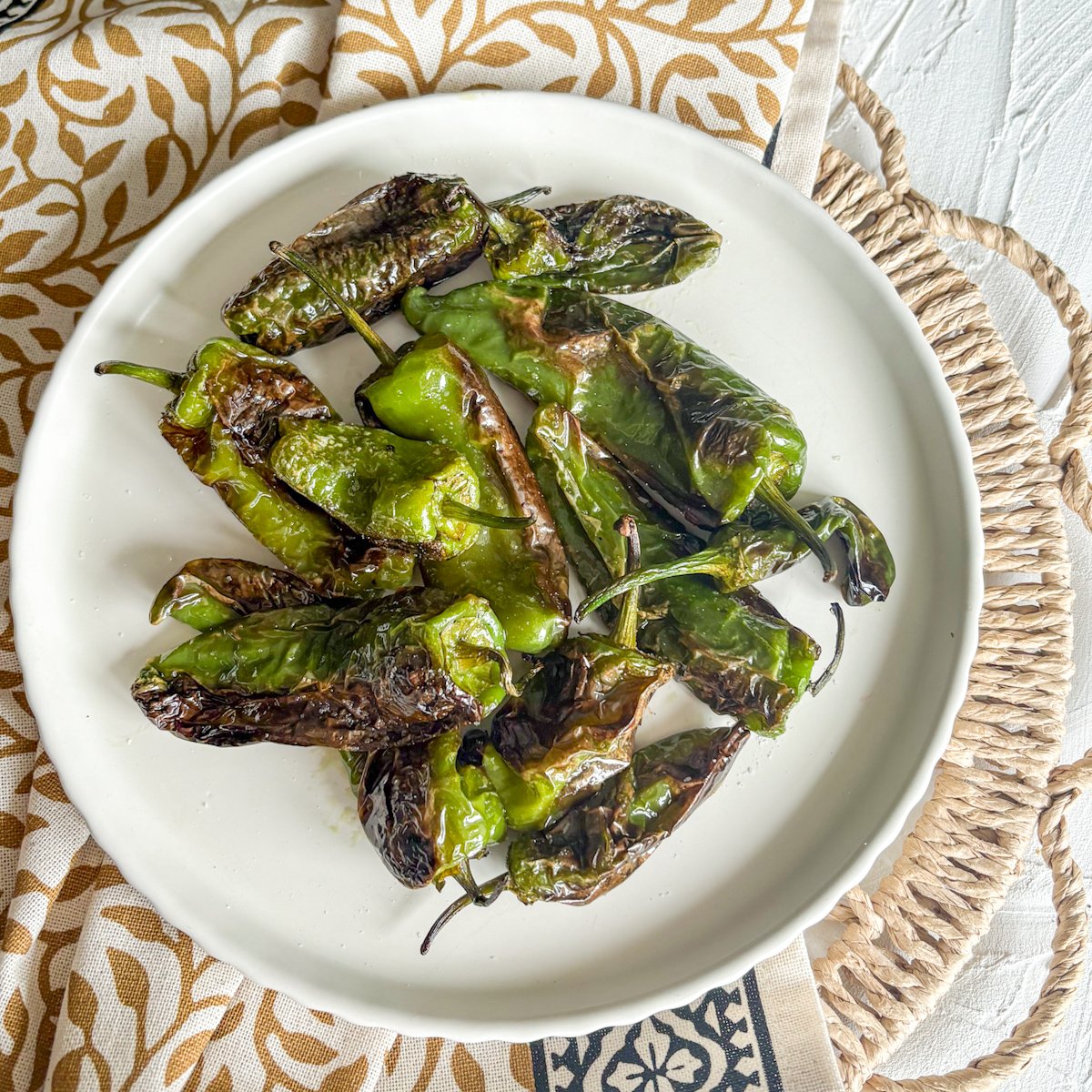
Raw, they have a fresh, grassy, slightly green-pepper flavour. Once blistered in hot oil, they turn soft and smoky with a savoury, lightly charred edge and a touch of natural sweetness. The salt added at the end lifts all of that, which is why so little seasoning is needed.
Can children eat padron peppers?
In most cases yes, because the peppers are usually very mild. The only thing to keep in mind is the occasional spicy one, which can catch a child off guard. If you are serving young children, it is worth mentioning that one now and then might be a little hot.
Can I cook padron peppers in an air fryer?
Yes, and it is a great low-effort method. Toss them in a little olive oil, spread them in the basket, and cook at around 200°C for six to eight minutes, shaking once. They blister nicely and you avoid any oil spitting on the hob.
Why did my padron peppers turn out bitter?
The most common cause is overcooking. Padron peppers can turn bitter if they are fried for too long or allowed to burn rather than blister. Keep the cooking time short, around three to five minutes, and pull them off the heat once they are blistered and soft.
Related
Looking for other recipes like this? Try these:
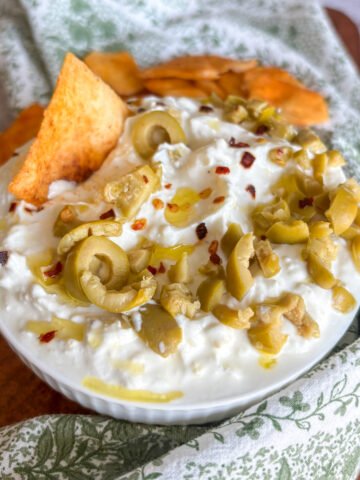
- How to Make Whipped Feta Dip with Lemon and Olives
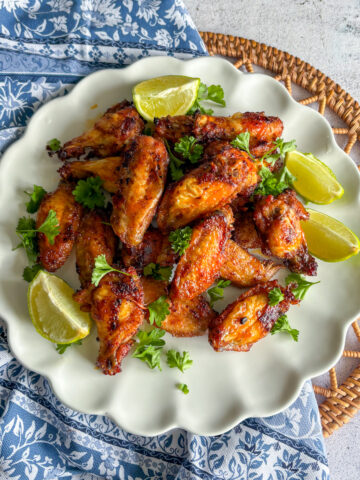
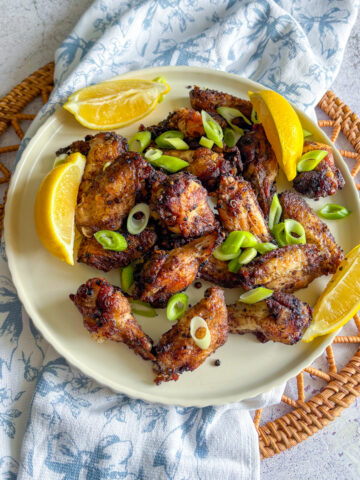
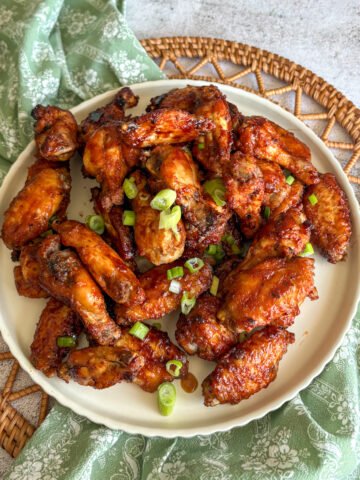
- Sticky Baked Guinness Chicken Wings with a Smoky Dry Rub
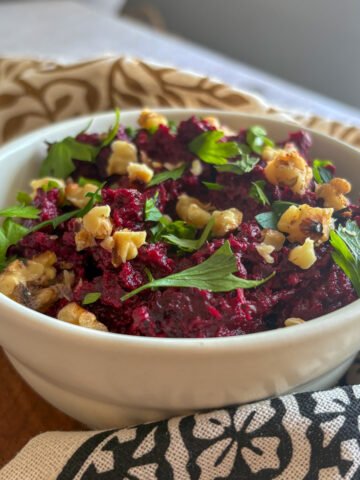
- Easy Beetroot and Walnut Dip with Roasted Garlic (Georgian Pkhali)
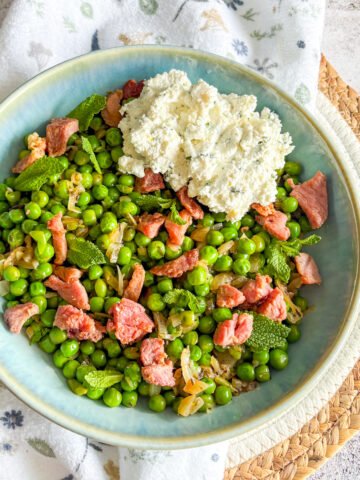
- Summer Peas with Bacon and Ricotta (Hot or Cold)
Pairing
These are my favorite dishes to serve with blistered padron peppers:
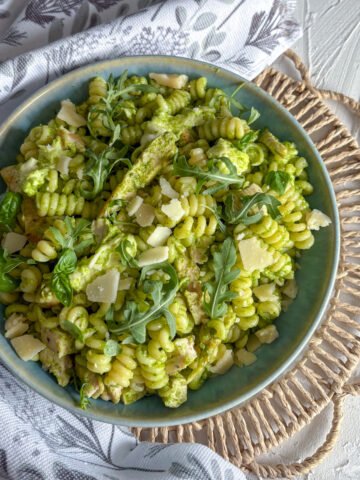
- Rocket Pesto Pasta Salad with Chicken and Cashews
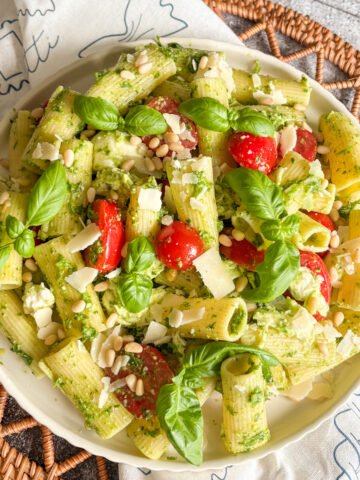
- Easy Pesto Pasta Salad with Parsley Pesto and Mozzarella
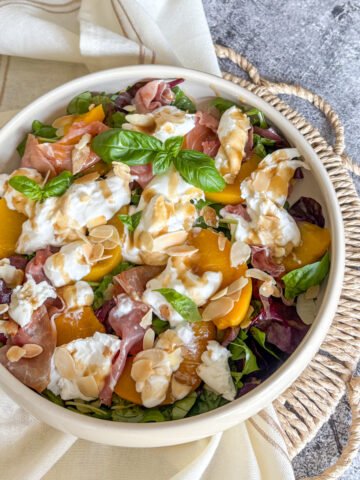
- Summer Peach and Burrata Salad with Prosciutto
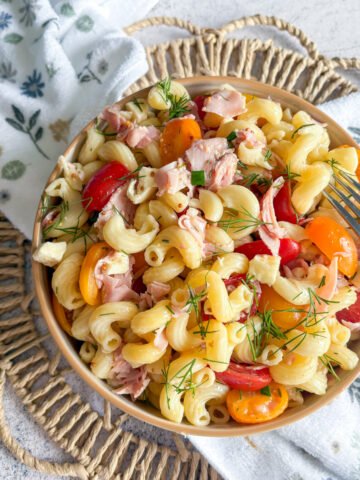
- Pasta Salad with Dill Vinaigrette - Easy Summer Recipe
Blistered Padron Peppers Recipe
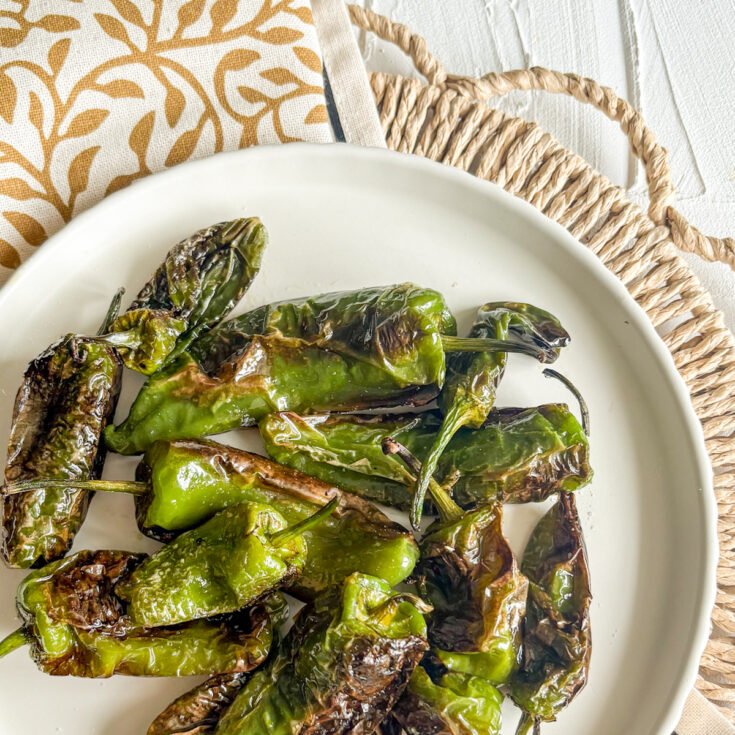
Blistered padron peppers are a quick Spanish tapas made with just three ingredients in five minutes. Mild, smoky and lightly charred, they need only a hot pan, good olive oil and a pinch of flaky sea salt. Serve them hot as a starter, a side or part of a tapas board.
Ingredients
- 200g padron peppers
- 1 tablespoon olive oil
- 1 teaspoon flaky sea salt
Instructions
- Wash the padron peppers and pat them dry. There is no need to chop or de-seed them.
- Heat a large skillet over high heat. Add the olive oil and let it get very hot, almost to the smoking point.
- Add the peppers in a single layer and fry for about 3 minutes, stirring frequently, until the skins blister and char on the sides. Do not overcook, as the peppers can turn bitter.
- Tip the peppers into a serving dish and sprinkle generously with flaky sea salt.
- Serve straight away while hot.